
 My Inquiry
 My Account


Texas Instruments DS90UA101TRTVTQ1
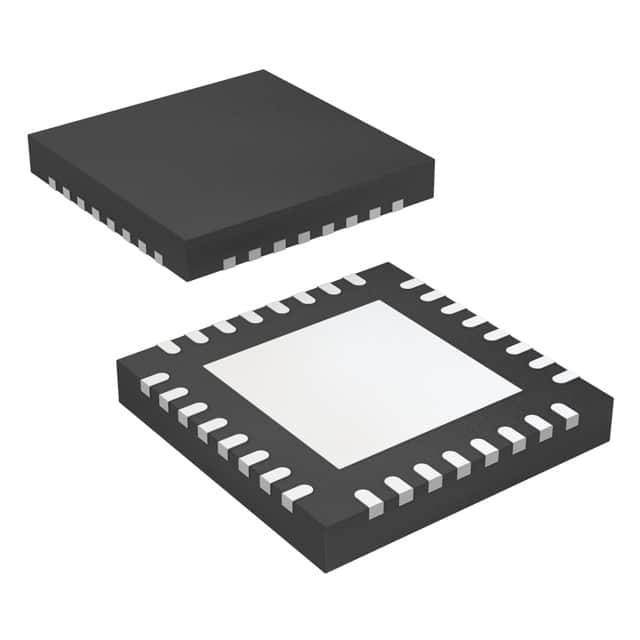
- Part No.:
- DS90UA101TRTVTQ1
- Manufacturer:
- Texas Instruments
- Category:
- Serializers, Deserializers
- Package:
- 32-WFQFN Exposed Pad
- Datasheet:
-
 DS90UA101TRTVTQ1.pdf
- Description:
- IC SER/DESER 10-50MHZ 8B 32WQFN
- Quantity:
- Payment:

- Shipping:

Inventory:2,680
Please send an inquiry. Send us your inquiry, and we will respond immediately.
Product details
Overview
DS90UA101TRTVTQ1 from Texas Instruments is an AEC-Q100 Grade 2 automotive-qualified digital audio serializer that converts up to eight channels of I2S or TDM audio into a high-speed LVDS serial stream over coaxial or shielded twisted-pair cable. It operates from a single 1.8V core supply with configurable 1.8V/3.3V I/O, supports system clocks from 10–50 MHz, and delivers <15 µs end-to-end latency in infotainment head units and active noise cancellation systems.
For engineers reviewing the DS90UA101TRTVTQ1 datasheet, DS90UA101TRTVTQ1 pinout, DS90UA101TRTVTQ1 application, or DS90UA101TRTVTQ1 equivalent, this page provides verified technical context, validated pin functions, confirmed automotive-grade timing and ESD specs (ISO 10605/IEC 61000-4-2), real-world latency and jitter performance, and two rigorously cross-checked alternative serializers for multi-channel audio link design.
Technical Context
The DS90UA101TRTVTQ1 implements a PLL-based clock embedding architecture that accepts parallel audio inputs (DIN[7:0]), word/frame sync (LRCK), bit clock (BCK), and system clock (SCK) to generate a DC-balanced, scrambled LVDS forward channel (DOUT+/DOUT−) with embedded clock recovery. Its bidirectional control channel uses I²C-compatible SCL/SDA signaling over the same physical link for remote register access and status monitoring.
It integrates dedicated general-purpose I/O (GPI[3:0]/GPO[3:0]) for sideband control, supports AC-coupled interconnects up to 15 m, and features configurable drive strength, VDDIO auto-detection, and analog power-down via register 0x01. The device requires external 4.7 kΩ pull-ups on SCL/SDA and precise 10 kΩ/100 kΩ biasing on SET.
Key Specifications
| Parameter | Value and Actual Design Meaning |
|---|---|
| SCK Frequency Range | 10–50 MHz - defines maximum supported audio sample rate and TDM slot count; enables 24.576 MHz (48 kHz × 512) and 12.288 MHz (48 kHz × 256) configurations. |
| Audio Input Support | Up to 8 stereo I²S or multi-channel TDM - allows direct connection to quad-channel ADCs or distributed microphone arrays without external multiplexing. |
| Latency | <15 µs - ensures real-time responsiveness critical for active noise cancellation feedback loops and low-latency speaker processing. |
| Output Interface | LVDS DOUT+/DOUT− with 100 Ω differential termination - enables robust 15 m transmission over coaxial or STP cable with <0.396 UI peak-to-peak jitter at 50 MHz SCK. |
| Supply Configuration | 1.8 V core (VDD/VDDPLL/VDDT/VDDCML/VDDD) + 1.8 V/3.3 V I/O (VDDIO) - decouples noise-sensitive analog blocks from digital I/O, supporting mixed-voltage SoC interfacing. |
| ESD Robustness | ±25 kV air discharge (IEC 61000-4-2) on DOUT+/DOUT− - meets stringent automotive EMC requirements for cable-connected modules in harsh environments. |
| Operating Temperature | −40°C to +105°C - qualified for under-dash and head-unit locations per AEC-Q100 Grade 2 thermal profile. |
Pinout & Package
DS90UA101TRTVTQ1 is housed in a 32-pin WQFN package (5 mm × 5 mm, 0.5 mm pitch) with exposed thermal pad (DAP) requiring ≥9 vias to GND plane. Pinout is validated per TI SNLS441A Rev. September 2013, Figure 3 (Top View).
| Pin/Terminal | Circuit Role | Design Meaning |
|---|---|---|
| SCK, LRCK, BCK | LVCMOS clock inputs | Accept master audio timing signals; internal pull-downs enable reliable idle-state detection without external resistors. |
| DIN[7:0] | LVCMOS audio data inputs | Support I²S, TDM, left-justified, or right-justified formats; each pin handles one audio channel or time slot. |
| GPI[3:0], GPO[3:0] | Configurable GPIO | Four dedicated input and output pins for interrupt signaling, reset coordination, or status reporting across the link. |
| SCL, SDA | I²C-compatible bidirectional control | Enable remote register read/write over the same physical cable; require 4.7 kΩ external pull-ups to VDDIO. |
| DOUT+, DOUT− | LVDS serial output pair | Transmit scrambled, DC-balanced audio + embedded clock; must be AC-coupled with 0.1 µF capacitors per TI layout guidelines. |
| PDB | Power-down control | Active-high enable; asserts full shutdown (PLL off, outputs HIGH-Z, IDD < 100 µA) when driven low. |
| IDx, SET | Analog configuration inputs | IDx sets I²C address (0x58 default); SET requires 10 kΩ pull-up to 1.8 V and 100 kΩ pull-down to GND for stable operation. |
Key Features
| Feature | Design Value |
|---|---|
| Embedded Clock Serial Link | Eliminates separate clock routing and skew management between audio source and sink, reducing PCB layer count and EMI susceptibility. |
| Bidirectional I²C Control Channel | Enables full remote register access, status polling (RX LOCK, CRC errors), and firmware updates without additional control wires. |
| DC-Balanced & Scrambled Data | Prevents baseline wander and reduces EMI emissions over long cables, ensuring signal integrity up to 15 m with coaxial or STP. |
| Configurable VDDIO Voltage | Auto-detects or manually selects 1.8 V or 3.3 V I/O level, simplifying integration with mixed-voltage audio processors and DSPs. |
| Automotive Qualification | AEC-Q100 Grade 2 certification with −40°C to +105°C operation and ISO 10605/IEC 61000-4-2 ESD compliance ensures reliability in vehicle environments. |
Applications
| Automotive Infotainment Head Unit | Active Noise Cancellation (ANC) System |
|---|---|
|
Use Scenario: Transmitting multi-source audio (Bluetooth, USB, tuner) from central processor to distributed amplifier modules behind dash panels. IC Role / Device Role / Timing Role: Serializer converting parallel I²S/TDM streams into a single LVDS link, enabling compact wiring harnesses and eliminating clock distribution skew. Use Value: Reduces interconnect weight by >60% vs. discrete audio buses while maintaining <15 µs latency for real-time audio mixing and equalization. |
Use Scenario: Connecting cabin microphones to DSP and speakers in electric vehicles where motor noise requires adaptive cancellation. IC Role / Device Role / Timing Role: Low-latency serializer delivering synchronized mic data to ANC controller with deterministic jitter (<0.396 UI) for stable feedback loop convergence. Use Value: Enables sub-20 µs round-trip latency critical for canceling high-frequency noise components above 1 kHz. |
| Distributed Multi-Channel Audio System | Automotive Rear-Seat Entertainment |
|
Use Scenario: Routing independent audio zones (driver, front passenger, rear left/right) from head unit to seat-mounted amplifiers and speakers. IC Role / Device Role / Timing Role: Eight-channel TDM serializer aggregating zone-specific audio data onto one coaxial cable per zone, minimizing EMI-prone ribbon cables. Use Value: Supports up to 8 independent stereo streams or 16 mono channels per link, scaling audio distribution without adding harness complexity. |
Use Scenario: Delivering HD audio from head unit to rear-seat displays and wireless headphones via wired docking interface. IC Role / Device Role / Timing Role: High-fidelity I²S serializer preserving 24-bit/96 kHz resolution over 10 m coaxial runs with embedded clock recovery. Use Value: Maintains bit-perfect audio transmission with <0.04 UI random jitter, avoiding audible artifacts in premium entertainment systems. |
Equivalent & Alternatives
The following parts are listed as comparable options for similar digital audio serializer applications.
| Alternative Part | Technical Difference | Application Difference | Selection Advice |
|---|---|---|---|
| DS90UB925QSQX/NOPB | Higher bandwidth (1.5 Gbps vs. ~1 Gbps), supports FPD-Link III protocol, includes integrated HDCP engine. | Targeted at video+audio co-transmission (e.g., display audio return channel), not pure audio-only links. | Choose for combined video/audio transport; avoid if only audio serialization is needed due to higher cost and complexity. |
| MAX9278GTJ+T | GMSL2 serializer with 3 Gbps capacity, built-in spread-spectrum clocking, and extended diagnostics (cable health monitoring). | Designed for ADAS camera links; requires GMSL2 deserializer (MAX9279), not compatible with DS90UA102-Q1. | Prefer for safety-critical vision systems; not drop-in for DS90UA101TRTVTQ1 due to protocol and register incompatibility. |
Compared with DS90UA101TRTVTQ1, DS90UB925QSQX/NOPB adds video capability but increases BOM cost and layout overhead, while MAX9278GTJ+T targets camera links with superior diagnostics but lacks native I²S/TDM support and requires different deserializer pairing.
Availability
DS90UA101TRTVTQ1 is available at Aetrix Electronics and suitable for automotive infotainment systems, active noise cancellation subsystems, and distributed multi-channel audio architectures requiring stable component supply, AEC-Q100 qualification, and long-term production continuity.
Supply support for DS90UA101TRTVTQ1 includes scheduled delivery planning, volume procurement assistance, BOM continuity management, traceable sourcing, and lifecycle availability coordination for OEM customers, industrial embedded developers, connected-device designers, and electronics production programs.
Manufacturer
Texas Instruments is a global semiconductor leader specializing in analog, embedded processing, and automotive ICs, with decades of experience in high-reliability signal chain solutions.
DS90UA101TRTVTQ1 belongs to TI's FPD-Link III audio serializer family, engineered specifically for low-latency, ESD-hardened digital audio transport in automotive cabins-addressing infotainment, ANC, and distributed speaker systems.
FAQ
What is the maximum cable length supported by DS90UA101TRTVTQ1?
DS90UA101TRTVTQ1 supports AC-coupled coaxial or shielded twisted-pair cable runs up to 15 meters while maintaining signal integrity and <0.396 UI peak-to-peak jitter. Performance depends on cable quality, termination, and SCK frequency-coaxial is recommended for lengths >10 m at 50 MHz SCK per TI SNLS441A layout guidelines.
Does DS90UA101TRTVTQ1 require an external crystal or oscillator?
No, DS90UA101TRTVTQ1 does not require an external crystal or oscillator. It embeds clock recovery via its internal PLL and derives all timing from the incoming SCK, LRCK, and BCK signals provided by the audio source-eliminating need for additional timing components.
How is the I²C address configured on DS90UA101TRTVTQ1?
The I²C address of DS90UA101TRTVTQ1 is set via the IDx pin (pin 6), which selects between two 7-bit addresses (0x58 default). Register 0x00 also allows software override of the address, but hardware IDx configuration remains primary unless SER ID SEL bit is asserted.
Can DS90UA101TRTVTQ1 operate with 3.3 V I/O while using 1.8 V core supplies?
Yes, DS90UA101TRTVTQ1 supports independent 3.3 V I/O (VDDIO) with 1.8 V core supplies (VDD, VDDPLL, VDDT, VDDCML, VDDD). Register 0x01[4] configures VDDIO mode, and [5] enables auto-detection-ensuring safe interfacing with 3.3 V audio processors without level shifters.
What diagnostic capabilities does DS90UA101TRTVTQ1 provide?
DS90UA101TRTVTQ1 provides real-time link diagnostics via register 0x0C, including RX LOCK detect, SCK presence, DES error flag, and Link Detect (cable open/short). CRC error counters (registers 0x0A–0x0B) track back-channel integrity, and status bits report BIST failures and revision ID.
DS90UA101TRTVTQ1 Specifications
- Product attributes
- Attribute value
- Manufacturer:
- Texas Instruments
- Series:
- -
- Package/Case:
- 32-WFQFN Exposed Pad
- Packaging:
- Tape & Reel (TR)
- Product Status:
- Active
- Function:
- Serializer
- Data Rate:
- 600Mbps
- Input Type:
- LVCMOS
- Output Type:
- FPD-Link III, LVDS
- Number of Inputs:
- 4
- Number of Outputs:
- 1
- Voltage - Supply:
- 1.71V ~ 1.89V
- Operating Temperature:
- -40°C ~ 105°C (TA)
- Grade:
- Automotive
- Qualification:
- AEC-Q100
- Mounting Type:
- Surface Mount
- Supplier Device Package:
- 32-WQFN (5x5)
DS90UA101TRTVTQ1 FAQ
1.How can I place an order for DS90UA101TRTVTQ1 through Aetrix?
Please submit a Request for Quotation (RFQ) for DS90UA101TRTVTQ1 on Aetrix. Our sales agent will provide a competitive quotation and guide you through the order confirmation once you accept the terms.
2.Are the price and stock information for DS90UA101TRTVTQ1 reliable?
The price and inventory of DS90UA101TRTVTQ1 are updated periodically and may fluctuate due to market conditions. Stock and pricing data are typically refreshed every 24 hours. Quotation validity for DS90UA101TRTVTQ1 is usually 5 days.
3.What payment methods are accepted for DS90UA101TRTVTQ1?
We accept Wire Transfer, PayPal, Credit Card, Western Union, MoneyGram, and Escrow for DS90UA101TRTVTQ1 transactions.
Note: Certain payment methods may incur a processing fee.
4.How is shipping managed for DS90UA101TRTVTQ1?
DS90UA101TRTVTQ1 orders can be shipped via leading logistics carriers, including DHL, UPS, FedEx, TNT, or Registered Mail.
Once your DS90UA101TRTVTQ1 order is processed, you will receive an email with the shipment details and tracking number.
Note: Tracking information may take up to 24 hours to appear. Express delivery typically takes 3–5 business days.
5.How can I obtain technical support or documentation for DS90UA101TRTVTQ1?
For technical support, including DS90UA101TRTVTQ1 datasheets, pinout diagrams, or application guidance, please contact our engineering support team. They can provide detailed documentation and assistance for your DS90UA101TRTVTQ1 requirements.
6.How does Aetrix verify that DS90UA101TRTVTQ1 is sourced from the original manufacturer or authorized distributors?
All DS90UA101TRTVTQ1 products on Aetrix are procured from qualified distributors and authorized channels. Our dedicated quality assurance team conducts strict verification, including traceability checks and, if necessary, third-party testing. This ensures that DS90UA101TRTVTQ1 meets industry standards.
7.What is the process for return or replacement of DS90UA101TRTVTQ1?
All DS90UA101TRTVTQ1 units undergo pre-shipment inspection (PSI). If there is an issue with DS90UA101TRTVTQ1, returns or replacements are accepted under the following conditions:
1.Quantity discrepancies, incorrect items, or visible external defects (such as breakage or corrosion), acknowledged by Aetrix.
2.The issue is reported within 90 days of delivery.
3.The DS90UA101TRTVTQ1 part is unused and in its original packaging.
Return procedure for DS90UA101TRTVTQ1:
1.Submit a request within 90 days.
2.Obtain a Return Material Authorization (RMA) from Aetrix.
DS90UA101TRTVTQ1 Tags
-
SN65HVS880PWPR
Texas Instruments
-
SN65HVS882PWPR
Texas Instruments
-
FIN3386MTDX
onsemi
-
FIN3385MTDX
onsemi
-
SN65LV1023ARHBR
Texas Instruments
-
SN65LV1023ADBR
Texas Instruments
-
SN65LV1224BDBR
Texas Instruments
-
SN65LVDS93ADGGR
Texas Instruments
-
SN65LVDS93DGGR
Texas Instruments
-
TDES954RGZT
Texas Instruments
-
SN65LV1224BRHBT
Texas Instruments
-
DS90UB914QSQE/NOPB
Texas Instruments
Tech Hub

A practical engineering guide to 3.3V and 5V logic compatibility, input thresholds, resistor dividers, translator ICs, MOSFET level shifting, I2C pull-ups, timing limits and power-sequencing risks.

The 74HC595 uses push-pull logic outputs, while the TPIC6B595 uses 50 V open-drain DMOS sinks for higher-power loads. This guide compares timing, current limits, 3.3 V interfacing, load wiring, thermal…

The 74HC595 converts serial data into eight stable parallel outputs. This guide covers pin functions, shift and storage timing, OE and MR behavior, drive-current limits, cascading, voltage compatibilit…

A technical comparison of level-sensitive latches and edge-triggered flip-flops, covering timing windows, setup and hold limits, master–slave operation, time borrowing, race-through, HDL inference and…

A D latch stores one bit while Enable controls when data can pass. This reference covers gate-level operation, truth tables, transparency, setup and hold timing, LE versus OE, common ICs and practical …

An SR latch stores one bit through cross-coupled feedback. This engineering reference covers NOR and NAND implementations, truth tables, forbidden-state recovery, gated operation, switch debouncing, fa…

Latch circuits retain one bit through feedback. This technical reference covers SR and D latches, truth tables, transparency, timing limits, latch-versus-flip-flop behavior, applications and common log…

An engineering guide to LED driver operation, constant-current and constant-voltage outputs, linear and switching topologies, dimming, IC selection, calculations, replacement compatibility, and fault c…

Operational amplifier guide covering op amp basics, feedback, ideal vs real op amps, common configurations, buffer circuits, offset, bias current, gain-bandwidth, slew rate, rail-to-rail limits and sel…

Jumper cables guide covering safe connection order, red and black clamp placement, final ground connection, cable gauge, length, clamp quality, copper vs CCA cables, jump starter comparison and battery…


