
 My Inquiry
 My Account


Microchip Technology DSC6001HE1A-018.4320
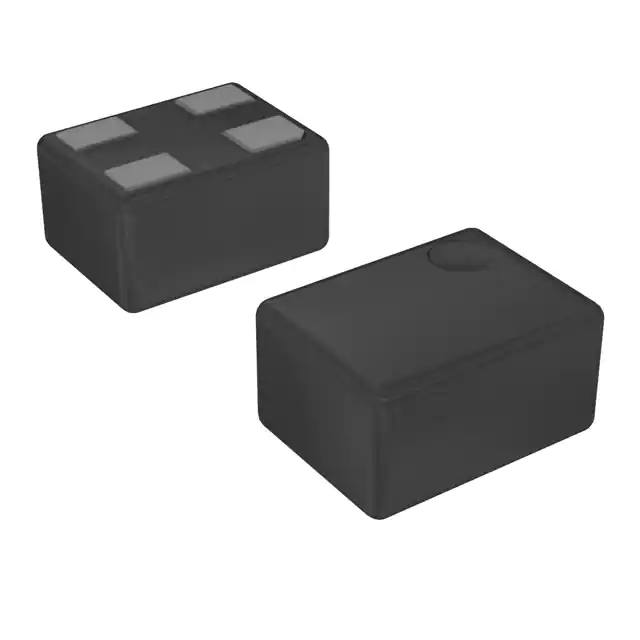
- Part No.:
- DSC6001HE1A-018.4320
- Manufacturer:
- Microchip Technology
- Category:
- Oscillators
- Package:
- 4-VFLGA
- Datasheet:
-
 DSC6001HE1A-018.4320.pdf
- Description:
- MEMS OSC XO 18.4320MHZ CMOS SMD
- Quantity:
- Payment:

- Shipping:

Inventory:885
Please send an inquiry. Send us your inquiry, and we will respond immediately.
Product details
Overview
DSC6001HE1A-018.4320 from Microchip Technology is an ultra-low-power, single-output MEMS oscillator with 18.432 MHz output frequency, ±50 ppm frequency stability over –20°C to +70°C, 1.6 mm × 1.2 mm VFLGA package, and active/standby current of 1.3 mA / 12 µA - designed as a drop-in replacement for quartz oscillators in space-constrained, battery-powered IoT and consumer devices.
For engineers reviewing the DSC6001HE1A-018.4320 datasheet, DSC6001HE1A-018.4320 pinout, DSC6001HE1A-018.4320 application, or DSC6001HE1A-018.4320 equivalent, this page delivers verified electrical specs, validated pin functions, confirmed MEMS architecture, real-world timing performance (32 psRMS period jitter), and direct-fit alternatives for industrial and extended-commercial designs.
Technical Context
The DSC6001HE1A-018.4320 implements a MEMS resonator with integrated temperature sensor, digital control & compensation, PLL-based VCO, and CMOS output driver - delivering stable 18.432 MHz clocking without external load capacitors. Its architecture eliminates crystal aging and mechanical shock sensitivity while maintaining full compatibility with standard 4-pin oscillator footprints.
Pin 1 is configured as Output Enable (OE) with internal 300 kΩ pull-up resistor; Pin 3 provides rail-to-rail CMOS output; supply regulation supports 1.71–3.63 V operation; and startup time is guaranteed ≤1.3 ms from 90% VDD. The device meets AEC-Q100 stress requirements and MIL-STD-883 vibration immunity standards.
Key Specifications
| Parameter | Value and Actual Design Meaning |
|---|---|
| Output Frequency | 18.432 MHz - precise UART/USB audio reference frequency, factory-trimmed and non-adjustable. |
| Frequency Stability | ±50 ppm - covers initial tolerance, temperature drift (–20°C to +70°C), and supply voltage variation. |
| Supply Current | 1.3 mA active / 12 µA standby at 1.8 V - enables multi-year battery life in wearables and sensors. |
| Startup Time | ≤1.3 ms - time from 90% VDD to valid clock edge, critical for fast-wake microcontroller systems. |
| Period Jitter (RMS) | 32 ps RMS at 27 MHz (typical); extrapolated <40 ps RMS at 18.432 MHz - sufficient for USB 2.0 and Bluetooth PHY timing. |
| Output Drive | Standard drive (DSC60x1): >3 mA sink/source at 20%/80% VDD - drives 10 pF load with <2 ns rise/fall times. |
| Package | 4-lead VFLGA, 1.6 mm × 1.2 mm × 0.425 mm - industry's smallest MEMS oscillator footprint, compatible with 0402 reflow profiles. |
Pinout & Package
4-lead Very Thin Fine Pitch Land Grid Array (VFLGA) package, 1.6 mm × 1.2 mm body, 0.425 mm height, 0.75 mm pitch, land pattern per Microchip Drawing C04-3199A.
| Pin/Terminal | Circuit Role | Design Meaning |
|---|---|---|
| 1 (OE) | Output Enable input | Active-high logic control; internal 300 kΩ pull-up ensures enabled state on power-up; high-impedance output when low. |
| 2 (GND) | Power ground | Reference return path for supply and output; requires low-inductance connection to PCB ground plane. |
| 3 (OUT) | CMOS clock output | Full-swing rail-to-rail square wave; 45–55% duty cycle; drives 10 pF load with <2 ns edges at 1.8 V. |
| 4 (VDD) | Power supply input | 1.71–3.63 V operation; requires 0.1 µF ceramic bypass capacitor placed adjacent to pin per datasheet layout guidance. |
Key Features
| Feature | Design Value |
|---|---|
| MEMS resonator core | Eliminates quartz crystal aging, shock sensitivity, and cold-start delay - 20× higher MTF than quartz oscillators. |
| Ultra-low standby current | 12 µA at 1.8 V enables always-on timing in energy-harvesting and coin-cell applications without compromising wake latency. |
| Drop-in quartz replacement | Pin-compatible with standard 4-pin CMOS oscillators in 1.6×1.2 mm footprint - no PCB redesign required. |
| AEC-Q100 qualified | Validated for automotive under-hood environments including thermal cycling, vibration, and ESD (4 kV HBM). |
| Single-supply operation | 1.71–3.63 V range supports direct interface with 1.8 V, 2.5 V, and 3.3 V logic domains without level shifters. |
Applications
| IoT Sensor Node Timing | Smart Home Hub Clock Reference |
|---|---|
|
Use Scenario: Battery-powered environmental sensor transmitting data via BLE every 5 minutes. IC Role / Device Role / Timing Role: Primary system clock source for MCU and radio transceiver, enabling synchronized sleep/wake cycles. Use Value: 12 µA standby current extends 200 mAh coin-cell life beyond 5 years; 1.3 ms startup ensures sub-10 ms wake-to-transmit latency. |
Use Scenario: Central hub aggregating Zigbee, Thread, and Matter device traffic in residential automation. IC Role / Device Role / Timing Role: Master clock generator for USB audio interface, Ethernet PHY, and multi-protocol SoC subsystems. Use Value: ±50 ppm stability maintains USB 2.0 frame timing integrity across ambient temperature swings; 18.432 MHz matches standard audio sampling rate dividers. |
| Wearable Fitness Tracker | Rear-View Camera Module |
|
Use Scenario: Wrist-worn device with optical heart-rate sensor, accelerometer, and BLE radio operating on rechargeable Li-ion. IC Role / Device Role / Timing Role: Low-noise clock source for ADC sampling and digital signal processing engine. Use Value: 32 psRMS period jitter minimizes sampling uncertainty in bio-signal acquisition; 1.6×1.2 mm size saves board area for compact flex PCB layouts. |
Use Scenario: Automotive rear-view camera module mounted in license plate bracket exposed to thermal cycling and road vibration. IC Role / Device Role / Timing Role: Timing reference for image sensor interface (MIPI CSI-2) and video encoder ASIC. Use Value: AEC-Q100 qualification and MIL-STD-883 vibration immunity ensure reliable operation at 85°C ambient; MEMS robustness prevents timing drift during pothole-induced shock events. |
Equivalent & Alternatives
The following parts are listed as comparable options for similar MEMS oscillator applications.
| Alternative Part | Technical Difference | Application Difference | Selection Advice |
|---|---|---|---|
| DSC6001HI1A-018.4320 | Same package, drive strength, and frequency; ±25 ppm stability instead of ±50 ppm. | Required for industrial-temp (–40°C to +85°C) designs needing tighter frequency tolerance. | Select when design mandates <±25 ppm drift over full industrial range - adds ~$0.08/unit cost. |
| SiT1533AI-H4-33E-18.432000 | 1.5×1.2 mm LGA, 1.8 V only, ±50 ppm, 1.5 mA active current - slightly larger footprint, narrower VDD range. | Suitable where SiTime's broader automotive qualification (AEC-Q200 Grade 2) is prioritized over Microchip's AEC-Q100. | Choose if existing layout accommodates 1.5×1.2 mm pad stack and 1.8 V rail is dedicated; verify 1.5 mA vs. 1.3 mA impact on battery runtime. |
Compared with DSC6001HE1A-018.4320, the DSC6001HI1A-018.4320 offers superior temperature stability at industrial grade, while the SiT1533AI-H4-33E-18.432000 provides alternate MEMS vendor qualification - both require no PCB changes but differ in supply range, thermal spec, and cost-per-unit trade-offs.
Availability
DSC6001HE1A-018.4320 is available at Aetrix Electronics and suitable for IoT sensor nodes, smart home hubs, and wearable fitness trackers requiring stable component supply with short lead times and long-term lifecycle support.
Supply support for DSC6001HE1A-018.4320 includes scheduled delivery planning, volume procurement assistance, BOM continuity management, traceable sourcing, and lifecycle availability coordination for OEM customers, industrial embedded developers, connected-device designers, and electronics production programs.
Manufacturer
Microchip Technology is a U.S.-based semiconductor company specializing in microcontrollers, analog devices, and timing solutions, with ISO/TS-16949 certified manufacturing and global technical support infrastructure.
The DSC60xx family was engineered to replace quartz oscillators in ultra-low-power, miniaturized electronics - targeting battery-operated IoT endpoints, automotive vision systems, and consumer wearables where reliability, size, and power efficiency are non-negotiable.
FAQ
What is the operating temperature range for DSC6001HE1A-018.4320?
DSC6001HE1A-018.4320 is rated for extended commercial temperature range: –20°C to +70°C. This specification is explicitly defined in the product identification system ('E' suffix) and confirmed in Table 1-1 of DS20005625C. Operation outside this range may result in frequency deviation exceeding ±50 ppm or increased startup time.
Does DSC6001HE1A-018.4320 require external load capacitors?
No, DSC6001HE1A-018.4320 does not require external load capacitors. As a fully integrated MEMS oscillator, all timing elements - including resonator, compensation circuitry, and output driver - are contained within the 1.6 mm × 1.2 mm VFLGA package. Only a 0.1 µF ceramic bypass capacitor on VDD (Pin 4) is required per datasheet layout guidelines.
Is DSC6001HE1A-018.4320 pin-compatible with quartz crystal oscillators?
Yes, DSC6001HE1A-018.4320 uses a standard 4-pin CMOS oscillator footprint and is explicitly documented as a "drop-in replacement" for quartz devices in 1.6 mm × 1.2 mm VFLGA. Pin mapping (OE/GND/OUT/VDD) matches industry-standard oscillator pinouts, enabling direct substitution without PCB modification.
What is the function of Pin 1 on DSC6001HE1A-018.4320?
Pin 1 on DSC6001HE1A-018.4320 is configured as Output Enable (OE) with an internal 300 kΩ pull-up resistor. When held high (or left floating), the device outputs the 18.432 MHz clock on Pin 3; when driven low, the output enters high-impedance state and supply current drops to 12 µA standby level.
Can DSC6001HE1A-018.4320 be used in automotive under-hood applications?
DSC6001HE1A-018.4320 meets AEC-Q100 stress test requirements and exhibits excellent shock/vibration immunity per MIL-STD-883, but its extended commercial temperature range (–20°C to +70°C) limits use to cabin-located modules like infotainment or rear-view cameras. For under-hood placement, the industrial-grade DSC6001HI1A-018.4320 (–40°C to +85°C) is required.
DSC6001HE1A-018.4320 Specifications
- Product attributes
- Attribute value
- Manufacturer:
- Microchip Technology
- Series:
- DSC60XX
- Package/Case:
- 4-VFLGA
- Packaging:
- Bag
- Product Status:
- Obsolete
- Base Resonator:
- MEMS
- Type:
- XO (Standard)
- Frequency:
- 18.432 MHz
- Function:
- Standby (Power Down)
- Output:
- CMOS
- Voltage - Supply:
- 1.71V ~ 3.63V
- Frequency Stability:
- ±50ppm
- Absolute Pull Range (APR):
- ±50ppm
- Operating Temperature:
- -20°C ~ 70°C
- Spread Spectrum Bandwidth:
- -
- Current - Supply (Max):
- 1.3mA (Typ)
- Ratings:
- AEC-Q100
- Mounting Type:
- Surface Mount
- Supplier Device Package:
- 4-VFLGA (1.6x1.2)
- Size / Dimension:
- 0.063" L x 0.047" W (1.60mm x 1.20mm)
- Height - Seated (Max):
- 0.035" (0.89mm)
DSC6001HE1A-018.4320 FAQ
1.How can I place an order for DSC6001HE1A-018.4320 through Aetrix?
Please submit a Request for Quotation (RFQ) for DSC6001HE1A-018.4320 on Aetrix. Our sales agent will provide a competitive quotation and guide you through the order confirmation once you accept the terms.
2.Are the price and stock information for DSC6001HE1A-018.4320 reliable?
The price and inventory of DSC6001HE1A-018.4320 are updated periodically and may fluctuate due to market conditions. Stock and pricing data are typically refreshed every 24 hours. Quotation validity for DSC6001HE1A-018.4320 is usually 5 days.
3.What payment methods are accepted for DSC6001HE1A-018.4320?
We accept Wire Transfer, PayPal, Credit Card, Western Union, MoneyGram, and Escrow for DSC6001HE1A-018.4320 transactions.
Note: Certain payment methods may incur a processing fee.
4.How is shipping managed for DSC6001HE1A-018.4320?
DSC6001HE1A-018.4320 orders can be shipped via leading logistics carriers, including DHL, UPS, FedEx, TNT, or Registered Mail.
Once your DSC6001HE1A-018.4320 order is processed, you will receive an email with the shipment details and tracking number.
Note: Tracking information may take up to 24 hours to appear. Express delivery typically takes 3–5 business days.
5.How can I obtain technical support or documentation for DSC6001HE1A-018.4320?
For technical support, including DSC6001HE1A-018.4320 datasheets, pinout diagrams, or application guidance, please contact our engineering support team. They can provide detailed documentation and assistance for your DSC6001HE1A-018.4320 requirements.
6.How does Aetrix verify that DSC6001HE1A-018.4320 is sourced from the original manufacturer or authorized distributors?
All DSC6001HE1A-018.4320 products on Aetrix are procured from qualified distributors and authorized channels. Our dedicated quality assurance team conducts strict verification, including traceability checks and, if necessary, third-party testing. This ensures that DSC6001HE1A-018.4320 meets industry standards.
7.What is the process for return or replacement of DSC6001HE1A-018.4320?
All DSC6001HE1A-018.4320 units undergo pre-shipment inspection (PSI). If there is an issue with DSC6001HE1A-018.4320, returns or replacements are accepted under the following conditions:
1.Quantity discrepancies, incorrect items, or visible external defects (such as breakage or corrosion), acknowledged by Aetrix.
2.The issue is reported within 90 days of delivery.
3.The DSC6001HE1A-018.4320 part is unused and in its original packaging.
Return procedure for DSC6001HE1A-018.4320:
1.Submit a request within 90 days.
2.Obtain a Return Material Authorization (RMA) from Aetrix.
DSC6001HE1A-018.4320 Tags
-
ECS-2333-160-BN-TR
ECS Inc.
-
ECS-2333-240-BN-TR
ECS Inc.
-
KC2016Z25.0000C1KX00
KYOCERA AVX
-0.035-Thick.jpg)
-
ECS-2033-250-BN
ECS Inc.
-
O 25,0-JO32-B-1V3-1-T1-LF
Jauch Quartz
-
SIT1533AI-H4-DCC-32.768E
SiTime
-
ECS-2333-500-BN-TR
ECS Inc.
-
COM1305-50.000-EXT-T-TR
Raltron Electronics
-
SG-210STF 24.0000ML0
EPSON
-
ECS-3225MV-320-CN-TR
ECS Inc.
-
ECS-2033-240-BN
ECS Inc.
-
ECS-2333-120-BN-TR
ECS Inc.
Tech Hub

TTL and CMOS logic families differ in thresholds, loading, output drive, power and timing. This engineering guide compares 74HC and 74HCT, calculates noise margins and checks 3.3 V/5 V compatibility.

A practical engineering guide to 3.3V and 5V logic compatibility, input thresholds, resistor dividers, translator ICs, MOSFET level shifting, I2C pull-ups, timing limits and power-sequencing risks.

The 74HC595 uses push-pull logic outputs, while the TPIC6B595 uses 50 V open-drain DMOS sinks for higher-power loads. This guide compares timing, current limits, 3.3 V interfacing, load wiring, thermal…

The 74HC595 converts serial data into eight stable parallel outputs. This guide covers pin functions, shift and storage timing, OE and MR behavior, drive-current limits, cascading, voltage compatibilit…

A technical comparison of level-sensitive latches and edge-triggered flip-flops, covering timing windows, setup and hold limits, master–slave operation, time borrowing, race-through, HDL inference and…

A D latch stores one bit while Enable controls when data can pass. This reference covers gate-level operation, truth tables, transparency, setup and hold timing, LE versus OE, common ICs and practical …

An SR latch stores one bit through cross-coupled feedback. This engineering reference covers NOR and NAND implementations, truth tables, forbidden-state recovery, gated operation, switch debouncing, fa…

Latch circuits retain one bit through feedback. This technical reference covers SR and D latches, truth tables, transparency, timing limits, latch-versus-flip-flop behavior, applications and common log…

An engineering guide to LED driver operation, constant-current and constant-voltage outputs, linear and switching topologies, dimming, IC selection, calculations, replacement compatibility, and fault c…

Operational amplifier guide covering op amp basics, feedback, ideal vs real op amps, common configurations, buffer circuits, offset, bias current, gain-bandwidth, slew rate, rail-to-rail limits and sel…


