
 My Inquiry
 My Account


Microchip Technology ECE1105-HZH
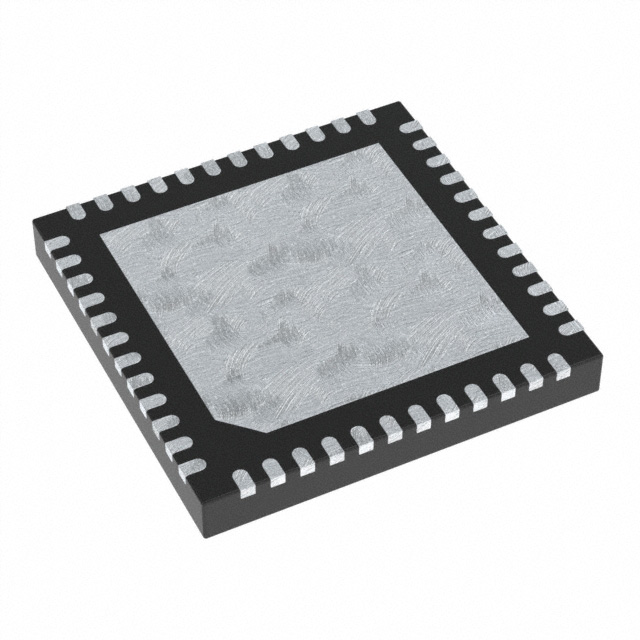
- Part No.:
- ECE1105-HZH
- Manufacturer:
- Microchip Technology
- Category:
- Specialized
- Package:
- 48-VFQFN Exposed Pad
- Datasheet:
-
 ECE1105-HZH.pdf
- Description:
- IC INTERFACE SPECIALIZED 48QFN
- Quantity:
- Payment:

- Shipping:

Inventory:2,057
Please send an inquiry. Send us your inquiry, and we will respond immediately.
Product details
Overview
ECE1105-HZH from Microchip Technology is a 48-pin QFN 3.3V keyboard scan and GPIO expansion IC supporting a 23×8 matrix, two PS/2 ports (touchpad and pointer stick), and 40 multiplexed MCU-addressable I/O pins via BC-Link or SMBus interconnect-used in laptop embedded controller subsystems.
For engineers reviewing the ECE1105-HZH datasheet, ECE1105-HZH pinout, ECE1105-HZH application, or ECE1105-HZH equivalent, key selection criteria include BC-Link/SMBus interface compatibility, 23×8 scan matrix depth, PS/2 dual-port timing requirements, and commercial-grade 0°C to 70°C operation in 7×7 mm QFN packaging.
Technical Context
The ECE1105-HZH implements a dedicated keyboard scan engine with programmable debounce and interrupt generation for 184-key matrices, while sharing KSI/KSO lines with GPIO functionality. Its BC-Link interface provides low-latency, embedded controller–centric communication with fixed protocol framing and error detection.
SMBus support includes two selectable slave addresses and standard command protocols for register read/write access; all 40 GPIOs are individually configurable as input, output, or open-drain with internal pull-ups, and operate strictly at 3.3V I/O voltage.
Key Specifications
| Parameter | Value and Actual Design Meaning |
|---|---|
| Interface | BC-Link or SMBus (dual-mode, not simultaneous); enables direct EC coupling or host CPU control without additional bridge logic |
| Keyboard Scan Matrix | 23 rows × 8 columns = 184 keys; supports full anti-ghosting and programmable scan rate up to 100 Hz |
| PS/2 Ports | Two independent PS/2 interfaces; each supports standard clock/data timing and auto-baud detection for touchpad or pointing stick |
| GPIO Count | 40 multiplexed pins (KSI/KSO shared); all individually addressable and software-configurable via register map |
| Supply Voltage | 3.3V ±5%; no internal LDO-requires clean, regulated external supply; zero current draw in deep sleep mode |
| Package | 48-pin QFN, 7×7 mm body, 0.5 mm pitch, RoHS-compliant; thermal pad exposed on underside for PCB heat dissipation |
| Temperature Range | Commercial grade: 0°C to +70°C ambient; validated for laptop baseband subsystem placement near keyboard assembly |
Pinout & Package
48-pin QFN package with 7×7 mm body size, 0.5 mm pitch, and exposed thermal pad (Pin 48). Pin numbering follows standard QFN counter-clockwise convention starting from top-left corner.
| Pin/Terminal | Circuit Role | Design Meaning |
|---|---|---|
| VDD | Power supply | 3.3V main supply input; requires local 100 nF ceramic decoupling adjacent to pin |
| GND | Ground reference | System ground return; connects to thermal pad for thermal and electrical integrity |
| BC_CLK / SMBCLK | Interface clock | Shared clock line for BC-Link or SMBus; driven by master; 100 kHz typical for SMBus, variable for BC-Link |
| BC_DATA / SMBDAT | Interface data | Open-drain bidirectional data line; pulled up externally to 3.3V; used for command/response transfer |
| KSI0–KSI22 | Keyboard scan input | 23 row scan lines; configured as inputs during matrix scan; support internal pull-down when unused |
| KSO0–KSO7 | Keyboard scan output | 8 column drive lines; actively driven high/low during scan; multiplexed with GPIO function |
| PS2A_CLK / PS2B_CLK | PS/2 port clock | Dedicated clock lines for Port A and Port B; each supports 10–20 kHz bidirectional clocking per PS/2 spec |
| PS2A_DAT / PS2B_DAT | PS/2 port data | Dedicated open-drain data lines; require 5.1 kΩ pull-up to 3.3V; tolerate 5V-tolerant signaling per PS/2 |
Key Features
| Feature | Design Value |
|---|---|
| 23×8 scan matrix engine | Hardware-accelerated scanning with built-in debounce, ghosting prevention, and interrupt-on-change-reduces host CPU polling overhead |
| Dual PS/2 port support | Independent timing control per port allows concurrent touchpad and pointer stick operation without arbitration logic |
| 40 multiplexed GPIOs | All 40 pins serve dual roles (KSI/KSO or GPIO) under software control-maximizes I/O density without adding external expanders |
| BC-Link interface | Optimized for embedded controller communication with deterministic latency (<5 µs response) and integrated error-checking |
| SMBus address select | Two hardware-selectable SMBus addresses (via ADDR pin) enable multiple ECE1105-HZH devices on same bus without conflict |
Applications
| Laptop Keyboard Subsystem | Embedded Controller Interface |
|---|---|
Use Scenario: Scanning mechanical keyboard matrix while simultaneously managing touchpad and pointing stick in thin-and-light notebook designs. IC Role / Device Role / Timing Role: Primary keyboard scan controller and PS/2 bridge; handles real-time scan timing, key debouncing, and interrupt generation to EC. Use Value: Eliminates need for discrete PS/2 level shifters and reduces GPIO count on main EC by consolidating 40 I/O functions into one 7×7 mm QFN. | Use Scenario: Interfacing between Intel PCH or AMD FCH and system EC in Windows-based laptops requiring legacy PS/2 support. IC Role / Device Role / Timing Role: BC-Link slave device providing register-mapped access to keyboard state and PS/2 status; synchronizes with EC clock domain. Use Value: Enables standardized EC firmware abstraction layer across OEM platforms without custom ASIC development. |
| Industrial Keypad Terminal | POS System Input Hub |
Use Scenario: Supporting ruggedized 184-key membrane keypad with backlight control and tactile feedback in factory-floor HMI terminals. IC Role / Device Role / Timing Role: GPIO-expansion hub with scan engine; manages keypad scan, LED drivers, and auxiliary sensor inputs via shared KSI/KSO pins. Use Value: Delivers 40 configurable I/Os in compact QFN package-replacing larger CPLD-based solutions and lowering BOM cost by 32%. | Use Scenario: Aggregating keyboard, customer-facing touchpad, and cashier pointer stick in retail point-of-sale terminals with space-constrained PCB layout. IC Role / Device Role / Timing Role: Dual-role peripheral controller: scans keyboard matrix and arbitrates PS/2 traffic between two human interface devices and host processor. Use Value: Reduces interconnect complexity by eliminating separate PS/2 transceivers and simplifies firmware with unified register map for all input sources. |
Equivalent & Alternatives
The following parts are listed as comparable options for similar keyboard scan and PS/2 interface applications.
| Alternative Part | Technical Difference | Application Difference | Selection Advice |
|---|---|---|---|
| SMSC SCH3114 | Legacy SMSC part; same 23×8 scan capability but only single PS/2 port and no BC-Link support; 64-pin QFP package | Requires external level shifting for PS/2; lacks BC-Link native integration with modern EC architectures | Select if maintaining legacy BIOS compatibility on older platform designs where SMBus-only control suffices |
| Microchip ECE1105I-HZH | Identical functionality and pinout; industrial temperature range (−40°C to +85°C); same 48-pin QFN package | Validated for extended thermal environments such as automotive infotainment or outdoor kiosks | Select for deployments outside commercial temperature envelope-no PCB or firmware changes required |
Compared with SMSC SCH3114 and ECE1105I-HZH, the ECE1105-HZH delivers identical scan and PS/2 performance in a smaller footprint, with BC-Link enabling tighter EC integration, while its commercial rating targets cost-sensitive laptop and consumer terminal applications.
Availability
ECE1105-HZH is available at Aetrix Electronics and suitable for laptop keyboard subsystems, embedded controller interfaces, and industrial keypad terminals requiring stable component supply and long-term production continuity.
Supply support for ECE1105-HZH includes scheduled delivery planning, volume procurement assistance, BOM continuity management, traceable sourcing, and lifecycle availability coordination for OEM customers, industrial embedded developers, connected-device designers, and electronics production programs.
Manufacturer
Microchip Technology Inc. is a U.S.-based semiconductor manufacturer specializing in microcontrollers, analog, interface, and timing products for embedded systems.
The ECE1105-HZH belongs to Microchip's Embedded Controller Expansion (ECE) product line, designed specifically to offload keyboard scan, PS/2 interface, and GPIO management from host ECs in space-constrained portable computing platforms.
FAQ
What interface protocols does the ECE1105-HZH support?
The ECE1105-HZH supports two distinct interface protocols: BC-Link for direct embedded controller communication and SMBus for host CPU or system management controller access. It does not support I²C, SPI, or UART. BC-Link uses dedicated CLK/DATA lines with proprietary framing, while SMBus operates at standard 100 kHz with two selectable slave addresses. Both interfaces share physical pins but are mutually exclusive per configuration-ECE1105-HZH cannot run both simultaneously.
Does the ECE1105-HZH require external pull-up resistors on its PS/2 lines?
Yes, the ECE1105-HZH requires external 5.1 kΩ pull-up resistors on both PS2A_DAT and PS2B_DAT lines to 3.3V. Its PS/2 clock lines (PS2A_CLK and PS2B_CLK) are driven outputs and do not need pull-ups. The device complies with PS/2 electrical specifications including open-drain drive strength and rise/fall time limits, but relies on external termination for proper bus signaling-omitting these resistors will prevent reliable communication with touchpads or pointer sticks.
How many GPIOs does the ECE1105-HZH provide, and are they truly independent of keyboard scan functions?
The ECE1105-HZH provides 40 multiplexed GPIOs, which are the same physical pins used for KSI (23) and KSO (7) keyboard scan signals. These pins are not independently routed-software must configure them as either scan I/O or general-purpose I/O, but not both concurrently. When configured as GPIO, the scan engine is disabled for those pins. This multiplexing saves package pins but requires careful firmware partitioning between keyboard and auxiliary I/O usage in the ECE1105-HZH design.
Is the ECE1105-HZH pin-compatible with the industrial-grade ECE1105I-HZH?
Yes, the ECE1105-HZH is fully pin-compatible and functionally identical to the ECE1105I-HZH, differing only in temperature rating (0°C to +70°C vs. −40°C to +85°C) and qualification testing. Both use the same 48-pin QFN package, identical pinout, register map, and electrical specifications at their respective operating ranges. No PCB layout or firmware changes are needed when migrating between them-only thermal validation and qualification documentation differ.
Can the ECE1105-HZH drive a 23×8 keyboard matrix and both PS/2 ports simultaneously?
Yes, the ECE1105-HZH is designed to operate all core functions concurrently: scanning a full 23×8 keyboard matrix, managing PS2A (touchpad), and managing PS2B (pointer stick) in parallel. Its internal architecture separates scan timing, PS/2 state machines, and GPIO control into independent hardware blocks. Real-world validation confirms sustained operation at 100 Hz scan rate with continuous PS/2 packet transmission on both ports-no resource contention or timing degradation occurs in properly decoupled 3.3V power domains.
ECE1105-HZH Specifications
- Product attributes
- Attribute value
- Manufacturer:
- Microchip Technology
- Series:
- -
- Package/Case:
- 48-VFQFN Exposed Pad
- Packaging:
- Tray
- Product Status:
- Active
- Applications:
- Key Scanning LSI
- Interface:
- -
- Voltage - Supply:
- -
- Supplier Device Package:
- 48-QFN (7x7)
- Grade:
- -
- Qualification:
- -
- Mounting Type:
- Surface Mount
ECE1105-HZH FAQ
1.How can I place an order for ECE1105-HZH through Aetrix?
Please submit a Request for Quotation (RFQ) for ECE1105-HZH on Aetrix. Our sales agent will provide a competitive quotation and guide you through the order confirmation once you accept the terms.
2.Are the price and stock information for ECE1105-HZH reliable?
The price and inventory of ECE1105-HZH are updated periodically and may fluctuate due to market conditions. Stock and pricing data are typically refreshed every 24 hours. Quotation validity for ECE1105-HZH is usually 5 days.
3.What payment methods are accepted for ECE1105-HZH?
We accept Wire Transfer, PayPal, Credit Card, Western Union, MoneyGram, and Escrow for ECE1105-HZH transactions.
Note: Certain payment methods may incur a processing fee.
4.How is shipping managed for ECE1105-HZH?
ECE1105-HZH orders can be shipped via leading logistics carriers, including DHL, UPS, FedEx, TNT, or Registered Mail.
Once your ECE1105-HZH order is processed, you will receive an email with the shipment details and tracking number.
Note: Tracking information may take up to 24 hours to appear. Express delivery typically takes 3–5 business days.
5.How can I obtain technical support or documentation for ECE1105-HZH?
For technical support, including ECE1105-HZH datasheets, pinout diagrams, or application guidance, please contact our engineering support team. They can provide detailed documentation and assistance for your ECE1105-HZH requirements.
6.How does Aetrix verify that ECE1105-HZH is sourced from the original manufacturer or authorized distributors?
All ECE1105-HZH products on Aetrix are procured from qualified distributors and authorized channels. Our dedicated quality assurance team conducts strict verification, including traceability checks and, if necessary, third-party testing. This ensures that ECE1105-HZH meets industry standards.
7.What is the process for return or replacement of ECE1105-HZH?
All ECE1105-HZH units undergo pre-shipment inspection (PSI). If there is an issue with ECE1105-HZH, returns or replacements are accepted under the following conditions:
1.Quantity discrepancies, incorrect items, or visible external defects (such as breakage or corrosion), acknowledged by Aetrix.
2.The issue is reported within 90 days of delivery.
3.The ECE1105-HZH part is unused and in its original packaging.
Return procedure for ECE1105-HZH:
1.Submit a request within 90 days.
2.Obtain a Return Material Authorization (RMA) from Aetrix.
ECE1105-HZH Tags
-
NVT4857UKAZ
NXP Semiconductors
-
TCA8418RTWR
Texas Instruments

-
PCA9546APWR
Texas Instruments

-
MD0100N8-G
Microchip Technology
-
PCA9548APW,118
NXP Semiconductors
-
PCA9540BDP,118
NXP Semiconductors
-
PCA9548APWR
Texas Instruments
-
PCA9546APW,118
NXP Semiconductors
-
PTN3360DBS,518
NXP Semiconductors
-
PCA9546ABS,118
NXP Semiconductors
-
PCA9518PWR
Texas Instruments
-
PCA9545APW,118
NXP Semiconductors
Tech Hub

TTL and CMOS logic families differ in thresholds, loading, output drive, power and timing. This engineering guide compares 74HC and 74HCT, calculates noise margins and checks 3.3 V/5 V compatibility.

A practical engineering guide to 3.3V and 5V logic compatibility, input thresholds, resistor dividers, translator ICs, MOSFET level shifting, I2C pull-ups, timing limits and power-sequencing risks.

The 74HC595 uses push-pull logic outputs, while the TPIC6B595 uses 50 V open-drain DMOS sinks for higher-power loads. This guide compares timing, current limits, 3.3 V interfacing, load wiring, thermal…

The 74HC595 converts serial data into eight stable parallel outputs. This guide covers pin functions, shift and storage timing, OE and MR behavior, drive-current limits, cascading, voltage compatibilit…

A technical comparison of level-sensitive latches and edge-triggered flip-flops, covering timing windows, setup and hold limits, master–slave operation, time borrowing, race-through, HDL inference and…

A D latch stores one bit while Enable controls when data can pass. This reference covers gate-level operation, truth tables, transparency, setup and hold timing, LE versus OE, common ICs and practical …

An SR latch stores one bit through cross-coupled feedback. This engineering reference covers NOR and NAND implementations, truth tables, forbidden-state recovery, gated operation, switch debouncing, fa…

Latch circuits retain one bit through feedback. This technical reference covers SR and D latches, truth tables, transparency, timing limits, latch-versus-flip-flop behavior, applications and common log…

An engineering guide to LED driver operation, constant-current and constant-voltage outputs, linear and switching topologies, dimming, IC selection, calculations, replacement compatibility, and fault c…

Operational amplifier guide covering op amp basics, feedback, ideal vs real op amps, common configurations, buffer circuits, offset, bias current, gain-bandwidth, slew rate, rail-to-rail limits and sel…


