Send an Inquiry

To receive a quote for your project, please fill in the following information, and we’ll get back to you promptly.

Name*
Company*
Email Address*
Phone/WhatsApp
Part Number*
Quantity*
Message
Submit Inventory List

Please fill in the following information, and we’ll get back to you promptly.

Name*
Company*
Email Address*
Phone/WhatsApp
Upload My List
Message

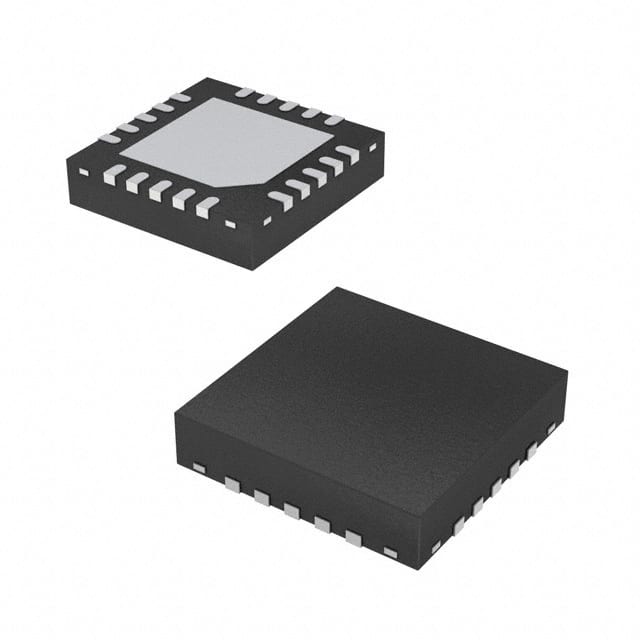
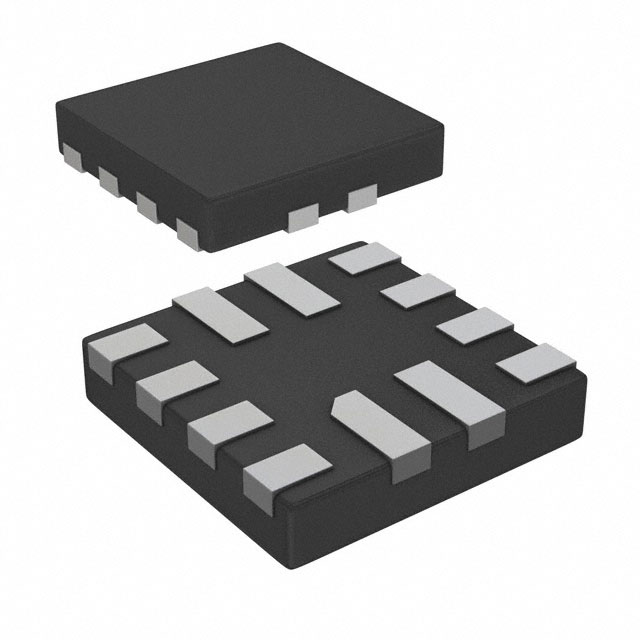
Silicon Labs EFP0104GM20-D

Part No.:
EFP0104GM20-D
Manufacturer:
Silicon Labs
Category:
Power Management - Specialized
Package:
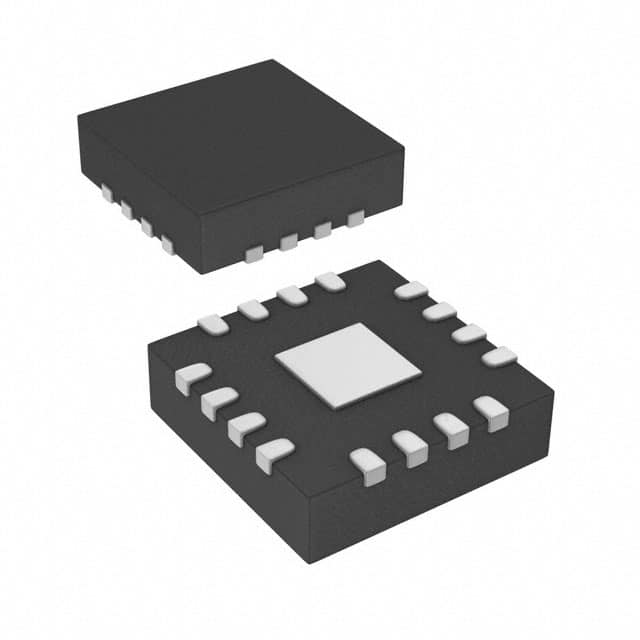
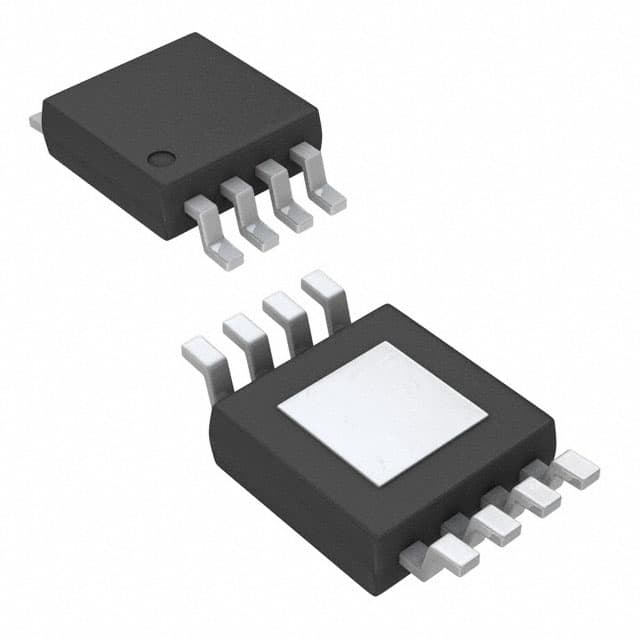
20-VFQFN Exposed Pad
Datasheet:
AetrixEFP0104GM20-D.pdf
Description:
EFP0104 WIRED BUCK PMIC
Quantity:
Payment:
Payment
Shipping:
Shipping

Inventory:1,046

Please send an inquiry. Send us your inquiry, and we will respond immediately.

Part Number
Quantity*
Price
Name*
Company
Email*
Comments

Product details

Overview

EFP0104GM20-D from Silicon Labs is a highly integrated, ultra-low-power Energy Friendly Power Management IC (PMIC) designed for battery-powered EFM32/EFR32 microcontroller systems. It delivers four regulated outputs - one buck/boost DC-DC (VOA), one buck-only DC-DC with parallel LDO (VOB), one standalone LDO (VOC), and one firmware-controlled switched output (VOA_SW) - with input voltage support from 1.8 V to 5.5 V, EM2 quiescent current of 300 nA (single output enabled), and up to 94% peak efficiency.

For engineers reviewing the EFP0104GM20-D datasheet, EFP0104GM20-D pinout, EFP0104GM20-D application, or EFP0104GM20-D equivalent, this page provides verified technical context, validated pin functions, confirmed battery-type compatibility (including dual alkaline/LiFeS₂ and NiMH), exact OPN-specific configuration (Wired Buck with LDO C, VOB disabled at startup), and real-world design implications for IoT sensor nodes and low-energy metering systems.

Technical Context

The EFP0104GM20-D implements a Wired Buck with LDO C configuration: DCDC A operates in fixed wired-buck mode (BB_CTRL3.BB_MODE = 5), while VOB is disabled at startup and programmable only within 0.8 V–1.26 V range. Its VOC LDO is paired with VOA and not independently configurable.

It supports lossless Coulomb counting on VDDB, full I²C configurability including Direct Mode for fast energy-mode transitions, IRQ signaling, and safety features including UVLO (1.2 V threshold), short-circuit tolerant outputs, and over-temperature monitoring - all operating across –40 °C to +100 °C junction temperature.

Key Specifications

Parameter Value and Actual Design Meaning
Input Voltage Range 1.8 V to 5.5 V - supports dual alkaline, LiFeS₂, NiMH/NiCd, and USB-supplied systems without external pre-regulation.
VOA Output Voltage 1.7 V to 5.2 V - programmable via VOA_V register (1.7374 V + VOA_V × 0.0306 V); fixed at 1.860 V at startup.
VOB Output Range 0.8 V to 1.26 V - only available in this narrow range for EFP0104GM20-D; disabled at power-on.
EM2 Quiescent Current 300 nA (single output enabled) - enables multi-year battery life in always-on sensor endpoints with periodic wake-up.
Peak Efficiency Up to 94% - achieved in buck/boost or buck-only operation, critical for extending runtime in compact battery cells.
Package QFN20 3×3 mm - surface-mount footprint with exposed thermal pad; top mark P04G confirms EFP0104 variant.
Coulomb Counter Lossless (no sense resistor) on VDDB - enables precise battery fuel gauging for primary and rechargeable chemistries.

Pinout & Package

Package: QFN20 (3 mm × 3 mm, 0.5 mm pitch), thermally enhanced with exposed pad. Pin 1 marked by dot; pin numbering follows standard counter-clockwise convention starting from top-left corner.

Pin/Terminal Circuit Role Design Meaning
VDDA Analog supply input Supplies internal ADC, temp sensor, and reference; must be decoupled near pin; accepts 1.8–5.5 V.
VDDB Main power input Primary input for DCDC A/B and LDOs; monitored for Coulomb counting and UVLO; supports 1.8–5.5 V.
VOA Main regulated output Buck/boost DC-DC output (1.7–5.2 V); powers MCU core/radio; paired with VOC LDO for improved light-load regulation.
VOA_SW Firmware-controlled switch Open-drain output enabling complete shutdown of external high-leakage circuitry during EM2/EM4 sleep modes.
VOB Secondary regulated output Buck-only DC-DC + LDO output (0.8–1.26 V); disabled at startup; used for low-voltage peripherals or RF bias rails.
VOC Linear regulator output LDO output (1.7–3.3 V); not independent - internally tied to VOA for hybrid regulation; improves efficiency near VOA voltage.
I2C_SDA / SCL Config interface Standard I²C bus (100 kHz/400 kHz) for dynamic voltage scaling, energy mode control, and status register access.
IRQ Interrupt output Active-low open-drain signal notifying host MCU of events: UVLO, over-temp, Coulomb threshold, or EM transition completion.
GND Ground reference Common analog/digital return; requires low-impedance connection to PCB ground plane and thermal pad.
EPAD Thermal pad Internally connected to GND; mandatory soldering to PCB copper pour for thermal dissipation and EMI reduction.

Key Features

Feature Design Value
Firmware-programmable VOA_SW Enables zero-current shutdown of external sensors, radios, or memory - eliminating standby leakage beyond PMIC limits.
Lossless Coulomb counting on VDDB Measures total charge delivered to system without sense resistor losses or board space penalty - essential for accurate battery lifetime prediction.
Direct Mode I²C control Allows sub-10 µs transition between EM0/EM2 states - critical for duty-cycled IoT sensors requiring rapid wake/sleep cycles.
Coarse regulators for EM4 Dedicated low-IQ (~150 nA) regulators per output maintain minimal bias during deepest sleep - enabling true EM4 retention without external LDOs.
Programmable inrush current limiting Configurable TSW_MIN via BB_IRI_CON prevents input droop during cold-start from weak batteries or high-impedance sources.

Applications

Smart Meter Sensor Node Wireless Building Thermostat

Use Scenario: Battery-powered ultrasonic flow meter with 15-second wake interval, measuring water/gas consumption in utility infrastructure.

IC Role / Device Role / Timing Role: Primary power controller supplying EFM32GG MCU core (VOA), RF transceiver bias (VOB), and analog front-end (VOC), while tracking total battery charge consumed.

Use Value: 300 nA EM2 IQ extends AA alkaline battery life beyond 10 years; lossless Coulomb counting enables predictive maintenance alerts before end-of-life.

Use Scenario: Zigbee-enabled HVAC thermostat using dual AA cells, sampling ambient temperature/humidity every 60 seconds and transmitting via Ember chip.

IC Role / Device Role / Timing Role: Manages power sequencing between MCU (VOA), radio (VOB), and precision ADC reference (VOC), with VOA_SW disabling display backlight during sleep.

Use Value: Wired Buck with LDO C configuration ensures stable 1.1 V rail for RF section across full battery discharge curve (1.8 V → 1.0 V); Direct Mode I²C cuts wake latency to <12 µs.

Portable Health Monitor Industrial Wireless Sensor

Use Scenario: CE-certified wearable pulse oximeter with optical sensor array, BLE SoC, and rechargeable LiFePO₄ battery.

IC Role / Device Role / Timing Role: Delivers regulated 3.3 V (VOA), 1.1 V (VOB), and 2.5 V (VOC) while performing Coulomb counting on LiFePO₄ (2.5–3.65 V range).

Use Value: 0.8–1.26 V VOB range matches BLE radio VDDIO requirements; UVLO at 1.2 V prevents brownout-induced data corruption during deep discharge.

Use Scenario: IP67-rated vibration sensor node deployed in factory machinery, powered by lithium thionyl chloride (Li/SOCl₂) cell (3.0–3.65 V).

IC Role / Device Role / Timing Role: Provides 3.3 V system rail (VOA) and 1.8 V logic rail (VOB), monitors battery health via Coulomb integration, and asserts IRQ on over-temperature event.

Use Value: Supports 3.0–3.65 V Li/SOCl₂ input directly - no external buck pre-regulator needed; -40 °C to +100 °C operation ensures reliability in harsh industrial environments.

Equivalent & Alternatives

The following parts are listed as comparable options for similar PMIC applications.

Alternative Part Technical Difference Application Difference Selection Advice
TPS65270PWP Single buck + dual LDO; no Coulomb counter; 25 µA typical IQ; supports 2.7–5.5 V input. Lacks battery fuel gauging and ultra-low-power EM2 mode; suited for AC-powered or short-life battery systems. Select when Coulomb counting is unnecessary and higher IQ is acceptable for cost-sensitive designs.
MAX77650EWL+T Single-input, single-buck + dual-LDO PMIC; integrated fuel gauge with sense resistor; 4 µA IQ (not EM2-grade); 2.5–4.8 V input. Requires external sense resistor for Coulomb counting; lacks VOA_SW switch and coarse EM4 regulators. Choose for Li-ion systems needing high-accuracy fuel gauging but where 300 nA EM2 IQ and EM4 retention are not required.

Compared with TPS65270PWP and MAX77650EWL+T, the EFP0104GM20-D uniquely combines sub-µA EM2 operation, lossless Coulomb counting, firmware-controllable power gating (VOA_SW), and EM4-optimized coarse regulators - making it the only option for decade-long primary-cell deployments with precise battery telemetry.

Availability

EFP0104GM20-D is available at Aetrix Electronics and suitable for IoT sensors and end devices, smart metering, and home/building automation requiring stable component supply, long-term lifecycle assurance, and guaranteed traceable sourcing for battery-powered edge nodes.

Supply support for EFP0104GM20-D includes scheduled delivery planning, volume procurement assistance, BOM continuity management, traceable sourcing, and lifecycle availability coordination for OEM customers, industrial embedded developers, connected-device designers, and electronics production programs.

Manufacturer

Silicon Labs is a fabless semiconductor company specializing in low-power wireless SoCs, timing solutions, and energy-efficient mixed-signal ICs for IoT, industrial, and consumer markets.

The EFP01 family was designed specifically to eliminate external discrete power components in EFM32/EFR32-based battery systems - integrating multi-rail regulation, Coulomb counting, and intelligent energy-mode control into a single QFN20 package.

FAQ

What battery chemistries does the EFP0104GM20-D support?

The EFP0104GM20-D supports dual alkaline, zinc-carbon, or lithium iron-disulfide (Li/FeS₂) primary cells (1.6–3.6 V), NiMH/NiCd rechargeables (1.6–3.6 V), and USB input (<5.5 V). It does not support single-cell Li/SOCl₂ or Li-ion - those require other EFP01 variants like EFP0108GM20-E or EFP0111GM20-E. The EFP0104GM20-D's 1.8–5.5 V input range and VOB 0.8–1.26 V range make it ideal for dual-AA or dual-NiMH systems powering low-voltage radios.

How is the VOB output configured on the EFP0104GM20-D?

On the EFP0104GM20-D, VOB is configured as a buck-only DC-DC converter with an integrated parallel LDO, and it is disabled at startup. Its programmable output voltage range is strictly limited to 0.8 V–1.26 V - narrower than other EFP01 variants - and it cannot be set above 1.26 V. This configuration targets low-voltage RF peripherals such as BLE transceivers or sensor bias rails, and its disable-at-startup behavior reduces initial inrush current.

Does the EFP0104GM20-D include a Coulomb counter, and how does it work?

Yes, the EFP0104GM20-D includes a lossless Coulomb counter that measures total charge delivered to the load through the VDDB pin - without requiring an external sense resistor. It integrates current over time using internal current mirrors and delta-sigma ADC techniques, storing accumulated charge in 32-bit registers (CCB0_MSBY/LSBY, CCB2_MSBY/LSBY). This enables precise battery fuel gauging for primary and rechargeable cells, with accuracy unaffected by PCB trace resistance or thermal drift.

What is the purpose of the VOA_SW pin on the EFP0104GM20-D?

The VOA_SW pin on the EFP0104GM20-D is a firmware-controlled open-drain switch tied to the VOA output. When asserted via I²C register (VOA_SW_STAT), it disconnects external high-leakage circuitry - such as op-amps, sensors, or memory - from the VOA rail during EM2 or EM4 sleep modes. This eliminates standby current paths that would otherwise dominate system IQ, enabling true nanoamp-level system sleep and extending battery life in intermittently active IoT endpoints.

Is the EFP0104GM20-D pin-compatible with other EFP01 family members?

Yes, all EFP01 family members, including the EFP0104GM20-D, use the identical QFN20 3×3 mm package with identical pinout and footprint. Mechanical and electrical compatibility is guaranteed across the family - meaning PCB layout can be reused for different EFP01 variants. However, functional differences (e.g., VOB voltage range, startup defaults, supported configurations) require firmware reconfiguration; the EFP0104GM20-D's "Wired Buck with LDO C" mode and OFF-at-startup VOB are specific to its OPN.

EFP0104GM20-D Specifications

Product attributes
Attribute value
Manufacturer:
Silicon Labs
Series:
EFP01
Package/Case:
20-VFQFN Exposed Pad
Packaging:
Tray
Product Status:
Not For New Designs
Applications:
Industrial Automation
Current - Supply:
24nA
Voltage - Supply:
1.8V ~ 5.5V
Operating Temperature:
-40°C ~ 100°C (TJ)
Grade:
-
Qualification:
-
Mounting Type:
Surface Mount
Supplier Device Package:
20-QFN (3x3)

EFP0104GM20-D FAQ

1.How can I place an order for EFP0104GM20-D through Aetrix?

Please submit a Request for Quotation (RFQ) for EFP0104GM20-D on Aetrix. Our sales agent will provide a competitive quotation and guide you through the order confirmation once you accept the terms.

2.Are the price and stock information for EFP0104GM20-D reliable?

The price and inventory of EFP0104GM20-D are updated periodically and may fluctuate due to market conditions. Stock and pricing data are typically refreshed every 24 hours. Quotation validity for EFP0104GM20-D is usually 5 days.

3.What payment methods are accepted for EFP0104GM20-D?

We accept Wire Transfer, PayPal, Credit Card, Western Union, MoneyGram, and Escrow for EFP0104GM20-D transactions.

Note: Certain payment methods may incur a processing fee.

4.How is shipping managed for EFP0104GM20-D?

EFP0104GM20-D orders can be shipped via leading logistics carriers, including DHL, UPS, FedEx, TNT, or Registered Mail.

Once your EFP0104GM20-D order is processed, you will receive an email with the shipment details and tracking number.

Note: Tracking information may take up to 24 hours to appear. Express delivery typically takes 3–5 business days.

5.How can I obtain technical support or documentation for EFP0104GM20-D?

For technical support, including EFP0104GM20-D datasheets, pinout diagrams, or application guidance, please contact our engineering support team. They can provide detailed documentation and assistance for your EFP0104GM20-D requirements.

6.How does Aetrix verify that EFP0104GM20-D is sourced from the original manufacturer or authorized distributors?

All EFP0104GM20-D products on Aetrix are procured from qualified distributors and authorized channels. Our dedicated quality assurance team conducts strict verification, including traceability checks and, if necessary, third-party testing. This ensures that EFP0104GM20-D meets industry standards.

7.What is the process for return or replacement of EFP0104GM20-D?

All EFP0104GM20-D units undergo pre-shipment inspection (PSI). If there is an issue with EFP0104GM20-D, returns or replacements are accepted under the following conditions:

1.Quantity discrepancies, incorrect items, or visible external defects (such as breakage or corrosion), acknowledged by Aetrix.

2.The issue is reported within 90 days of delivery.

3.The EFP0104GM20-D part is unused and in its original packaging.

Return procedure for EFP0104GM20-D:

1.Submit a request within 90 days.

2.Obtain a Return Material Authorization (RMA) from Aetrix.

EFP0104GM20-D Tags
  • EFP0104GM20-D
  • EFP0104GM20-D PDF
  • EFP0104GM20-D Datasheet
  • EFP0104GM20-D Specifications
  • EFP0104GM20-D Images
  • Silicon Labs
  • Silicon Labs EFP0104GM20-D
  • Buy EFP0104GM20-D
  • EFP0104GM20-D Price
  • EFP0104GM20-D Distributor
  • EFP0104GM20-D Supplier
  • EFP0104GM20-D Wholesale
Related Products
TPS2511DGNR
TPS2511DGNR

Texas Instruments

UTC2000/MG
UTC2000/MG

Microchip Technology

TUSB320HAIRWBR
TUSB320HAIRWBR

Texas Instruments

TPS61252DSGR
TPS61252DSGR

Texas Instruments

PI5USB30216CXUAEX
PI5USB30216CXUAEX

Diodes Incorporated

SN6501DBVR
SN6501DBVR

Texas Instruments

CYPD3177-24LQXQT
CYPD3177-24LQXQT

Infineon Technologies

SN6501QDBVRQ1
SN6501QDBVRQ1

Texas Instruments

STUSB1600AQTR
STUSB1600AQTR

STMicroelectronics

SN6505BDBVR
SN6505BDBVR

Texas Instruments

SN6501DBVT
SN6501DBVT

Texas Instruments

TPS65150PWPR
TPS65150PWPR

Texas Instruments

Tech Hub

Search

Search

PRODUCT

PRODUCT

PHONE

PHONE

USER

USER