
 My Inquiry
 My Account


Texas Instruments EKS-EVALBOT

- Part No.:
- EKS-EVALBOT
- Manufacturer:
- Texas Instruments
- Category:
- Robotics Kits
- Package:
- Datasheet:
-
 EKS-EVALBOT.pdf
- Description:
- KIT EVLBOT CODE COMPOSR LM3S9B92
- Quantity:
- Payment:

- Shipping:

Inventory:4,148
Please send an inquiry. Send us your inquiry, and we will respond immediately.
EKS-EVALBOT Specifications
- Product attributes
- Attribute value
- Manufacturer:
- Texas Instruments
- :
- Stellaris®
- :
- Bulk
- :
- Obsolete
- Configuration:
- Robot Components
- Utilized IC / Part:
- LM3S9B92
- Interconnect System:
- -
- Suggested Programming Environment:
- -
- Included MCU/MPU Board(s):
- -
- Contents:
- Board(s), Cable(s), Components, Hardware, Wheel(s)
EKS-EVALBOT FAQ
1.How can I place an order for EKS-EVALBOT through Aetrix?
Please submit a Request for Quotation (RFQ) for EKS-EVALBOT on Aetrix. Our sales agent will provide a competitive quotation and guide you through the order confirmation once you accept the terms.
2.Are the price and stock information for EKS-EVALBOT reliable?
The price and inventory of EKS-EVALBOT are updated periodically and may fluctuate due to market conditions. Stock and pricing data are typically refreshed every 24 hours. Quotation validity for EKS-EVALBOT is usually 5 days.
3.What payment methods are accepted for EKS-EVALBOT?
We accept Wire Transfer, PayPal, Credit Card, Western Union, MoneyGram, and Escrow for EKS-EVALBOT transactions.
Note: Certain payment methods may incur a processing fee.
4.How is shipping managed for EKS-EVALBOT?
EKS-EVALBOT orders can be shipped via leading logistics carriers, including DHL, UPS, FedEx, TNT, or Registered Mail.
Once your EKS-EVALBOT order is processed, you will receive an email with the shipment details and tracking number.
Note: Tracking information may take up to 24 hours to appear. Express delivery typically takes 3–5 business days.
5.How can I obtain technical support or documentation for EKS-EVALBOT?
For technical support, including EKS-EVALBOT datasheets, pinout diagrams, or application guidance, please contact our engineering support team. They can provide detailed documentation and assistance for your EKS-EVALBOT requirements.
6.How does Aetrix verify that EKS-EVALBOT is sourced from the original manufacturer or authorized distributors?
All EKS-EVALBOT products on Aetrix are procured from qualified distributors and authorized channels. Our dedicated quality assurance team conducts strict verification, including traceability checks and, if necessary, third-party testing. This ensures that EKS-EVALBOT meets industry standards.
7.What is the process for return or replacement of EKS-EVALBOT?
All EKS-EVALBOT units undergo pre-shipment inspection (PSI). If there is an issue with EKS-EVALBOT, returns or replacements are accepted under the following conditions:
1.Quantity discrepancies, incorrect items, or visible external defects (such as breakage or corrosion), acknowledged by Aetrix.
2.The issue is reported within 90 days of delivery.
3.The EKS-EVALBOT part is unused and in its original packaging.
Return procedure for EKS-EVALBOT:
1.Submit a request within 90 days.
2.Obtain a Return Material Authorization (RMA) from Aetrix.
EKS-EVALBOT Tags



Tech Hub

Jumper cables guide covering safe connection order, red and black clamp placement, final ground connection, cable gauge, length, clamp quality, copper vs CCA cables, jump starter comparison and battery…

LDO regulator guide covering low dropout voltage, power dissipation, thermal design, PSRR, output noise, capacitor stability, adjustable LDO circuits, LDO vs buck converter and datasheet selection chec…

Conditional Access Module guide covering CAM meaning, CI/CI+ interface, smart card authorization, DVB security workflow, TV and set-top box compatibility, internal electronics, ESD protection, connecto…

Guide to electronic component obsolescence covering EOL risk, PCN/PDN notices, last-time buy planning, replacement options, form-fit-function validation, counterfeit risk and BOM lifecycle management.

18650 battery guide covering lithium-ion cell basics, 3.6V/3.7V voltage, 4.2V charging, mAh and Wh capacity, protected cells, chargers, BMS, series-parallel packs, holders, welding and sourcing checks.…

Hall effect sensor guide covering working principle, linear and digital sensors, Arduino circuits, current sensing, speed detection, automotive applications, A3144 examples, signal filtering and datash…

Product Change Notification guide for electronic components, covering PCN meaning, PCN vs PDN/EOL, common change types, risk levels, form-fit-function review, engineering validation, BOM control, LTB/L…

A practical guide to blend door actuators, covering HVAC function, symptoms, location, AC and heater issues, reset and calibration, replacement cost, electrical diagnosis, compatibility checks, and rep…

Engineering guide to Raspberry Pi alternatives, covering chip-level differences, Orange Pi, ROCK, Jetson, Banana Pi, NanoPi, Compute Module, Pico, GPIO, camera, HAT compatibility, and replacement risks…
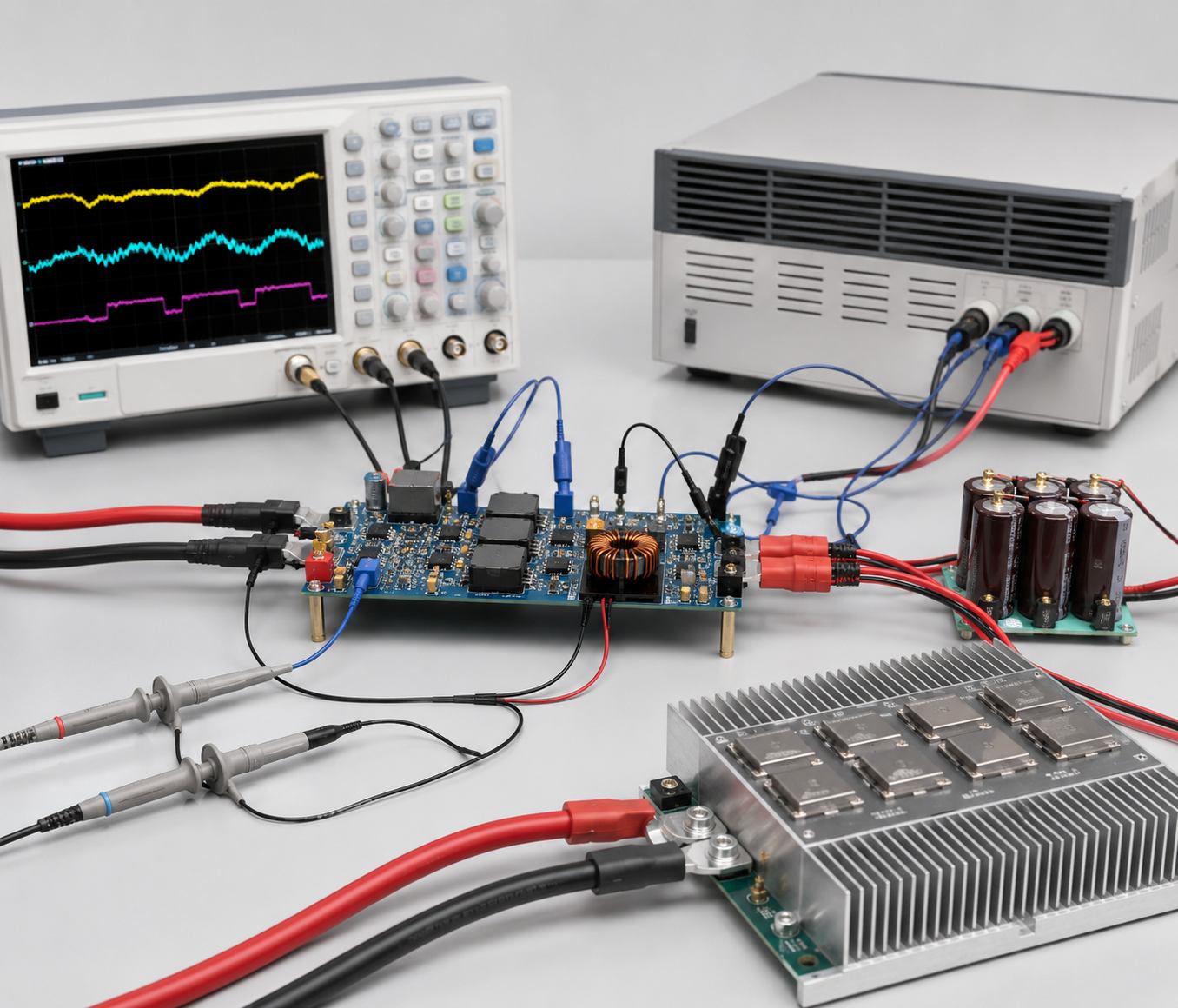
Engineering guide to dynamic load response testing for high-current buck converters, covering load step setup, slew rate, Vcore undershoot, overshoot, recovery time, probe location, output capacitors a…


