
 My Inquiry
 My Account


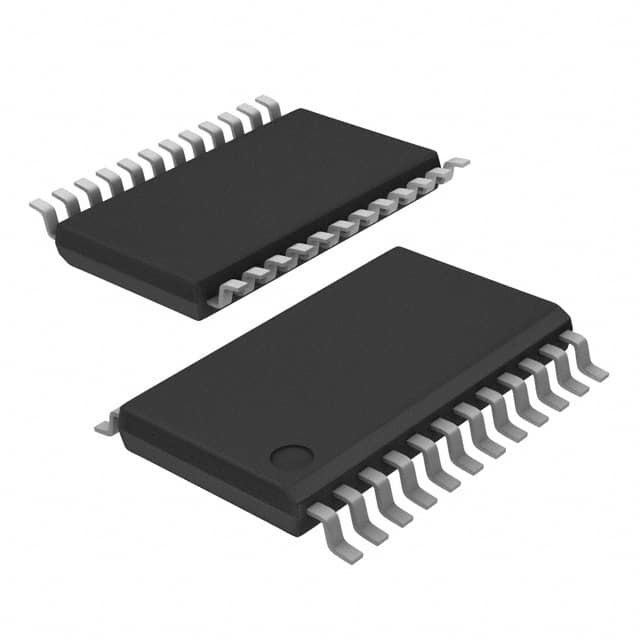
Renesas EL5225IRZ-T7
- Part No.:
- EL5225IRZ-T7
- Manufacturer:
- Renesas
- Category:
- Special Purpose Regulators
- Package:
- 24-TSSOP (0.173", 4.40mm Width)
- Datasheet:
-
 EL5225IRZ-T7.pdf
- Description:
- IC REG CONV LCD 10OUT 24TSSOP
- Quantity:
- Payment:

- Shipping:

Inventory:4,642
Please send an inquiry. Send us your inquiry, and we will respond immediately.
Product details
Overview
EL5225IRZ-T7 from Intersil is a 10-channel programmable reference voltage generator for TFT-LCD gamma correction, featuring 10-bit resolution (0–1023), ±1% output accuracy, rail-to-rail output swing (within 50 mV of VS+ and GND), and SPI-compatible 3-wire digital interface operating up to 5 MHz. It supports analog supply voltages from 5 V to 16.5 V and digital supply from 3.3 V to 5 V, with typical supply current of 9 mA.
For engineers reviewing the EL5225IRZ-T7 datasheet, EL5225IRZ-T7 pinout, EL5225IRZ-T7 application, or EL5225IRZ-T7 equivalent, this device is selected for precision multi-voltage reference generation in display timing systems where channel-to-channel matching (<2 mV mismatch), low droop (1–2 mV/ms), and synchronized refresh via internal/external 21 kHz oscillator are critical design requirements.
Technical Context
The EL5225IRZ-T7 implements a segmented sample-and-hold architecture per channel, refreshed continuously by an internal 21 kHz oscillator or externally synchronized clock applied to EXT_OSC. Each output is driven by a rail-to-rail buffer capable of sourcing/sinking up to 30 mA, with load regulation of 0.5–1.5 mV/mA and PSRR of 45–65 dB.
Its 16-bit serial interface uses ENA as chip select, SDI for data input, SCLK for clocking (positive-edge triggered), and SDO for daisy-chain capability. Control bits B14 select internal/external clock source; B13–B10 encode channel address (A–J); B9–B0 hold the 10-bit DAC code. Transfer function is strictly VOUT = VREFL + (data/1024) × (VREFH − VREFL).
Key Specifications
| Parameter | Value and Actual Design Meaning |
|---|---|
| Output Channels | 10 independent analog outputs (OUTA–OUTJ), each programmable via 10-bit DAC |
| Accuracy | ±1% full-scale error ensures precise gamma curve definition across LCD panels |
| Rail-to-Rail Swing | Within 50 mV of VS+ and GND enables full utilization of available supply headroom |
| Digital Interface | SPI-compatible 3-wire (ENA/SDI/SCLK/SDO), 5 MHz max clock supports fast reconfiguration |
| Supply Range | Analog: 5 V to 16.5 V; Digital: 3.3 V to 5 V - supports mixed-supply display subsystems |
| Channel Mismatch | ≤2 mV at mid-scale (code 512) guarantees uniform grayscale step response |
| Refresh Timing | Internal 21 kHz oscillator or external clock up to 70 kHz; update latency 48 µs to 4.2 ms |
Pinout & Package
EL5225IRZ-T7 is housed in a 24-pin TSSOP package (JEDEC MO-153, pkg drawing MDP0044), RoHS-compliant with 100% matte tin termination and MSL3 rating.
| Pin/Terminal | Circuit Role | Design Meaning |
|---|---|---|
| 1, ENA | Logic Input | Active-low chip select; initiates serial data capture on falling edge |
| 2, SDI | Logic Input | Serial data input; MSB-first 16-bit frame includes channel address and 10-bit DAC code |
| 3, SCLK | Logic Input | Positive-edge clock; synchronizes SDI data sampling and internal register loading |
| 4, SDO | Logic Output | Daisy-chain output; forwards shifted data to next EL5225 in stack after 16 SCLK cycles |
| 5, EXT_OSC | Logic I/O | Configurable as internal oscillator output (21 kHz) or external clock input (≤70 kHz) |
| 6, 10, VS+ | Analog Power | Main analog supply input; powers all output buffers and reference circuitry |
| 7, VSD | Digital Power | Dedicated 3.3 V–5 V supply for logic interface; isolates digital noise from analog section |
| 8, REFH | Analog Reference Input | High reference voltage (GND ≤ REFH ≤ VS+); sets upper bound of DAC output range |
| 9, REFL | Analog Reference Input | Low reference voltage (GND ≤ REFL ≤ REFH); sets lower bound of DAC output range |
| 11, 16, 21, GND | Ground | Four dedicated ground pins minimize ground bounce and improve PSRR |
| 12, CAP | Analog Bypass | Connects 0.1 µF ceramic capacitor to stabilize internal bandgap reference (1.3 V) |
| 13–15, 17–20, 22–24, OUTJ–OUTA | Analog Output | 10 buffered voltage outputs; each drives loads up to 30 mA with rail-to-rail capability |
Key Features
| Feature | Design Value |
|---|---|
| 10-bit programmable reference generation | Enables fine-grained gamma correction tuning (1024 discrete steps per channel) |
| Rail-to-rail output buffers | Delivers usable voltage range from 50 mV above GND to 50 mV below VS+, maximizing panel contrast |
| Daisy-chainable SPI interface | Allows stacking multiple EL5225IRZ-T7 devices without additional GPIOs or address decoding |
| Internal/external clock selection | B14 bit configures 21 kHz internal oscillator or external sync signal to avoid transient load interference |
| Low droop & high PSRR | 1–2 mV/ms droop and 45–65 dB PSRR maintain stable reference under dynamic column driver loads |
| Channel-to-channel matching | ≤2 mV mismatch at mid-scale ensures consistent grayscale linearity across all 10 outputs |
Applications
| TFT-LCD Gamma Correction | LCD Panel Test Equipment |
|---|---|
Use Scenario: Generating 10 precision reference voltages to define the V/T (voltage-transmission) transfer curve of a color TFT-LCD panel. IC Role / Device Role / Timing Role: Primary gamma reference generator; outputs drive column driver DAC references synchronized to horizontal scan rate. Use Value: Enables application-specific gamma tuning without hardware change; ±1% accuracy and <2 mV channel mismatch ensure repeatable grayscale reproduction. |
Use Scenario: Providing calibrated, programmable reference voltages during automated functional testing of LCD modules. IC Role / Device Role / Timing Role: Programmable reference source; outputs emulate panel-specific gamma curves under test controller command. Use Value: Eliminates manual resistor networks; 10-bit resolution allows rapid test pattern switching and statistical yield analysis across voltage bins. |
| Multi-Chip Gamma System | Industrial HMI Display Controller |
Use Scenario: Cascading two EL5225IRZ-T7 devices to generate 20 gamma voltages-10 above and 10 below VCOM-for high-contrast IPS panels. IC Role / Device Role / Timing Role: Stacked reference generator; SDO-to-SDI daisy chain enables simultaneous update of both chips using one SPI port. Use Value: Doubles channel count without increasing MCU pin count; shared EXT_OSC synchronization prevents inter-chip timing skew. |
Use Scenario: Supplying stable, software-adjustable reference voltages for analog front-end circuits in ruggedized human-machine interface displays. IC Role / Device Role / Timing Role: Precision voltage reference hub; operates over full −40°C to +85°C industrial temperature range with 9 mA quiescent current. Use Value: Maintains display fidelity across thermal cycling; rail-to-rail swing accommodates wide-input-range op-amps in analog signal conditioning paths. |
Equivalent & Alternatives
The following parts are listed as comparable options for similar multi-channel reference voltage generator applications.
| Alternative Part | Technical Difference | Application Difference | Selection Advice |
|---|---|---|---|
| MAX5487ETN+ | 8-channel, 10-bit, SPI interface; no internal oscillator; requires external clock or MCU timing control | Lacks daisy-chain SDO and internal refresh oscillator; less suited for standalone gamma systems | Select when fewer channels suffice and system-level timing control is already available |
| AD5667RBRMZ-REEL7 | Dual-channel, 16-bit, I²C interface; integrated 2.5 V reference; no rail-to-rail output stage | Higher resolution but half the channel count; I²C limits daisy-chain scalability vs SPI | Select for high-precision dual-output needs where I²C bus integration is preferred |
Compared with MAX5487ETN+ and AD5667RBRMZ-REEL7, the EL5225IRZ-T7 uniquely combines 10-channel count, built-in 21 kHz refresh oscillator, daisy-chain SPI, and rail-to-rail output drive-making it purpose-built for TFT-LCD gamma correction where channel density, autonomous operation, and load drive capability are non-negotiable.
Availability
EL5225IRZ-T7 is available at Aetrix Electronics and suitable for TFT-LCD display manufacturing, LCD test equipment development, and industrial HMI controller design requiring stable component supply, long-term lifecycle support, and RoHS-compliant packaging.
Supply support for EL5225IRZ-T7 includes scheduled delivery planning, volume procurement assistance, BOM continuity management, traceable sourcing, and lifecycle availability coordination for OEM customers, industrial embedded developers, connected-device designers, and electronics production programs.
Manufacturer
Intersil Corporation (now part of Renesas Electronics) is a U.S.-based analog and power management IC designer known for high-performance precision amplifiers, data converters, and display interface solutions.
The EL5225IRZ-T7 belongs to Intersil's TFT-LCD reference voltage generator product line, engineered specifically to replace resistor ladders and discrete DACs in gamma correction circuits for flat-panel displays.
FAQ
What is the absolute maximum supply voltage for EL5225IRZ-T7?
The EL5225IRZ-T7 supports an analog supply voltage (VS+) from 4.5 V (min) to 18 V (max) and a digital supply (VSD) from 3 V (min) to VS+ or 7 V (max), whichever is lower. Operation beyond these limits risks permanent damage. The recommended operating range is 5 V to 16.5 V for VS+ and 3.3 V to 5 V for VSD, as specified in the FN7356 datasheet.
Does EL5225IRZ-T7 support daisy-chaining multiple units?
Yes, the EL5225IRZ-T7 supports daisy-chaining via its SDO (serial data out) pin. When ENA is held low, data shifted into the first device's SDI propagates through SDO to the next device's SDI. This allows programming of stacked EL5225IRZ-T7 units using a single 3-wire SPI interface, with simultaneous output update upon ENA rising edge.
What is the role of the CAP pin on EL5225IRZ-T7?
The CAP pin on EL5225IRZ-T7 connects to a 0.1 µF ceramic bypass capacitor that stabilizes the internal 1.3 V bandgap reference. This capacitor must be placed as close as possible to the CAP pin and GND to suppress noise and ensure accurate DAC output scaling. Omitting or misplacing this capacitor degrades reference stability and increases output drift.
Can EL5225IRZ-T7 operate with only internal clocking?
Yes, EL5225IRZ-T7 defaults to internal 21 kHz oscillator mode after power-up. The EXT_OSC pin outputs this clock signal when B14 = 0 in the control word. Internal clocking is suitable for static or slowly varying load conditions. For transient column driver loads, external clock synchronization (B14 = 1) is recommended to align refresh edges away from load switching events.
What is the guaranteed accuracy specification for EL5225IRZ-T7?
The EL5225IRZ-T7 guarantees ±1% full-scale output accuracy over temperature (−40°C to +85°C) and supply variations. This includes integral nonlinearity (INL) of ±1.3 LSB and differential nonlinearity (DNL) of ±0.5 LSB, measured at TA = 25°C with VS = 15 V, VSD = 5 V, VREFH = 13 V, VREFL = 2 V, and RL = 1.5 kΩ.
EL5225IRZ-T7 Specifications
- Product attributes
- Attribute value
- Manufacturer:
- Renesas
- Series:
- -
- Package/Case:
- 24-TSSOP (0.173", 4.40mm Width)
- Packaging:
- Tape & Reel (TR)
- Product Status:
- Obsolete
- Applications:
- Converter, TFT LCD
- Voltage - Input:
- 5V ~ 16.5V
- Number of Outputs:
- 10
- Voltage - Output:
- 0.5V ~ 14.95V
- Operating Temperature:
- -40°C ~ 85°C
- Grade:
- -
- Qualification:
- -
- Mounting Type:
- Surface Mount
- Supplier Device Package:
- 24-TSSOP
EL5225IRZ-T7 FAQ
1.How can I place an order for EL5225IRZ-T7 through Aetrix?
Please submit a Request for Quotation (RFQ) for EL5225IRZ-T7 on Aetrix. Our sales agent will provide a competitive quotation and guide you through the order confirmation once you accept the terms.
2.Are the price and stock information for EL5225IRZ-T7 reliable?
The price and inventory of EL5225IRZ-T7 are updated periodically and may fluctuate due to market conditions. Stock and pricing data are typically refreshed every 24 hours. Quotation validity for EL5225IRZ-T7 is usually 5 days.
3.What payment methods are accepted for EL5225IRZ-T7?
We accept Wire Transfer, PayPal, Credit Card, Western Union, MoneyGram, and Escrow for EL5225IRZ-T7 transactions.
Note: Certain payment methods may incur a processing fee.
4.How is shipping managed for EL5225IRZ-T7?
EL5225IRZ-T7 orders can be shipped via leading logistics carriers, including DHL, UPS, FedEx, TNT, or Registered Mail.
Once your EL5225IRZ-T7 order is processed, you will receive an email with the shipment details and tracking number.
Note: Tracking information may take up to 24 hours to appear. Express delivery typically takes 3–5 business days.
5.How can I obtain technical support or documentation for EL5225IRZ-T7?
For technical support, including EL5225IRZ-T7 datasheets, pinout diagrams, or application guidance, please contact our engineering support team. They can provide detailed documentation and assistance for your EL5225IRZ-T7 requirements.
6.How does Aetrix verify that EL5225IRZ-T7 is sourced from the original manufacturer or authorized distributors?
All EL5225IRZ-T7 products on Aetrix are procured from qualified distributors and authorized channels. Our dedicated quality assurance team conducts strict verification, including traceability checks and, if necessary, third-party testing. This ensures that EL5225IRZ-T7 meets industry standards.
7.What is the process for return or replacement of EL5225IRZ-T7?
All EL5225IRZ-T7 units undergo pre-shipment inspection (PSI). If there is an issue with EL5225IRZ-T7, returns or replacements are accepted under the following conditions:
1.Quantity discrepancies, incorrect items, or visible external defects (such as breakage or corrosion), acknowledged by Aetrix.
2.The issue is reported within 90 days of delivery.
3.The EL5225IRZ-T7 part is unused and in its original packaging.
Return procedure for EL5225IRZ-T7:
1.Submit a request within 90 days.
2.Obtain a Return Material Authorization (RMA) from Aetrix.
EL5225IRZ-T7 Tags
-
TPS51206DSQR
Texas Instruments
-
TPS51200DRCR
Texas Instruments
-
TPS51200DRCT
Texas Instruments
-
TPS62740DSSR
Texas Instruments
-
TPS51100DGQR
Texas Instruments
-
NCP51200MNTXG
onsemi
-
NCP51400MNTXG
onsemi
-
RT9026GSP
Richtek USA Inc.
-
LP2998MRX/NOPB
Texas Instruments
-
TPS51200QDRCRQ1
Texas Instruments
-
DPA423GN-TL
Power Integrations
-
LM10011SD/NOPB
Texas Instruments
Tech Hub

TTL and CMOS logic families differ in thresholds, loading, output drive, power and timing. This engineering guide compares 74HC and 74HCT, calculates noise margins and checks 3.3 V/5 V compatibility.

A practical engineering guide to 3.3V and 5V logic compatibility, input thresholds, resistor dividers, translator ICs, MOSFET level shifting, I2C pull-ups, timing limits and power-sequencing risks.

The 74HC595 uses push-pull logic outputs, while the TPIC6B595 uses 50 V open-drain DMOS sinks for higher-power loads. This guide compares timing, current limits, 3.3 V interfacing, load wiring, thermal…

The 74HC595 converts serial data into eight stable parallel outputs. This guide covers pin functions, shift and storage timing, OE and MR behavior, drive-current limits, cascading, voltage compatibilit…

A technical comparison of level-sensitive latches and edge-triggered flip-flops, covering timing windows, setup and hold limits, master–slave operation, time borrowing, race-through, HDL inference and…

A D latch stores one bit while Enable controls when data can pass. This reference covers gate-level operation, truth tables, transparency, setup and hold timing, LE versus OE, common ICs and practical …

An SR latch stores one bit through cross-coupled feedback. This engineering reference covers NOR and NAND implementations, truth tables, forbidden-state recovery, gated operation, switch debouncing, fa…

Latch circuits retain one bit through feedback. This technical reference covers SR and D latches, truth tables, transparency, timing limits, latch-versus-flip-flop behavior, applications and common log…

An engineering guide to LED driver operation, constant-current and constant-voltage outputs, linear and switching topologies, dimming, IC selection, calculations, replacement compatibility, and fault c…

Operational amplifier guide covering op amp basics, feedback, ideal vs real op amps, common configurations, buffer circuits, offset, bias current, gain-bandwidth, slew rate, rail-to-rail limits and sel…


