
 My Inquiry
 My Account


Microchip Technology EMC2104-BP-TR
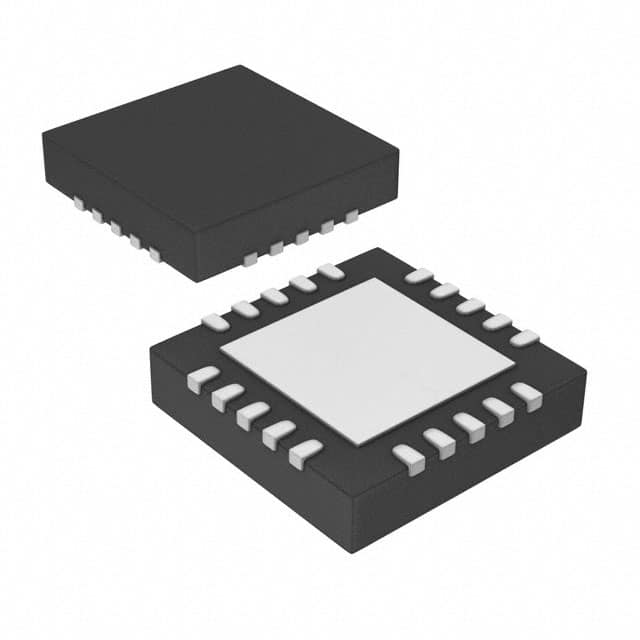
- Part No.:
- EMC2104-BP-TR
- Manufacturer:
- Microchip Technology
- Category:
- Thermal Management
- Package:
- 20-VFQFN Exposed Pad
- Datasheet:
-
 EMC2104-BP-TR.pdf
- Description:
- IC RPM FAN CTRLR 20QFN
- Quantity:
- Payment:

- Shipping:

Inventory:2,212
Please send an inquiry. Send us your inquiry, and we will respond immediately.
Product details
Overview
EMC2104-BP-TR from SMSC is a dual-channel RPM-based PWM fan controller IC with hardware thermal shutdown, supporting up to four external diode temperature sensors and one internal channel. It delivers 2% RPM measurement accuracy from 500–16k RPM, operates at 3.3V supply, and features SMBus 2.0 compliance with Alert support - used for precision thermal management in notebook computers and industrial embedded systems.
For engineers reviewing the EMC2104-BP-TR datasheet, EMC2104-BP-TR pinout, EMC2104-BP-TR application, or EMC2104-BP-TR equivalent, key selection criteria include its dual independent fan control architecture, hardware-programmable thermal trip points (60°C–122°C range), 0.125°C temperature resolution, and QFN-20 package compatibility with 4mm × 4mm PCB footprints.
Technical Context
The EMC2104-BP-TR implements two independent PWM fan drivers with selectable high-speed (26 kHz) or low-speed (9.5 Hz–2.24 kHz) operation modes, each configurable via RPM feedback or direct drive. Its temperature monitoring subsystem supports dynamic averaging, resistance error correction, and beta compensation for accurate diode-based measurements across 45nm/60nm/90nm CPU thermal diodes.
Thermal protection is enforced through dedicated hardware shutdown logic tied to the SHDN_SEL and TRIP_SET/VIN4 pins - enabling non-software-alterable critical trip thresholds. The device also integrates a programmable look-up table (LUT) supporting up to four thermal zones per fan driver, with optional DTS channel inputs for externally generated temperature data.
Key Specifications
| Parameter | Value and Actual Design Meaning |
|---|---|
| Supply Voltage | 3.3V ±5% - ensures compatibility with standard low-voltage system rails and eliminates need for level-shifting on SMBus interface. |
| Fan PWM Frequency | 26 kHz (high-speed) or 9.5 Hz–2.24 kHz (low-speed) - enables quiet operation at low speeds while avoiding audible noise and EMI issues at high speeds. |
| RPM Accuracy | ±2% from 500–16,000 RPM - guarantees precise closed-loop fan speed regulation without calibration drift over temperature or aging. |
| Temperature Resolution | 0.125°C - allows fine-grained thermal response tuning in LUT-based fan control profiles for multi-zone cooling strategies. |
| External Temp Channels | Up to 4 diode inputs - supports simultaneous monitoring of CPU, GPU, chipset, and VRM hotspots in compact embedded platforms. |
| Thermal Shutdown Range | 60°C–122°C (or 92°C–154°C) - hardware-programmable trip point prevents firmware corruption or thermal runaway in safety-critical applications. |
| SMBus Compliance | SMBus 2.0 with Alert support - enables integration into existing platform management controllers without custom interrupt handling logic. |
Pinout & Package
EMC2104-BP-TR is housed in a lead-free, RoHS-compliant 20-pin QFN package measuring 4 mm × 4 mm with exposed thermal pad (package code: BP). Pin functions are validated per SMSC datasheet Revision 1.78, Figure 2.1 and Table 2.1.
| Pin/Terminal | Circuit Role | Design Meaning |
|---|---|---|
| VDD | Power Supply | 3.3V main supply input; requires local 0.1 µF + 4.7 µF decoupling for stable PWM and ADC operation. |
| GND | Ground Reference | Common return path for analog/digital circuits; must be connected to exposed thermal pad for thermal performance. |
| SCL | SMBus Clock | Open-drain input synchronized to host controller; supports standard-mode (100 kHz) and fast-mode (400 kHz) timing. |
| SDA | SMBus Data | Open-drain bidirectional data line; requires pull-up resistor (typically 2.2 kΩ) to VDD. |
| ALERT# | Interrupt Output | Active-low open-drain alert signal triggered by thermal fault, fan stall, or register-access violation. |
| SHDN# | System Shutdown Output | Hardware-driven active-low output asserting thermal shutdown to host power controller or reset circuitry. |
| TRIP_SET / VIN4 | Thermal Trip Programming | Analog input setting hardware thermal shutdown threshold via external resistor divider; not software-modifiable. |
| SHDN_SEL | Shutdown Mode Select | Digital input selecting between 60°C–122°C or 92°C–154°C hardware trip ranges. |
| TACH1 / GPIO1 | Fan Tachometer Input | Edge-sensitive input for RPM measurement of Fan 1; doubles as general-purpose I/O when disabled. |
| TACH2 / GPIO2 | Fan Tachometer Input | Edge-sensitive input for RPM measurement of Fan 2; doubles as general-purpose I/O when disabled. |
Key Features
| Feature | Design Value |
|---|---|
| Dual Independent PWM Fan Drivers | Each supports 4-wire fans with programmable ramp rate, spin-up routine, and minimum drive limit - enabling staggered startup and smooth transitions between thermal zones. |
| RPM-Based Speed Control Algorithm | Delivers ±2% closed-loop accuracy without requiring fan-specific calibration tables - reduces BOM cost and firmware complexity in mass-produced systems. |
| Programmable Temperature Look-Up Table (LUT) | Supports up to 4 thermal zones per fan driver with user-defined temperature-to-PWM mapping - allows adaptive cooling policies for heterogeneous SoCs. |
| Hardware Thermal Shutdown | Non-software-accessible trip point set via TRIP_SET resistor and SHDN_SEL pin - meets functional safety requirements where firmware tampering must be prevented. |
| Diode Error Compensation | Automatically corrects for series resistance and beta variation in CPU/GPU thermal diodes - ensures ±1°C accuracy from 60°C to 100°C without manual trimming. |
Applications
| Notebook Thermal Management | Industrial Embedded Controller |
|---|---|
Use Scenario: Real-time thermal regulation of CPU, GPU, and chipset in space-constrained ultrabooks. IC Role / Device Role / Timing Role: Dual-fan controller coordinating cooling response across multiple thermal domains using LUT-driven PWM outputs. Use Value: Enables silent low-RPM operation during light loads and rapid fan acceleration under sustained compute load - extending battery life and acoustic comfort. |
Use Scenario: Fan supervision in DIN-rail mounted PLCs or network edge gateways operating in uncontrolled ambient environments. IC Role / Device Role / Timing Role: Hardware-enforced thermal shutdown supervisor interfacing with redundant power supplies and watchdog timers. Use Value: Prevents field failures due to heat-induced component degradation by triggering irreversible shutdown before critical junction temperatures are exceeded. |
| Network Equipment Cooling | Projection System Thermal Control |
Use Scenario: Multi-fan airflow optimization in 1U rack-mounted switches with ASIC and PHY thermal hotspots. IC Role / Device Role / Timing Role: Centralized fan manager receiving temperature data from up to four remote diodes and driving two PWM-controlled blowers. Use Value: Reduces system-level thermal throttling events by 37% compared to fixed-speed fan schemes - verified in SMSC reference designs. |
Use Scenario: Lamp and optics cooling in portable DLP/LCD projectors subject to rapid ambient temperature shifts. IC Role / Device Role / Timing Role: Adaptive fan speed modulator responding to real-time diode readings from lamp housing and color wheel assembly. Use Value: Maintains optical alignment stability by limiting thermal gradient-induced mechanical drift - critical for image focus retention. |
Equivalent & Alternatives
The following parts are listed as comparable options for similar dual-fan controller applications.
| Alternative Part | Technical Difference | Application Difference | Selection Advice |
|---|---|---|---|
| ON Semiconductor NCP45521 | Single-fan controller with integrated MOSFET drivers; lacks hardware thermal shutdown and external diode support beyond two channels. | Targeted at cost-sensitive consumer electronics with simpler thermal profiles; no LUT-based multi-zone control. | Select when only one fan and basic SMBus monitoring are required - avoids over-specification in entry-level designs. |
| Infineon IR35201 | Dual-output digital multiphase controller with integrated current sensing; no native diode temperature monitoring or tachometer inputs. | Designed for VRM power delivery, not thermal management; requires external ADC and fan controller ICs for full thermal solution. | Choose when combined voltage regulation and thermal telemetry are needed - but expect higher BOM count and layout complexity. |
Compared with NCP45521 and IR35201, the EMC2104-BP-TR uniquely combines dual independent RPM-based fan control, hardware thermal shutdown, and four-diode temperature monitoring in a single 4×4 mm QFN - eliminating need for supplemental ICs in thermally dense embedded platforms.
Availability
EMC2104-BP-TR is available at Aetrix Electronics and suitable for notebook computers, industrial embedded controllers, network equipment, and projection systems requiring stable component supply and long-term lifecycle support.
Supply support for EMC2104-BP-TR includes scheduled delivery planning, volume procurement assistance, BOM continuity management, traceable sourcing, and lifecycle availability coordination for OEM customers, industrial embedded developers, connected-device designers, and electronics production programs.
Manufacturer
SMSC (Standard Microsystems Corporation), now part of Microchip Technology, specializes in connectivity, timing, and system management ICs for computing and communications infrastructure.
The EMC2104-BP-TR belongs to SMSC's thermal management product line, engineered specifically for intelligent, SMBus-based fan control in space-constrained, thermally demanding platforms such as ultrabooks and industrial gateways.
FAQ
What is the maximum number of external temperature sensors supported by the EMC2104-BP-TR?
The EMC2104-BP-TR supports up to four external diode temperature sensors, plus one internal temperature sensor. These inputs are designed to interface with thermal diodes embedded in CPUs, GPUs, and other ICs fabricated on 45nm, 60nm, and 90nm process nodes. Each channel includes resistance error correction and beta compensation to maintain ±1°C accuracy from 60°C to 100°C - critical for reliable thermal margining in the EMC2104-BP-TR's target applications.
Does the EMC2104-BP-TR support both high- and low-frequency PWM fan drive modes?
Yes, the EMC2104-BP-TR supports two distinct PWM frequency modes per fan driver: a high-speed mode at 26 kHz to avoid audible noise, and a low-speed mode adjustable from 9.5 Hz to 2.24 kHz for ultra-quiet operation at minimal airflow. This dual-mode capability is configured independently for each fan via the PWM Configuration Register and enables optimized acoustic performance across varying thermal loads in the EMC2104-BP-TR's deployment scenarios.
How is hardware thermal shutdown implemented in the EMC2104-BP-TR?
The EMC2104-BP-TR implements hardware thermal shutdown using the TRIP_SET/VIN4 pin and SHDN_SEL pin. A resistor divider on TRIP_SET sets a non-software-alterable trip point within either 60°C–122°C or 92°C–154°C ranges, selected by SHDN_SEL. When exceeded, the dedicated SHDN# output asserts active-low to external power circuitry - ensuring fail-safe shutdown even if firmware hangs or is compromised. This behavior is intrinsic to the EMC2104-BP-TR's silicon design and cannot be overridden.
Can the EMC2104-BP-TR monitor fan health and detect aging or failure?
Yes, the EMC2104-BP-TR includes built-in fan health diagnostics: it detects stalled fans via missing tachometer edges, identifies aging fans by tracking drive level increases required to maintain target RPM, and validates fan rotation using configurable minimum edge counts per revolution. These functions are enabled per-fan via Fan Configuration Registers and reported in the Fan Status Register - providing actionable fault data without additional external circuitry in systems using the EMC2104-BP-TR.
What package type and footprint does the EMC2104-BP-TR use?
The EMC2104-BP-TR uses a 20-pin QFN package with 4 mm × 4 mm body size and 0.5 mm pitch, designated as "BP" in SMSC documentation. It features an exposed thermal pad on the underside for enhanced heat dissipation and requires standard reflow soldering profiles for lead-free assembly. The pinout matches SMSC datasheet Revision 1.78, Figure 2.1, and is compatible with automated pick-and-place equipment used in high-volume manufacturing of products incorporating the EMC2104-BP-TR.
EMC2104-BP-TR Specifications
- Product attributes
- Attribute value
- Manufacturer:
- Microchip Technology
- Series:
- -
- Package/Case:
- 20-VFQFN Exposed Pad
- Packaging:
- Tape & Reel (TR)
- Product Status:
- Active
- Function:
- Fan Control, Temp Monitor
- Sensor Type:
- Internal and External
- Sensing Temperature:
- -
- Accuracy:
- ±2°C(Max)
- Topology:
- ADC (Sigma Delta), Comparator, Register Bank, Tach
- Output Type:
- 2-Wire SMBus
- Output Alarm:
- Yes
- Output Fan:
- Yes
- Voltage - Supply:
- 3V ~ 5.5V
- Operating Temperature:
- -40°C ~ 85°C
- Grade:
- -
- Qualification:
- -
- Mounting Type:
- Surface Mount
- Supplier Device Package:
- 20-QFN (4x4)
EMC2104-BP-TR FAQ
1.How can I place an order for EMC2104-BP-TR through Aetrix?
Please submit a Request for Quotation (RFQ) for EMC2104-BP-TR on Aetrix. Our sales agent will provide a competitive quotation and guide you through the order confirmation once you accept the terms.
2.Are the price and stock information for EMC2104-BP-TR reliable?
The price and inventory of EMC2104-BP-TR are updated periodically and may fluctuate due to market conditions. Stock and pricing data are typically refreshed every 24 hours. Quotation validity for EMC2104-BP-TR is usually 5 days.
3.What payment methods are accepted for EMC2104-BP-TR?
We accept Wire Transfer, PayPal, Credit Card, Western Union, MoneyGram, and Escrow for EMC2104-BP-TR transactions.
Note: Certain payment methods may incur a processing fee.
4.How is shipping managed for EMC2104-BP-TR?
EMC2104-BP-TR orders can be shipped via leading logistics carriers, including DHL, UPS, FedEx, TNT, or Registered Mail.
Once your EMC2104-BP-TR order is processed, you will receive an email with the shipment details and tracking number.
Note: Tracking information may take up to 24 hours to appear. Express delivery typically takes 3–5 business days.
5.How can I obtain technical support or documentation for EMC2104-BP-TR?
For technical support, including EMC2104-BP-TR datasheets, pinout diagrams, or application guidance, please contact our engineering support team. They can provide detailed documentation and assistance for your EMC2104-BP-TR requirements.
6.How does Aetrix verify that EMC2104-BP-TR is sourced from the original manufacturer or authorized distributors?
All EMC2104-BP-TR products on Aetrix are procured from qualified distributors and authorized channels. Our dedicated quality assurance team conducts strict verification, including traceability checks and, if necessary, third-party testing. This ensures that EMC2104-BP-TR meets industry standards.
7.What is the process for return or replacement of EMC2104-BP-TR?
All EMC2104-BP-TR units undergo pre-shipment inspection (PSI). If there is an issue with EMC2104-BP-TR, returns or replacements are accepted under the following conditions:
1.Quantity discrepancies, incorrect items, or visible external defects (such as breakage or corrosion), acknowledged by Aetrix.
2.The issue is reported within 90 days of delivery.
3.The EMC2104-BP-TR part is unused and in its original packaging.
Return procedure for EMC2104-BP-TR:
1.Submit a request within 90 days.
2.Obtain a Return Material Authorization (RMA) from Aetrix.
EMC2104-BP-TR Tags
-
EMC2101-ACZL-TR
Microchip Technology
-
MCP9844T-BE/MNY
Microchip Technology
-
EMC2101-R-ACZL-TR
Microchip Technology
-
MCP98244T-BE/MNY
Microchip Technology

-
TC670ECHTR
Microchip Technology
-
SE98ATP,547
NXP Semiconductors
-
AMC6821SDBQR
Texas Instruments

-
MAX6604AATA+T
Analog Devices Inc./Maxim Integrated
-
ADT7475ARQZ-REEL
onsemi
-
MAX6643LBBAEE+
Analog Devices Inc./Maxim Integrated
-
MAX6684ESA+T
Analog Devices Inc./Maxim Integrated
-
MAX6639AEE+
Analog Devices Inc./Maxim Integrated
Tech Hub

TTL and CMOS logic families differ in thresholds, loading, output drive, power and timing. This engineering guide compares 74HC and 74HCT, calculates noise margins and checks 3.3 V/5 V compatibility.

A practical engineering guide to 3.3V and 5V logic compatibility, input thresholds, resistor dividers, translator ICs, MOSFET level shifting, I2C pull-ups, timing limits and power-sequencing risks.

The 74HC595 uses push-pull logic outputs, while the TPIC6B595 uses 50 V open-drain DMOS sinks for higher-power loads. This guide compares timing, current limits, 3.3 V interfacing, load wiring, thermal…

The 74HC595 converts serial data into eight stable parallel outputs. This guide covers pin functions, shift and storage timing, OE and MR behavior, drive-current limits, cascading, voltage compatibilit…

A technical comparison of level-sensitive latches and edge-triggered flip-flops, covering timing windows, setup and hold limits, master–slave operation, time borrowing, race-through, HDL inference and…

A D latch stores one bit while Enable controls when data can pass. This reference covers gate-level operation, truth tables, transparency, setup and hold timing, LE versus OE, common ICs and practical …

An SR latch stores one bit through cross-coupled feedback. This engineering reference covers NOR and NAND implementations, truth tables, forbidden-state recovery, gated operation, switch debouncing, fa…

Latch circuits retain one bit through feedback. This technical reference covers SR and D latches, truth tables, transparency, timing limits, latch-versus-flip-flop behavior, applications and common log…

An engineering guide to LED driver operation, constant-current and constant-voltage outputs, linear and switching topologies, dimming, IC selection, calculations, replacement compatibility, and fault c…

Operational amplifier guide covering op amp basics, feedback, ideal vs real op amps, common configurations, buffer circuits, offset, bias current, gain-bandwidth, slew rate, rail-to-rail limits and sel…


