
 My Inquiry
 My Account


STMicroelectronics E-ST7538P
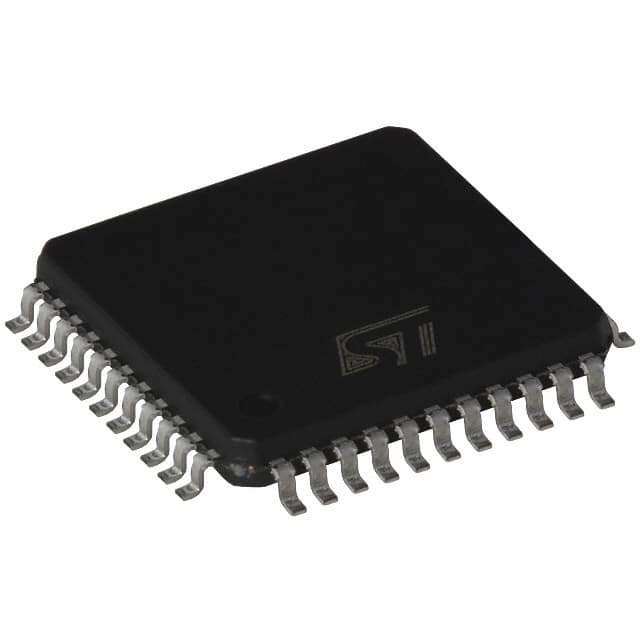
- Part No.:
- E-ST7538P
- Manufacturer:
- STMicroelectronics
- Category:
- Drivers, Receivers, Transceivers
- Package:
- 44-LQFP Exposed Pad
- Datasheet:
-
 E-ST7538P.pdf
- Description:
- IC TRANSCEIVER HALF 1/1 44TQFP
- Quantity:
- Payment:

- Shipping:

Inventory:1,712
Please send an inquiry. Send us your inquiry, and we will respond immediately.
Product details
Overview
E-ST7538P from STMicroelectronics is a half-duplex FSK power line transceiver IC integrating a programmable line driver, 5V linear regulator (100mA), carrier/preamble detection, mains zero-crossing synchronization, and watchdog timer. It operates from 7.5–12.5V single supply, consumes only 5mA quiescent current, supports up to 4800bps baud rate, and delivers 250µVRMS receiving sensitivity per EN 50065 CENELEC-compliant smart metering systems.
For engineers reviewing the E-ST7538P datasheet, E-ST7538P pinout, E-ST7538P application, or E-ST7538P equivalent, this device serves as a complete PLC modem solution for synchronous/asynchronous communication over AC power lines - with register-programmable carrier frequencies (60–132.5kHz), voltage/current-controlled line drive, and integrated analog front-end filtering.
Technical Context
The ST7538P implements a fully integrated FSK modem architecture with dual-path analog signal chain: transmit path includes DAC-based FSK modulation, programmable ALC loop, and differential power line drivers (ATOP1/ATOP2); receive path features bandpass filtering, AGC, demodulation, and digital filter output (RxFO). All timing and channel selection are controlled via a 24-bit internal register accessed synchronously.
Its PLL-based carrier recovery enables robust asynchronous operation, while zero-crossing detection (ZCIN/ZCOUT) and mains synchronization support time-sliced transmission aligned to AC phase - critical for interference avoidance in CENELEC-compliant narrowband PLC. The integrated 5V regulator powers external logic and provides PG monitoring.
Key Specifications
| Parameter | Value and Actual Design Meaning |
|---|---|
| Supply Voltage | 7.5–12.5V PAVcc; enables direct connection to unregulated AC-DC rails in metering hardware. |
| Quiescent Current | 5mA Iq; ensures ultra-low standby power for battery-backed or energy-harvested PLC nodes. |
| Receiver Sensitivity | 250µVRMS; meets EN 50065 Class A noise immunity requirements for noisy low-voltage distribution networks. |
| Programmable Carrier Frequencies | 8 channels (60–132.5kHz); allows dynamic channel hopping to avoid narrowband interference in multi-node deployments. |
| Baud Rate | 600–4800bps; supports trade-off between data throughput and noise resilience in constrained PLC environments. |
| Integrated Regulator | 5.0V ±2%, 100mA output with UVLO (3.8V) and Power Good (PG) flag; powers MCU peripherals without external LDO. |
| Line Driver Output | ±7VPP differential (ATOP1/ATOP2), 370mArms max; drives 1Ω–50Ω line impedances per CENELEC A/B/C bands. |
Pinout & Package
TQFP44 (slug-down) package with exposed thermal pad for enhanced power dissipation in high-current line driver operation.
| Pin/Terminal | Circuit Role | Design Meaning |
|---|---|---|
| ATOP1 / ATOP2 | Power Line Driver Outputs | Differential high-current outputs for coupling to AC mains; require external matching network and isolation transformer. |
| RAI / RxFO | Receive Analog Input / Filter Output | RAI accepts filtered line signal referenced to SGND; RxFO provides post-filter analog baseband for external ADC or internal demod. |
| ZCIN / ZCOUT | Zero-Crossing Input / Output | ZCIN senses AC phase zero crossing; ZCOUT provides synchronized digital pulse for time-aligned TX bursts. |
| RxTx / REG_DATA | Mode Control Inputs | RxTx selects RX/TX; REG_DATA + RxTx jointly configure data transfer vs. control register access (synchronous only). |
| VDC / PG | Regulator Output / Power-Good Flag | VDC supplies 5V to host logic; PG asserts high when VDC ≥4.5V - used for system reset sequencing and brownout detection. |
| CD_PD / BU | Carrier/Preamble Detect / Band-in-Use | CD_PD signals presence of valid FSK carrier; BU indicates spectral occupancy in selected band - enables listen-before-talk protocol. |
Key Features
| Feature | Design Value |
|---|---|
| Programmable Voltage & Current Control Loop | Independent Vsense and CL feedback paths enable precise regulation of line drive amplitude and current limit under varying grid impedance. |
| 8-Channel FSK Carrier Selection | Hardware-configurable carrier set (60–132.5kHz) eliminates need for external frequency synthesizer - reduces BOM and layout complexity. |
| Mains Synchronization Engine | ZCIN/ZCOUT interface with <1µs delay enables sub-cycle TX timing alignment - essential for meeting CENELEC spectral mask duty cycle limits. |
| Security Checksum Register Access | REGOK pin validates integrity of 24-bit control register writes - prevents corruption-induced misconfiguration in noisy industrial environments. |
| Integrated Watchdog Timer | TWO = 1.5s timeout with TWD = 3.5ms pulse width; resets host MCU if firmware hangs during PLC frame processing or register updates. |
Applications
| Smart Electricity Metering | Home Area Network (HAN) Gateways |
|---|---|
|
Use Scenario: Two-way communication between utility meters and concentrators over existing 230V AC wiring in residential buildings. IC Role / Device Role / Timing Role: Full-duplex-capable FSK transceiver handling physical layer modulation/demodulation, line driving, and mains-synchronized burst transmission. Use Value: Meets EN 50065-1 Class A emission limits and achieves >99% frame success rate at 2400bps under 10dB SNR due to 250µVRMS sensitivity and adaptive ALC. |
Use Scenario: PLC-based bridging between legacy RS-485 smart appliances and IPv6-enabled home routers using G3-PLC or PRIME stack. IC Role / Device Role / Timing Role: Physical layer modem providing programmable carrier agility (60–132.5kHz) and register-controlled baud rate switching for protocol adaptation. Use Value: Enables seamless interoperability across regional PLC standards by reconfiguring carrier frequency and deviation via SPI-like serial interface without hardware change. |
| Streetlight Remote Management | Industrial Load Monitoring Nodes |
|
Use Scenario: Centralized control of LED streetlights via underground 400V three-phase distribution lines in municipal grids. IC Role / Device Role / Timing Role: Half-duplex transceiver with mains zero-crossing synchronization ensuring TX bursts occur only during low-noise AC voltage zero crossings. Use Value: Reduces conducted emissions by >15dB compared to unsynchronized transmission - critical for passing CISPR 11 Class B EMC testing in outdoor enclosures. |
Use Scenario: Retrofit energy monitoring sensors installed on factory floor MCC panels communicating over 400V busbars. IC Role / Device Role / Timing Role: Robust PLC interface with integrated 5V/100mA regulator powering local microcontroller and isolated ADC, eliminating external power conversion. Use Value: Simplifies design certification by integrating safety-isolated power and communications in one TQFP44 package - reducing footprint by 32% vs. discrete regulator + modem solution. |
Equivalent & Alternatives
The following parts are listed as comparable options for similar FSK power line transceiver applications.
| Alternative Part | Technical Difference | Application Difference | Selection Advice |
|---|---|---|---|
| ST7540P | Successor device with extended carrier range (50–500kHz), higher max baud rate (9600bps), and improved receiver sensitivity (150µVRMS). | Supports G3-PLC PHY layer; requires updated firmware and external crystal (20MHz vs. 16MHz). | Select when upgrading to newer PLC standards or requiring higher throughput in low-noise environments. |
| AMIS-49200 | Single-chip OFDM modem (not FSK); integrates MAC layer, supports 100kbps PHY rate, but lacks zero-crossing sync and integrated regulator. | Targeted at high-speed AMI deployments; requires external 3.3V supply and separate clock management IC. | Choose for greenfield G3-PLC rollouts where OFDM spectral efficiency outweighs legacy FSK compatibility needs. |
Compared with ST7540P, E-ST7538P offers lower system cost and simpler firmware for CENELEC-compliant FSK metering, while AMIS-49200 enables higher bandwidth at the expense of increased BOM count and loss of mains synchronization capability.
Availability
E-ST7538P is available at Aetrix Electronics and suitable for smart metering infrastructure, industrial load monitoring, streetlight control systems, and home area network gateways requiring stable component supply across long-lifecycle deployments.
Supply support for E-ST7538P includes scheduled delivery planning, volume procurement assistance, BOM continuity management, traceable sourcing, and lifecycle availability coordination for OEM customers, industrial embedded developers, connected-device designers, and electronics production programs.
Manufacturer
STMicroelectronics is a global semiconductor leader specializing in automotive, industrial, and power management ICs, with broad analog and mixed-signal portfolio serving mission-critical applications.
The ST7538P belongs to ST's legacy power line communication (PLC) transceiver family, designed specifically for EN 50065-compliant narrowband FSK communication in electricity metering and building automation systems.
FAQ
What is the maximum allowable PAVcc slew rate during power-up?
The ST7538P specifies a maximum allowed slope of 100 V/ms during PAVcc power-up sequence to prevent latch-up or internal regulator instability. Exceeding this rate may cause undefined behavior in the voltage control loop or premature activation of the 5V regulator before digital logic stabilizes.
How does the carrier detection (CD_PD) pin behave during preamble detection?
CD_PD asserts low ("0") when either a valid carrier tone or preamble sequence is detected - it does not distinguish between them. Detection threshold is programmable via control register bits, with default sensitivity set to 250µVRMS in high-sensitivity mode.
Can the ST7538P operate without an external crystal?
No - the ST7538P requires a 16MHz crystal connected between XIN and XOUT pins for all operating modes. External clock input is not supported; the internal oscillator cannot be bypassed, and no RC-based timing alternative exists per datasheet specifications.
What is the purpose of the CL pin and how is current limiting configured?
The CL pin provides feedback to the internal current control loop. A resistor between CL and AVss sets the current limit threshold - e.g., 10kΩ yields ~310mArms max output per ATOP pin. This protects the driver stage during short-circuit or high-impedance line faults.
E-ST7538P Specifications
- Product attributes
- Attribute value
- Manufacturer:
- STMicroelectronics
- Series:
- -
- Package/Case:
- 44-LQFP Exposed Pad
- Packaging:
- Tray
- Product Status:
- Obsolete
- Type:
- Transceiver
- Protocol:
- -
- Number of Drivers/Receivers:
- 1/1
- Duplex:
- Half
- Receiver Hysteresis:
- -
- Data Rate:
- -
- Voltage - Supply:
- 4.75V ~ 5.25V
- Operating Temperature:
- -40°C ~ 85°C
- Grade:
- -
- Qualification:
- -
- Mounting Type:
- Surface Mount
- Supplier Device Package:
- 44-TQFP (10x10)
E-ST7538P FAQ
1.How can I place an order for E-ST7538P through Aetrix?
Please submit a Request for Quotation (RFQ) for E-ST7538P on Aetrix. Our sales agent will provide a competitive quotation and guide you through the order confirmation once you accept the terms.
2.Are the price and stock information for E-ST7538P reliable?
The price and inventory of E-ST7538P are updated periodically and may fluctuate due to market conditions. Stock and pricing data are typically refreshed every 24 hours. Quotation validity for E-ST7538P is usually 5 days.
3.What payment methods are accepted for E-ST7538P?
We accept Wire Transfer, PayPal, Credit Card, Western Union, MoneyGram, and Escrow for E-ST7538P transactions.
Note: Certain payment methods may incur a processing fee.
4.How is shipping managed for E-ST7538P?
E-ST7538P orders can be shipped via leading logistics carriers, including DHL, UPS, FedEx, TNT, or Registered Mail.
Once your E-ST7538P order is processed, you will receive an email with the shipment details and tracking number.
Note: Tracking information may take up to 24 hours to appear. Express delivery typically takes 3–5 business days.
5.How can I obtain technical support or documentation for E-ST7538P?
For technical support, including E-ST7538P datasheets, pinout diagrams, or application guidance, please contact our engineering support team. They can provide detailed documentation and assistance for your E-ST7538P requirements.
6.How does Aetrix verify that E-ST7538P is sourced from the original manufacturer or authorized distributors?
All E-ST7538P products on Aetrix are procured from qualified distributors and authorized channels. Our dedicated quality assurance team conducts strict verification, including traceability checks and, if necessary, third-party testing. This ensures that E-ST7538P meets industry standards.
7.What is the process for return or replacement of E-ST7538P?
All E-ST7538P units undergo pre-shipment inspection (PSI). If there is an issue with E-ST7538P, returns or replacements are accepted under the following conditions:
1.Quantity discrepancies, incorrect items, or visible external defects (such as breakage or corrosion), acknowledged by Aetrix.
2.The issue is reported within 90 days of delivery.
3.The E-ST7538P part is unused and in its original packaging.
Return procedure for E-ST7538P:
1.Submit a request within 90 days.
2.Obtain a Return Material Authorization (RMA) from Aetrix.
E-ST7538P Tags

-
ATA6561-GAQW-N
Microchip Technology
-
ATA6561-GBQW-N
Microchip Technology
-
AM26LS32ACDR
Texas Instruments

-
SP485CN-L/TR
MaxLinear, Inc.
-
SP485EN-L/TR
MaxLinear, Inc.
-
SP485EEN-L/TR
MaxLinear, Inc.
-
SP485ECN-L/TR
MaxLinear, Inc.
-
THVD1400DR
Texas Instruments
-
AM26C31IDR
Texas Instruments

-
TLIN1021ADRQ1
Texas Instruments
-
MAX232IDR
Texas Instruments
-
AM26C32IDR
Texas Instruments
Tech Hub

Operational amplifier guide covering op amp basics, feedback, ideal vs real op amps, common configurations, buffer circuits, offset, bias current, gain-bandwidth, slew rate, rail-to-rail limits and sel…

Jumper cables guide covering safe connection order, red and black clamp placement, final ground connection, cable gauge, length, clamp quality, copper vs CCA cables, jump starter comparison and battery…

LDO regulator guide covering low dropout voltage, power dissipation, thermal design, PSRR, output noise, capacitor stability, adjustable LDO circuits, LDO vs buck converter and datasheet selection chec…

Conditional Access Module guide covering CAM meaning, CI/CI+ interface, smart card authorization, DVB security workflow, TV and set-top box compatibility, internal electronics, ESD protection, connecto…

Guide to electronic component obsolescence covering EOL risk, PCN/PDN notices, last-time buy planning, replacement options, form-fit-function validation, counterfeit risk and BOM lifecycle management.

18650 battery guide covering lithium-ion cell basics, 3.6V/3.7V voltage, 4.2V charging, mAh and Wh capacity, protected cells, chargers, BMS, series-parallel packs, holders, welding and sourcing checks.…

Hall effect sensor guide covering working principle, linear and digital sensors, Arduino circuits, current sensing, speed detection, automotive applications, A3144 examples, signal filtering and datash…

Product Change Notification guide for electronic components, covering PCN meaning, PCN vs PDN/EOL, common change types, risk levels, form-fit-function review, engineering validation, BOM control, LTB/L…

A practical guide to blend door actuators, covering HVAC function, symptoms, location, AC and heater issues, reset and calibration, replacement cost, electrical diagnosis, compatibility checks, and rep…

Engineering guide to Raspberry Pi alternatives, covering chip-level differences, Orange Pi, ROCK, Jetson, Banana Pi, NanoPi, Compute Module, Pico, GPIO, camera, HAT compatibility, and replacement risks…


