
 My Inquiry
 My Account


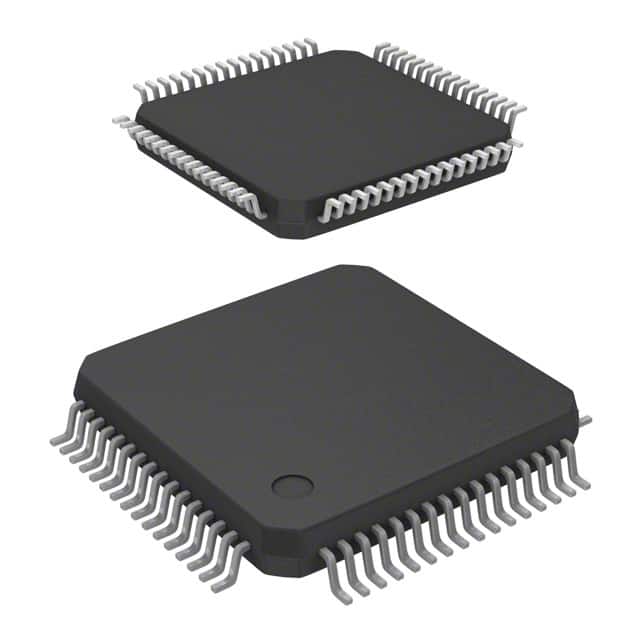
STMicroelectronics E-STE100P
- Part No.:
- E-STE100P
- Manufacturer:
- STMicroelectronics
- Category:
- Drivers, Receivers, Transceivers
- Package:
- 64-LQFP
- Datasheet:
-
 E-STE100P.pdf
- Description:
- IC TRANSCEIVER HALF 1/1 64TQFP
- Quantity:
- Payment:

- Shipping:

Inventory:2,505
Please send an inquiry. Send us your inquiry, and we will respond immediately.
Product details
Overview
E-STE100P from STMicroelectronics is a 3.3V 10/100BASE-TX/T Ethernet PHY transceiver with MII interface, IEEE 802.3u/802.3 compliance, full/half-duplex support at 10/100 Mbps, auto-negotiation (NWAY), and integrated MLT-3 encoder/decoder for twisted-pair physical layer interfacing in industrial networking equipment.
For engineers reviewing the E-STE100P datasheet, E-STE100P pinout, E-STE100P application, or E-STE100P equivalent, this device serves as a complete physical layer solution requiring no external scrambler, 4B/5B logic, or adaptive equalization circuitry - critical for compact MAC-PHY designs in embedded switches, routers, and industrial controllers.
Technical Context
The STE100P implements a full IEEE 802.3u-compliant PHY layer including Manchester/NRZI/MLT-3 encoding/decoding, adaptive equalization, baseline wander compensation, and parallel detection logic. It supports both symbol-mode (4B/5B) and non-symbol transmit/receive paths.
Its MII interface operates with synchronous TX_CLK/RX_CLK at 25 MHz (100 Mbps) or 2.5 MHz (10 Mbps), while hardware configuration pins (mf0–mf4, cfg0/cfg1, fde) set initial register values before MDIO takeover - enabling boot-time PHY address assignment and mode selection without software initialization.
Key Specifications
| Parameter | Value and Actual Design Meaning |
|---|---|
| Data Rate | 10 Mbps and 100 Mbps - supports both legacy 10Base-T and Fast Ethernet 100Base-TX operation in same silicon. |
| Interface | Standard Media Independent Interface (MII) - enables direct connection to any IEEE 802.3-compliant MAC without glue logic. |
| Auto-Negotiation | IEEE 802.3u NWAY compliant - negotiates speed, duplex, and flow control capability with link partner during link establishment. |
| Encoding | Integrated 4B/5B encoder/decoder + MLT-3 transmitter + NRZI-to-Manchester receiver - eliminates need for external line coding ICs. |
| Power Supply | 3.3V single supply - digital (VCCE), analog (VCCA), and ground domains are separated for noise immunity in mixed-signal Ethernet signaling. |
| Temperature Range | Industrial grade (−40°C to +85°C) - validated for use in factory automation, transportation, and outdoor network infrastructure. |
| Package | TQFP64 (10×10×1.40 mm) - surface-mount package with exposed thermal pad compatible with standard reflow profiles. |
Pinout & Package
Package: TQFP64 (10 mm × 10 mm × 1.40 mm), thermally enhanced with exposed pad. Pin 1 marked by dot; pin numbering follows standard counter-clockwise QFP convention.
| Pin/Terminal | Circuit Role | Design Meaning |
|---|---|---|
| TXP/TXN (pins 21,23) | Differential Transmit Output | Direct drive to 1:1 center-tapped transformer - MLT-3 waveform output compliant with 100Base-TX spectral mask. |
| RXP/RXN (pins 19,18) | Differential Receive Input | Accepts twisted-pair signals with adaptive equalization and smart squelch - rejects common-mode noise up to 1500 VDC isolation rating. |
| TXD[3:0], TX_EN, TX_CLK (pins 52–54,53) | MII Transmit Interface | Synchronous 4-bit data path clocked by STE100P-generated TX_CLK - eliminates need for external clock source in 100 Mbps mode. |
| RXD[3:0], RX_DV, RX_CLK (pins 47–41,49) | MII Receive Interface | RX_CLK is output-only and phase-aligned to recovered symbol timing - enables deterministic MAC sampling without PLL jitter accumulation. |
| MDC/MDIO (pins 42,41) | Serial Management Interface | 2.5 MHz max SMI bus for IEEE 802.3 clause 22 register access - supports up to 32 unique PHY addresses via PAD[4:0] hardware configuration. |
| CFG0/CFG1/FDE (pins 64,63,5) | Hardware Configuration Inputs | Set PR4 advertisement bits and initial PR0 control bits (e.g., ANEN, DPSEL) at power-up - enables static PHY setup without MDIO firmware. |
Key Features
| Feature | Design Value |
|---|---|
| Integrated Scrambler/Descrambler | Eliminates long DC-biased sequences in 100 Mbps transmission - ensures compliance with IEEE 802.3u spectral emission limits without external logic. |
| Adaptive Equalization + Smart Squelch | Compensates for cable length variation (5–100 m) and maintains BER < 10⁻¹² - enables reliable operation across CAT3/CAT5 UTP links. |
| Hardware-Configurable PHY Address | Five LED/PAD pins (ledr10, ledtr, ledl, ledc, leds) double as PHY address inputs - allows multiple STE100Ps on shared MII without address conflict. |
| LED Status Outputs with Configurable Polarity | Five dedicated CMOS LED drivers (active-high/low selectable via pull-up/down at power-up) - provides real-time link/speed/duplex/collision feedback without MCU GPIO overhead. |
| Loopback Modes (Digital & Analog) | PR0 bit 14 (via CFG1) enables internal digital loopback; PR19 bit 15 enables analog loopback - supports production test and field diagnostics without external cabling. |
Applications
| Industrial Ethernet Switch | Embedded Network Controller |
|---|---|
|
Use Scenario: DIN-rail mounted managed switch in factory automation with 4–8 ports and real-time traffic prioritization. IC Role / Device Role / Timing Role: PHY layer transceiver handling physical signaling between MAC and RJ-45 magnetics - recovers clock from incoming symbols and generates jitter-controlled TX_CLK for MAC synchronization. Use Value: Integrated adaptive equalization maintains signal integrity over 100 m CAT5 cable runs typical in plant-floor deployments, reducing need for repeaters or active hubs. |
Use Scenario: PLC or CNC controller with built-in Ethernet port for HMI communication and remote diagnostics. IC Role / Device Role / Timing Role: Full-duplex 100 Mbps PHY enabling simultaneous upload of machine logs and download of firmware updates without collision delay. Use Value: Hardware-configured auto-negotiation (via CFG0/CFG1) ensures deterministic link-up behavior during cold boot - critical for unattended industrial restarts. |
| Networked Power Meter | Building Automation Gateway |
|
Use Scenario: DIN-rail energy meter with Modbus TCP and SNMP support deployed in commercial HVAC systems. IC Role / Device Role / Timing Role: Low-power 10/100 PHY supporting IEEE 802.3x flow control - prevents packet loss during bursty meter reading cycles. Use Value: Power-down mode (PWPDN pin + PR0:11) reduces idle current to <100 µA - extends battery backup runtime during AC outage. |
Use Scenario: BACnet/IP gateway aggregating LonWorks, KNX, and DALI devices onto IP backbone in smart buildings. IC Role / Device Role / Timing Role: MII-connected PHY providing deterministic latency for time-sensitive BACnet MSTP-to-IP bridging. Use Value: On-chip carrier sense (CRS) and collision detect (COL) outputs enable precise MAC-level contention management - essential for deterministic scheduling in converged building networks. |
Equivalent & Alternatives
The following parts are listed as comparable options for similar 10/100BASE-TX PHY applications.
| Alternative Part | Technical Difference | Application Difference | Selection Advice |
|---|---|---|---|
| DP83848C (Texas Instruments) | Supports RMII in addition to MII; includes integrated voltage regulator and lower 0.18 µm process - 20% lower dynamic power at 100 Mbps. | RMII option simplifies PCB layout in cost-sensitive consumer gateways; lacks hardware LED polarity configuration. | Select if RMII interface or integrated LDO is required; verify compatibility with existing MII timing constraints. |
| LAN8720A (Microchip) | Smaller QFN32 package; supports HP Auto-MDIX and Wake-on-LAN - no parallel detection or hardware CFG pin mapping. | Better suited for space-constrained IoT edge nodes; requires MDIO initialization for all configuration - no boot-time static setup. | Select for compact designs needing auto-crossover and WoL; avoid if hardware-configurable PHY address or parallel detection is mandatory. |
Compared with DP83848C and LAN8720A, the E-STE100P uniquely supports hardware-driven PHY address assignment and parallel detection fallback - making it preferred for deterministic, firmware-light industrial deployments where MDIO stack integration is constrained.
Availability
E-STE100P is available at Aetrix Electronics and suitable for industrial Ethernet switches, embedded network controllers, networked power meters, and building automation gateways requiring stable component supply across extended product lifecycles.
Supply support for E-STE100P includes scheduled delivery planning, volume procurement assistance, BOM continuity management, traceable sourcing, and lifecycle availability coordination for OEM customers, industrial embedded developers, connected-device designers, and electronics production programs.
Manufacturer
STMicroelectronics is a global semiconductor leader headquartered in Geneva, Switzerland, specializing in microcontrollers, analog ICs, and connectivity solutions for industrial, automotive, and power applications.
The STE100P belongs to ST's legacy Ethernet PHY product line designed specifically for robust, low-software-footprint 10/100 Mbps connectivity in harsh industrial environments - emphasizing hardware configurability, wide temperature operation, and IEEE compliance without firmware dependency.
FAQ
Does the E-STE100P support Auto-MDIX?
No, the E-STE100P does not implement Auto-MDIX. It requires external crossover or straight-through cabling depending on link partner type. The device relies on standard MDI/MDI-X pinout definitions per IEEE 802.3u, and correct physical layer connection must be ensured at board level using appropriate magnetics and PCB routing.
What is the function of the RIP (Reset In Progress) pin?
The RIP pin (pin 29) is an open-drain output that goes high when internal power-on reset completes and all registers are initialized. It remains low until >1 ms after VCC stabilization, signaling to external logic (e.g., FPGA or microcontroller) that the PHY is ready for MDIO register access and MII interface activation.
Can the E-STE100P operate at 10 Mbps only without auto-negotiation?
Yes. When mf0 = 0 (Auto-Negotiation disabled), the device enters forced mode: speed and duplex are set by fde (full-duplex enable) and SPSEL (speed select) bits, allowing fixed 10 Mbps half-duplex, 10 Mbps full-duplex, or 100 Mbps configurations independent of link partner negotiation.
Is an external crystal required for 100 Mbps operation?
Yes. A 25 MHz fundamental-mode crystal must be connected between X1 (pin 12) and X2 (pin 11). The STE100P uses this reference to generate its internal 25 MHz TX_CLK and RX_CLK - no PLL is used, so frequency accuracy depends directly on crystal tolerance (±50 ppm typical).
E-STE100P Specifications
- Product attributes
- Attribute value
- Manufacturer:
- STMicroelectronics
- Series:
- -
- Package/Case:
- 64-LQFP
- Packaging:
- Tray
- Product Status:
- Obsolete
- Type:
- Transceiver
- Protocol:
- MII
- Number of Drivers/Receivers:
- 1/1
- Duplex:
- Half
- Receiver Hysteresis:
- -
- Data Rate:
- -
- Voltage - Supply:
- 3.15V ~ 3.45V
- Operating Temperature:
- -40°C ~ 85°C
- Grade:
- -
- Qualification:
- -
- Mounting Type:
- Surface Mount
- Supplier Device Package:
- 64-TQFP (10x10)
E-STE100P FAQ
1.How can I place an order for E-STE100P through Aetrix?
Please submit a Request for Quotation (RFQ) for E-STE100P on Aetrix. Our sales agent will provide a competitive quotation and guide you through the order confirmation once you accept the terms.
2.Are the price and stock information for E-STE100P reliable?
The price and inventory of E-STE100P are updated periodically and may fluctuate due to market conditions. Stock and pricing data are typically refreshed every 24 hours. Quotation validity for E-STE100P is usually 5 days.
3.What payment methods are accepted for E-STE100P?
We accept Wire Transfer, PayPal, Credit Card, Western Union, MoneyGram, and Escrow for E-STE100P transactions.
Note: Certain payment methods may incur a processing fee.
4.How is shipping managed for E-STE100P?
E-STE100P orders can be shipped via leading logistics carriers, including DHL, UPS, FedEx, TNT, or Registered Mail.
Once your E-STE100P order is processed, you will receive an email with the shipment details and tracking number.
Note: Tracking information may take up to 24 hours to appear. Express delivery typically takes 3–5 business days.
5.How can I obtain technical support or documentation for E-STE100P?
For technical support, including E-STE100P datasheets, pinout diagrams, or application guidance, please contact our engineering support team. They can provide detailed documentation and assistance for your E-STE100P requirements.
6.How does Aetrix verify that E-STE100P is sourced from the original manufacturer or authorized distributors?
All E-STE100P products on Aetrix are procured from qualified distributors and authorized channels. Our dedicated quality assurance team conducts strict verification, including traceability checks and, if necessary, third-party testing. This ensures that E-STE100P meets industry standards.
7.What is the process for return or replacement of E-STE100P?
All E-STE100P units undergo pre-shipment inspection (PSI). If there is an issue with E-STE100P, returns or replacements are accepted under the following conditions:
1.Quantity discrepancies, incorrect items, or visible external defects (such as breakage or corrosion), acknowledged by Aetrix.
2.The issue is reported within 90 days of delivery.
3.The E-STE100P part is unused and in its original packaging.
Return procedure for E-STE100P:
1.Submit a request within 90 days.
2.Obtain a Return Material Authorization (RMA) from Aetrix.
E-STE100P Tags

-
ATA6561-GAQW-N
Microchip Technology
-
ATA6561-GBQW-N
Microchip Technology
-
AM26LS32ACDR
Texas Instruments

-
SP485CN-L/TR
MaxLinear, Inc.
-
SP485EN-L/TR
MaxLinear, Inc.
-
SP485EEN-L/TR
MaxLinear, Inc.
-
SP485ECN-L/TR
MaxLinear, Inc.
-
THVD1400DR
Texas Instruments
-
AM26C31IDR
Texas Instruments

-
TLIN1021ADRQ1
Texas Instruments
-
MAX232IDR
Texas Instruments
-
AM26C32IDR
Texas Instruments
Tech Hub

Operational amplifier guide covering op amp basics, feedback, ideal vs real op amps, common configurations, buffer circuits, offset, bias current, gain-bandwidth, slew rate, rail-to-rail limits and sel…

Jumper cables guide covering safe connection order, red and black clamp placement, final ground connection, cable gauge, length, clamp quality, copper vs CCA cables, jump starter comparison and battery…

LDO regulator guide covering low dropout voltage, power dissipation, thermal design, PSRR, output noise, capacitor stability, adjustable LDO circuits, LDO vs buck converter and datasheet selection chec…

Conditional Access Module guide covering CAM meaning, CI/CI+ interface, smart card authorization, DVB security workflow, TV and set-top box compatibility, internal electronics, ESD protection, connecto…

Guide to electronic component obsolescence covering EOL risk, PCN/PDN notices, last-time buy planning, replacement options, form-fit-function validation, counterfeit risk and BOM lifecycle management.

18650 battery guide covering lithium-ion cell basics, 3.6V/3.7V voltage, 4.2V charging, mAh and Wh capacity, protected cells, chargers, BMS, series-parallel packs, holders, welding and sourcing checks.…

Hall effect sensor guide covering working principle, linear and digital sensors, Arduino circuits, current sensing, speed detection, automotive applications, A3144 examples, signal filtering and datash…

Product Change Notification guide for electronic components, covering PCN meaning, PCN vs PDN/EOL, common change types, risk levels, form-fit-function review, engineering validation, BOM control, LTB/L…

A practical guide to blend door actuators, covering HVAC function, symptoms, location, AC and heater issues, reset and calibration, replacement cost, electrical diagnosis, compatibility checks, and rep…

Engineering guide to Raspberry Pi alternatives, covering chip-level differences, Orange Pi, ROCK, Jetson, Banana Pi, NanoPi, Compute Module, Pico, GPIO, camera, HAT compatibility, and replacement risks…


