
 My Inquiry
 My Account


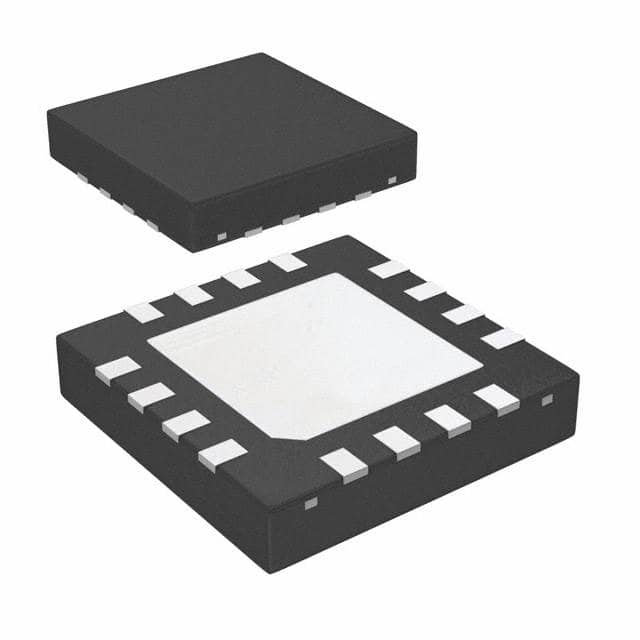
STMicroelectronics E-TDA7479AD
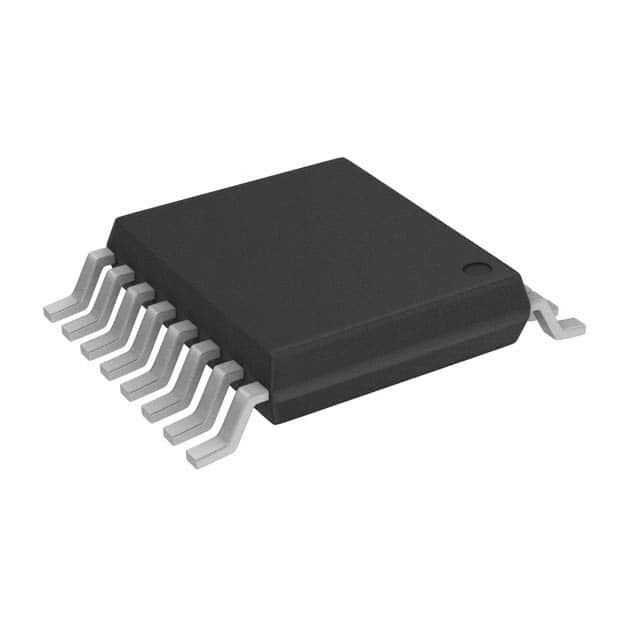
- Part No.:
- E-TDA7479AD
- Manufacturer:
- STMicroelectronics
- Category:
- Video Processing
- Package:
- 16-TSSOP (0.173", 4.40mm Width)
- Datasheet:
-
 E-TDA7479AD.pdf
- Description:
- IC VIDEO RDS DMOD/FILTER 16TSSOP
- Quantity:
- Payment:

- Shipping:

Inventory:4,883
Please send an inquiry. Send us your inquiry, and we will respond immediately.
Product details
Overview
E-TDA7479AD from STMicroelectronics is a single-chip RDS (Radio Data System) demodulator and 8th-order 57 kHz bandpass filter for FM radio receivers. It performs fully digital RDS signal recovery per EBU specifications, delivers synchronized 1187.5 Hz RDCL clock and parallel RDDA data outputs, and provides ARI (Announcement Radio Identification) and signal quality (QUAL) status flags. Used in automotive and consumer FM tuners requiring embedded RDS decoding.
For engineers reviewing the E-TDA7479AD datasheet, E-TDA7479AD pinout, E-TDA7479AD application, or E-TDA7479AD equivalent, this page details its integrated 57 kHz filtering, crystal oscillator options (4.332/8.664/17.328 MHz), low-noise CMOS architecture, and direct interface to external RDS decoders via TTL-compatible outputs.
Technical Context
The TDA7479 integrates a cascaded antialiasing + switched-capacitor 8th-order bandpass filter centered at 57 kHz (±0.5 kHz) with 3 dB bandwidth of 3 kHz and >22 dB attenuation at ±4 kHz offset. Its digital demodulation section extracts the biphase-decoded RDS data stream (RDDA) and recovers the 1187.5 Hz clock (RDCL) using dual PLLs - one for fast ARI detection and another for precise RDS timing synchronization.
Pin configuration enables flexible oscillator selection: FSEL sets crystal frequency (4.332/8.664/17.328 MHz), OSEL disables internal oscillator for external drive (60–150 mVpp), and TM/EXTRES support test mode and hardware reset. All inputs feature internal pull-up (OSEL) or pull-down (FSEL, TM, EXTRES) resistors.
Key Specifications
| Parameter | Value and Actual Design Meaning |
|---|---|
| Filter center frequency | 57 kHz ±0.5 kHz - precisely selects RDS subcarrier without external tuning components |
| Filter order & type | 8th-order switched-capacitor bandpass - achieves sharp roll-off and high out-of-band rejection (>22 dB at ±4 kHz) |
| RDS clock output (RDCL) | 1187.5 Hz TTL-level - synchronized to incoming data with 416.7 µs data hold time after clock edge |
| RDS sensitivity | 1 mVrms at MPX input - enables reliable decoding under weak FM signal conditions |
| Supply voltage range | 4.5–5.5 V - compatible with standard 5 V automotive and consumer power rails |
| Quartz frequencies | 4.332 MHz (default), 8.664 MHz, or 17.328 MHz - selectable via FSEL pin configuration |
| Operating temperature | −40 °C to +85 °C - qualified for automotive cabin and industrial tuner environments |
Pinout & Package
TSSOP16 package: 5.0 mm × 4.4 mm body, 0.65 mm pitch, 1.05 mm max height, lead-free ECOPACK® compliant.
| Pin/Terminal | Circuit Role | Design Meaning |
|---|---|---|
| 1 QUAL | RDS signal quality flag | High = valid RDS lock; used by host MCU to validate data integrity before parsing |
| 2 RDDA | RDS data output | Parallel TTL-level biphase-decoded data stream synchronized to RDCL |
| 4 MPX | RDS composite input | Accepts 57 kHz RDS+ARI subcarrier from FM IF stage; 120 kΩ input impedance |
| 7 ARI | Announcement Radio Identification flag | High when ARI present (RDS+ARI or ARI-only); undefined if no signal |
| 8 FILOUT | Filter output | 57 kHz bandpass-filtered signal; drives external demodulator or spectrum analyzer |
| 9 FSEL | Frequency select control | Configures crystal frequency: open = 4.332 MHz, VS = 8.664 MHz, GND = 17.328 MHz |
| 11 EXTRES | Hardware reset input | Pull to VS to force device reset; internal pull-down ensures run mode on power-up |
| 12 VS | Positive supply | 4.5–5.5 V; supplies all analog/digital sections; requires 10 μF + 100 nF local decoupling |
| 15 T57 | 57 kHz test clock output | Provides diagnostic 57 kHz reference for alignment and debug of downstream stages |
| 16 RDCL | RDS clock output | 1187.5 Hz TTL clock edge-aligned to RDDA transitions; supports rising/falling-edge sampling |
Key Features
| Feature | Design Value |
|---|---|
| Fully digital RDS demodulation | Eliminates external analog filters, comparators, and clock recovery ICs - reduces BOM count and layout area |
| Adjustment-free 8th-order SC filter | Guarantees 57 kHz passband stability over voltage/temperature without trimmers or calibration |
| Three selectable crystal frequencies | Enables system-level optimization: 4.332 MHz for low EMI, 17.328 MHz for higher noise immunity |
| External oscillator mode (OSEL = GND) | Reduces radiated emissions by disabling internal oscillator; accepts 60–150 mVpp sine input |
| Integrated ARI and QUAL indicators | Provides real-time status for host firmware to manage display updates and fallback behavior |
Applications
| Automotive FM Tuner Modules | Consumer Stereo Receivers |
|---|---|
Use Scenario: Integrated RDS decoding in OEM dashboard radios with traffic announcement (TA) and program service (PS) name display. IC Role / Device Role / Timing Role: Front-end RDS demodulator generating RDCL/RDDA for microcontroller-based decoder; QUAL and ARI signals enable dynamic UI updates. Use Value: Enables compliance with EU RDS standards while reducing external component count by 7+ parts versus discrete filter+PLL solutions. | Use Scenario: High-fidelity home audio systems supporting station name, song title, and alternative frequency (AF) switching. IC Role / Device Role / Timing Role: Dedicated RDS signal conditioner feeding FPGA or ARM-based decoder; T57 output aids factory calibration. Use Value: Delivers 40 dB S/N ratio at 3 mVrms input, ensuring robust decoding even with low-gain IF stages. |
| Portable FM Radios with Display | Professional Broadcast Monitoring Equipment |
Use Scenario: Battery-powered handheld radios requiring low quiescent current and compact footprint. IC Role / Device Role / Timing Role: Low-power RDS extraction block; operates at 11 mA typical supply current with 5 V rail. Use Value: TSSOP16 package (5.0 × 4.4 mm) and no external passive filter components reduce PCB area by >30% vs SO16 alternatives. | Use Scenario: Field-deployable RDS signal analyzers verifying broadcast station compliance with EBU RDS specification. IC Role / Device Role / Timing Role: Reference-grade 57 kHz filter and clock generator; FILOUT and T57 pins provide calibrated test points. Use Value: 8th-order filter achieves <3.5 kHz 3dB BW and >60 dB attenuation at 38 kHz, enabling precise spectral analysis. |
Equivalent & Alternatives
The following parts are listed as comparable options for similar RDS demodulator applications.
| Alternative Part | Technical Difference | Application Difference | Selection Advice |
|---|---|---|---|
| Si4702-C10 | Single-chip FM+RDS receiver with integrated ADC, DSP, and I²C interface; no discrete MPX input required | Replaces entire IF+demodulator chain; requires host processor with I²C and firmware stack | Choose for new designs needing full software-defined radio flexibility and smaller total solution size |
| TDA7332 | Analog RDS demodulator with external PLL and op-amp filter; requires 12+ external components including trimmer capacitors | Legacy design compatibility; lower integration but wider supply range (6–18 V) | Choose only for drop-in replacement in existing TDA7332-based boards where redesign is prohibited |
Compared with Si4702-C10, E-TDA7479AD offers simpler analog interface and deterministic timing but lacks integrated ADC/DSP; compared with TDA7332, it eliminates manual tuning and improves RDS sensitivity by 6 dB while halving component count.
Availability
E-TDA7479AD is available at Aetrix Electronics and suitable for automotive infotainment systems, consumer stereo receivers, portable FM radios, and broadcast monitoring equipment requiring stable component supply and long-term lifecycle support.
Supply support for E-TDA7479AD includes scheduled delivery planning, volume procurement assistance, BOM continuity management, traceable sourcing, and lifecycle availability coordination for OEM customers, industrial embedded developers, connected-device designers, and electronics production programs.
Manufacturer
STMicroelectronics is a global semiconductor leader headquartered in Geneva, Switzerland, designing and manufacturing microcontrollers, power ICs, sensors, and analog chips for industrial, automotive, and consumer markets.
The TDA7xxx audio processing product line targets FM/AM radio subsystems, delivering integrated RDS, ARI, and audio signal conditioning functions optimized for cost-sensitive, high-reliability tuner applications.
FAQ
What crystal oscillator configurations does E-TDA7479AD support?
E-TDA7479AD supports three crystal frequencies: 4.332 MHz (default, FSEL open), 8.664 MHz (FSEL tied to VS), and 17.328 MHz (FSEL tied to GND). External drive mode (OSEL = GND) accepts 4.332/8.664/17.328 MHz sine inputs with 60–150 mVpp amplitude. C1 = 27 pF and C2 = 47 pF are recommended for 4.332 MHz operation.
How does the QUAL output indicate RDS signal validity?
The QUAL pin outputs logic high when the internal PLL achieves stable lock on the 57 kHz RDS subcarrier and the demodulated data meets minimum signal-to-noise criteria. It remains low during acquisition, weak signal conditions, or loss of lock. Host firmware must sample QUAL synchronously with RDCL edges to avoid metastability.
Can E-TDA7479AD operate without an external crystal?
No - E-TDA7479AD requires either a quartz crystal (4.332/8.664/17.328 MHz) connected between OSCIN and OSCOUT, or an external sinusoidal clock source (same frequencies) applied to OSCIN with OSEL grounded. The internal oscillator cannot be disabled without providing an alternative clock source.
What is the purpose of the FILOUT pin in system design?
FILOUT provides the filtered 57 kHz RDS subcarrier signal after the 8th-order switched-capacitor bandpass stage. It allows external verification of filter performance using oscilloscopes or spectrum analyzers, supports hybrid architectures where analog demodulation follows digital filtering, and enables diagnostic monitoring of MPX path integrity prior to digital decoding.
E-TDA7479AD Specifications
- Product attributes
- Attribute value
- Manufacturer:
- STMicroelectronics
- Series:
- -
- Package/Case:
- 16-TSSOP (0.173", 4.40mm Width)
- Packaging:
- Tube
- Product Status:
- Obsolete
- Function:
- Demodulator, Filter
- Applications:
- FM Radio Receiver
- Standards:
- -
- Control Interface:
- -
- Voltage - Supply:
- 4.5V ~ 5.5V
- Mounting Type:
- Surface Mount
- Grade:
- -
- Qualification:
- -
- Supplier Device Package:
- 16-TSSOP
E-TDA7479AD FAQ
1.How can I place an order for E-TDA7479AD through Aetrix?
Please submit a Request for Quotation (RFQ) for E-TDA7479AD on Aetrix. Our sales agent will provide a competitive quotation and guide you through the order confirmation once you accept the terms.
2.Are the price and stock information for E-TDA7479AD reliable?
The price and inventory of E-TDA7479AD are updated periodically and may fluctuate due to market conditions. Stock and pricing data are typically refreshed every 24 hours. Quotation validity for E-TDA7479AD is usually 5 days.
3.What payment methods are accepted for E-TDA7479AD?
We accept Wire Transfer, PayPal, Credit Card, Western Union, MoneyGram, and Escrow for E-TDA7479AD transactions.
Note: Certain payment methods may incur a processing fee.
4.How is shipping managed for E-TDA7479AD?
E-TDA7479AD orders can be shipped via leading logistics carriers, including DHL, UPS, FedEx, TNT, or Registered Mail.
Once your E-TDA7479AD order is processed, you will receive an email with the shipment details and tracking number.
Note: Tracking information may take up to 24 hours to appear. Express delivery typically takes 3–5 business days.
5.How can I obtain technical support or documentation for E-TDA7479AD?
For technical support, including E-TDA7479AD datasheets, pinout diagrams, or application guidance, please contact our engineering support team. They can provide detailed documentation and assistance for your E-TDA7479AD requirements.
6.How does Aetrix verify that E-TDA7479AD is sourced from the original manufacturer or authorized distributors?
All E-TDA7479AD products on Aetrix are procured from qualified distributors and authorized channels. Our dedicated quality assurance team conducts strict verification, including traceability checks and, if necessary, third-party testing. This ensures that E-TDA7479AD meets industry standards.
7.What is the process for return or replacement of E-TDA7479AD?
All E-TDA7479AD units undergo pre-shipment inspection (PSI). If there is an issue with E-TDA7479AD, returns or replacements are accepted under the following conditions:
1.Quantity discrepancies, incorrect items, or visible external defects (such as breakage or corrosion), acknowledged by Aetrix.
2.The issue is reported within 90 days of delivery.
3.The E-TDA7479AD part is unused and in its original packaging.
Return procedure for E-TDA7479AD:
1.Submit a request within 90 days.
2.Obtain a Return Material Authorization (RMA) from Aetrix.
E-TDA7479AD Tags
-
HDMI2C1-6C1
STMicroelectronics
-
ADA4430-1YKSZ-R7
Analog Devices Inc.

-
LM1881MX/NOPB
Texas Instruments
-
SN75DP130SSRGZR
Texas Instruments
-
EQCO30T5.2
Microchip Technology
-
LMH1980MM/NOPB
Texas Instruments
-
EQCO30R5.D
Microchip Technology

-
SII9022ACNU
Lattice Semiconductor Corporation
-
SN65DP159RGZR
Texas Instruments
-
SN65DP159RSBR
Texas Instruments
-
SN65DP141RLJR
Texas Instruments
-
LMH0303SQ/NOPB
Texas Instruments
Tech Hub

A practical engineering guide to 3.3V and 5V logic compatibility, input thresholds, resistor dividers, translator ICs, MOSFET level shifting, I2C pull-ups, timing limits and power-sequencing risks.

The 74HC595 uses push-pull logic outputs, while the TPIC6B595 uses 50 V open-drain DMOS sinks for higher-power loads. This guide compares timing, current limits, 3.3 V interfacing, load wiring, thermal…

The 74HC595 converts serial data into eight stable parallel outputs. This guide covers pin functions, shift and storage timing, OE and MR behavior, drive-current limits, cascading, voltage compatibilit…

A technical comparison of level-sensitive latches and edge-triggered flip-flops, covering timing windows, setup and hold limits, master–slave operation, time borrowing, race-through, HDL inference and…

A D latch stores one bit while Enable controls when data can pass. This reference covers gate-level operation, truth tables, transparency, setup and hold timing, LE versus OE, common ICs and practical …

An SR latch stores one bit through cross-coupled feedback. This engineering reference covers NOR and NAND implementations, truth tables, forbidden-state recovery, gated operation, switch debouncing, fa…

Latch circuits retain one bit through feedback. This technical reference covers SR and D latches, truth tables, transparency, timing limits, latch-versus-flip-flop behavior, applications and common log…

An engineering guide to LED driver operation, constant-current and constant-voltage outputs, linear and switching topologies, dimming, IC selection, calculations, replacement compatibility, and fault c…

Operational amplifier guide covering op amp basics, feedback, ideal vs real op amps, common configurations, buffer circuits, offset, bias current, gain-bandwidth, slew rate, rail-to-rail limits and sel…

Jumper cables guide covering safe connection order, red and black clamp placement, final ground connection, cable gauge, length, clamp quality, copper vs CCA cables, jump starter comparison and battery…


