
 My Inquiry
 My Account


STMicroelectronics E-TEA3718SFP
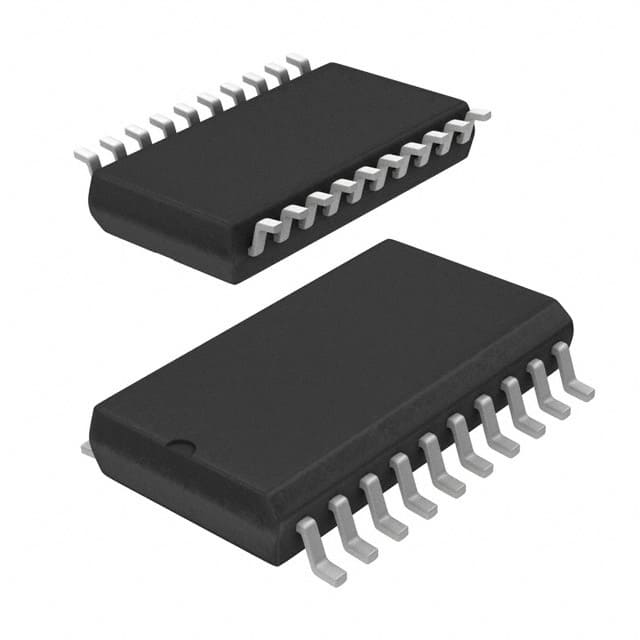
- Part No.:
- E-TEA3718SFP
- Manufacturer:
- STMicroelectronics
- Category:
- Motor Drivers, Controllers
- Package:
- 20-SOIC (0.295", 7.50mm Width)
- Datasheet:
-
 E-TEA3718SFP.pdf
- Description:
- IC MTR DRV BIPLR 4.75-5.25V 20SO
- Quantity:
- Payment:

- Shipping:

Inventory:2,388
Please send an inquiry. Send us your inquiry, and we will respond immediately.
Product details
Overview
E-TEA3718SFP from STMicroelectronics is a bipolar stepper motor driver IC in SO20 package, designed to regulate constant current in one winding of a bipolar stepper motor using switch-mode chopper control. It supports full-step and half-step operation, delivers up to 1.5 A output current, operates from 10–50 V motor supply (VS), and features pre-alarm thermal protection at ~170 °C for industrial motion control systems.
For engineers reviewing the E-TEA3718SFP datasheet, E-TEA3718SFP pinout, E-TEA3718SFP application, or E-TEA3718SFP equivalent, key selection criteria include its SO20 footprint, pre-alarm output (not alarm), three-level logic-selectable current (via IN0/IN1), integrated H-bridge with built-in protection diodes, and compatibility with LS-TTL or microprocessor-based step/direction interfaces.
Technical Context
The E-TEA3718SFP implements a monostable-based chopper controller with three comparator thresholds (VCH/VCM/VCL) selected by IN0/IN1 logic inputs, enabling discrete current levels (0, low, medium, max) determined jointly by reference voltage (VR), sense resistor (RS), and comparator thresholds. Its pulse time (toff = 0.69·RT·CT) governs current decay during off-time.
The output stage integrates four Darlington transistors and four protection diodes in an H-bridge configuration, with separate VS(A)/VS(B) supply pins for dual half-bridge operation and dedicated VSS for logic. PHASE input controls current direction with Schmitt-trigger input and internal delay to prevent shoot-through, while SENSE RESISTOR connects to lower emitter nodes for current sensing.
Key Specifications
| Parameter | Value and Actual Design Meaning |
|---|---|
| Output Current | ±1.5 A maximum - supports high-torque bipolar stepper motors without external current amplification |
| Motor Supply Range (VS) | 10–50 V - accommodates unstabilized DC supplies common in industrial actuators and CNC stages |
| Logic Supply (VSS) | 4.75–5.25 V - tightly regulated 5 V domain ensures noise-immune TTL-compatible input operation |
| Current Control Resolution | 3 discrete levels + off - selected via IN0/IN1 truth table; enables coarse but deterministic torque scaling |
| Pre-Alarm Threshold | ~170 °C junction temperature - active-low PRE-ALARM output signals thermal stress before shutdown, allowing system-level derating |
| Thermal Resistance (Rth(j-a)) | 60 °C/W (SO20 on 4 cm² copper) - defines maximum power dissipation (≤3.1 W at Im=1 A) under natural convection |
| Switching Frequency | Up to 30 kHz - enables smooth microstepping-compatible current regulation with minimal audible noise |
Pinout & Package
E-TEA3718SFP is housed in a 20-pin Small Outline (SO20) package with gull-wing leads, optimized for surface-mount assembly and moderate-power thermal dissipation. GND pins (pins 10, 11, 19, 20) serve dual roles as signal ground and thermal conduction paths to PCB copper.
| Pin/Terminal | Circuit Role | Design Meaning |
|---|---|---|
| OUTA / OUTB | H-bridge output terminals | Drive opposite ends of a single bipolar stepper winding; form complete current path with internal Darlington pairs and clamping diodes |
| PHASE | Direction control input | TTL-compatible Schmitt-triggered logic input that sets current flow direction (OUTA→OUTB or OUTB→OUTA) with internal delay to prevent cross-conduction |
| IN0 / IN1 | Current level select inputs | Two-bit logic interface selecting one of four current modes (off, low, medium, max) per truth table; open-circuit defaults to high |
| PULSE TIME | Chopper timing node | RC network connection setting fixed off-time (toff = 0.69·RT·CT) for current decay; determines chopping frequency and ripple |
| SENSE RESISTOR | Current sense return | Connection point for external low-value sense resistor (RS); feeds filtered voltage to comparators for current regulation feedback |
| REFERENCE | Comparator reference voltage | Analog input setting baseline threshold for all three comparators; directly scales output current magnitude with RS |
| PRE-ALARM | Thermal pre-warning output | Active-low open-collector output asserted at ~170 °C junction temp; distinct from ALARM (used in SP/DP variants) and enables early thermal management |
| VS(A) / VS(B) | Power stage supply inputs | Separate inputs for upper and lower half-bridges; allow independent supply routing and reduce ground bounce in high-current switching |
| VSS | Logic supply input | 5 V supply for internal logic, comparators, and input buffers; must be decoupled locally to maintain noise immunity |
| GND | Common reference | Four dedicated pins provide low-inductance return path for logic, sense, and power stages; critical for stable chopper regulation |
Key Features
| Feature | Design Value |
|---|---|
| Bipolar H-bridge with integrated diodes | Eliminates need for 8 external flyback diodes; reduces BOM count and PCB area in dual-winding stepper drivers |
| Three-level programmable current control | Enables torque optimization across speed ranges-e.g., lower current at standstill to reduce heating, higher current during acceleration |
| Pre-alarm thermal output (SO20-specific) | Provides early warning at ~170 °C, allowing host MCU to reduce step rate or disable drive before thermal shutdown occurs |
| Unstabilized VS operation support | Accepts wide 10–50 V motor supply range without regulation-ideal for battery-powered or unregulated industrial DC rails |
| LS-TTL and microprocessor compatible inputs | Direct interface with 5 V MCUs or logic families without level-shifting; Schmitt-triggered PHASE input rejects noise in noisy motor environments |
Applications
| Industrial CNC Positioning | Automated Laboratory Equipment |
|---|---|
|
Use Scenario: Precision open-loop positioning of X-Y stages in milling machines and engravers using NEMA 17/23 stepper motors. IC Role / Device Role / Timing Role: Constant-current chopper driver regulating one motor phase; PHASE and PULSE TIME set direction and decay timing for smooth full/half-step motion. Use Value: Delivers 1.5 A peak current with <30 kHz switching to minimize torque ripple and audible noise at mid-range speeds (200–1000 pps). |
Use Scenario: Controlled reagent dispensing in robotic liquid handlers, where repeatable micro-displacement is required. IC Role / Device Role / Timing Role: Bipolar winding driver accepting step/direction commands from ARM-based controller; IN0/IN1 configure low-current hold mode between dispense cycles. Use Value: Pre-alarm output triggers firmware-based current reduction before thermal throttling, maintaining positional accuracy over extended duty cycles. |
| Printed Circuit Board Router | Medical Imaging Sample Stage |
|
Use Scenario: High-speed PCB drilling with rapid acceleration/deceleration profiles demanding consistent torque delivery. IC Role / Device Role / Timing Role: Motor winding controller implementing switch-mode current regulation; SENSE RESISTOR and REFERENCE set precise 1.2 A running current per winding. Use Value: Integrated protection diodes and thermal pre-alarm enable reliable operation at ambient temperatures up to 70 °C without forced cooling. |
Use Scenario: Low-vibration sample translation in MRI-compatible diagnostic scanners requiring EMI-controlled actuation. IC Role / Device Role / Timing Role: Stepper phase driver with tightly filtered SENSE RESISTOR path and local RC decoupling (15 nF ceramic) to suppress switching noise. Use Value: SO20 package allows compact layout near motor connector; GND pin distribution minimizes ground loop interference in sensitive analog signal zones. |
Equivalent & Alternatives
The following parts are listed as comparable options for similar bipolar stepper motor driver applications.
| Alternative Part | Technical Difference | Application Difference | Selection Advice |
|---|---|---|---|
| TB6600HG | Higher 4.5 A rating, 256-microstep resolution, external MOSFETs; requires gate drivers and more external components | Targets high-precision motion systems needing sub-step resolution; lacks integrated diodes and pre-alarm | Select when microstepping and >2 A current are mandatory; accept added complexity and board space |
| DRV8811 | Integrated current DAC, SPI interface, 1.8 A rating; no pre-alarm, only thermal shutdown | Suited for digitally controlled systems with real-time current profiling; less robust for analog-set, thermally constrained designs | Choose for SPI-configurable current and diagnostics; avoid if pre-failure thermal signaling is required |
Compared with TB6600HG and DRV8811, E-TEA3718SFP offers simpler analog current setup, built-in protection diodes reducing external part count, and unique pre-alarm signaling for proactive thermal management-making it optimal for cost-sensitive, thermally aware industrial stepper drives where microstepping is not required.
Availability
E-TEA3718SFP is available at Aetrix Electronics and suitable for industrial CNC positioning, automated laboratory equipment, PCB routers, and medical imaging sample stages requiring stable component supply and long-term obsolescence mitigation.
Supply support for E-TEA3718SFP includes scheduled delivery planning, volume procurement assistance, BOM continuity management, traceable sourcing, and lifecycle availability coordination for OEM customers, industrial embedded developers, connected-device designers, and electronics production programs.
Manufacturer
STMicroelectronics is a global semiconductor leader headquartered in Geneva, Switzerland, specializing in power management, motion control, and automotive-grade ICs with broad industrial certification coverage.
E-TEA3718SFP belongs to ST's legacy stepper motor driver family, engineered for robust bipolar chopper control in cost-sensitive industrial motion systems where reliability under variable DC supply and thermal stress is critical.
FAQ
What is the function of the PRE-ALARM pin on E-TEA3718SFP?
The PRE-ALARM pin is an active-low open-collector output that asserts at approximately 170 °C junction temperature, providing early thermal warning before full thermal shutdown. Unlike the ALARM output found on TEA3718SP/DP variants, PRE-ALARM enables system-level derating-such as reducing step rate or disabling drive-while the device remains operational, preserving motion control continuity.
Can E-TEA3718SFP drive a unipolar stepper motor?
No. E-TEA3718SFP is specifically designed for bipolar stepper motors and implements an H-bridge topology to reverse current direction in a single winding. Unipolar motors require center-tapped windings and separate phase switching, which this IC does not support. Attempting unipolar use would result in incorrect current paths and potential device damage.
How is current level selected on E-TEA3718SFP?
Current level is selected via two TTL-compatible logic inputs: IN0 and IN1. Their combination (per Table 8) chooses among four states: no current (HH), low current (LH), medium current (HL), or maximum current (LL). The actual current magnitude depends on the reference voltage applied to the REFERENCE pin and the value of the external sense resistor (RS), following Imotor ≈ VREF / RS.
What thermal management is required for SO20 package operation at 1.5 A?
At 1.5 A continuous output, E-TEA3718SFP dissipates up to 3.1 W in SO20. To maintain junction temperature below 150 °C, the PCB must provide ≥4 cm² of 35 µm-thick copper connected to all four GND pins. A thermal pad beneath the package is not supported; instead, maximize copper area and consider optional airflow or localized heatsinking if ambient exceeds 50 °C.
E-TEA3718SFP Specifications
- Product attributes
- Attribute value
- Manufacturer:
- STMicroelectronics
- Series:
- -
- Package/Case:
- 20-SOIC (0.295", 7.50mm Width)
- Packaging:
- Tube
- Product Status:
- Active
- Motor Type - Stepper:
- Bipolar
- Motor Type - AC, DC:
- -
- Function:
- Driver - Fully Integrated, Control and Power Stage
- Output Configuration:
- Half Bridge (2)
- Interface:
- Parallel
- Technology:
- Bipolar
- Step Resolution:
- 1, 1/2
- Applications:
- General Purpose
- Current - Output:
- 1.5A
- Voltage - Supply:
- 4.75V ~ 5.25V
- Voltage - Load:
- 10V ~ 45V
- Operating Temperature:
- 0°C ~ 150°C (TJ)
- Grade:
- -
- Qualification:
- -
- Mounting Type:
- Surface Mount
- Supplier Device Package:
- 20-SO
E-TEA3718SFP FAQ
1.How can I place an order for E-TEA3718SFP through Aetrix?
Please submit a Request for Quotation (RFQ) for E-TEA3718SFP on Aetrix. Our sales agent will provide a competitive quotation and guide you through the order confirmation once you accept the terms.
2.Are the price and stock information for E-TEA3718SFP reliable?
The price and inventory of E-TEA3718SFP are updated periodically and may fluctuate due to market conditions. Stock and pricing data are typically refreshed every 24 hours. Quotation validity for E-TEA3718SFP is usually 5 days.
3.What payment methods are accepted for E-TEA3718SFP?
We accept Wire Transfer, PayPal, Credit Card, Western Union, MoneyGram, and Escrow for E-TEA3718SFP transactions.
Note: Certain payment methods may incur a processing fee.
4.How is shipping managed for E-TEA3718SFP?
E-TEA3718SFP orders can be shipped via leading logistics carriers, including DHL, UPS, FedEx, TNT, or Registered Mail.
Once your E-TEA3718SFP order is processed, you will receive an email with the shipment details and tracking number.
Note: Tracking information may take up to 24 hours to appear. Express delivery typically takes 3–5 business days.
5.How can I obtain technical support or documentation for E-TEA3718SFP?
For technical support, including E-TEA3718SFP datasheets, pinout diagrams, or application guidance, please contact our engineering support team. They can provide detailed documentation and assistance for your E-TEA3718SFP requirements.
6.How does Aetrix verify that E-TEA3718SFP is sourced from the original manufacturer or authorized distributors?
All E-TEA3718SFP products on Aetrix are procured from qualified distributors and authorized channels. Our dedicated quality assurance team conducts strict verification, including traceability checks and, if necessary, third-party testing. This ensures that E-TEA3718SFP meets industry standards.
7.What is the process for return or replacement of E-TEA3718SFP?
All E-TEA3718SFP units undergo pre-shipment inspection (PSI). If there is an issue with E-TEA3718SFP, returns or replacements are accepted under the following conditions:
1.Quantity discrepancies, incorrect items, or visible external defects (such as breakage or corrosion), acknowledged by Aetrix.
2.The issue is reported within 90 days of delivery.
3.The E-TEA3718SFP part is unused and in its original packaging.
Return procedure for E-TEA3718SFP:
1.Submit a request within 90 days.
2.Obtain a Return Material Authorization (RMA) from Aetrix.
E-TEA3718SFP Tags
-
DRV2603RUNR
Texas Instruments
-
DRV8837CDSGR
Texas Instruments
-
DRV8837DSGR
Texas Instruments
-
DRV8838DSGR
Texas Instruments
-
DRV8839DSSR
Texas Instruments
-
EMC2301-1-ACZL-TR
Microchip Technology
-
DRV8231ADSGR
Texas Instruments
-
EMC2302-2-AIZL-TR
Microchip Technology
-
DRV8800PWPR
Texas Instruments
-
DRV8835DSSR
Texas Instruments
-
EMC2303-1-KP-TR
Microchip Technology
-
DRV8876PWPR
Texas Instruments
Tech Hub

A practical engineering guide to 3.3V and 5V logic compatibility, input thresholds, resistor dividers, translator ICs, MOSFET level shifting, I2C pull-ups, timing limits and power-sequencing risks.

The 74HC595 uses push-pull logic outputs, while the TPIC6B595 uses 50 V open-drain DMOS sinks for higher-power loads. This guide compares timing, current limits, 3.3 V interfacing, load wiring, thermal…

The 74HC595 converts serial data into eight stable parallel outputs. This guide covers pin functions, shift and storage timing, OE and MR behavior, drive-current limits, cascading, voltage compatibilit…

A technical comparison of level-sensitive latches and edge-triggered flip-flops, covering timing windows, setup and hold limits, master–slave operation, time borrowing, race-through, HDL inference and…

A D latch stores one bit while Enable controls when data can pass. This reference covers gate-level operation, truth tables, transparency, setup and hold timing, LE versus OE, common ICs and practical …

An SR latch stores one bit through cross-coupled feedback. This engineering reference covers NOR and NAND implementations, truth tables, forbidden-state recovery, gated operation, switch debouncing, fa…

Latch circuits retain one bit through feedback. This technical reference covers SR and D latches, truth tables, transparency, timing limits, latch-versus-flip-flop behavior, applications and common log…

An engineering guide to LED driver operation, constant-current and constant-voltage outputs, linear and switching topologies, dimming, IC selection, calculations, replacement compatibility, and fault c…

Operational amplifier guide covering op amp basics, feedback, ideal vs real op amps, common configurations, buffer circuits, offset, bias current, gain-bandwidth, slew rate, rail-to-rail limits and sel…

Jumper cables guide covering safe connection order, red and black clamp placement, final ground connection, cable gauge, length, clamp quality, copper vs CCA cables, jump starter comparison and battery…


