
 My Inquiry
 My Account


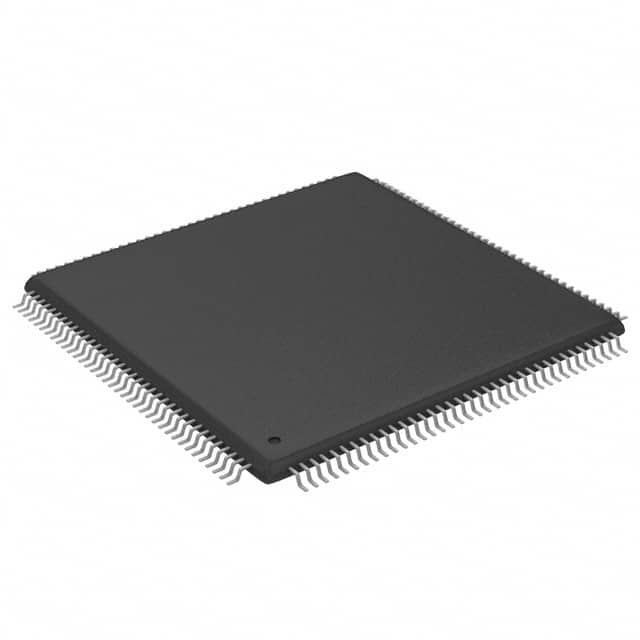
Texas Instruments F28M35H52C1RFPS
- Part No.:
- F28M35H52C1RFPS
- Manufacturer:
- Texas Instruments
- Category:
- Microcontrollers
- Package:
- 144-TQFP Exposed Pad
- Datasheet:
-
 F28M35H52C1RFPS.pdf
- Description:
- IC MCU 32BIT 512KB FLASH 144TQFP
- Quantity:
- Payment:

- Shipping:

Inventory:151
Please send an inquiry. Send us your inquiry, and we will respond immediately.
Product details
Overview
F28M35H52C1RFPS from Texas Instruments is a dual-core Concerto™ microcontroller integrating an Arm® Cortex®-M3 master subsystem (100 MHz) and a TMS320C28x real-time control subsystem (150 MHz), with 512KB ECC flash, 32KB RAM (ECC/parity), 64KB shared RAM, dual 12-bit ADCs (2.88 MSPS, 20 channels), six comparators with integrated 10-bit DACs, and Ethernet 1588 + USB OTG for industrial motor drives and solar inverters.
For engineers reviewing the F28M35H52C1RFPS datasheet, F28M35H52C1RFPS pinout, F28M35H52C1RFPS application, or F28M35H52C1RFPS equivalent, key selection criteria include dual-core clock coordination (100/150 MHz), HTQFP-144 PowerPAD thermal packaging, IPC message RAM for interprocessor synchronization, and AEC-Q100–qualified variants for automotive-grade reliability.
Technical Context
The F28M35H52C1RFPS implements tightly coupled heterogeneous processing: the Cortex-M3 handles communication tasks (10/100 ENET MII, USB-OTG, 2× CAN, 5× UART, 4× SSI/SPI, 2× I²C) while the C28x executes deterministic real-time control (9× ePWM with 16 HRPWM outputs, 6× eCAP, 3× eQEP, VCU-accelerated FFT/CRC). Both cores share 64KB parity RAM and dual 12-bit ADCs with independent sample-and-hold circuits.
Hardware safety features include dual security zones (128-bit password per zone), ECC on flash and critical RAM, parity on non-ECC RAM, NMI watchdogs per subsystem, and glitch-free GPIOs. Clocking supports dynamic PLL ratio changes, with independent 1.2-V digital, 1.8-V analog, and 3.3-V I/O domains - all validated for –40°C to 105°C junction operation.
Key Specifications
| Parameter | Value and Actual Design Meaning |
|---|---|
| CPU Cores | Dual-core: Arm Cortex-M3 @ 100 MHz + TMS320C28x @ 150 MHz - enables concurrent high-level comms and hard real-time control without OS scheduling latency. |
| Memory | 512KB flash (ECC), 32KB RAM (ECC/parity), 64KB shared RAM (parity) - supports robust firmware storage, runtime data segregation, and inter-core data exchange. |
| Analog Subsystem | Dual 12-bit ADCs: 2.88 MSPS aggregate, 20 total channels, 4 S/H circuits - enables simultaneous sampling of multiple motor phase currents and DC-link voltages. |
| PWM & Capture | 9× ePWM modules (18 outputs, 16 HRPWM), 6× eCAP, 3× eQEP - delivers precise gate timing, fault-responsive dead-time insertion, and encoder-based position feedback. |
| Communication Peripherals | 10/100 ENET 1588 MII, USB OTG + PHY, 2× D_CAN, 5× UART, 4× SSI/SPI, 2× I²C - satisfies industrial networking, fieldbus bridging, and host-device connectivity requirements. |
| Package & Thermal | 144-pin HTQFP (RFP PowerPAD™), 20.0 mm × 20.0 mm - thermally enhanced package with exposed die pad soldered to PCB ground plane for >2.5 W dissipation at 105°C junction. |
| Operating Range | Junction temperature: –40°C to 105°C - qualified for industrial motor drives, UPS, and grid-tied inverters without derating. |
Pinout & Package
Package: 144-pin RFP PowerPAD™ Thermally Enhanced Thin Quad Flatpack (HTQFP), 20.0 mm × 20.0 mm, with exposed thermal pad requiring solder connection to PCB ground plane for thermal and electrical integrity.
| Pin/Terminal | Circuit Role | Design Meaning |
|---|---|---|
| VDD12 / VDD18 / VDDIO / VDDA1 / VDDA2 | Power supply rails | Separate 1.2-V digital core, 1.8-V analog, 3.3-V I/O, and dual 3.3-V analog module supplies - enable noise isolation and domain-specific voltage regulation. |
| ADC1INA0–7, ADC1INB0–7, ADC2INA0–7, ADC2INB0–7 | Analog inputs | 20-channel differential-capable ADC input set across two independent 12-bit converters - supports simultaneous current/voltage sensing in multi-phase systems. |
| C_EPWM1A/B–C_EPWM9A/B | PWM outputs | 18 dedicated ePWM output pins (16 HRPWM-capable) - drive gate drivers with sub-nanosecond resolution and hardware fault trip zone mapping. |
| M_CAN0RX/TX, M_CAN1RX/TX | CAN transceiver interface | Two pin-bootable D_CAN modules - support J1939 or CANopen networked motor control and diagnostics without external transceivers. |
| M_MIITXD0–3, M_MIIRXD0–3, M_MIIRXDV, M_MIITXEN | EMAC MII interface | 16-pin 10/100 MII bus - connects directly to external PHY for IEEE 1588 precision time protocol synchronization in distributed drives. |
| EMU0/EMU1, TCK/TMS/TDI/TDO, TRST | JTAG debug interface | IEEE 1149.1-compliant boundary-scan and emulation pins - enable full-core debugging, flash programming, and real-time trace via XDS100v3+ emulators. |
Key Features
| Feature | Design Value |
|---|---|
| Interprocessor Communication (IPC) | 32 handshaking channels + 4 IPC interrupt sources + 2KB message RAM - enables deterministic, low-latency data exchange between Cortex-M3 and C28x without bus contention. |
| Viterbi/Complex Math Unit (VCU) | Hardware-accelerated 16-bit FFT, CRC-16/32, and complex arithmetic - reduces C28x CPU load by >70% for observer-based motor control algorithms. |
| Fault Trip Zones | 12 configurable GPIO-based trip inputs mapped to ePWM modules - allows hardware-fast (<100 ns) shutdown on overcurrent, overtemperature, or encoder loss events. |
| Dual Security Zones | Independent 128-bit passwords for master (Cortex-M3) and control (C28x) subsystems - enforces secure boot, encrypted firmware updates, and protected memory regions. |
| Glitch-Free GPIO | All 74 GPIOs (except GPIO135) retain stable logic state during power-up/down - eliminates spurious PWM activation or relay chatter in uncontrolled power sequencing. |
Applications
| Industrial Motor Drive | Solar String Inverter |
|---|---|
|
Use Scenario: Closed-loop vector control of 3-phase PMSM/BLDC motors in HVAC compressors and industrial pumps. IC Role / Device Role / Timing Role: C28x core executes 10-kHz FOC algorithm with HRPWM gating; Cortex-M3 manages Modbus TCP communication and web-based HMI. Use Value: Dual-core separation eliminates RTOS jitter on control loops while enabling real-time diagnostics and remote firmware updates over Ethernet. |
Use Scenario: MPPT tracking and grid-synchronization in residential solar string inverters with anti-islanding protection. IC Role / Device Role / Timing Role: C28x runs 20-kHz interleaved DC-DC and 50/60-Hz grid-tie PWM; Cortex-M3 handles SunSpec Modbus, IEEE 1547 compliance timers, and USB configuration. Use Value: Integrated ENET 1588 and dual ADCs enable sub-millisecond grid event detection and synchronized multi-inverter reactive power response. |
| Three-Phase UPS | AC-DC Industrial Power Supply |
|
Use Scenario: Online double-conversion UPS with battery management, harmonic compensation, and seamless transfer switching. IC Role / Device Role / Timing Role: C28x controls IGBT-based rectifier/inverter stages with active harmonic injection; Cortex-M3 manages SNMP monitoring and battery SOC estimation. Use Value: Shared 64KB RAM stores waveform buffers for real-time THD analysis; dual comparators monitor DC-link imbalance with <1 µs response. |
Use Scenario: Programmable AC-DC front-end with PFC and isolated LLC control for factory automation power systems. IC Role / Device Role / Timing Role: C28x executes dual-loop PFC + resonant LLC control at 300 kHz; Cortex-M3 hosts EtherNet/IP adapter and safety-critical fault logging. Use Value: Hardware CRC and ECC ensure firmware integrity in long-life deployments; EPI interface supports external FPGA co-processing for adaptive load forecasting. |
Equivalent & Alternatives
The following parts are listed as comparable options for similar dual-core real-time control applications.
| Alternative Part | Technical Difference | Application Difference | Selection Advice |
|---|---|---|---|
| F28M35H52C-Q1 | AEC-Q100 qualified (Grade 2: –40°C to 105°C junction); identical core specs, memory, peripherals, and pinout. | Required for automotive traction inverters, onboard chargers, and ADAS-adjacent power systems needing functional safety documentation. | Select F28M35H52C-Q1 when ISO 26262 ASIL-B evidence, automotive qualification, or extended temperature validation is mandatory. |
| F28M36H52C | Second-generation Concerto with enhanced ENET (RMII/MII), additional 32KB RAM, and improved analog front-end SNR; same HTQFP-144 package. | Better suited for next-gen solar central inverters requiring higher-resolution current sensing and deterministic EtherCAT slave timing. | Choose F28M36H52C when upgrading legacy designs for higher ADC ENOB, expanded RAM for larger control models, or EtherCAT integration. |
Compared with F28M35H52C-Q1, the F28M35H52C1RFPS offers identical performance and pin compatibility but lacks automotive qualification documentation; versus F28M36H52C, it provides proven stability and lower BOM cost where advanced EtherCAT or +2dB SNR are not required.
Availability
F28M35H52C1RFPS is available at Aetrix Electronics and suitable for industrial motor drives, solar string inverters, and three-phase UPS systems requiring stable component supply, long-term lifecycle support, and traceable sourcing from authorized TI distribution channels.
Supply support for F28M35H52C1RFPS includes scheduled delivery planning, volume procurement assistance, BOM continuity management, traceable sourcing, and lifecycle availability coordination for OEM customers, industrial embedded developers, connected-device designers, and electronics production programs.
Manufacturer
Texas Instruments is a global semiconductor leader specializing in analog, embedded processing, and connectivity technologies, with decades of expertise in industrial and automotive microcontrollers.
The F28M35H52C1RFPS belongs to TI's Concerto™ family - designed specifically to unify high-bandwidth communication and deterministic real-time control in single-chip solutions for energy conversion, motor control, and grid infrastructure.
FAQ
What is the maximum operating frequency of each core in the F28M35H52C1RFPS?
The F28M35H52C1RFPS features an Arm Cortex-M3 core rated for up to 100 MHz and a TMS320C28x core rated for up to 150 MHz. These frequencies are simultaneously achievable only when using appropriate clock dividers; Table 5-2 in the SPRS742L datasheet confirms valid combinations including 100 MHz (Cortex-M3) / 100 MHz (C28x) and 75 MHz / 150 MHz. The F28M35H52C1RFPS datasheet specifies these as guaranteed operational limits under recommended conditions.
Does the F28M35H52C1RFPS support hardware-based interprocessor communication?
Yes, the F28M35H52C1RFPS includes a dedicated Interprocessor Communication (IPC) module with 32 handshaking channels, four IPC interrupt sources, and 2KB of dedicated message RAM (1KB per direction). This hardware block enables lock-free, atomic signaling and data transfer between the Cortex-M3 and C28x subsystems without software polling or shared-memory arbitration overhead - a key feature confirmed in Section 1.1 and Figure 3-1 of the SPRS742L datasheet.
What analog capabilities does the F28M35H52C1RFPS provide for motor control?
The F28M35H52C1RFPS integrates two independent 12-bit ADCs capable of 2.88 MSPS aggregate sampling, 20 total input channels, and four sample-and-hold circuits. It also includes six analog comparators, each with a dedicated 10-bit DAC for reference generation. These resources are explicitly documented in Sections 1.1 and 7.10 of SPRS742L and are used for simultaneous current sensing, DC-link voltage monitoring, and fast overcurrent protection in motor drive applications.
Is the F28M35H52C1RFPS pin-compatible with other devices in the F28M35x family?
Yes, the F28M35H52C1RFPS shares the same 144-pin HTQFP (RFP PowerPAD™) package and pinout with F28M35H52C, F28M35H52C-Q1, F28M35H22C, F28M35M52C, and F28M35M22C, as confirmed in Table 5-1 and Section 11.1 of SPRS742L. Pin assignments, signal multiplexing, and power/ground locations are identical across these variants, enabling drop-in replacement within the same temperature grade and feature subset.
What safety features are implemented in the F28M35H52C1RFPS for industrial applications?
The F28M35H52C1RFPS includes ECC on 512KB flash and selected RAM blocks, parity on non-ECC RAM, dual independent security zones (128-bit password each), NMI watchdogs for both CPU subsystems, critical register lock protection, and hardware fault trip zones mapped to 64 GPIOs. These mechanisms - detailed in Sections 1.1, 5, and 8.18 of SPRS742L - support IEC 61508 SIL-2 and UL 1998 certification efforts for industrial safety systems.
F28M35H52C1RFPS Specifications
- Product attributes
- Attribute value
- Manufacturer:
- Texas Instruments
- Package/Case:
- 144-TQFP Exposed Pad
- Series:
- C2000™ C28x + ARM® Cortex® M3 Concerto™
- Packaging:
- Tray
- Product Status:
- Active
- Programmable:
- Not Verified
- Core Processor:
- C28x/ARM® Cortex®-M3
- Core Size:
- 32-Bit Dual-Core
- Speed:
- 100MHz/150MHz
- Connectivity:
- CANbus, EBI/EMI, Ethernet, I2C, SCI, SPI, SSI, UART/USART, USB, USB OTG
- Peripherals:
- Brown-out Detect/Reset, DMA, POR, PWM, WDT
- Number of I/O:
- 74
- Program Memory Size:
- 512KB/512KB
- Program Memory Type:
- FLASH
- EEPROM Size:
- -
- RAM Size:
- 136KB
- Voltage - Supply (Vcc/Vdd):
- 1.2V, 1.8V, 3.3V
- Data Converters:
- A/D 20x12b
- Oscillator Type:
- -
- Operating Temperature:
- -40°C ~ 125°C (TJ)
- Grade:
- -
- Qualification:
- -
- Mounting Type:
- Surface Mount
- Supplier Device Package:
F28M35H52C1RFPS FAQ
1.How can I place an order for F28M35H52C1RFPS through Aetrix?
Please submit a Request for Quotation (RFQ) for F28M35H52C1RFPS on Aetrix. Our sales agent will provide a competitive quotation and guide you through the order confirmation once you accept the terms.
2.Are the price and stock information for F28M35H52C1RFPS reliable?
The price and inventory of F28M35H52C1RFPS are updated periodically and may fluctuate due to market conditions. Stock and pricing data are typically refreshed every 24 hours. Quotation validity for F28M35H52C1RFPS is usually 5 days.
3.What payment methods are accepted for F28M35H52C1RFPS?
We accept Wire Transfer, PayPal, Credit Card, Western Union, MoneyGram, and Escrow for F28M35H52C1RFPS transactions.
Note: Certain payment methods may incur a processing fee.
4.How is shipping managed for F28M35H52C1RFPS?
F28M35H52C1RFPS orders can be shipped via leading logistics carriers, including DHL, UPS, FedEx, TNT, or Registered Mail.
Once your F28M35H52C1RFPS order is processed, you will receive an email with the shipment details and tracking number.
Note: Tracking information may take up to 24 hours to appear. Express delivery typically takes 3–5 business days.
5.How can I obtain technical support or documentation for F28M35H52C1RFPS?
For technical support, including F28M35H52C1RFPS datasheets, pinout diagrams, or application guidance, please contact our engineering support team. They can provide detailed documentation and assistance for your F28M35H52C1RFPS requirements.
6.How does Aetrix verify that F28M35H52C1RFPS is sourced from the original manufacturer or authorized distributors?
All F28M35H52C1RFPS products on Aetrix are procured from qualified distributors and authorized channels. Our dedicated quality assurance team conducts strict verification, including traceability checks and, if necessary, third-party testing. This ensures that F28M35H52C1RFPS meets industry standards.
7.What is the process for return or replacement of F28M35H52C1RFPS?
All F28M35H52C1RFPS units undergo pre-shipment inspection (PSI). If there is an issue with F28M35H52C1RFPS, returns or replacements are accepted under the following conditions:
1.Quantity discrepancies, incorrect items, or visible external defects (such as breakage or corrosion), acknowledged by Aetrix.
2.The issue is reported within 90 days of delivery.
3.The F28M35H52C1RFPS part is unused and in its original packaging.
Return procedure for F28M35H52C1RFPS:
1.Submit a request within 90 days.
2.Obtain a Return Material Authorization (RMA) from Aetrix.
F28M35H52C1RFPS Tags

-
ATTINY4-TSHR
Microchip Technology
-
ATTINY10-TSHR
Microchip Technology
-
ATTINY10-TS8R
Microchip Technology
-
ATTINY202-SSNR
Microchip Technology
-
ATTINY202-SSFR
Microchip Technology
-
ATTINY402-SSNR
Microchip Technology
-
PIC16F15213T-I/MF
Microchip Technology
-
PIC16F15213-E/MF
Microchip Technology

-
PIC10F200T-I/OT
Microchip Technology
-
ATTINY412-SSNR
Microchip Technology
-
PIC10F202T-I/OT
Microchip Technology
-
ATTINY404-SSNR
Microchip Technology
Tech Hub

A practical engineering guide to 3.3V and 5V logic compatibility, input thresholds, resistor dividers, translator ICs, MOSFET level shifting, I2C pull-ups, timing limits and power-sequencing risks.

The 74HC595 uses push-pull logic outputs, while the TPIC6B595 uses 50 V open-drain DMOS sinks for higher-power loads. This guide compares timing, current limits, 3.3 V interfacing, load wiring, thermal…

The 74HC595 converts serial data into eight stable parallel outputs. This guide covers pin functions, shift and storage timing, OE and MR behavior, drive-current limits, cascading, voltage compatibilit…

A technical comparison of level-sensitive latches and edge-triggered flip-flops, covering timing windows, setup and hold limits, master–slave operation, time borrowing, race-through, HDL inference and…

A D latch stores one bit while Enable controls when data can pass. This reference covers gate-level operation, truth tables, transparency, setup and hold timing, LE versus OE, common ICs and practical …

An SR latch stores one bit through cross-coupled feedback. This engineering reference covers NOR and NAND implementations, truth tables, forbidden-state recovery, gated operation, switch debouncing, fa…

Latch circuits retain one bit through feedback. This technical reference covers SR and D latches, truth tables, transparency, timing limits, latch-versus-flip-flop behavior, applications and common log…

An engineering guide to LED driver operation, constant-current and constant-voltage outputs, linear and switching topologies, dimming, IC selection, calculations, replacement compatibility, and fault c…

Operational amplifier guide covering op amp basics, feedback, ideal vs real op amps, common configurations, buffer circuits, offset, bias current, gain-bandwidth, slew rate, rail-to-rail limits and sel…

Jumper cables guide covering safe connection order, red and black clamp placement, final ground connection, cable gauge, length, clamp quality, copper vs CCA cables, jump starter comparison and battery…


