
 My Inquiry
 My Account


Infineon Technologies FM25040B-GATR
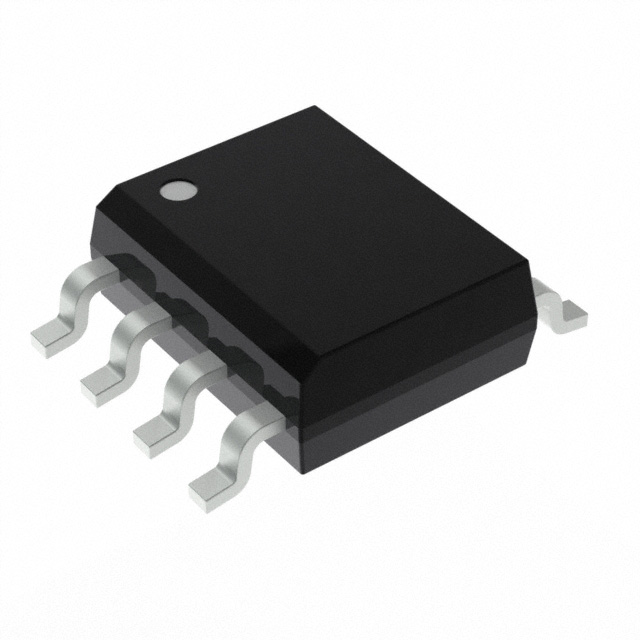
- Part No.:
- FM25040B-GATR
- Manufacturer:
- Infineon Technologies
- Category:
- Memory
- Package:
- 8-SOIC (0.154", 3.90mm Width)
- Datasheet:
-
 FM25040B-GATR.pdf
- Description:
- IC FRAM 4KBIT SPI 14MHZ 8SOIC
- Quantity:
- Payment:

- Shipping:

Inventory:3,649
Please send an inquiry. Send us your inquiry, and we will respond immediately.
Product details
Overview
FM25040B-GATR from Cypress Semiconductor is an automotive-grade 4-Kbit (512 × 8) serial SPI ferroelectric RAM (F-RAM) with NoDelay™ writes, 1013 read/write endurance, and 121-year data retention. It operates at up to 14 MHz over VDD = 4.5–5.5 V and –40 °C to +125 °C, serving as a hardware drop-in replacement for SPI EEPROM/flash in engine control units, airbag controllers, and battery management systems.
For engineers reviewing the FM25040B-GATR datasheet, FM25040B-GATR pinout, FM25040B-GATR application, or FM25040B-GATR equivalent, key selection criteria include write-speed-critical nonvolatile logging, AEC-Q100 Grade 1 compliance, SPI Mode 0/3 interoperability, and absence of write polling overhead in real-time safety-critical firmware.
Technical Context
The FM25040B-GATR implements a synchronous SPI slave interface with dual-mode support (Mode 0 and Mode 3), where data is latched on SCK rising edge and output on falling edge. Its internal F-RAM array eliminates erase cycles and write latency - every byte written completes within one SPI frame without status polling.
Write protection is enforced via three independent mechanisms: hardware WP pin assertion, software WREN/WRDI instruction control, and configurable block protection (1/4, 1/2, or full array) through the 2-bit Status Register. The device contains no internal power management beyond POR, requiring strict VDD regulation per datasheet limits.
Key Specifications
| Parameter | Value and Actual Design Meaning |
|---|---|
| Memory Size | 4-Kbit (512 × 8 bytes); enables compact firmware parameter storage without page management logic. |
| Interface | SPI slave, Modes 0 & 3; ensures direct compatibility with standard microcontroller SPI peripherals without custom timing firmware. |
| Max Clock Frequency | 14 MHz; supports sub-400 ns per-byte write completion, eliminating bus arbitration delays in high-frequency logging. |
| Endurance | 1013 read/write cycles; sustains >1000 writes/sec continuously for >30 years in telematics event buffers. |
| Data Retention | 121 years at +85 °C; guarantees integrity across full automotive lifecycle without refresh or backup power. |
| Operating Temp | –40 °C to +125 °C (AEC-Q100 Grade 1); qualified for under-hood ECU deployment without derating. |
| Supply Voltage | 4.5 V to 5.5 V; matches legacy 5 V automotive power rails without level-shifting circuitry. |
Pinout & Package
FM25040B-GATR is housed in an 8-pin Small Outline Integrated Circuit (SOIC) package with gull-wing leads, RoHS-compliant and optimized for reflow soldering in automotive PCB assembly.
| Pin/Terminal | Circuit Role | Design Meaning |
|---|---|---|
| CS | Chip Select input | Active-low enable; must fall before each opcode; places device in standby (10 µA) when high. |
| SCK | Serial clock input | Synchronizes all I/O; rising edge latches SI, falling edge drives SO; supports 0–14 MHz with arbitrary pauses. |
| SI | Serial input | Receives opcodes, addresses, and write data; sampled only on SCK rising edge; must be driven valid to meet IDD specs. |
| SO | Serial output | Drives read data on falling SCK edge; tristated during writes, HOLD low, or CS high. |
| WP | Hardware write protect | Active-low lock; disables all writes including Status Register when pulled low; must tie to VDD if unused. |
| HOLD | Operation suspend | Active-low pause; freezes ongoing read/write without clock or CS dependency; transitions only allowed while SCK = LOW. |
| VSS | Ground reference | System ground return; required for stable logic thresholds and noise immunity in noisy automotive environments. |
| VDD | Power supply | 5 V nominal supply; must remain within 4.5–5.5 V during all operations; no internal regulation. |
Key Features
| Feature | Design Value |
|---|---|
| NoDelay™ write architecture | Zero-latency byte writes complete within one SPI frame; eliminates polling loops and improves deterministic response in ASIL-B firmware. |
| Ferroelectric memory cell | 1013 endurance and 121-year retention achieved without oxide wear-out mechanisms inherent in flash/EEPROM. |
| Dual SPI mode support | Native compatibility with both Mode 0 (CPOL=0, CPHA=0) and Mode 3 (CPOL=1, CPHA=1) simplifies integration across diverse MCU platforms. |
| Multi-layer write protection | Hardware (WP), instruction-based (WREN/WRDI), and block-level (Status Register bits) safeguards prevent accidental corruption in safety-critical contexts. |
| Automotive qualification | AEC-Q100 Grade 1 certified and manufactured in ISO/TS 16949 facilities, ensuring traceable lot control and zero-defect delivery for Tier-1 suppliers. |
Applications
| Engine Control Unit (ECU) Parameter Storage | Advanced Driver Assistance Systems (ADAS) Event Logging |
|---|---|
Use Scenario: Storing calibrated fuel injection maps and real-time sensor offsets subject to frequent field updates during vehicle calibration and OTA updates. IC Role / Device Role / Timing Role: Nonvolatile parameter register bank accessed via SPI during boot and runtime; requires sub-millisecond write commit to avoid interrupt latency penalties. Use Value: Eliminates 5–20 ms flash erase delays, enabling safe mid-operation parameter updates without freezing control loops or triggering watchdog resets. | Use Scenario: Capturing pre-crash sensor snapshots (radar, camera timestamps, IMU data) at ≥1 kHz for post-incident forensic analysis. IC Role / Device Role / Timing Role: High-speed circular buffer memory interfaced directly to MCU DMA; writes occur synchronously with sensor sampling clocks. Use Value: Sustains 100% write duty cycle at 14 MHz SPI without data loss, unlike EEPROMs limited to ~100 Hz sustained writes due to erase overhead. |
| Electric Vehicle Battery Management System (BMS) | Automotive Infotainment Configuration Memory |
Use Scenario: Recording cell voltage imbalance history and thermal derating events across 1000+ charge/discharge cycles in traction battery packs. IC Role / Device Role / Timing Role: Endurance-critical nonvolatile log storage co-located with BMS MCU; accessed during idle periods between cell balancing cycles. Use Value: Withstands >1013 cycles, supporting 10+ years of daily logging at 100 entries/hour - exceeding EEPROM's 106 cycle limit by 10 million-fold. | Use Scenario: Preserving user preferences (audio settings, display themes, navigation history) across ignition cycles and firmware upgrades in head units. IC Role / Device Role / Timing Role: SPI-configurable configuration store mapped into MCU memory space via driver abstraction layer. Use Value: Guarantees instant write success on power loss (no last-byte corruption), unlike flash requiring complex wear-leveling and journaling schemes. |
Equivalent & Alternatives
The following parts are listed as comparable options for similar serial nonvolatile memory applications.
| Alternative Part | Technical Difference | Application Difference | Selection Advice |
|---|---|---|---|
| AT25DF041A-SSH-T | 4-Mbit SPI flash; requires 25 ms sector erase before write; 100k endurance; no built-in write protection bits. | Requires firmware erase management; unsuitable for high-frequency logging; lacks hardware WP pin. | Select only if cost-per-bit is primary and write frequency < 100x/day. |
| BR25G40FJ-WE2 | 4-Kbit SPI EEPROM; 1 ms write time per byte; 1M endurance; supports SPI Mode 0 only; no HOLD pin. | Introduces deterministic 1 ms latency per write; insufficient for burst logging; no hardware suspend capability. | Choose only for legacy designs already using ROHM EEPROM footprint and tolerating polling overhead. |
Compared with AT25DF041A-SSH-T and BR25G40FJ-WE2, FM25040B-GATR uniquely delivers true RAM-like write speed with automotive-grade reliability - making it the sole option for applications demanding both sub-microsecond write commit and 15-year data integrity without firmware complexity.
Availability
FM25040B-GATR is available at Aetrix Electronics and suitable for engine control units, ADAS event recorders, and battery management systems requiring stable component supply across extended automotive production lifecycles.
Supply support for FM25040B-GATR includes scheduled delivery planning, volume procurement assistance, BOM continuity management, traceable sourcing, and lifecycle availability coordination for OEM customers, industrial embedded developers, connected-device designers, and electronics production programs.
Manufacturer
Cypress Semiconductor (now part of Infineon Technologies) is a global leader in embedded solutions, specializing in high-reliability memory, PSoC programmable systems-on-chip, and automotive-qualified semiconductors.
The FM25040B-GATR belongs to Cypress's automotive F-RAM product line, engineered specifically to replace legacy serial EEPROM and flash in safety-critical, high-write-frequency automotive subsystems.
FAQ
What is the maximum SPI clock frequency supported by FM25040B-GATR?
The FM25040B-GATR supports up to 14 MHz SPI clock frequency across its full operating temperature range (–40 °C to +125 °C). This is validated per AC switching characteristics in the official datasheet (Document Number 001-86151 Rev. *D), with timing margins maintained even at worst-case VDD = 4.5 V and +125 °C.
Does FM25040B-GATR require write polling or delay loops after issuing a WRITE command?
No. FM25040B-GATR implements NoDelay™ writes: each byte is committed to nonvolatile memory immediately upon successful SPI frame reception. The next opcode may be issued without checking status - confirmed by the absence of BUSY bit in the Status Register and zero write latency in timing diagrams on pages 13–15 of the datasheet.
How does the HOLD pin function during an active memory operation?
When HOLD is pulled low during any memory operation (read or write), the FM25040B-GATR suspends communication immediately: SCK and CS are ignored, and SO enters high-impedance state. Operation resumes on the next rising SCK edge after HOLD returns high - verified in Figure 9 and HOLD Pin Operation section (page 9) of the datasheet.
Is FM25040B-GATR compatible with SPI Mode 3 (CPOL=1, CPHA=1)?
Yes. The FM25040B-GATR explicitly supports both SPI Mode 0 and Mode 3, as stated in the Features section and verified in the SPI Overview (pages 4–6). In Mode 3, data is sampled on the falling edge of SCK and output on the rising edge - matching the timing requirements of MCUs such as NXP S32K and STMicroelectronics SPC5.
FM25040B-GATR Specifications
- Product attributes
- Attribute value
- Manufacturer:
- Infineon Technologies
- Series:
- F-RAM™
- Package/Case:
- 8-SOIC (0.154", 3.90mm Width)
- Packaging:
- Tape & Reel (TR)
- Product Status:
- Obsolete
- Programmable:
- Not Verified
- Memory Type:
- Non-Volatile
- Memory Format:
- FRAM
- Technology:
- FRAM (Ferroelectric RAM)
- Memory Size:
- 4Kbit
- Memory Organization:
- 512 x 8
- Memory Interface:
- SPI
- Clock Frequency:
- 14 MHz
- Write Cycle Time - Word, Page:
- -
- Access Time:
- -
- Voltage - Supply:
- 4.5V ~ 5.5V
- Operating Temperature:
- -40°C ~ 125°C (TA)
- Grade:
- Automotive
- Qualification:
- AEC-Q100
- Mounting Type:
- Surface Mount
- Supplier Device Package:
- 8-SOIC
FM25040B-GATR FAQ
1.How can I place an order for FM25040B-GATR through Aetrix?
Please submit a Request for Quotation (RFQ) for FM25040B-GATR on Aetrix. Our sales agent will provide a competitive quotation and guide you through the order confirmation once you accept the terms.
2.Are the price and stock information for FM25040B-GATR reliable?
The price and inventory of FM25040B-GATR are updated periodically and may fluctuate due to market conditions. Stock and pricing data are typically refreshed every 24 hours. Quotation validity for FM25040B-GATR is usually 5 days.
3.What payment methods are accepted for FM25040B-GATR?
We accept Wire Transfer, PayPal, Credit Card, Western Union, MoneyGram, and Escrow for FM25040B-GATR transactions.
Note: Certain payment methods may incur a processing fee.
4.How is shipping managed for FM25040B-GATR?
FM25040B-GATR orders can be shipped via leading logistics carriers, including DHL, UPS, FedEx, TNT, or Registered Mail.
Once your FM25040B-GATR order is processed, you will receive an email with the shipment details and tracking number.
Note: Tracking information may take up to 24 hours to appear. Express delivery typically takes 3–5 business days.
5.How can I obtain technical support or documentation for FM25040B-GATR?
For technical support, including FM25040B-GATR datasheets, pinout diagrams, or application guidance, please contact our engineering support team. They can provide detailed documentation and assistance for your FM25040B-GATR requirements.
6.How does Aetrix verify that FM25040B-GATR is sourced from the original manufacturer or authorized distributors?
All FM25040B-GATR products on Aetrix are procured from qualified distributors and authorized channels. Our dedicated quality assurance team conducts strict verification, including traceability checks and, if necessary, third-party testing. This ensures that FM25040B-GATR meets industry standards.
7.What is the process for return or replacement of FM25040B-GATR?
All FM25040B-GATR units undergo pre-shipment inspection (PSI). If there is an issue with FM25040B-GATR, returns or replacements are accepted under the following conditions:
1.Quantity discrepancies, incorrect items, or visible external defects (such as breakage or corrosion), acknowledged by Aetrix.
2.The issue is reported within 90 days of delivery.
3.The FM25040B-GATR part is unused and in its original packaging.
Return procedure for FM25040B-GATR:
1.Submit a request within 90 days.
2.Obtain a Return Material Authorization (RMA) from Aetrix.
FM25040B-GATR Tags
-
M24C02-WMN6TP
STMicroelectronics
-
AT24C02C-XHM-T
Microchip Technology
-
AT21CS01-STUM10-T
Microchip Technology

-
AT24C02C-SSHM-T
Microchip Technology
-
24LC01BT-I/OT
Microchip Technology
-
M24C02-FMC6TG
STMicroelectronics
-
AT24CS02-SSHM-T
Microchip Technology

-
93LC46BT-I/OT
Microchip Technology
-
AT24C04C-SSHM-T
Microchip Technology

-
24LC01BT-I/SN
Microchip Technology
-
24AA02UIDT-I/OT
Microchip Technology
-
AT24C08C-STUM-T
Microchip Technology
Tech Hub

Latch circuits retain one bit through feedback. This technical reference covers SR and D latches, truth tables, transparency, timing limits, latch-versus-flip-flop behavior, applications and common log…

An engineering guide to LED driver operation, constant-current and constant-voltage outputs, linear and switching topologies, dimming, IC selection, calculations, replacement compatibility, and fault c…

Operational amplifier guide covering op amp basics, feedback, ideal vs real op amps, common configurations, buffer circuits, offset, bias current, gain-bandwidth, slew rate, rail-to-rail limits and sel…

Jumper cables guide covering safe connection order, red and black clamp placement, final ground connection, cable gauge, length, clamp quality, copper vs CCA cables, jump starter comparison and battery…

LDO regulator guide covering low dropout voltage, power dissipation, thermal design, PSRR, output noise, capacitor stability, adjustable LDO circuits, LDO vs buck converter and datasheet selection chec…

Conditional Access Module guide covering CAM meaning, CI/CI+ interface, smart card authorization, DVB security workflow, TV and set-top box compatibility, internal electronics, ESD protection, connecto…

Guide to electronic component obsolescence covering EOL risk, PCN/PDN notices, last-time buy planning, replacement options, form-fit-function validation, counterfeit risk and BOM lifecycle management.

18650 battery guide covering lithium-ion cell basics, 3.6V/3.7V voltage, 4.2V charging, mAh and Wh capacity, protected cells, chargers, BMS, series-parallel packs, holders, welding and sourcing checks.…

Hall effect sensor guide covering working principle, linear and digital sensors, Arduino circuits, current sensing, speed detection, automotive applications, A3144 examples, signal filtering and datash…

Product Change Notification guide for electronic components, covering PCN meaning, PCN vs PDN/EOL, common change types, risk levels, form-fit-function review, engineering validation, BOM control, LTB/L…


