
 My Inquiry
 My Account


Infineon Technologies FM28V020-TGTR
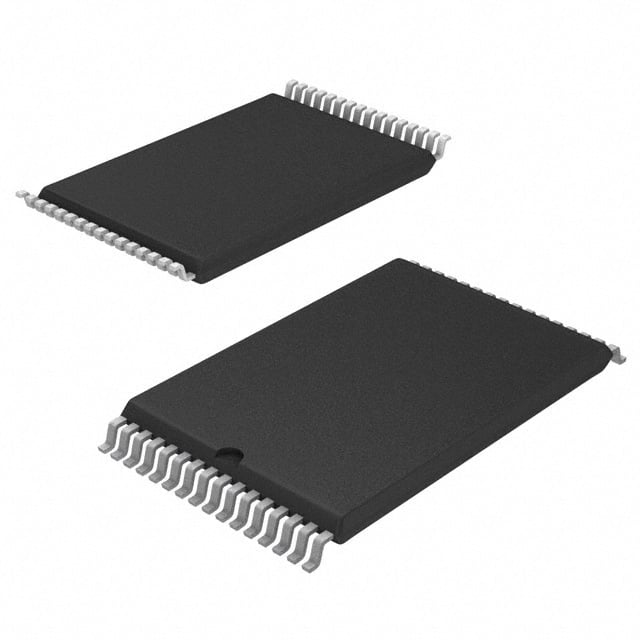
- Part No.:
- FM28V020-TGTR
- Manufacturer:
- Infineon Technologies
- Category:
- Memory
- Package:
- 32-TFSOP (0.465", 11.80mm Width)
- Datasheet:
-
 FM28V020-TGTR.pdf
- Description:
- IC FRAM 256KBIT PARALLEL 32STSOP
- Quantity:
- Payment:

- Shipping:

Inventory:1,372
Please send an inquiry. Send us your inquiry, and we will respond immediately.
Product details
Overview
FM28V020-TGTR from Infineon Technologies (formerly Cypress) is a 256-Kbit (32K × 8) parallel-interface ferroelectric RAM (F-RAM) with NoDelay™ writes, 1014 read/write endurance, and 151-year data retention. It operates at 2.0–3.6 V over –40 °C to +85 °C and replaces battery-backed SRAM in industrial logging, metering, and real-time event capture systems.
For engineers reviewing the FM28V020-TGTR datasheet, FM28V020-TGTR pinout, FM28V020-TGTR application, or FM28V020-TGTR equivalent, key selection criteria include SRAM-compatible timing (70-ns access), page-mode support for burst writes, nonvolatile write atomicity without polling, and industrial-grade reliability under shock, moisture, and voltage undershoot conditions.
Technical Context
The FM28V020-TGTR implements a ferroelectric memory array organized as 32K × 8 bytes, with row/column decoding controlled by A14–A0 and DQ7–DQ0. Its NoDelay™ architecture enables immediate nonvolatile storage on WE or CE assertion-no internal write cycle or latency overhead.
It supports two write control modes: CE-initiated (WE asserted before CE fall) and WE-initiated (CE fall first, then WE fall). Page mode uses A2–A0 to access eight column locations per row without toggling CE, enabling up to 15 MHz burst throughput while maintaining full nonvolatility per byte.
Key Specifications
| Parameter | Value and Actual Design Meaning |
|---|---|
| Memory size | 256 Kbit (32K × 8); provides byte-addressable nonvolatile storage matching standard SRAM footprint |
| Access time | 70 ns (typ); enables direct replacement of 70-ns asynchronous SRAMs without timing redesign |
| Endurance | 1014 read/write cycles; supports >100 years of daily 1000-write logging at full array depth |
| Data retention | 151 years at +85 °C; eliminates need for periodic refresh or backup power |
| Supply voltage | 2.0 V to 3.6 V; compatible with modern low-voltage microcontrollers and battery-powered systems |
| Operating temperature | –40 °C to +85 °C; qualified for industrial automation, smart meters, and automotive body electronics |
| Active current | 5 mA (typ); matches SRAM-level dynamic power during read/write bursts |
| Standby current | 90 µA (typ); enables ultra-low-power sleep modes without data loss |
Pinout & Package
FM28V020-TGTR is supplied in a 28-pin thin small outline package (TSOP Type I), RoHS-compliant, surface-mountable with 0.55 mm pitch. Pinout conforms to industry-standard 32K × 8 SRAM layout.
| Pin/Terminal | Circuit Role | Design Meaning |
|---|---|---|
| A14–A0 | Address inputs | 15-bit address bus latched on CE falling edge; A2–A0 enable page-mode column addressing within same row |
| DQ7–DQ0 | Bidirectional data bus | 8-bit parallel I/O; driven only when OE = LOW and valid read data available; tristated otherwise |
| WE | Write Enable input | Falling edge initiates write; rising edge commits data to F-RAM array immediately (NoDelay™) |
| CE | Chip Enable input | Falling edge latches full address; device remains active while CE = LOW, enabling continuous page access |
| OE | Output Enable input | Controls DQ bus drive; prevents invalid data output and reduces system supply transients |
| VDD | Power supply | 2.0–3.6 V core supply; no external regulation required for most MCU interfaces |
| VSS | Ground | System ground reference; must be low-impedance connection to minimize noise coupling into F-RAM array |
Key Features
| Feature | Design Value |
|---|---|
| NoDelay™ write architecture | Eliminates write latency and polling; data becomes nonvolatile at rising edge of WE or CE-no hidden cycles |
| SRAM pin- and timing-compatible interface | Direct drop-in replacement for 32K × 8 parallel SRAMs without PCB or firmware changes |
| Page mode operation | Enables 8-byte burst reads/writes per row using A2–A0, reducing CE toggle overhead and improving throughput |
| Monolithic nonvolatile reliability | Removes battery, capacitor, and solder joint failure modes inherent in BBSRAM modules |
| Robustness to electrical stress | Withstands negative voltage undershoots and mechanical shock/vibration better than EEPROM or Flash |
Applications
| Industrial Data Logger | Smart Electricity Meter |
|---|---|
Use Scenario: Continuous timestamped sensor sampling (e.g., temperature, pressure) with power-loss resilience. IC Role / Device Role / Timing Role: Nonvolatile scratchpad memory storing last-known state and recent events prior to brownout. Use Value: 1014 endurance ensures >30 years of daily 10,000-event logging; 70-ns writes capture transient faults without buffering. | Use Scenario: Tamper-proof energy consumption records updated every second during grid operation. IC Role / Device Role / Timing Role: Primary event log storage synchronized to metrology IC interrupts. Use Value: NoDelay™ writes guarantee atomic updates even during sudden AC dropout; 151-year retention meets utility archival mandates. |
| Automotive Body Control Module | PLC I/O Configuration Storage |
Use Scenario: Storing user-configured lighting sequences, window position limits, and seat memory profiles. IC Role / Device Role / Timing Role: Parameter EEPROM replacement interfaced directly to MCU GPIO/SPI-emulated parallel bus. Use Value: Eliminates 10-year wear-out concerns of Flash-based NVM; withstands automotive thermal cycling and ESD per ISO 10605. | Use Scenario: Retaining module-specific I/O mapping, scaling factors, and calibration offsets across firmware updates. IC Role / Device Role / Timing Role: Configuration register bank accessed during boot and runtime reconfiguration. Use Value: Page-mode writes allow full 32K config reload in <1 ms; 2.0–3.6 V range supports wide-input industrial power rails. |
Equivalent & Alternatives
The following parts are listed as comparable options for similar nonvolatile parallel memory applications.
| Alternative Part | Technical Difference | Application Difference | Selection Advice |
|---|---|---|---|
| CY14B102QN-SPXC | Same F-RAM technology, 256 Kbit, but 32-pin TSOP I; includes hardware store-enable (HSE) pin for enhanced write protection | Requires PCB layout change due to 32-pin footprint; HSE enables deterministic write-disable during power ramp | Select when system-level write-protection integrity is critical and board revision is feasible |
| AT28HC256-15PU | EEPROM-based, 256 Kbit, 150-ns access, 100K endurance, requires 5-ms write cycle; no page mode | Cannot support high-frequency logging; needs polling or timeout logic; higher power during write | Select only if legacy EEPROM infrastructure exists and write frequency is <100x/day |
Compared with CY14B102QN-SPXC, FM28V020-TGTR offers identical endurance and retention but saves board space with its 28-pin TSOP I footprint; versus AT28HC256-15PU, it delivers 109× greater endurance and eliminates write latency-critical for real-time data capture.
Availability
FM28V020-TGTR is available at Aetrix Electronics and suitable for industrial data loggers, smart electricity meters, automotive body control modules, and PLC I/O configuration storage requiring stable component supply and long-term lifecycle assurance.
Supply support for FM28V020-TGTR includes scheduled delivery planning, volume procurement assistance, BOM continuity management, traceable sourcing, and lifecycle availability coordination for OEM customers, industrial embedded developers, connected-device designers, and electronics production programs.
Manufacturer
Infineon Technologies is a global semiconductor leader headquartered in Munich, Germany, delivering power, sensor, and connectivity solutions for industrial, automotive, and IoT applications.
The FM28V020 belongs to Infineon's F-RAM product line, engineered specifically to replace battery-backed SRAM and legacy EEPROM in high-reliability, high-write-cycle embedded systems where data integrity during power loss is non-negotiable.
FAQ
Is FM28V020-TGTR truly a drop-in replacement for standard SRAMs?
Yes-FM28V020-TGTR uses an industry-standard 32K × 8 parallel interface with identical pinout, 70-ns access time, and SRAM-like timing behavior. It requires no firmware changes, external capacitors, batteries, or write-delay handling. CE and WE timing aligns with JEDEC-standard asynchronous SRAM protocols, and page mode operates transparently within existing address-control logic.
How does NoDelay™ writing eliminate the need for write polling?
NoDelay™ means data is stored nonvolatility at the rising edge of WE or CE-no internal write cycle follows. Unlike EEPROM or Flash, there is no hidden latency or status register to poll. The bus cycle completes in one access, and subsequent reads return committed data immediately. This removes software overhead, interrupt latency, and timeout risks in time-critical logging.
What happens during power loss while a write is in progress?
Because F-RAM stores data via polarization switching-not charge storage-power loss at any point during the WE or CE pulse does not corrupt data. If the rising edge occurs before power collapse, the bit is reliably written. If interrupted mid-pulse, the cell retains its prior state. This intrinsic atomicity eliminates write-protection circuitry, brownout detectors, or supercapacitors required by BBSRAM.
Can FM28V020-TGTR operate reliably in high-vibration environments like automotive or railway systems?
Yes-FM28V020-TGTR has been validated for mechanical robustness per AEC-Q200 stress tests. Its monolithic silicon construction avoids solder joint fatigue and interconnect failure modes common in hybrid BBSRAM modules. It also resists negative voltage undershoots (<–0.5 V) and survives repeated thermal cycling from –40 °C to +85 °C without parameter drift or data loss.
FM28V020-TGTR Specifications
- Product attributes
- Attribute value
- Manufacturer:
- Infineon Technologies
- Series:
- F-RAM™
- Package/Case:
- 32-TFSOP (0.465", 11.80mm Width)
- Packaging:
- Tape & Reel (TR)
- Product Status:
- Active
- Programmable:
- Not Verified
- Memory Type:
- Non-Volatile
- Memory Format:
- FRAM
- Technology:
- FRAM (Ferroelectric RAM)
- Memory Size:
- 256Kbit
- Memory Organization:
- 32K x 8
- Memory Interface:
- Parallel
- Clock Frequency:
- -
- Write Cycle Time - Word, Page:
- 140ns
- Access Time:
- 140 ns
- Voltage - Supply:
- 2V ~ 3.6V
- Operating Temperature:
- -40°C ~ 85°C (TA)
- Grade:
- -
- Qualification:
- -
- Mounting Type:
- Surface Mount
- Supplier Device Package:
- 32-sTSOP
FM28V020-TGTR FAQ
1.How can I place an order for FM28V020-TGTR through Aetrix?
Please submit a Request for Quotation (RFQ) for FM28V020-TGTR on Aetrix. Our sales agent will provide a competitive quotation and guide you through the order confirmation once you accept the terms.
2.Are the price and stock information for FM28V020-TGTR reliable?
The price and inventory of FM28V020-TGTR are updated periodically and may fluctuate due to market conditions. Stock and pricing data are typically refreshed every 24 hours. Quotation validity for FM28V020-TGTR is usually 5 days.
3.What payment methods are accepted for FM28V020-TGTR?
We accept Wire Transfer, PayPal, Credit Card, Western Union, MoneyGram, and Escrow for FM28V020-TGTR transactions.
Note: Certain payment methods may incur a processing fee.
4.How is shipping managed for FM28V020-TGTR?
FM28V020-TGTR orders can be shipped via leading logistics carriers, including DHL, UPS, FedEx, TNT, or Registered Mail.
Once your FM28V020-TGTR order is processed, you will receive an email with the shipment details and tracking number.
Note: Tracking information may take up to 24 hours to appear. Express delivery typically takes 3–5 business days.
5.How can I obtain technical support or documentation for FM28V020-TGTR?
For technical support, including FM28V020-TGTR datasheets, pinout diagrams, or application guidance, please contact our engineering support team. They can provide detailed documentation and assistance for your FM28V020-TGTR requirements.
6.How does Aetrix verify that FM28V020-TGTR is sourced from the original manufacturer or authorized distributors?
All FM28V020-TGTR products on Aetrix are procured from qualified distributors and authorized channels. Our dedicated quality assurance team conducts strict verification, including traceability checks and, if necessary, third-party testing. This ensures that FM28V020-TGTR meets industry standards.
7.What is the process for return or replacement of FM28V020-TGTR?
All FM28V020-TGTR units undergo pre-shipment inspection (PSI). If there is an issue with FM28V020-TGTR, returns or replacements are accepted under the following conditions:
1.Quantity discrepancies, incorrect items, or visible external defects (such as breakage or corrosion), acknowledged by Aetrix.
2.The issue is reported within 90 days of delivery.
3.The FM28V020-TGTR part is unused and in its original packaging.
Return procedure for FM28V020-TGTR:
1.Submit a request within 90 days.
2.Obtain a Return Material Authorization (RMA) from Aetrix.
FM28V020-TGTR Tags
-
M24C02-WMN6TP
STMicroelectronics
-
AT24C02C-XHM-T
Microchip Technology
-
AT21CS01-STUM10-T
Microchip Technology

-
AT24C02C-SSHM-T
Microchip Technology
-
24LC01BT-I/OT
Microchip Technology
-
M24C02-FMC6TG
STMicroelectronics
-
AT24CS02-SSHM-T
Microchip Technology

-
93LC46BT-I/OT
Microchip Technology
-
AT24C04C-SSHM-T
Microchip Technology

-
24LC01BT-I/SN
Microchip Technology
-
24AA02UIDT-I/OT
Microchip Technology
-
AT24C08C-STUM-T
Microchip Technology
Tech Hub

A practical engineering guide to 3.3V and 5V logic compatibility, input thresholds, resistor dividers, translator ICs, MOSFET level shifting, I2C pull-ups, timing limits and power-sequencing risks.

The 74HC595 uses push-pull logic outputs, while the TPIC6B595 uses 50 V open-drain DMOS sinks for higher-power loads. This guide compares timing, current limits, 3.3 V interfacing, load wiring, thermal…

The 74HC595 converts serial data into eight stable parallel outputs. This guide covers pin functions, shift and storage timing, OE and MR behavior, drive-current limits, cascading, voltage compatibilit…

A technical comparison of level-sensitive latches and edge-triggered flip-flops, covering timing windows, setup and hold limits, master–slave operation, time borrowing, race-through, HDL inference and…

A D latch stores one bit while Enable controls when data can pass. This reference covers gate-level operation, truth tables, transparency, setup and hold timing, LE versus OE, common ICs and practical …

An SR latch stores one bit through cross-coupled feedback. This engineering reference covers NOR and NAND implementations, truth tables, forbidden-state recovery, gated operation, switch debouncing, fa…

Latch circuits retain one bit through feedback. This technical reference covers SR and D latches, truth tables, transparency, timing limits, latch-versus-flip-flop behavior, applications and common log…

An engineering guide to LED driver operation, constant-current and constant-voltage outputs, linear and switching topologies, dimming, IC selection, calculations, replacement compatibility, and fault c…

Operational amplifier guide covering op amp basics, feedback, ideal vs real op amps, common configurations, buffer circuits, offset, bias current, gain-bandwidth, slew rate, rail-to-rail limits and sel…

Jumper cables guide covering safe connection order, red and black clamp placement, final ground connection, cable gauge, length, clamp quality, copper vs CCA cables, jump starter comparison and battery…


