
 My Inquiry
 My Account


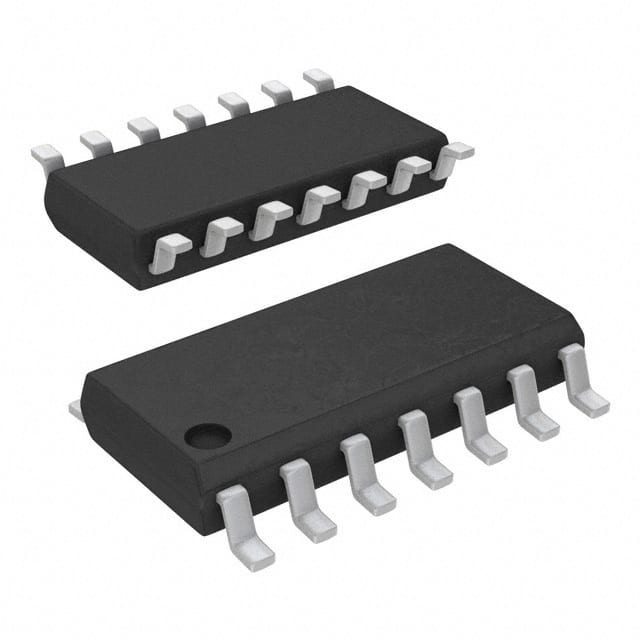
Infineon Technologies FM31256-G
- Part No.:
- FM31256-G
- Manufacturer:
- Infineon Technologies
- Category:
- Specialized ICs
- Package:
- 14-SOIC (0.154", 3.90mm Width)
- Datasheet:
-
 FM31256-G.pdf
- Description:
- IC PROCESSOR COMPANION 14SOIC
- Quantity:
- Payment:

- Shipping:

Inventory:1,988
Please send an inquiry. Send us your inquiry, and we will respond immediately.
Product details
Overview
FM31256-G from Infineon Technologies (formerly Cypress) is a 256-Kbit integrated processor companion IC combining ferroelectric RAM (F-RAM), real-time clock (RTC), low-VDD supervisor, watchdog timer, dual event counter, and 64-bit lockable serial number in a single 14-pin SOIC package. It delivers 1014 read/write endurance, 151-year data retention, and NoDelay™ writes, enabling reliable time-stamped logging in industrial metering systems.
For engineers reviewing the FM31256-G datasheet, FM31256-G pinout, FM31256-G application, or FM31256-G equivalent, key selection criteria include I²C-compatible 1-MHz interface timing, battery-backed RTC with software calibration, programmable VDD reset threshold (2.55 V / 2.75 V / 2.95 V / 3.15 V), dual edge-triggered event counters, and F-RAM's absence of write-cycle delays or wear leveling overhead.
Technical Context
The FM31256-G implements two logically independent I²C slave devices on one die: a 32K × 8 F-RAM array (slave address 0x50–0x53) and a companion peripheral block (slave address 0x68) containing RTC registers, supervisor control bits, event counter latches, and serial number fields. All timekeeping and supervision functions remain active under VBAK backup power (2.0–3.6 V).
Its RTC operates in BCD format with leap-year compensation through 2099, uses an external 32.768 kHz crystal (6 pF load), and supports ±1 ppm software calibration via CAL/PFO output. The supervisor includes a programmable watchdog (100 ms–3 s), early power-fail comparator referenced to 1.2 V, and RST output with 100 ms minimum pulse width after VDD recovery.
Key Specifications
| Parameter | Value and Actual Design Meaning |
|---|---|
| F-RAM capacity | 256 Kbit (32K × 8), accessed as standard I²C memory with no write latency |
| Endurance | 1014 read/write cycles - eliminates EEPROM wear-out concerns in high-log-rate systems |
| Data retention | 151 years at +25 °C - enables unattended operation without battery replacement |
| RTC accuracy | Software-calibratable ±1 ppm - supports precision timestamping without external TCXO |
| I²C speed | Up to 1 MHz - enables fast bulk F-RAM writes while maintaining compatibility with 100/400 kHz legacy systems |
| Reset trip points | Programmable: 2.55 V / 2.75 V / 2.95 V / 3.15 V - allows precise brownout detection aligned to host MCU thresholds |
| Backup current | 1.15 µA at 2 V, +25 °C - extends coin-cell life beyond 10 years in always-on RTC mode |
Pinout & Package
FM31256-G is housed in a 14-pin small outline integrated circuit (SOIC) package with standard 1.27 mm pitch and RoHS-compliant finish.
| Pin/Terminal | Circuit Role | Design Meaning |
|---|---|---|
| A0, A1 | Device select address inputs | Set I²C slave address bits for up to 4 devices on same bus; internally pulled down |
| SDA | I²C bidirectional data line | Open-drain, Schmitt-triggered, requires external pull-up; supports memory and companion register access |
| SCL | I²C clock input | Schmitt-triggered; rising edge samples data, falling edge outputs data |
| RST | Active-low reset I/O | Open-drain output (reset assertion) and debounced manual reset input; wire-OR capable |
| PFI | Power-fail comparator input | Compares external voltage to internal 1.2 V reference; triggers NMI on undervoltage |
| CAL/PFO | Calibration output / power-fail indicator | Outputs 512 Hz square wave during calibration; asserts low on early power failure |
| CNT1, CNT2 | Battery-backed event counter inputs | Edge-triggered (rising/falling programmable); retain count during VDD loss via VBAK |
| X1, X2 | 32.768 kHz crystal terminals | Drive external tuning fork crystal; X2 may be DC-biased if using oscillator module |
| VBAK | Backup power supply | Accepts 2.0–3.6 V battery/capacitor; powers RTC, counters, and registers during main power loss |
Key Features
| Feature | Design Value |
|---|---|
| NoDelay™ F-RAM writes | Eliminates write-cycle delays and polling - enables deterministic logging at full I²C bandwidth |
| Software-calibratable RTC | Adjusts timekeeping accuracy via CAL/PFO 512 Hz output - removes need for factory trimming or external compensation |
| Dual battery-backed event counters | Tracks system intrusions or maintenance events across power cycles - retains count even when VDD = 0 V |
| Lockable 64-bit serial number | One-time programmable field prevents cloning or firmware tampering - enhances device identity security |
| Programmable low-VDD reset threshold | Four selectable trip points match diverse MCU supply rails - avoids premature resets in multi-rail systems |
Applications
| Smart Electricity Metering | Industrial PLC Data Logger |
|---|---|
Use Scenario: Continuous energy consumption logging with time stamps and tamper detection. IC Role / Device Role / Timing Role: F-RAM stores kWh readings; RTC provides BCD timestamps; CNT1/CNT2 detect cover removal or meter tilt. Use Value: 1014 write cycles ensure >20 years of daily 1000-event logging; 151-year retention preserves regulatory audit trails. | Use Scenario: Capturing sensor data and fault events during intermittent power outages in factory automation. IC Role / Device Role / Timing Role: VBAK-backed RTC maintains accurate time; F-RAM buffers sensor streams; PFI triggers NMI before brownout. Use Value: No write delay allows uninterrupted logging during voltage sag; backup power sustains timekeeping for >10 years on CR2032. |
| Medical Infusion Pump | Building HVAC Controller |
Use Scenario: Recording dose delivery history, error codes, and calibration events with FDA-required traceability. IC Role / Device Role / Timing Role: Lockable serial number binds firmware to hardware; RTC timestamps each infusion; F-RAM stores audit logs. Use Value: One-time programmable serial number prevents counterfeit part substitution; BCD RTC ensures ISO 8601-compliant timestamps. | Use Scenario: Scheduling HVAC cycles, tracking filter life, and logging temperature anomalies across seasonal power interruptions. IC Role / Device Role / Timing Role: RTC drives weekly schedules; event counters track door openings or filter replacements; F-RAM stores seasonal setpoints. Use Value: Dual CNT inputs log mechanical actuations independently of main power; software calibration maintains ±1 min/month accuracy over 10 years. |
Equivalent & Alternatives
The following parts are listed as comparable options for similar integrated processor companion applications.
| Alternative Part | Technical Difference | Application Difference | Selection Advice |
|---|---|---|---|
| DS3231M+ | Higher RTC accuracy (±2 ppm), but only RTC + SRAM (no F-RAM, no event counters, no serial number) | Lacks nonvolatile memory and supervision features - requires external components for full FM31256-G functionality | Select when ultra-precise timekeeping is primary requirement and system already implements separate memory/supervision |
| MAX31328 | Integrated 64 Kbit FRAM + RTC + supervisor, but no event counters or lockable serial number; lower endurance (1012 cycles) | Missing dual event counting and secure serial number - unsuitable for tamper-evident or high-integrity logging | Select for cost-sensitive designs where 1012 endurance suffices and event tracking is handled externally |
Compared with DS3231M+ and MAX31328, FM31256-G uniquely combines 256 Kbit F-RAM, dual battery-backed event counters, and lockable serial number in one device - reducing BOM count and PCB area while enabling end-to-end secure, time-stamped data integrity without external support components.
Availability
FM31256-G is available at Aetrix Electronics and suitable for smart metering, industrial data loggers, medical devices, and building automation systems requiring stable component supply, long-term data retention, and robust power-fail resilience.
Supply support for FM31256-G includes scheduled delivery planning, volume procurement assistance, BOM continuity management, traceable sourcing, and lifecycle availability coordination for OEM customers, industrial embedded developers, connected-device designers, and electronics production programs.
Manufacturer
Infineon Technologies is a global semiconductor leader headquartered in Munich, Germany, specializing in power management, sensing, connectivity, and security solutions for automotive, industrial, and IoT applications.
The FM31256-G belongs to Infineon's integrated processor companion product line, designed to replace discrete RTC, supervisor, and nonvolatile memory components in resource-constrained embedded systems requiring high reliability and long service life.
FAQ
What is the maximum I²C clock frequency supported by FM31256-G?
The FM31256-G supports I²C communication up to 1 MHz, with full backward compatibility for legacy 100 kHz and 400 kHz timing. This allows high-speed F-RAM writes while maintaining interoperability with existing controllers that do not support fast-mode plus. The SDA and SCL inputs include Schmitt triggers for noise immunity, and the SDA driver incorporates slope control to reduce EMI.
How does the FM31256-G handle power transitions between VDD and VBAK?
When VDD drops below the programmed reset threshold, the RTC, event counters, and companion registers automatically switch to VBAK power without interruption. The F-RAM remains accessible until VDD falls below ~1.8 V. Upon VDD restoration, the device resumes normal operation with no initialization required - all timekeeping and counter states are preserved across the transition.
Can the lockable 64-bit serial number be reprogrammed after locking?
No. Once the serial number lock bit (SNL in register 0Bh) is set to '1', the 64-bit serial number field becomes permanently read-only. This one-time programming is enforced by hardware and cannot be reversed, ensuring cryptographic binding of firmware to the physical device for anti-counterfeiting and secure boot applications.
What crystal specifications are required for the FM31256-G RTC?
The FM31256-G requires a standard 32.768 kHz tuning-fork crystal with 6 pF load capacitance and ±20 ppm initial tolerance. The crystal connects between X1 and X2 pins; no external load capacitors are needed. For improved stability over temperature, a TCXO may be substituted by driving X1 with its output and biasing X2 to mid-supply, though this is not required for typical industrial applications.
FM31256-G Specifications
- Product attributes
- Attribute value
- Manufacturer:
- Infineon Technologies
- Series:
- -
- Package/Case:
- 14-SOIC (0.154", 3.90mm Width)
- Packaging:
- Tube
- Product Status:
- Active
- Programmable:
- Not Verified
- Type:
- Processor Companion
- Applications:
- Processor-Based Systems
- Mounting Type:
- Surface Mount
- Supplier Device Package:
- 14-SOIC
- Grade:
- -
- Qualification:
- -
FM31256-G FAQ
1.How can I place an order for FM31256-G through Aetrix?
Please submit a Request for Quotation (RFQ) for FM31256-G on Aetrix. Our sales agent will provide a competitive quotation and guide you through the order confirmation once you accept the terms.
2.Are the price and stock information for FM31256-G reliable?
The price and inventory of FM31256-G are updated periodically and may fluctuate due to market conditions. Stock and pricing data are typically refreshed every 24 hours. Quotation validity for FM31256-G is usually 5 days.
3.What payment methods are accepted for FM31256-G?
We accept Wire Transfer, PayPal, Credit Card, Western Union, MoneyGram, and Escrow for FM31256-G transactions.
Note: Certain payment methods may incur a processing fee.
4.How is shipping managed for FM31256-G?
FM31256-G orders can be shipped via leading logistics carriers, including DHL, UPS, FedEx, TNT, or Registered Mail.
Once your FM31256-G order is processed, you will receive an email with the shipment details and tracking number.
Note: Tracking information may take up to 24 hours to appear. Express delivery typically takes 3–5 business days.
5.How can I obtain technical support or documentation for FM31256-G?
For technical support, including FM31256-G datasheets, pinout diagrams, or application guidance, please contact our engineering support team. They can provide detailed documentation and assistance for your FM31256-G requirements.
6.How does Aetrix verify that FM31256-G is sourced from the original manufacturer or authorized distributors?
All FM31256-G products on Aetrix are procured from qualified distributors and authorized channels. Our dedicated quality assurance team conducts strict verification, including traceability checks and, if necessary, third-party testing. This ensures that FM31256-G meets industry standards.
7.What is the process for return or replacement of FM31256-G?
All FM31256-G units undergo pre-shipment inspection (PSI). If there is an issue with FM31256-G, returns or replacements are accepted under the following conditions:
1.Quantity discrepancies, incorrect items, or visible external defects (such as breakage or corrosion), acknowledged by Aetrix.
2.The issue is reported within 90 days of delivery.
3.The FM31256-G part is unused and in its original packaging.
Return procedure for FM31256-G:
1.Submit a request within 90 days.
2.Obtain a Return Material Authorization (RMA) from Aetrix.
FM31256-G Tags
-
CAP200DG-TL
Power Integrations
-
ATSHA204A-MAHDA-T
Microchip Technology

-
ATSHA204A-SSHDA-T
Microchip Technology
-
ATSHA204A-STUCZ-T
Microchip Technology
-
ATECC608B-MAHDA-T
Microchip Technology
-
ATECC608B-MAHCZ-S
Microchip Technology

-
ATECC608B-SSHDA-T
Microchip Technology
-
ATECC608B-MAHDA-S
Microchip Technology
-
ATECC608A-MAHDA-S
Microchip Technology
-
ATECC608B-MAVDA-T
Microchip Technology

-
ATECC608A-SSHDA-T
Microchip Technology
-
ATECC508A-MAHDA-T
Microchip Technology
Tech Hub

Operational amplifier guide covering op amp basics, feedback, ideal vs real op amps, common configurations, buffer circuits, offset, bias current, gain-bandwidth, slew rate, rail-to-rail limits and sel…

Jumper cables guide covering safe connection order, red and black clamp placement, final ground connection, cable gauge, length, clamp quality, copper vs CCA cables, jump starter comparison and battery…

LDO regulator guide covering low dropout voltage, power dissipation, thermal design, PSRR, output noise, capacitor stability, adjustable LDO circuits, LDO vs buck converter and datasheet selection chec…

Conditional Access Module guide covering CAM meaning, CI/CI+ interface, smart card authorization, DVB security workflow, TV and set-top box compatibility, internal electronics, ESD protection, connecto…

Guide to electronic component obsolescence covering EOL risk, PCN/PDN notices, last-time buy planning, replacement options, form-fit-function validation, counterfeit risk and BOM lifecycle management.

18650 battery guide covering lithium-ion cell basics, 3.6V/3.7V voltage, 4.2V charging, mAh and Wh capacity, protected cells, chargers, BMS, series-parallel packs, holders, welding and sourcing checks.…

Hall effect sensor guide covering working principle, linear and digital sensors, Arduino circuits, current sensing, speed detection, automotive applications, A3144 examples, signal filtering and datash…

Product Change Notification guide for electronic components, covering PCN meaning, PCN vs PDN/EOL, common change types, risk levels, form-fit-function review, engineering validation, BOM control, LTB/L…

A practical guide to blend door actuators, covering HVAC function, symptoms, location, AC and heater issues, reset and calibration, replacement cost, electrical diagnosis, compatibility checks, and rep…

Engineering guide to Raspberry Pi alternatives, covering chip-level differences, Orange Pi, ROCK, Jetson, Banana Pi, NanoPi, Compute Module, Pico, GPIO, camera, HAT compatibility, and replacement risks…


