
 My Inquiry
 My Account


NXP Semiconductors FS32K144HAT0MLHT
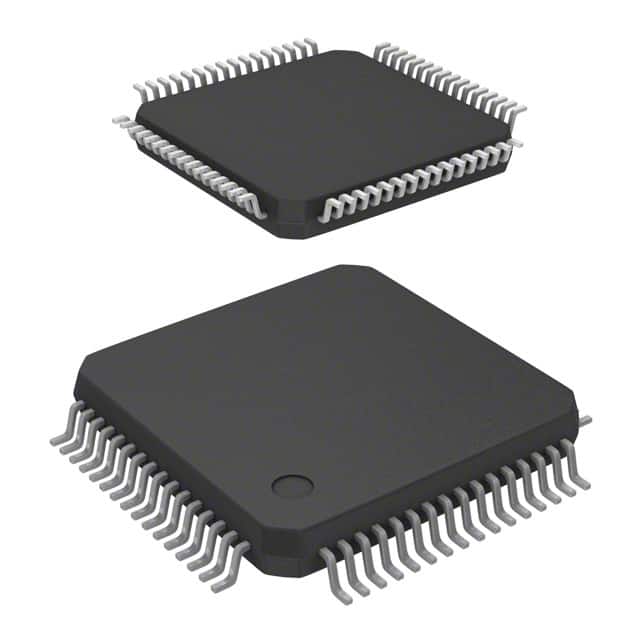
- Part No.:
- FS32K144HAT0MLHT
- Manufacturer:
- NXP Semiconductors
- Category:
- Microcontrollers
- Package:
- 64-LQFP
- Datasheet:
-
 FS32K144HAT0MLHT.pdf
- Description:
- IC MCU 32BIT 512KB FLASH 64LQFP
- Quantity:
- Payment:

- Shipping:

Inventory:720
Please send an inquiry. Send us your inquiry, and we will respond immediately.
Product details
Overview
FS32K144HAT0MLHT from NXP Semiconductors is an automotive-grade 32-bit Arm Cortex-M4F microcontroller with HSRUN mode up to 112 MHz, 2 MB flash (ECC), 256 KB SRAM (ECC), and integrated CSEc security engine. It supports CAN-FD, FlexCAN, LPUART/LIN, LPSPI, LPI2C, FlexIO, and operates from -40 °C to +125 °C in 144-pin LQFP packaging - deployed in vehicle body control modules and powertrain gateways.
For engineers reviewing the FS32K144HAT0MLHT datasheet, FS32K144HAT0MLHT pinout, FS32K144HAT0MLHT application, or FS32K144HAT0MLHT equivalent, key selection considerations include HSRUN/RUN mode switching constraints for CSEc/EEPROM operations, ASIL-B capable safety architecture, 156 GPIO count, QuadSPI with HyperBus™ support, and temperature-rated operation at 125 °C ambient.
Technical Context
The FS32K144HAT0MLHT implements a dual-core-capable Arm Cortex-M4F core with single-precision FPU and DSP extensions, executing at up to 112 MHz in HSRUN mode (80 MHz in RUN mode). Its clock system integrates SPLL (up to 112 MHz), FIRC (48 MHz), SIRC (8 MHz), LPO (128 kHz), and SOSC (4–40 MHz), with configurable clock gating per peripheral domain.
Power management includes five modes - HSRUN, RUN, STOP, VLPR, VLPS - managed by PMC; CSEc cryptographic operations and EEPROM emulation are restricted to RUN mode (80 MHz) due to hardware arbitration conflict in HSRUN. Memory subsystem features ECC on 2 MB flash, 256 KB SRAM, and 64 KB FlexNVM with EEPROM emulation capability.
Key Specifications
| Parameter | Value and Actual Design Meaning |
|---|---|
| CPU Core | Arm Cortex-M4F with FPU and DSP extensions - enables real-time motor control, sensor fusion, and floating-point math without external coprocessor. |
| Max Clock Frequency | 112 MHz in HSRUN mode - delivers 140 DMIPS performance for high-throughput signal processing in automotive ECUs. |
| Flash Memory | 2 MB with ECC - ensures functional safety compliance (ISO 26262 ASIL-B) and prevents silent data corruption in mission-critical firmware storage. |
| SRAM | 256 KB with ECC - supports large real-time buffers and deterministic execution for safety-critical tasks like CAN message handling. |
| Operating Temperature | -40 °C to +125 °C (M-grade) - qualified for under-hood automotive applications including engine control and battery management. |
| Security Engine | Cryptographic Services Engine (CSEc) - implements SHE-compliant AES-128, SHA-256, RNG, and secure boot with key provisioning in trusted execution environment. |
| I/O Count | 156 GPIO pins with interrupt capability - enables direct interface to sensors, actuators, LIN transceivers, and CAN PHYs without external I/O expanders. |
| Package | 144-pin LQFP (16 × 16 mm, 0.5 mm pitch) - provides mechanical robustness and thermal performance suitable for reflow-soldered automotive PCBs. |
Pinout & Package
FS32K144HAT0MLHT is housed in a 144-pin LQFP package (16 × 16 mm, 0.5 mm pitch) with exposed thermal pad. Pin functions are defined per the S32K144-specific IO Signal Description multiplexing sheet; all pins support configurable pull-up/down, slew rate control, and digital filtering.
| Pin/Terminal | Circuit Role | Design Meaning |
|---|---|---|
| VDD, VDDA, VREFH | Analog & digital supply rails | Must be decoupled locally with 100 nF + 10 µF capacitors; VDD/VDDA differential ≤ ±0.1 V ensures ADC accuracy and I/O noise immunity. |
| RESET_B | Active-low reset input | Asynchronous reset with internal pull-up; requires external RC filter (≥ 10 µs pulse width) for ECU-level power sequencing compliance. |
| SWD_CLK, SWD_DIO | Serial Wire Debug interface | Supports non-intrusive debug, trace, and flash programming; requires 10 kΩ pull-up on SWD_DIO for reliable JTAG/SWD mode entry. |
| CAN0_TX, CAN0_RX | FlexCAN channel 0 differential pair | Direct connection to ISO 11898-1 compliant CAN transceiver; supports CAN-FD up to 5 Mbps with bit-rate switching. |
| LPUART0_RX, LPUART0_TX | Low-power UART channel 0 | Enables LIN 2.2A protocol implementation with automatic sync-break detection and checksum generation in hardware. |
| ADC0_SE0–ADC0_SE31 | Analog inputs for 12-bit SAR ADC | Up to 32 channels shared across two ADC modules; supports simultaneous sampling, hardware-triggered conversion, and DMA auto-chaining. |
Key Features
| Feature | Design Value |
|---|---|
| ASIL-B Capable Safety Architecture | Integrated System MPU, ECC on flash/SRAM, CRC module, WDOG/EWM, and lockstep-ready peripherals enable ISO 26262-compliant system design without external safety monitors. |
| QuadSPI with HyperBus™ Support | Enables direct XIP (execute-in-place) from external NOR flash or PSRAM, reducing boot time and eliminating need for external memory controllers in infotainment gateway designs. |
| FlexIO Module | Configurable logic block supporting UART, SPI, I2C, I2S, PWM, and custom protocols - replaces discrete glue logic and reduces BOM cost in mixed-interface automotive subsystems. |
| Low-Power Communication Peripherals | LPUART, LPSPI, LPI2C retain full functionality in VLPR/VLPS modes - allows wake-on-message while consuming < 50 µA, critical for always-on vehicle networks. |
| Real-Time Timer Subsystem | Eight independent FlexTimers (64 channels total), LPIT (4-channel), LPTMR, PDB, and RTC provide deterministic timing for PWM generation, capture, delay generation, and calendar-based wake-up events. |
| Secure Boot & Key Management | CSEc enforces authenticated boot using SHA-256 hash verification and AES-128 decryption of encrypted firmware images stored in protected flash regions. |
Applications
| Body Control Module (BCM) | Electric Power Steering (EPS) |
|---|---|
Use Scenario: Centralized control of lighting, door locks, window lifts, and HVAC actuators in modern vehicle architectures. IC Role / Device Role / Timing Role: Main application MCU coordinating LIN slave nodes, driving high-side/low-side power switches, and managing CAN gateway routing between chassis and comfort domains. Use Value: 156 GPIOs eliminate external I/O expanders; CSEc secures over-the-air update authentication; 125 °C rating ensures reliability near fuse boxes and junction boxes. | Use Scenario: Real-time torque assist calculation, motor phase current sensing, and fault monitoring in steer-by-wire systems. IC Role / Device Role / Timing Role: Safety-critical controller executing ASIL-B software partitions with lockstep-capable peripherals, running motor control loops at 10 kHz using FTM PWM outputs and ADC-triggered sampling. Use Value: 112 MHz HSRUN mode delivers deterministic 100 ns interrupt latency; ECC-protected SRAM prevents corruption during EMI-heavy motor commutation events. |
| Battery Management System (BMS) | Vehicle Gateway Module |
Use Scenario: Monitoring cell voltages, temperatures, and state-of-charge in 48V mild-hybrid and EV traction battery packs. IC Role / Device Role / Timing Role: Data acquisition hub interfacing with analog front-end ICs via SPI, performing Coulomb counting and thermal modeling, and relaying diagnostics over CAN-FD. Use Value: Dual 12-bit ADCs (32-channel total) support simultaneous voltage/temperature sampling; CSEc protects cryptographic keys used in battery pack authentication. | Use Scenario: Protocol translation and firewalling between high-speed Ethernet (100BASE-T1), CAN-FD, LIN, and FlexRay domains in zonal E/E architectures. IC Role / Device Role / Timing Role: Network bridge MCU with dedicated Ethernet MAC, three FlexCAN interfaces, and FlexIO for legacy protocol emulation. Use Value: QuadSPI enables local storage of routing tables and firewall rules; 2 MB flash accommodates multiple firmware variants for different OEM configurations. |
Equivalent & Alternatives
The following parts are listed as comparable options for similar automotive microcontroller applications.
| Alternative Part | Technical Difference | Application Difference | Selection Advice |
|---|---|---|---|
| S32K146HAT0MLHT | Same package and pinout; adds 1 MB additional flash (3 MB total), 128 KB extra SRAM, second Ethernet MAC, and third FlexCAN with FD. | Required for multi-gateway systems needing redundant Ethernet or extended firmware partitioning for OTA updates. | Select when >2 MB flash or dual Ethernet is mandatory; otherwise FS32K144HAT0MLHT offers optimal cost/performance balance. |
| S32K144HFT0MLHT | Identical feature set but rated for -40 °C to +105 °C (V-grade); uses same 144-pin LQFP but lower max ambient temperature. | Suitable for cabin-mounted modules (e.g., HVAC control) where under-hood thermal stress is absent. | Choose for cost-sensitive interior applications; FS32K144HAT0MLHT remains required for engine bay or powertrain placement. |
Compared with S32K146HAT0MLHT and S32K144HFT0MLHT, the FS32K144HAT0MLHT delivers the precise balance of ASIL-B safety features, 125 °C operation, CAN-FD, and 2 MB flash needed for mainstream body and chassis ECUs - avoiding over-specification while maintaining full pin compatibility within the S32K14x family.
Availability
FS32K144HAT0MLHT is available at Aetrix Electronics and suitable for automotive body control, electric power steering, and battery management systems requiring stable component supply across long production lifecycles and rigorous qualification standards.
Supply support for FS32K144HAT0MLHT includes scheduled delivery planning, volume procurement assistance, BOM continuity management, traceable sourcing, and lifecycle availability coordination for OEM customers, industrial embedded developers, connected-device designers, and electronics production programs.
Manufacturer
NXP Semiconductors is a global semiconductor leader specializing in secure connectivity solutions for automotive, industrial, and IoT markets, with deep expertise in functional safety and automotive-grade silicon.
The S32K1xx series is NXP's purpose-built automotive MCU platform targeting ASIL-B compliant applications, integrating Arm Cortex-M cores, safety mechanisms, and automotive communication interfaces into a scalable, pin-compatible family.
FAQ
What is the maximum operating frequency of the FS32K144HAT0MLHT and under what conditions?
The FS32K144HAT0MLHT achieves 112 MHz in HSRUN mode and 80 MHz in RUN mode. HSRUN mode requires VDD ≥ 2.7 V and ambient temperature ≤ 105 °C; operation above 105 °C mandates switching to RUN mode. This frequency limitation is enforced by hardware to maintain timing closure and thermal stability.
Does the FS32K144HAT0MLHT support CAN-FD, and how many instances are available?
Yes, the FS32K144HAT0MLHT integrates three FlexCAN modules, all supporting CAN-FD per ISO 11898-1 with bit-rate switching up to 5 Mbps. Each module includes dedicated message RAM, acceptance filtering, and loopback self-test capability - enabling concurrent high-speed diagnostics and control messaging on separate CAN domains.
Can CSEc security operations be executed while the FS32K144HAT0MLHT runs at 112 MHz?
No. CSEc cryptographic operations (AES, SHA, RNG) and EEPROM emulation writes/erases are explicitly prohibited in HSRUN mode (112 MHz) per hardware design. The FS32K144HAT0MLHT must transition to RUN mode (80 MHz) before initiating any CSEc command or FlexNVM write - failure triggers error flags and halts execution until mode change completes.
What is the flash memory configuration of the FS32K144HAT0MLHT, and does it include ECC?
The FS32K144HAT0MLHT contains 2 MB of program flash memory with full Error-Correcting Code (ECC) protection, plus 64 KB of FlexNVM for data flash or EEPROM emulation - also ECC-protected. This dual-ECC architecture meets ISO 26262 ASIL-B requirements for fault detection and correction in safety-critical automotive code storage.
Is the FS32K144HAT0MLHT pin-compatible with other S32K14x devices in the same package?
Yes. All S32K14x devices sharing the 144-pin LQFP package - including FS32K142HAT0MLHT, FS32K144HAT0MLHT, and FS32K146HAT0MLHT - are fully pin-to-pin compatible. Peripheral availability varies by device variant, but pin assignments, power domains, and reset behavior remain identical across the family.
FS32K144HAT0MLHT Specifications
- Product attributes
- Attribute value
- Manufacturer:
- NXP Semiconductors
- Package/Case:
- 64-LQFP
- Series:
- S32K
- Packaging:
- Tray
- Product Status:
- Active
- Programmable:
- Not Verified
- Core Processor:
- ARM® Cortex®-M4F
- Core Size:
- 32-Bit Single-Core
- Speed:
- 80MHz
- Connectivity:
- CANbus, FlexIO, I2C, LINbus, SPI, UART/USART
- Peripherals:
- POR, PWM, WDT
- Number of I/O:
- 58
- Program Memory Size:
- 512KB (512K x 8)
- Program Memory Type:
- FLASH
- EEPROM Size:
- 4K x 8
- RAM Size:
- 64K x 8
- Voltage - Supply (Vcc/Vdd):
- 2.7V ~ 5.5V
- Data Converters:
- A/D 16x12b SAR; D/A1x8b
- Oscillator Type:
- Internal
- Operating Temperature:
- -40°C ~ 125°C (TA)
- Grade:
- -
- Qualification:
- -
- Mounting Type:
- Surface Mount
- Supplier Device Package:
FS32K144HAT0MLHT FAQ
1.How can I place an order for FS32K144HAT0MLHT through Aetrix?
Please submit a Request for Quotation (RFQ) for FS32K144HAT0MLHT on Aetrix. Our sales agent will provide a competitive quotation and guide you through the order confirmation once you accept the terms.
2.Are the price and stock information for FS32K144HAT0MLHT reliable?
The price and inventory of FS32K144HAT0MLHT are updated periodically and may fluctuate due to market conditions. Stock and pricing data are typically refreshed every 24 hours. Quotation validity for FS32K144HAT0MLHT is usually 5 days.
3.What payment methods are accepted for FS32K144HAT0MLHT?
We accept Wire Transfer, PayPal, Credit Card, Western Union, MoneyGram, and Escrow for FS32K144HAT0MLHT transactions.
Note: Certain payment methods may incur a processing fee.
4.How is shipping managed for FS32K144HAT0MLHT?
FS32K144HAT0MLHT orders can be shipped via leading logistics carriers, including DHL, UPS, FedEx, TNT, or Registered Mail.
Once your FS32K144HAT0MLHT order is processed, you will receive an email with the shipment details and tracking number.
Note: Tracking information may take up to 24 hours to appear. Express delivery typically takes 3–5 business days.
5.How can I obtain technical support or documentation for FS32K144HAT0MLHT?
For technical support, including FS32K144HAT0MLHT datasheets, pinout diagrams, or application guidance, please contact our engineering support team. They can provide detailed documentation and assistance for your FS32K144HAT0MLHT requirements.
6.How does Aetrix verify that FS32K144HAT0MLHT is sourced from the original manufacturer or authorized distributors?
All FS32K144HAT0MLHT products on Aetrix are procured from qualified distributors and authorized channels. Our dedicated quality assurance team conducts strict verification, including traceability checks and, if necessary, third-party testing. This ensures that FS32K144HAT0MLHT meets industry standards.
7.What is the process for return or replacement of FS32K144HAT0MLHT?
All FS32K144HAT0MLHT units undergo pre-shipment inspection (PSI). If there is an issue with FS32K144HAT0MLHT, returns or replacements are accepted under the following conditions:
1.Quantity discrepancies, incorrect items, or visible external defects (such as breakage or corrosion), acknowledged by Aetrix.
2.The issue is reported within 90 days of delivery.
3.The FS32K144HAT0MLHT part is unused and in its original packaging.
Return procedure for FS32K144HAT0MLHT:
1.Submit a request within 90 days.
2.Obtain a Return Material Authorization (RMA) from Aetrix.
FS32K144HAT0MLHT Tags

-
ATTINY4-TSHR
Microchip Technology
-
ATTINY10-TSHR
Microchip Technology
-
ATTINY10-TS8R
Microchip Technology

-
ATTINY202-SSNR
Microchip Technology
-
ATTINY202-SSFR
Microchip Technology
-
ATTINY402-SSNR
Microchip Technology
-
PIC16F15213T-I/MF
Microchip Technology
-
PIC16F15213-E/MF
Microchip Technology

-
PIC10F200T-I/OT
Microchip Technology
-
ATTINY412-SSNR
Microchip Technology
-
PIC10F202T-I/OT
Microchip Technology
-
ATTINY404-SSNR
Microchip Technology
Tech Hub

A practical engineering guide to 3.3V and 5V logic compatibility, input thresholds, resistor dividers, translator ICs, MOSFET level shifting, I2C pull-ups, timing limits and power-sequencing risks.

The 74HC595 uses push-pull logic outputs, while the TPIC6B595 uses 50 V open-drain DMOS sinks for higher-power loads. This guide compares timing, current limits, 3.3 V interfacing, load wiring, thermal…

The 74HC595 converts serial data into eight stable parallel outputs. This guide covers pin functions, shift and storage timing, OE and MR behavior, drive-current limits, cascading, voltage compatibilit…

A technical comparison of level-sensitive latches and edge-triggered flip-flops, covering timing windows, setup and hold limits, master–slave operation, time borrowing, race-through, HDL inference and…

A D latch stores one bit while Enable controls when data can pass. This reference covers gate-level operation, truth tables, transparency, setup and hold timing, LE versus OE, common ICs and practical …

An SR latch stores one bit through cross-coupled feedback. This engineering reference covers NOR and NAND implementations, truth tables, forbidden-state recovery, gated operation, switch debouncing, fa…

Latch circuits retain one bit through feedback. This technical reference covers SR and D latches, truth tables, transparency, timing limits, latch-versus-flip-flop behavior, applications and common log…

An engineering guide to LED driver operation, constant-current and constant-voltage outputs, linear and switching topologies, dimming, IC selection, calculations, replacement compatibility, and fault c…

Operational amplifier guide covering op amp basics, feedback, ideal vs real op amps, common configurations, buffer circuits, offset, bias current, gain-bandwidth, slew rate, rail-to-rail limits and sel…

Jumper cables guide covering safe connection order, red and black clamp placement, final ground connection, cable gauge, length, clamp quality, copper vs CCA cables, jump starter comparison and battery…


