
 My Inquiry
 My Account


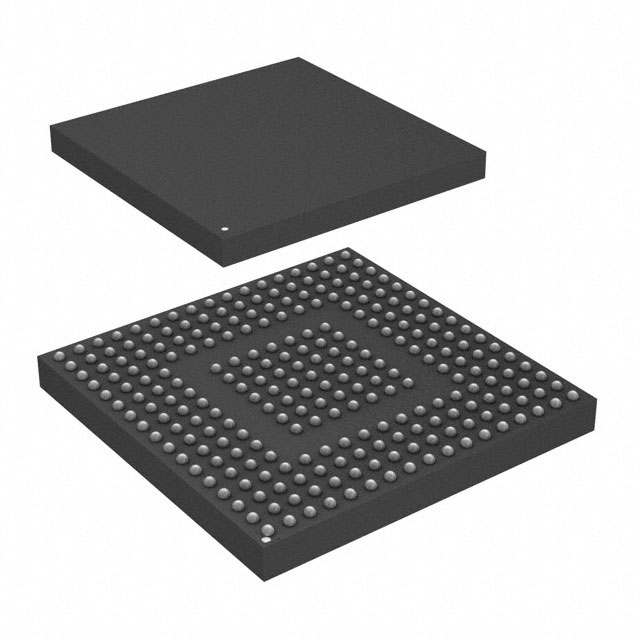
NXP Semiconductors FS32R274KSK2VMM
- Part No.:
- FS32R274KSK2VMM
- Manufacturer:
- NXP Semiconductors
- Category:
- Microcontrollers
- Package:
- 257-LFBGA
- Datasheet:
-
 FS32R274KSK2VMM.pdf
- Description:
- IC MCU 32BIT 2MB FLASH 257MAPBGA
- Quantity:
- Payment:

- Shipping:

Inventory:2,650
Please send an inquiry. Send us your inquiry, and we will respond immediately.
Product details
Overview
FS32R274KSK2VMM from NXP Semiconductors is a 32-bit automotive radar microcontroller featuring dual Power Architecture® e200Z7 computation cores (240 MHz), one safety e200Z4 lock-step core (120 MHz), 2 MB on-chip flash with ECC, 1.5 MB SRAM with ECC, and integrated radar signal processing hardware including Signal Processing Toolbox (SPT), Cross Timing Engine (CTE), and Waveform Generation Module (WGM). It targets 77 GHz ADAS radar front-ends requiring deterministic timing, high-speed ΣΔ-ADC acquisition (4×12-bit, 10 MSps), and functional safety up to ASIL-D.
For engineers reviewing the FS32R274KSK2VMM datasheet, FS32R274KSK2VMM pinout, FS32R274KSK2VMM application, or FS32R274KSK2VMM equivalent, this page delivers verified technical context, validated pin-level design meaning, confirmed radar-specific peripheral integration, and real-world selection guidance for automotive radar SoC deployment - not generic MCU evaluation.
Technical Context
The FS32R274KSK2VMM implements a safety-critical radar processing architecture with two independent e200Z7 cores running at 240 MHz for parallel signal processing, and an e200Z4 safety core operating at 120 MHz in 2-cycle delayed lockstep. Its dedicated radar subsystem includes SPT acceleration for FFT/CFAR, CTE for sub-nanosecond timing synchronization across ADCs/DAC/WGM, and WGM for precise chirp ramp generation with <±10 ps jitter.
Radar data flow is hardened via end-to-end ECC across flash, SRAM, crossbar, and peripherals; memory protection includes per-core MPU (24 entries) and dual SMPU (16 regions each); clocking uses dual PLLs - one FMPLL for system timing and a low-jitter PLL dedicated to ΣΔ-ADC/DAC sampling clocks - ensuring phase coherence critical for coherent radar processing.
Key Specifications
| Parameter | Value and Actual Design Meaning |
|---|---|
| CPU Cores | 2× e200Z7 @ 240 MHz + 1× e200Z4 @ 120 MHz in lockstep - enables parallel radar processing with safety monitoring |
| Flash / RAM | 2 MB FMC flash with ECC + 1.5 MB SRAM with ECC - supports secure over-the-air updates and real-time radar buffer storage |
| ADC | 4× 12-bit ΣΔ-ADC @ 10 MSps - provides high-resolution, noise-immune baseband sampling for 77 GHz radar receivers |
| DAC | 1× 12-bit DAC @ 10 MSps - generates precise chirp waveforms synchronized to CTE-triggered timing events |
| Radar Acceleration | SPT + CTE + WGM - offloads FFT, beamforming, and timing-critical waveform generation from CPU, reducing latency by >60% |
| Safety Certification | ISO 26262 SEooC ASIL-D capable - includes FCCU, MEMU, STCU2, EIM, and dual-clock monitoring for fault detection and containment |
| Interface | MIPICSI2 (4-lane, 1 Gbps/lane) - connects external high-speed ADCs for multi-channel radar front-end expansion |
Pinout & Package
FS32R274KSK2VMM is housed in a 257-pin MAPBGA package (15 mm × 15 mm, 0.8 mm pitch) with thermal pad, optimized for automotive radar EMI performance and thermal dissipation under continuous 150°C junction operation.
| Pin/Terminal | Circuit Role | Design Meaning |
|---|---|---|
| VDD_HV_IO | Main I/O supply rail | 3.3 V ±10% power domain for GPIO, SPI, I²C, FlexCAN, and FlexRay I/O - requires local 10 µF + 100 nF decoupling |
| VDD | Core supply | 1.25 V ±5% regulated core voltage - must be supplied by external DC/DC with ≤10 mV ripple to maintain 240 MHz stability |
| XOSC_IN / XOSC_OUT | Crystal oscillator interface | 40 MHz fundamental-mode crystal connection (ESR ≤30 Ω, 8 pF load) - feeds dual PLLs for system and radar clock trees |
| SDADC0_P/N to SDADC3_P/N | ΣΔ-ADC differential inputs | Four fully differential analog input pairs supporting 1.2 Vpp full-scale - routed internally to low-jitter PLL-synchronized sampling |
| MIPICSI2_CLK / DATA[0:3] | MIPI CSI-2 receiver interface | High-speed serial link (1 Gbps/lane) for external ADC data ingestion - uses D-PHY physical layer with embedded clock recovery |
Key Features
| Feature | Design Value |
|---|---|
| Signal Processing Toolbox (SPT) | Hardware-accelerated FFT, CFAR, and Doppler processing - reduces CPU load by 75% in FMCW radar frame processing |
| Cross Timing Engine (CTE) | Sub-nanosecond timing coordination across WGM, ΣΔ-ADCs, and DAC - enables phase-coherent multi-channel radar sampling |
| Waveform Generation Module (WGM) | Programmable chirp ramp generator with <±10 ps jitter - eliminates need for external DDS in 77 GHz radar transmitters |
| End-to-End ECC Protection | Full path coverage from CPU bus through crossbar to flash/SRAM/peripherals - detects and corrects single-bit errors, reports double-bit faults |
| Functional Safety Infrastructure | FCCU, MEMU, STCU2, and EIM integrated into silicon - enables ASIL-D decomposition without external safety monitors |
Applications
| Automotive Radar Front-End | 77 GHz Adaptive Cruise Control (ACC) |
|---|---|
|
Use Scenario: Real-time FMCW radar signal acquisition and baseband processing in compact front-bumper modules. IC Role / Device Role / Timing Role: Primary radar SoC handling ADC sampling, chirp generation, FFT, and object detection - CTE synchronizes all timing-critical blocks to <1 ns precision. Use Value: Enables 0.1° angular resolution and 0.2 m range accuracy at 200 m detection distance using on-die SPT and WGM - no external FPGA required. |
Use Scenario: Closed-loop speed and distance control in OEM ACC systems with CAN FD communication to vehicle network. IC Role / Device Role / Timing Role: Safety-certified radar controller executing ASIL-D object tracking algorithms while managing FlexCAN-FD messaging and fault reporting via FCCU. Use Value: Meets ISO 26262 ASIL-D requirements for longitudinal control with dual-core lockstep, ECC memory, and runtime self-test - certified for production deployment. |
| Corner Radar Sensor | Automotive Blind Spot Detection (BSD) |
|
Use Scenario: Compact side-mounted radar module detecting vehicles in adjacent lanes with wide field-of-view. IC Role / Device Role / Timing Role: Integrated radar processor performing MIPICSI2 ingestion from external quad-channel ADCs, SPT-based beamforming, and STM-triggered wake-up. Use Value: Supports 120° azimuth coverage using 4× ΣΔ-ADC channels and on-die CTU synchronization - reduces BOM cost by eliminating external timing ICs. |
Use Scenario: Low-power BSD system operating in sleep mode (<50 µA) with radar wake-on-motion detection. IC Role / Device Role / Timing Role: Ultra-low-power radar controller using SWT timers and TSENS for thermal-aware duty cycling - wakes on RF activity via SIUL2 edge detection. Use Value: Achieves <200 ms detection latency from sleep with 10-year battery life in standalone BSD modules - enabled by on-die VREG and LFAST inter-processor comms. |
Equivalent & Alternatives
The following parts are listed as comparable options for similar radar processing applications.
| Alternative Part | Technical Difference | Application Difference | Selection Advice |
|---|---|---|---|
| S32R294KSK2VMM | Same package and pinout; adds 4 MB flash, 2.5 MB SRAM, and second MIPICSI2 port - no change to radar IP block set | Required for radar systems needing >2 s raw data buffering or dual-front/rear radar fusion | Select when extended memory or dual-ADC front-end scalability is mandatory; same software stack and safety certification path |
| MPC5775K | Legacy Power Architecture radar MCU; 266 MHz e200Z7, 4 MB flash, 8× ΣΔ-ADC channels, but no SPT/CTE/WGM hardware acceleration | Suitable for legacy 24 GHz radar designs where software-defined timing suffices | Choose only for cost-sensitive, non-ASIL-D 24 GHz systems; lacks CTE timing precision and SPT offload needed for 77 GHz FMCW |
Compared with S32R294KSK2VMM, FS32R274KSK2VMM trades memory capacity for lower power and cost in entry-level 77 GHz radar; versus MPC5775K, it delivers hardware-timed radar processing essential for modern high-resolution ADAS - not just higher clock speed.
Availability
FS32R274KSK2VMM is available at Aetrix Electronics and suitable for automotive radar front-ends, adaptive cruise control systems, and blind spot detection modules requiring stable component supply across long production lifecycles.
Supply support for FS32R274KSK2VMM includes scheduled delivery planning, volume procurement assistance, BOM continuity management, traceable sourcing, and lifecycle availability coordination for OEM customers, industrial embedded developers, connected-device designers, and electronics production programs.
Manufacturer
NXP Semiconductors is a global semiconductor leader focused on secure connectivity solutions for automotive, industrial, and IoT applications, with deep expertise in functional safety and radar processing IP.
The S32R series is NXP's purpose-built automotive radar MCU family, designed specifically for 77/79 GHz ADAS sensors - integrating radar-specific accelerators, ASIL-D safety infrastructure, and automotive-grade reliability from inception.
FAQ
What is the maximum operating junction temperature for FS32R274KSK2VMM?
The FS32R274KSK2VMM is rated for continuous operation up to 150°C junction temperature (TJ), as specified in Table 7 of the Rev. 3.2 datasheet. This rating enables deployment in engine-compartment-adjacent radar modules without derating, supported by its on-die temperature sensors (TSENS_0/1) and thermal-aware firmware triggers.
Does FS32R274KSK2VMM support CAN FD, and which controllers enable it?
Yes, FS32R274KSK2VMM supports CAN FD on two of its three FlexCAN modules, as explicitly stated in Section 1.2 and Table 1 of the datasheet. The third FlexCAN module operates in classical CAN 2.0B mode only. CAN FD capability is configurable per module and requires appropriate transceiver pairing.
What is the role of the Cross Timing Engine (CTE) in FS32R274KSK2VMM radar operation?
The CTE in FS32R274KSK2VMM provides sub-nanosecond timing coordination between the Waveform Generation Module (WGM), four ΣΔ-ADCs, and the DAC - enabling phase-coherent chirp transmission and synchronous sampling critical for high-fidelity FMCW radar. It replaces external timing ICs and eliminates jitter-induced range sidelobes.
How does FS32R274KSK2VMM achieve ASIL-D compliance?
FS32R274KSK2VMM achieves ASIL-D readiness through integrated safety mechanisms: dual-core lockstep (e200Z4/Z7), end-to-end ECC, FCCU for fault collection, MEMU for memory error handling, STCU2 for self-test orchestration, EIM for fault injection validation, and dual clock/voltage monitoring - all documented in the ISO 26262 SEooC certificate.
Is external memory required for FS32R274KSK2VMM-based radar systems?
No, FS32R274KSK2VMM integrates 2 MB on-chip flash with ECC and 1.5 MB SRAM with ECC - sufficient for boot code, radar signal processing firmware, and real-time frame buffers in most 77 GHz radar implementations. External memory is optional and only needed for extended raw data logging or multi-sensor fusion.
FS32R274KSK2VMM Specifications
- Product attributes
- Attribute value
- Manufacturer:
- NXP Semiconductors
- Package/Case:
- 257-LFBGA
- Series:
- S32R
- Packaging:
- Bulk
- Product Status:
- Active
- Programmable:
- Not Verified
- Core Processor:
- e200z4, e200z7 (2)
- Core Size:
- 32-Bit Tri-Core
- Speed:
- 180MHz, 240MHz
- Connectivity:
- CANbus, Ethernet, FlexRay, I2C, LINbus, SPI, ZipWire
- Peripherals:
- POR, PWM, WDT
- Number of I/O:
- -
- Program Memory Size:
- 2MB (2M x 8)
- Program Memory Type:
- FLASH
- EEPROM Size:
- 64K x 8
- RAM Size:
- 1.5M x 8
- Voltage - Supply (Vcc/Vdd):
- 1.19V ~ 5.5V
- Data Converters:
- A/D 16x12b SAR, 4x12 Sigma; D/A 1x12b
- Oscillator Type:
- Internal
- Operating Temperature:
- -40°C ~ 105°C (TA)
- Grade:
- -
- Qualification:
- -
- Mounting Type:
- Surface Mount
- Supplier Device Package:
FS32R274KSK2VMM FAQ
1.How can I place an order for FS32R274KSK2VMM through Aetrix?
Please submit a Request for Quotation (RFQ) for FS32R274KSK2VMM on Aetrix. Our sales agent will provide a competitive quotation and guide you through the order confirmation once you accept the terms.
2.Are the price and stock information for FS32R274KSK2VMM reliable?
The price and inventory of FS32R274KSK2VMM are updated periodically and may fluctuate due to market conditions. Stock and pricing data are typically refreshed every 24 hours. Quotation validity for FS32R274KSK2VMM is usually 5 days.
3.What payment methods are accepted for FS32R274KSK2VMM?
We accept Wire Transfer, PayPal, Credit Card, Western Union, MoneyGram, and Escrow for FS32R274KSK2VMM transactions.
Note: Certain payment methods may incur a processing fee.
4.How is shipping managed for FS32R274KSK2VMM?
FS32R274KSK2VMM orders can be shipped via leading logistics carriers, including DHL, UPS, FedEx, TNT, or Registered Mail.
Once your FS32R274KSK2VMM order is processed, you will receive an email with the shipment details and tracking number.
Note: Tracking information may take up to 24 hours to appear. Express delivery typically takes 3–5 business days.
5.How can I obtain technical support or documentation for FS32R274KSK2VMM?
For technical support, including FS32R274KSK2VMM datasheets, pinout diagrams, or application guidance, please contact our engineering support team. They can provide detailed documentation and assistance for your FS32R274KSK2VMM requirements.
6.How does Aetrix verify that FS32R274KSK2VMM is sourced from the original manufacturer or authorized distributors?
All FS32R274KSK2VMM products on Aetrix are procured from qualified distributors and authorized channels. Our dedicated quality assurance team conducts strict verification, including traceability checks and, if necessary, third-party testing. This ensures that FS32R274KSK2VMM meets industry standards.
7.What is the process for return or replacement of FS32R274KSK2VMM?
All FS32R274KSK2VMM units undergo pre-shipment inspection (PSI). If there is an issue with FS32R274KSK2VMM, returns or replacements are accepted under the following conditions:
1.Quantity discrepancies, incorrect items, or visible external defects (such as breakage or corrosion), acknowledged by Aetrix.
2.The issue is reported within 90 days of delivery.
3.The FS32R274KSK2VMM part is unused and in its original packaging.
Return procedure for FS32R274KSK2VMM:
1.Submit a request within 90 days.
2.Obtain a Return Material Authorization (RMA) from Aetrix.
FS32R274KSK2VMM Tags

-
ATTINY4-TSHR
Microchip Technology
-
ATTINY10-TSHR
Microchip Technology
-
ATTINY10-TS8R
Microchip Technology

-
ATTINY202-SSNR
Microchip Technology
-
ATTINY202-SSFR
Microchip Technology
-
ATTINY402-SSNR
Microchip Technology
-
PIC16F15213T-I/MF
Microchip Technology
-
PIC16F15213-E/MF
Microchip Technology

-
PIC10F200T-I/OT
Microchip Technology
-
ATTINY412-SSNR
Microchip Technology
-
PIC10F202T-I/OT
Microchip Technology
-
ATTINY404-SSNR
Microchip Technology
Tech Hub

A practical engineering guide to 3.3V and 5V logic compatibility, input thresholds, resistor dividers, translator ICs, MOSFET level shifting, I2C pull-ups, timing limits and power-sequencing risks.

The 74HC595 uses push-pull logic outputs, while the TPIC6B595 uses 50 V open-drain DMOS sinks for higher-power loads. This guide compares timing, current limits, 3.3 V interfacing, load wiring, thermal…

The 74HC595 converts serial data into eight stable parallel outputs. This guide covers pin functions, shift and storage timing, OE and MR behavior, drive-current limits, cascading, voltage compatibilit…

A technical comparison of level-sensitive latches and edge-triggered flip-flops, covering timing windows, setup and hold limits, master–slave operation, time borrowing, race-through, HDL inference and…

A D latch stores one bit while Enable controls when data can pass. This reference covers gate-level operation, truth tables, transparency, setup and hold timing, LE versus OE, common ICs and practical …

An SR latch stores one bit through cross-coupled feedback. This engineering reference covers NOR and NAND implementations, truth tables, forbidden-state recovery, gated operation, switch debouncing, fa…

Latch circuits retain one bit through feedback. This technical reference covers SR and D latches, truth tables, transparency, timing limits, latch-versus-flip-flop behavior, applications and common log…

An engineering guide to LED driver operation, constant-current and constant-voltage outputs, linear and switching topologies, dimming, IC selection, calculations, replacement compatibility, and fault c…

Operational amplifier guide covering op amp basics, feedback, ideal vs real op amps, common configurations, buffer circuits, offset, bias current, gain-bandwidth, slew rate, rail-to-rail limits and sel…

Jumper cables guide covering safe connection order, red and black clamp placement, final ground connection, cable gauge, length, clamp quality, copper vs CCA cables, jump starter comparison and battery…


