
 My Inquiry
 My Account


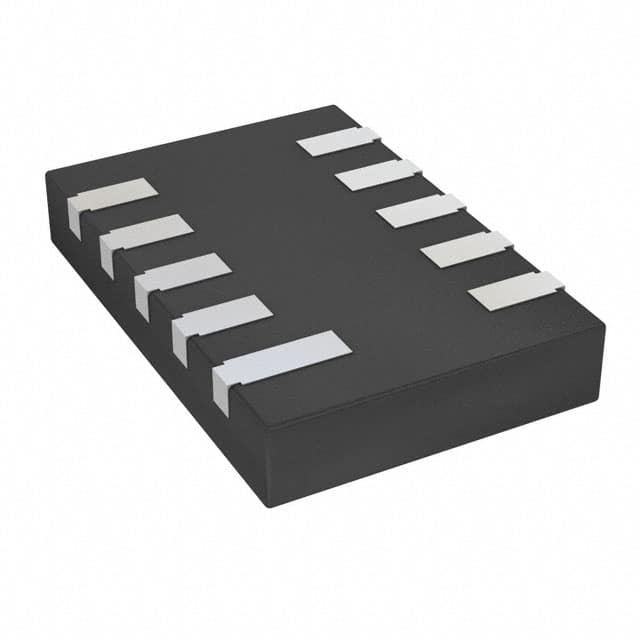
STMicroelectronics GG25LAJ
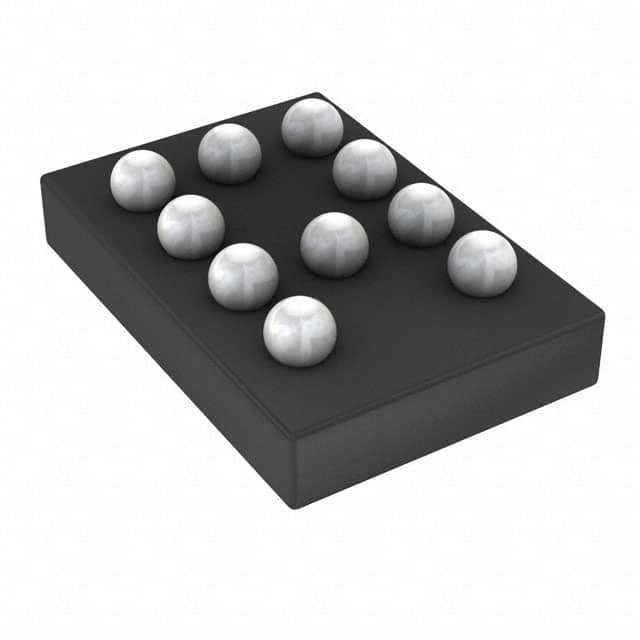
- Part No.:
- GG25LAJ
- Manufacturer:
- STMicroelectronics
- Category:
- Battery Management
- Package:
- 10-WFBGA, FCCSP
- Datasheet:
-
 GG25LAJ.pdf
- Description:
- IC BATT MON GAS GAUGE 10FCCSP
- Quantity:
- Payment:

- Shipping:

Inventory:2,546
Please send an inquiry. Send us your inquiry, and we will respond immediately.
Product details
Overview
GG25LAJ from STMicroelectronics is a gas gauge IC for Li-ion/Li-polymer battery state-of-charge (SOC) estimation, featuring Coulomb counting and voltage-mode algorithms, ±0.25% battery voltage accuracy, 45 µA power-saving mode current, and programmable low-SOC/low-voltage alarm output via open-drain ALM pin - deployed in wearable fitness trackers with tight space constraints.
For engineers reviewing the GG25LAJ datasheet, GG25LAJ pinout, GG25LAJ application, or GG25LAJ equivalent, key selection considerations include its 1.4 × 2.0 mm CSP-12 package, I²C interface timing compliance (up to 400 kHz), mixed-mode SOC tracking architecture, and dual-threshold alarm configuration via REG_SOC_ALM and REG_ALARM_VOLTAGE registers.
Technical Context
The GG25LAJ implements a dual-algorithm gas gauge system: a 14-bit sigma-delta ADC performs current integration (500 ms conversion time, 5.88 µV LSB) for Coulomb counting, while a voltage-mode algorithm uses internal OCV curve modeling (32768 Hz timebase, ±0.5% voltage accuracy) to correct long-term drift. Both operate under VMODE-controlled mixed or voltage-only modes.
Its functional block includes dedicated hardware for battery swap detection (1 s UVLO debounce), on-chip temperature sensing (±3 °C accuracy, -40 to +125 °C range), and alarm management logic that latches ALM output until software clears ALM_SOC/ALM_VOLT bits in REG_CTRL - all coordinated by an internal state machine without host intervention.
Key Specifications
| Parameter | Value and Actual Design Meaning |
|---|---|
| Supply Voltage | 2.7 V to 4.5 V - supports single-cell Li-ion packs without external LDO |
| Voltage Accuracy | ±0.25% at 25 °C - enables <1% SOC error during stable discharge phases |
| Current Sensing LSB | 5.88 µV - resolves ~60 nA with 10 mΩ sense resistor for precise charge tracking |
| Power-Saving Mode Current | 45 µA - extends runtime in always-on wearables between host wake-ups |
| Alarm Output Type | Open-drain ALM pin - allows flexible pull-up to system rail or logic level |
| Internal Clock | 32.768 kHz oscillator - provides stable timing reference for ADC conversions and SOC updates |
| Operating Temp Range | -40 °C to +85 °C - qualified for medical-grade portable equipment environments |
Pinout & Package
GG25LAJ is housed in a 1.4 × 2.0 mm, 10-bump CSP package (CSP-12 footprint with 2 NC bumps). The device uses a 10-pin functional layout with dedicated analog inputs, I²C interface, alarm output, and battery detection/reset control pins.
| Pin/Terminal | Circuit Role | Design Meaning |
|---|---|---|
| ALM (Pin 1) | Open-drain alarm output | Drives low when SOC < REG_SOC_ALM or VIN < REG_ALARM_VOLTAGE; requires external pull-up |
| SDA (Pin 2) | I²C data line | Bi-directional, open-drain; supports standard/fast-mode I²C up to 400 kHz |
| SCL (Pin 3) | I²C clock line | Input only; synchronizes register reads/writes and configures operating modes |
| GND (Pin 4) | Analog/digital ground | Single-point connection required to minimize noise coupling into CG/VIN paths |
| CG (Pin 6) | Current sense input | Accepts ±40 mV differential voltage across external sense resistor; high-impedance input (500 nA bias) |
| RSTIO (Pin 7) | Reset sense/control | Detects battery insertion (input) and asserts reset (open-drain output) during swap events |
| BATD/CD (Pin 8) | Battery detect/charge inhibit | Inputs battery presence (1.46–1.76 V threshold); outputs charge inhibit signal when active high |
| VCC (Pin 9) | Power supply | Supplies core logic and ADC; UVLO triggers at 2.6 V typical with 100 mV hysteresis |
| VIN (Pin 10) | Battery voltage input | Measures pack voltage directly (0–4.5 V range); 2.20 mV ADC resolution enables 0.5% full-scale accuracy |
Key Features
| Feature | Design Value |
|---|---|
| OptimGauge™ algorithm | Combines real-time Coulomb counting with voltage-mode OCV modeling to eliminate SOC drift over battery aging cycles |
| Programmable dual-threshold alarm | Independent SOC (%) and voltage (mV-step) thresholds allow staged low-battery warnings before shutdown |
| Battery swap detection | 1 s UVLO debounce prevents false restarts from mechanical contact bounce during battery replacement |
| Mixed-mode operation | Automatic switching between high-accuracy mixed mode and ultra-low-power voltage-only mode based on system activity |
| On-chip temperature sensor | Eliminates need for external thermistor; ±3 °C accuracy enables temperature-compensated SOC correction |
Applications
| Fitness Tracker | Portable ECG Monitor |
|---|---|
Use Scenario: Continuous heart-rate and motion sensing during multi-day wear with intermittent Bluetooth sync. IC Role / Device Role / Timing Role: Gas gauge IC performing mixed-mode SOC estimation using VIN, CG, and internal temperature to maintain <3% SOC error across discharge cycles. Use Value: Enables accurate battery remaining-time prediction despite variable sensor duty cycling and ambient temperature shifts. | Use Scenario: Battery-powered clinical-grade ECG acquisition with 24-hour continuous recording capability. IC Role / Device Role / Timing Role: Primary battery monitor providing alarm-triggered data save-and-shutdown sequence when SOC drops below 5%. Use Value: Prevents data loss by initiating graceful shutdown before voltage collapse, using latched ALM output and I²C-accessible SOC register. |
| Smart Hearing Aid | Wireless Pulse Oximeter |
Use Scenario: Miniaturized rechargeable hearing aid requiring sub-2 mm² board area and >100 charge cycles. IC Role / Device Role / Timing Role: Compact gas gauge managing Li-polymer cell with BATD/CD pin detecting battery insertion and RSTIO coordinating safe boot after swap. Use Value: Supports field-replaceable battery design without firmware reinitialization; eliminates manual SOC reset. | Use Scenario: Disposable-style pulse oximeter with single-use Li-ion cell and LED-driven SpO₂ measurement bursts. IC Role / Device Role / Timing Role: Low-power voltage-mode gas gauge updating SOC every 4 s during idle, reducing average current to 45 µA. Use Value: Extends shelf life and operational runtime by minimizing background power draw during standby intervals. |
Equivalent & Alternatives
The following parts are listed as comparable options for similar battery fuel gauging applications.
| Alternative Part | Technical Difference | Application Difference | Selection Advice |
|---|---|---|---|
| BQ27426 (TI) | Integrated sense resistor; no external CG pin; 12-bit ADC (vs. 14-bit); 65 µA typical operating current | Targeted at cost-sensitive consumer electronics; lacks battery swap detection and RSTIO functionality | Select when board space is constrained and external sense resistor elimination outweighs precision trade-off |
| MAX17048 (Maxim) | ModelGauge m3 algorithm; no internal temperature sensor; 18 µA standby current; different I²C register map | Optimized for ultra-low-power IoT sensors; requires external thermistor for temp compensation | Select when lowest possible quiescent current is critical and temperature compensation can be implemented externally |
Compared with BQ27426 and MAX17048, GG25LAJ uniquely combines 14-bit current measurement resolution, on-die temperature sensing, and robust battery swap detection - making it optimal for medical and fitness devices where SOC accuracy, reliability, and field serviceability are non-negotiable.
Availability
GG25LAJ is available at Aetrix Electronics and suitable for wearable fitness trackers, portable ECG monitors, smart hearing aids, and wireless pulse oximeters requiring stable component supply across multi-year production cycles.
Supply support for GG25LAJ includes scheduled delivery planning, volume procurement assistance, BOM continuity management, traceable sourcing, and lifecycle availability coordination for OEM customers, industrial embedded developers, connected-device designers, and electronics production programs.
Manufacturer
STMicroelectronics is a global semiconductor leader headquartered in Geneva, specializing in microcontrollers, analog ICs, and power management solutions for industrial, automotive, and consumer markets.
The GG25L series belongs to ST's battery management portfolio, designed specifically for compact, low-power portable medical and wellness devices needing high-accuracy, self-contained fuel gauging without external calibration components.
FAQ
What is the function of the RSTIO pin on GG25LAJ?
RSTIO serves dual roles: as an input, it senses battery insertion via voltage threshold detection; as an open-drain output, it asserts a hardware reset signal during battery swap events. Its 1 s debounce filter ensures reliable detection of true battery replacement versus transient voltage dips, enabling seamless SOC continuity across swaps without host firmware intervention.
How does GG25LAJ handle initial SOC estimation at power-up?
At first power-up, GG25LAJ performs an immediate open-circuit voltage (OCV) measurement after a debounce delay, then maps the OCV to SOC using its built-in high-precision reference curve. This yields an accurate starting SOC value within 250 ms - critical for wearables that must display battery level immediately upon boot without waiting for discharge history.
Can GG25LAJ operate without an external current sense resistor?
Yes - GG25LAJ supports voltage-only mode (VMODE = 1), disabling Coulomb counting and relying solely on its voltage-mode algorithm for SOC estimation. In this mode, it consumes only 45 µA and updates SOC every 4 s using VIN measurements, making it suitable for applications where current sensing is impractical or unnecessary.
What is the significance of the REG_CC_ADJ and REG_VM_ADJ registers?
These signed 16-bit registers store real-time correction factors applied to the Coulomb counter and voltage-mode algorithms respectively. They are continuously updated during mixed-mode operation to compensate for battery aging, temperature effects, and capacity drift - enabling long-term SOC accuracy without periodic host recalibration or external model tuning.
GG25LAJ Specifications
- Product attributes
- Attribute value
- Manufacturer:
- STMicroelectronics
- Series:
- OptimGauge™
- Package/Case:
- 10-WFBGA, FCCSP
- Packaging:
- Tape & Reel (TR)
- Product Status:
- Not For New Designs
- Function:
- Battery Monitor
- Battery Chemistry:
- -
- Number of Cells:
- -
- Fault Protection:
- -
- Interface:
- I2C
- Operating Temperature:
- -40°C ~ 85°C (TA)
- Grade:
- -
- Qualification:
- -
- Mounting Type:
- Surface Mount
- Supplier Device Package:
- 10-FCCSP (1.37x2.01)
GG25LAJ FAQ
1.How can I place an order for GG25LAJ through Aetrix?
Please submit a Request for Quotation (RFQ) for GG25LAJ on Aetrix. Our sales agent will provide a competitive quotation and guide you through the order confirmation once you accept the terms.
2.Are the price and stock information for GG25LAJ reliable?
The price and inventory of GG25LAJ are updated periodically and may fluctuate due to market conditions. Stock and pricing data are typically refreshed every 24 hours. Quotation validity for GG25LAJ is usually 5 days.
3.What payment methods are accepted for GG25LAJ?
We accept Wire Transfer, PayPal, Credit Card, Western Union, MoneyGram, and Escrow for GG25LAJ transactions.
Note: Certain payment methods may incur a processing fee.
4.How is shipping managed for GG25LAJ?
GG25LAJ orders can be shipped via leading logistics carriers, including DHL, UPS, FedEx, TNT, or Registered Mail.
Once your GG25LAJ order is processed, you will receive an email with the shipment details and tracking number.
Note: Tracking information may take up to 24 hours to appear. Express delivery typically takes 3–5 business days.
5.How can I obtain technical support or documentation for GG25LAJ?
For technical support, including GG25LAJ datasheets, pinout diagrams, or application guidance, please contact our engineering support team. They can provide detailed documentation and assistance for your GG25LAJ requirements.
6.How does Aetrix verify that GG25LAJ is sourced from the original manufacturer or authorized distributors?
All GG25LAJ products on Aetrix are procured from qualified distributors and authorized channels. Our dedicated quality assurance team conducts strict verification, including traceability checks and, if necessary, third-party testing. This ensures that GG25LAJ meets industry standards.
7.What is the process for return or replacement of GG25LAJ?
All GG25LAJ units undergo pre-shipment inspection (PSI). If there is an issue with GG25LAJ, returns or replacements are accepted under the following conditions:
1.Quantity discrepancies, incorrect items, or visible external defects (such as breakage or corrosion), acknowledged by Aetrix.
2.The issue is reported within 90 days of delivery.
3.The GG25LAJ part is unused and in its original packaging.
Return procedure for GG25LAJ:
1.Submit a request within 90 days.
2.Obtain a Return Material Authorization (RMA) from Aetrix.
GG25LAJ Tags
-
BQ29700DSER
Texas Instruments
-
S-8241ABKMC-GBKT2G
ABLIC Inc.
-
S-8241ABPMC-GBPT2G
ABLIC Inc.

-
BQ27427YZFR
Texas Instruments
-
BQ27426YZFR
Texas Instruments
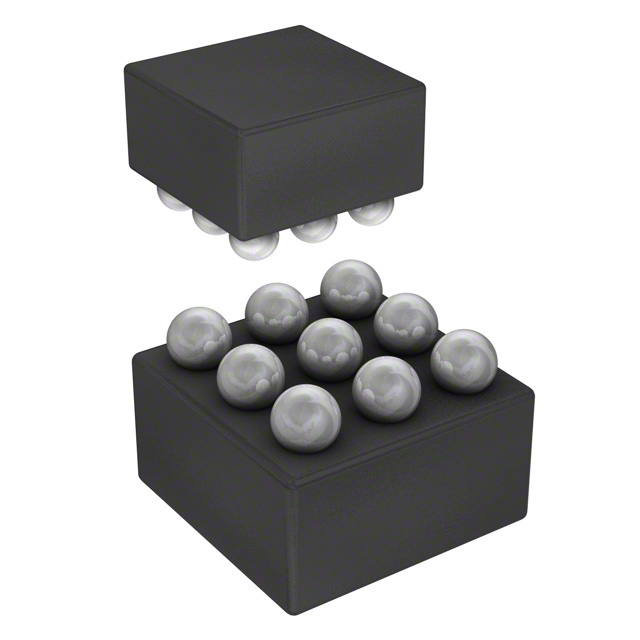
-
STC3117IJT
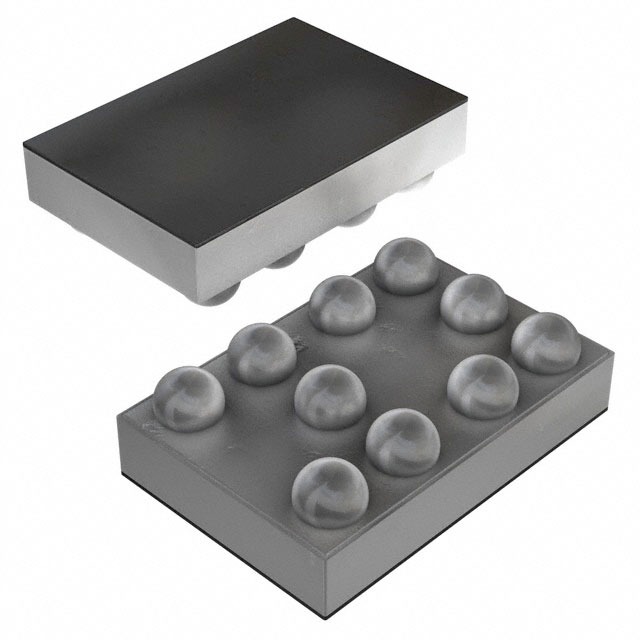
STMicroelectronics
-
STC3115IJT
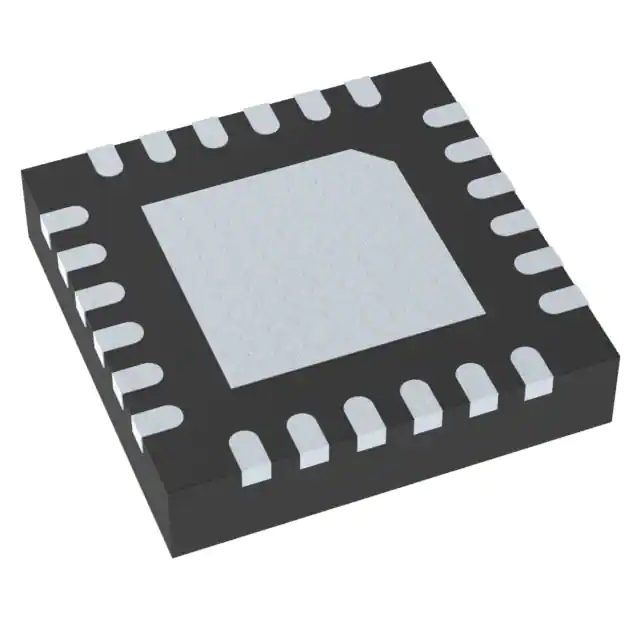
STMicroelectronics
-
BQ76925RGER
Texas Instruments
-
NPM1100-QDAA-R
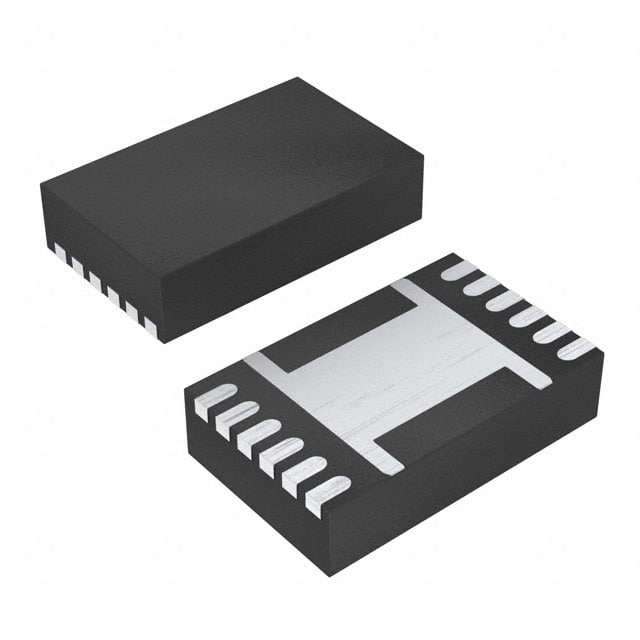
Nordic Semiconductor ASA
-
BQ27441DRZR-G1A
Texas Instruments
-
STC3115AIQT
STMicroelectronics

-
S-8252AAL-M6T1U
ABLIC Inc.
Tech Hub

A practical engineering and sourcing framework covering lifecycle verification, lifetime-buy calculations, replacement qualification, supplier checks and counterfeit-risk controls.

TTL and CMOS logic families differ in thresholds, loading, output drive, power and timing. This engineering guide compares 74HC and 74HCT, calculates noise margins and checks 3.3 V/5 V compatibility.

A practical engineering guide to 3.3V and 5V logic compatibility, input thresholds, resistor dividers, translator ICs, MOSFET level shifting, I2C pull-ups, timing limits and power-sequencing risks.

The 74HC595 uses push-pull logic outputs, while the TPIC6B595 uses 50 V open-drain DMOS sinks for higher-power loads. This guide compares timing, current limits, 3.3 V interfacing, load wiring, thermal…

The 74HC595 converts serial data into eight stable parallel outputs. This guide covers pin functions, shift and storage timing, OE and MR behavior, drive-current limits, cascading, voltage compatibilit…

A technical comparison of level-sensitive latches and edge-triggered flip-flops, covering timing windows, setup and hold limits, master–slave operation, time borrowing, race-through, HDL inference and…

A D latch stores one bit while Enable controls when data can pass. This reference covers gate-level operation, truth tables, transparency, setup and hold timing, LE versus OE, common ICs and practical …

An SR latch stores one bit through cross-coupled feedback. This engineering reference covers NOR and NAND implementations, truth tables, forbidden-state recovery, gated operation, switch debouncing, fa…

Latch circuits retain one bit through feedback. This technical reference covers SR and D latches, truth tables, transparency, timing limits, latch-versus-flip-flop behavior, applications and common log…

An engineering guide to LED driver operation, constant-current and constant-voltage outputs, linear and switching topologies, dimming, IC selection, calculations, replacement compatibility, and fault c…


