
 My Inquiry
 My Account


Renesas HA1631D02TEL-E
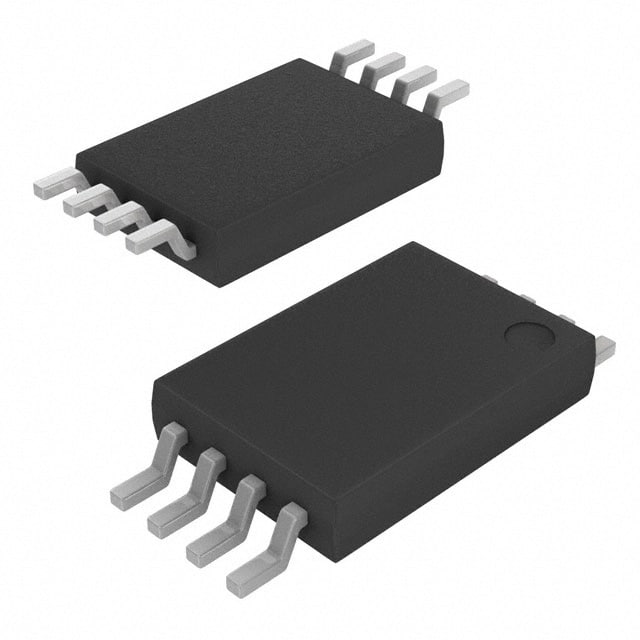
- Part No.:
- HA1631D02TEL-E
- Manufacturer:
- Renesas
- Category:
- Comparators
- Package:
- 8-TSSOP (0.173", 4.40mm Width)
- Datasheet:
-
 HA1631D02TEL-E.pdf
- Description:
- IC COMPARATOR 2 GEN PUR 8TSSOP
- Quantity:
- Payment:

- Shipping:

Inventory:1,010
Please send an inquiry. Send us your inquiry, and we will respond immediately.
Product details
Overview
HA1631D02TEL-E from Renesas is a dual CMOS comparator with push-pull full-swing outputs, low supply current (100 µA typ per comparator), 1.8–5.5 V single-supply operation, and input common-mode range extending to ground. It delivers fast response (TPLH = 0.33 µs, TPHL = 0.17 µs at 100 mV overdrive, CL = 15 pF) and supports direct interfacing with TTL/CMOS logic in battery-powered sensor monitoring and portable power management circuits.
For engineers reviewing the HA1631D02TEL-E datasheet, HA1631D02TEL-E pinout, HA1631D02TEL-E application, or HA1631D02TEL-E equivalent, this page provides verified electrical specifications, package mapping to TSSOP-8, confirmed dual-channel comparator functionality, output drive capability (IOSOURCE = 13 mA, IOSINK = 14 mA), and validated alternatives for low-power analog threshold detection designs.
Technical Context
The HA1631D02TEL-E implements two independent high-precision comparators in a single die, each featuring rail-to-rail input stage with ground-sensing capability and push-pull output stage capable of sourcing 13 mA and sinking 14 mA. Its architecture avoids internal hysteresis, enabling clean zero-crossing detection when externally configured.
Designed for ultra-low-power systems, it achieves 100 µA typical supply current per comparator at 3.0 V while maintaining 5 mV max input offset voltage and 1 pA typical input bias current - critical for high-impedance sensor interfaces such as thermistor or photodiode front-ends.
Key Specifications
| Parameter | Value and Actual Design Meaning |
|---|---|
| Supply voltage range | 1.8 V to 5.5 V - enables direct use with Li-ion, 3.3 V, and 5 V rails without level-shifting. |
| Supply current (typ) | 100 µA per comparator - supports multi-year battery life in always-on wake-up circuits. |
| Input offset voltage (max) | 5 mV - ensures reliable detection of small differential signals (e.g., ±10 mV thresholds). |
| Input bias current (typ) | 1 pA - preserves signal integrity in high-Z sources like piezoelectric sensors or pH electrodes. |
| Propagation delay (TPLH/TPHL) | 0.33 µs / 0.17 µs - suitable for sub-1 MHz window comparators and fast overvoltage latch applications. |
| Output drive (IO) | Sourcing 13 mA / sinking 14 mA - directly drives LEDs, small relays, or logic inputs without external buffers. |
| Common-mode input range | –0.1 V to 2.1 V at VDD = 3.0 V - includes ground, allowing single-supply sensing of 0 V referenced signals. |
Pinout & Package
HA1631D02TEL-E is housed in a Pb-free TSSOP-8 package (JEITA code PTSP0008JC-B, Renesas code TTP-8DAV), 4.4 mm × 3.0 mm × 1.0 mm, with 0.65 mm pitch.
| Pin | Circuit Role | Design Meaning |
|---|---|---|
| 1 | VSS | Ground reference for both comparators and internal bias network. |
| 2 | VIN1(+) | Non-inverting input of Channel 1 - accepts signals down to VSS (ground). |
| 3 | VIN1(–) | Inverting input of Channel 1 - used for reference or feedback in hysteresis configurations. |
| 4 | VOUT1 | Push-pull output of Channel 1 - swings rail-to-rail (VSS to VDD) with no external pull-up required. |
| 5 | VIN2(+) | Non-inverting input of Channel 2 - independently configurable for dual-threshold detection. |
| 6 | VIN2(–) | Inverting input of Channel 2 - supports independent reference setting per channel. |
| 7 | VOUT2 | Push-pull output of Channel 2 - electrically isolated from VOUT1; no crosstalk under specified conditions. |
| 8 | VDD | Positive supply rail - powers both comparators and output stages; tolerant up to 7.0 V absolute max. |
Key Features
| Feature | Design Value |
|---|---|
| Low-voltage operation | Functional from 1.8 V - enables integration into energy-harvesting and coin-cell powered systems. |
| Rail-to-rail input | Includes VSS (ground) in common-mode range - eliminates need for negative supply in single-ended sensor interfaces. |
| Full-swing push-pull output | VOHmin = 2.9 V at VDD = 3.0 V - ensures robust logic-high margin for 3.3 V CMOS/TTL loads. |
| On-chip ESD protection | HBM ≥ 2 kV - reduces external protection component count in handheld and industrial I/O modules. |
| Pb-free packaging | TSSOP-8 with Ni/Pd/Au plating - compliant with RoHS and JEDEC moisture sensitivity level MSL3. |
Applications
| Battery Voltage Monitor | Over-Temperature Protection |
|---|---|
|
Use Scenario: Detecting low battery condition in portable medical devices before shutdown. IC Role / Device Role / Timing Role: Dual comparator compares battery voltage against two thresholds (e.g., warning and critical) using resistor-divider references. Use Value: 100 µA supply current extends operational time between battery replacements; push-pull outputs directly assert MCU interrupt pins without pull-up resistors. |
Use Scenario: Shutting down motor drivers when heatsink temperature exceeds safe limit. IC Role / Device Role / Timing Role: One comparator monitors thermistor voltage; second channel provides hysteresis via feedback to prevent oscillation near trip point. Use Value: 1 pA input bias current prevents thermistor self-heating error; 5 mV offset ensures accurate trip-point repeatability across temperature. |
| Smoke Detector Signal Conditioning | Industrial Sensor Interface |
|
Use Scenario: Converting ionization chamber current pulses into clean digital alerts in residential smoke alarms. IC Role / Device Role / Timing Role: High-gain transimpedance amplifier output fed to HA1631D02TEL-E for pulse thresholding and noise rejection. Use Value: 0.17 µs TPHL enables reliable detection of short-duration smoke events; low IDD minimizes standby power in battery-backed units. |
Use Scenario: Interfacing 4–20 mA current-loop sensors to PLC analog input cards with fault detection. IC Role / Device Role / Timing Role: One comparator validates loop integrity (open/short detection); second monitors scaled sensor voltage against alarm thresholds. Use Value: Input common-mode range including ground allows direct connection to shunt-based current sensing; 7.0 V abs-max VDD tolerance accommodates transient surges on industrial buses. |
Equivalent & Alternatives
The following parts are listed as comparable options for similar dual comparator applications.
| Alternative Part | Technical Difference | Application Difference | Selection Advice |
|---|---|---|---|
| LM393DR | Higher supply current (500 µA typ), open-drain output, no rail-to-rail input (VCM = 0 to VDD–1.5 V). | Requires external pull-up; unsuitable for ground-referenced inputs without level shift. | Choose LM393DR only if cost is primary constraint and open-drain flexibility is needed for wired-OR bus applications. |
| TLV3702IDR | Lower supply current (800 nA typ), rail-to-rail input/output, but slower propagation (1.5 µs) and higher offset (3.5 mV max). | Optimized for nano-power systems where speed is secondary; lacks push-pull output drive strength. | Choose TLV3702IDR when ultra-low quiescent current dominates design requirements and output loading is light (e.g., MCU GPIO only). |
Compared with LM393DR and TLV3702IDR, HA1631D02TEL-E uniquely balances low power (100 µA), fast response (0.17–0.33 µs), rail-to-rail input (including ground), and robust push-pull drive (13/14 mA) - making it optimal for dual-threshold detection in space-constrained, battery-sensitive industrial and portable electronics.
Availability
HA1631D02TEL-E is available at Aetrix Electronics and suitable for battery voltage monitoring, over-temperature protection, smoke detector signal conditioning, and industrial sensor interface applications requiring stable component supply and long-term manufacturability.
Supply support for HA1631D02TEL-E includes scheduled delivery planning, volume procurement assistance, BOM continuity management, traceable sourcing, and lifecycle availability coordination for OEM customers, industrial embedded developers, connected-device designers, and electronics production programs.
Manufacturer
Renesas Electronics is a global semiconductor leader delivering microcontrollers, analog power, and SoC solutions for automotive, industrial, and IoT markets.
The HA1631D02TEL-E belongs to Renesas' legacy analog comparator family designed specifically for low-power, single-supply industrial and portable equipment where precision, speed, and supply flexibility are critical.
FAQ
What is the maximum operating supply voltage for HA1631D02TEL-E?
The absolute maximum supply voltage for HA1631D02TEL-E is 7.0 V, as specified in the Absolute Maximum Ratings table. Continuous operation is rated from 1.8 V to 5.5 V. Exceeding 7.0 V may cause permanent damage. The HA1631D02TEL-E maintains stable performance across its full 1.8–5.5 V range, with supply current increasing predictably per Figure 2-1 and Figure 2-2 in the datasheet.
Does HA1631D02TEL-E support ground-referenced input signals?
Yes, HA1631D02TEL-E supports ground-referenced input signals: its input common-mode voltage range includes VSS (ground), with VCM specified as –0.1 V to +2.1 V at VDD = 3.0 V. This allows direct connection of sensors or dividers referenced to system ground without level-shifting circuitry - a key advantage over comparators with limited common-mode ranges like the LM393.
What output configuration does HA1631D02TEL-E use?
HA1631D02TEL-E uses a push-pull (totem-pole) output configuration on both channels. Unlike open-drain variants (e.g., HA1631D04), it does not require external pull-up resistors and delivers full-swing outputs from VSS to VDD. This enables direct driving of logic inputs, LEDs, or small loads with 13 mA source and 14 mA sink capability at VDD = 3.0 V.
How does HA1631D02TEL-E compare to HA1631D01 in terms of supply current?
HA1631D02TEL-E draws 100 µA typical supply current per comparator, whereas HA1631D01 draws only 5 µA typical. The HA1631D02TEL-E trades ultra-low quiescent current for faster propagation delay (0.17–0.33 µs vs. 0.55–1.20 µs) and higher output drive strength - making it appropriate for applications needing speed and drive capability over minimal power draw.
Is HA1631D02TEL-E available in both TSSOP-8 and MMPAK-8 packages?
No - HA1631D02TEL-E is specifically the TSSOP-8 variant, identified by package code PTSP0008JC-B and ordering suffix "TEL-E". The MMPAK-8 version carries the "MM" suffix (e.g., HA1631D02MM). Both share identical electrical specifications, but differ mechanically: TSSOP-8 has 4.4 mm × 3.0 mm body and 0.65 mm pitch, while MMPAK-8 is smaller (2.8 mm × 2.95 mm) with different thermal and mounting characteristics.
HA1631D02TEL-E Specifications
- Product attributes
- Attribute value
- Manufacturer:
- Renesas
- Package/Case:
- 8-TSSOP (0.173", 4.40mm Width)
- Series:
- -
- Packaging:
- Tape & Reel (TR)
- Product Status:
- Obsolete
- Type:
- General Purpose
- Number of Elements:
- 2
- Output Type:
- Open-Drain, Push-Pull
- Voltage - Supply, Single/Dual (±):
- 1.8V ~ 5.5V
- :
- 5mV
- Voltage - Input Offset (Max):
- 1pA
- Current - Input Bias (Max):
- 14mA
- Current - Output (Typ):
- 200µA
- Current - Quiescent (Max):
- 70dB CMRR, 80dB PSRR
- CMRR, PSRR (Typ):
- -
- Propagation Delay (Max):
- -
- Hysteresis:
- -40°C ~ 85°C
- Operating Temperature:
- -
- Grade:
- -
- Qualification:
- Surface Mount
- :
- 8-TSSOP
HA1631D02TEL-E FAQ
1.How can I place an order for HA1631D02TEL-E through Aetrix?
Please submit a Request for Quotation (RFQ) for HA1631D02TEL-E on Aetrix. Our sales agent will provide a competitive quotation and guide you through the order confirmation once you accept the terms.
2.Are the price and stock information for HA1631D02TEL-E reliable?
The price and inventory of HA1631D02TEL-E are updated periodically and may fluctuate due to market conditions. Stock and pricing data are typically refreshed every 24 hours. Quotation validity for HA1631D02TEL-E is usually 5 days.
3.What payment methods are accepted for HA1631D02TEL-E?
We accept Wire Transfer, PayPal, Credit Card, Western Union, MoneyGram, and Escrow for HA1631D02TEL-E transactions.
Note: Certain payment methods may incur a processing fee.
4.How is shipping managed for HA1631D02TEL-E?
HA1631D02TEL-E orders can be shipped via leading logistics carriers, including DHL, UPS, FedEx, TNT, or Registered Mail.
Once your HA1631D02TEL-E order is processed, you will receive an email with the shipment details and tracking number.
Note: Tracking information may take up to 24 hours to appear. Express delivery typically takes 3–5 business days.
5.How can I obtain technical support or documentation for HA1631D02TEL-E?
For technical support, including HA1631D02TEL-E datasheets, pinout diagrams, or application guidance, please contact our engineering support team. They can provide detailed documentation and assistance for your HA1631D02TEL-E requirements.
6.How does Aetrix verify that HA1631D02TEL-E is sourced from the original manufacturer or authorized distributors?
All HA1631D02TEL-E products on Aetrix are procured from qualified distributors and authorized channels. Our dedicated quality assurance team conducts strict verification, including traceability checks and, if necessary, third-party testing. This ensures that HA1631D02TEL-E meets industry standards.
7.What is the process for return or replacement of HA1631D02TEL-E?
All HA1631D02TEL-E units undergo pre-shipment inspection (PSI). If there is an issue with HA1631D02TEL-E, returns or replacements are accepted under the following conditions:
1.Quantity discrepancies, incorrect items, or visible external defects (such as breakage or corrosion), acknowledged by Aetrix.
2.The issue is reported within 90 days of delivery.
3.The HA1631D02TEL-E part is unused and in its original packaging.
Return procedure for HA1631D02TEL-E:
1.Submit a request within 90 days.
2.Obtain a Return Material Authorization (RMA) from Aetrix.
HA1631D02TEL-E Tags

-
LM2903DR
Texas Instruments
-
LM339DR
Texas Instruments
-
LM339PWR
Texas Instruments
-
LM393DT
STMicroelectronics
-
LM2901PWR
Texas Instruments
-
LM2903DT
STMicroelectronics
-
LM393DR
Texas Instruments
-
LM239DR
Texas Instruments
-
LM339APWR
Texas Instruments
-
LM2903P
Texas Instruments
-
LM393ADR
Texas Instruments
-
NCX2200GMAZ
NXP Semiconductors
Tech Hub

A practical engineering and sourcing framework covering lifecycle verification, lifetime-buy calculations, replacement qualification, supplier checks and counterfeit-risk controls.

TTL and CMOS logic families differ in thresholds, loading, output drive, power and timing. This engineering guide compares 74HC and 74HCT, calculates noise margins and checks 3.3 V/5 V compatibility.

A practical engineering guide to 3.3V and 5V logic compatibility, input thresholds, resistor dividers, translator ICs, MOSFET level shifting, I2C pull-ups, timing limits and power-sequencing risks.

The 74HC595 uses push-pull logic outputs, while the TPIC6B595 uses 50 V open-drain DMOS sinks for higher-power loads. This guide compares timing, current limits, 3.3 V interfacing, load wiring, thermal…

The 74HC595 converts serial data into eight stable parallel outputs. This guide covers pin functions, shift and storage timing, OE and MR behavior, drive-current limits, cascading, voltage compatibilit…

A technical comparison of level-sensitive latches and edge-triggered flip-flops, covering timing windows, setup and hold limits, master–slave operation, time borrowing, race-through, HDL inference and…

A D latch stores one bit while Enable controls when data can pass. This reference covers gate-level operation, truth tables, transparency, setup and hold timing, LE versus OE, common ICs and practical …

An SR latch stores one bit through cross-coupled feedback. This engineering reference covers NOR and NAND implementations, truth tables, forbidden-state recovery, gated operation, switch debouncing, fa…

Latch circuits retain one bit through feedback. This technical reference covers SR and D latches, truth tables, transparency, timing limits, latch-versus-flip-flop behavior, applications and common log…

An engineering guide to LED driver operation, constant-current and constant-voltage outputs, linear and switching topologies, dimming, IC selection, calculations, replacement compatibility, and fault c…


