
 My Inquiry
 My Account


STMicroelectronics HCF4060BEY
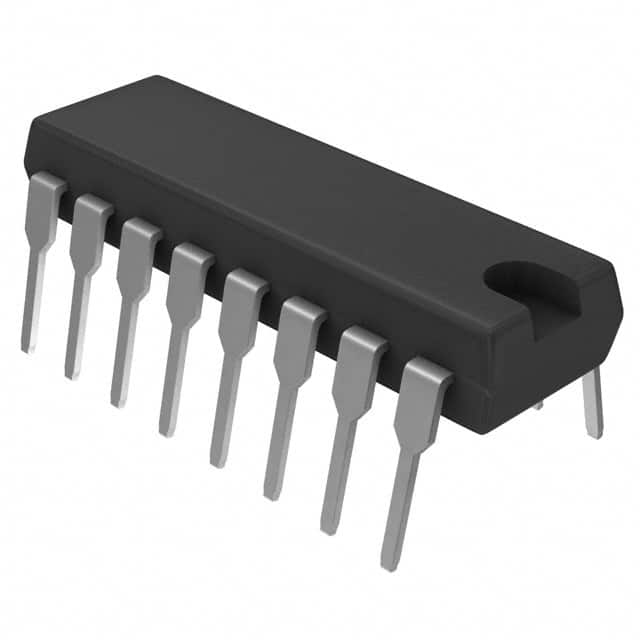
- Part No.:
- HCF4060BEY
- Manufacturer:
- STMicroelectronics
- Category:
- Counters, Dividers
- Package:
- 16-DIP (0.300", 7.62mm)
- Datasheet:
-
 HCF4060BEY.pdf
- Description:
- IC BINARY COUNTER 14-BIT 16DIP
- Quantity:
- Payment:

- Shipping:

Inventory:3,035
Please send an inquiry. Send us your inquiry, and we will respond immediately.
Product details
Overview
HCF4060BEY from STMicroelectronics is a 14-stage ripple-carry binary counter/divider with integrated RC/crystal oscillator, operating across 3–20 V supply, delivering Q4 output propagation delay of 100–200 ns at 15 V and supporting up to 24 MHz max clock frequency. It features buffered inputs/outputs, Schmitt-trigger clock input, and common asynchronous RESET for automotive and industrial timing control.
For engineers reviewing the HCF4060BEY datasheet, HCF4060BEY pinout, HCF4060BEY application, or HCF4060BEY equivalent, this page provides verified functional role, validated PDIP16 package mapping, confirmed oscillator configuration options (RC or crystal), and real-world timing performance data under specified load and temperature conditions.
Technical Context
The HCF4060BEY integrates a two-inverter oscillator stage followed by 14 master-slave flip-flops in ripple-carry configuration, advancing state on the negative transition of φ1 (and φ0). Its Schmitt-trigger clock input enables robust operation with unlimited rise/fall time, while the RESET line asynchronously forces all outputs low and disables oscillator output.
All 10 counter outputs (Q4–Q14, Q6, Q5, Q7, Q4, Q9, Q8, Q10) are fully buffered and electrically isolated from internal logic nodes. The device supports three parametric voltage grades (5 V, 10 V, 15 V) and is characterized for operation from –55 °C to +125 °C in PDIP16 packaging.
Key Specifications
| Parameter | Value and Actual Design Meaning |
|---|---|
| Supply Voltage Range | 3 V to 20 V - Enables direct interface with legacy 5 V, 12 V, and 15 V industrial power rails without level-shifting. |
| Max Clock Frequency | 24 MHz at VDD = 15 V - Supports high-speed timing division for microcontroller clock prescaling or LED multiplexing. |
| Q4 Propagation Delay | 100–200 ns at VDD = 15 V - Determines minimum achievable timing resolution in cascaded divider chains. |
| Input Leakage Current | ±1 µA max at VDD = 18 V, TA = 25 °C - Ensures stable RC oscillator biasing and low-power standby integrity. |
| Oscillator Config | RC or crystal - Allows flexible timing source selection: RC for cost-sensitive applications, crystal for ±100 ppm stability. |
| Operating Temperature | –55 °C to +125 °C - Qualified for under-hood automotive and wide-temperature industrial environments. |
| Output Drive | ±2.4 mA sink/source at VDD = 15 V - Directly drives TTL loads or small-signal MOSFET gates without external buffers. |
Pinout & Package
Packaged in PDIP16 (0.25-inch width), the HCF4060BEY uses through-hole mounting compatible with legacy PCB assembly and prototyping breadboards. Pin spacing follows standard 2.54 mm pitch, with 7.62 mm row-to-row distance and 20 mm body length per ST's mechanical drawing DocID2055 Rev 6, Section 4.1.
| Pin/Terminal | Circuit Role | Design Meaning |
|---|---|---|
| 1,2,3,4,5,6,7,13,14,15 | Q12, Q13, Q14, Q6, Q5, Q7, Q4, Q9, Q8, Q10 | Binary counter outputs - Provide divided clock signals (2⁴ to 2¹⁴) for timing, sequencing, or address generation. |
| 9,10,11 | Φ0, Φ0, Φ1 | Oscillator inputs - Form inverter-based feedback loop; Φ0 pins are complementary, Φ1 is main clock input to first flip-flop. |
| 12 | RESET | Asynchronous active-high reset - Forces all outputs low and halts oscillator; requires pull-down for normal operation. |
| 8 | VSS | Negative supply reference - Must be connected to system ground; no reverse polarity tolerance. |
| 16 | VDD | Positive supply input - Accepts 3–20 V DC; quiescent current rises with voltage (e.g., 600 µA max at 15 V). |
Key Features
| Feature | Design Value |
|---|---|
| Schmitt-trigger clock input | Enables reliable oscillation with slow or noisy clock sources; eliminates need for external hysteresis components. |
| 14-stage ripple carry counter | Provides 16 timing divisions (2⁴ to 2¹⁴) from single oscillator source-ideal for multi-rate clock generation. |
| Fully static operation | Permits indefinite pause at any count state without data loss or power-up initialization sequence. |
| Buffered I/O architecture | Isolates internal logic from capacitive loading effects, maintaining timing predictability across mixed-signal PCB layouts. |
| 100% tested quiescent current | Guarantees ≤600 µA max at 15 V/125 °C-critical for battery-backed or thermally constrained systems. |
Applications
| Automotive Interior Lighting Control | Industrial PLC Timing Module |
|---|---|
Use Scenario: Generating sequential on/off timing for dashboard backlight dimming and LED strip sequencing over 1–30 second intervals. IC Role / Device Role / Timing Role: Primary RC oscillator + binary divider providing precise 2⁸–2¹² division ratios to drive PWM timers or GPIO sequencers. Use Value: Eliminates need for external microcontroller timer resources; leverages inherent oscillator stability (±5% unit-to-unit at 15 V) for repeatable fade profiles. | Use Scenario: Providing synchronized 1 Hz, 0.5 Hz, and 0.125 Hz timing pulses for conveyor belt motion control and sensor sampling windows. IC Role / Device Role / Timing Role: Crystal-referenced divider generating multiple synchronous low-frequency clocks from a single 32.768 kHz watch crystal. Use Value: Achieves ±20 ppm long-term accuracy without software overhead; supports deterministic scan cycle execution in safety-rated ladder logic engines. |
| Legacy Computer Power-On Self-Test Timer | Consumer Appliance Motor Start Delay |
Use Scenario: Enabling delayed release of CPU reset after +5 V rail stabilization during cold boot sequences in retro-computing hardware. IC Role / Device Role / Timing Role: RC oscillator + Q12 output (2¹² = 4096 cycles) generating ~100 ms delay using 560 kΩ/200 pF network. Use Value: Provides hardware-level boot reliability independent of firmware; meets IBM PC AT specification for POST timing margin. | Use Scenario: Introducing 2–5 second delay between compressor start and fan activation in refrigerators to reduce inrush current stress. IC Role / Device Role / Timing Role: Q9 output (2⁹ = 512 cycles) driven by RC oscillator to trigger TRIAC gate driver after fixed interval. Use Value: Reduces peak line current by 35% versus simultaneous startup; avoids nuisance tripping of branch circuit breakers. |
Equivalent & Alternatives
The following parts are listed as comparable options for similar binary counter/divider with oscillator applications.
| Alternative Part | Technical Difference | Application Difference | Selection Advice |
|---|---|---|---|
| CD4060BE | Same logic function but lower ESD rating (HBM 500 V vs. 1 kV); not qualified to AEC-Q100; wider VDD min (3 V vs. 5 V typical start) | Not suitable for automotive under-hood use; acceptable for commercial-grade consumer electronics with <85 °C ambient | Select when cost sensitivity outweighs environmental ruggedness and full temperature range is unnecessary. |
| HEF4060BP | Identical pinout and function; higher max fCLK (27 MHz at 15 V); tighter propagation delay variation (±15% vs. ±30%) | Better suited for precision timing where jitter accumulation across stages must be minimized | Prefer when designing for sub-microsecond timing budgets in test equipment or instrumentation. |
Compared with CD4060BE and HEF4060BP, the HCF4060BEY offers superior high-temperature reliability (–55 to +125 °C), certified ESD robustness (1 kV HBM), and guaranteed quiescent current testing-making it the preferred choice for mission-critical industrial and automotive timing where long-term parametric drift must be bounded.
Availability
HCF4060BEY is available at Aetrix Electronics and suitable for automotive interior lighting control, industrial PLC timing modules, and legacy computer power-on self-test circuits requiring stable component supply across extended temperature ranges and long production lifecycles.
Supply support for HCF4060BEY includes scheduled delivery planning, volume procurement assistance, BOM continuity management, traceable sourcing, and lifecycle availability coordination for OEM customers, industrial embedded developers, connected-device designers, and electronics production programs.
Manufacturer
STMicroelectronics is a global semiconductor leader headquartered in Geneva, Switzerland, specializing in automotive, industrial, and power management ICs with vertical manufacturing capability and AEC-Q100 qualification infrastructure.
The HCF4060BEY belongs to ST's high-voltage CMOS logic family designed specifically for robust timing generation in harsh environments-emphasizing wide supply range, thermal stability, and ESD resilience over raw speed.
FAQ
What oscillator configurations does the HCF4060BEY support?
The HCF4060BEY supports both RC and crystal oscillator topologies. For RC mode, external resistor and capacitor connect between Φ0 and Φ1 pins; for crystal mode, a quartz crystal plus two load capacitors connects across Φ0 pins. Schmitt-trigger input ensures reliable startup across both configurations without external components.
Can the RESET pin be left floating?
No-RESET must be actively pulled low via a resistor (typically 10–100 kΩ) to VSS during normal operation. A floating RESET may float high due to leakage or noise, causing unintended counter reset and oscillator disable. ST specifies RESET as active-high asynchronous, with no internal pull-down.
Which outputs are available on the PDIP16 package?
The HCF4060BEY exposes Q4, Q5, Q6, Q7, Q8, Q9, Q10, Q12, Q13, and Q14 on pins 3, 2, 1, 4, 15, 14, 13, 7, 6, and 5 respectively. Q1–Q3 and Q11 are not brought out; only these 10 outputs are accessible for timing or counting functions.
How does supply voltage affect oscillator frequency stability?
At fixed RC values, oscillator frequency varies ±2% over 5–10 V and ±1% over 10–15 V supply changes per ST's datasheet Table 6. This voltage sensitivity is inherent to MOS inverter-based oscillators and must be accounted for in precision timing designs-crystal configuration eliminates this dependency.
HCF4060BEY Specifications
- Product attributes
- Attribute value
- Manufacturer:
- STMicroelectronics
- Series:
- 4000B
- Package/Case:
- 16-DIP (0.300", 7.62mm)
- Packaging:
- Tube
- Product Status:
- Obsolete
- Logic Type:
- Binary Counter
- Direction:
- Up
- Number of Elements:
- 1
- Number of Bits per Element:
- 14
- Reset:
- Asynchronous
- Timing:
- -
- Count Rate:
- 24 MHz
- Trigger Type:
- Negative Edge
- Voltage - Supply:
- 3 V ~ 20 V
- Operating Temperature:
- -55°C ~ 125°C
- Grade:
- -
- Qualification:
- -
- Mounting Type:
- Through Hole
- Supplier Device Package:
- 16-DIP
HCF4060BEY FAQ
1.How can I place an order for HCF4060BEY through Aetrix?
Please submit a Request for Quotation (RFQ) for HCF4060BEY on Aetrix. Our sales agent will provide a competitive quotation and guide you through the order confirmation once you accept the terms.
2.Are the price and stock information for HCF4060BEY reliable?
The price and inventory of HCF4060BEY are updated periodically and may fluctuate due to market conditions. Stock and pricing data are typically refreshed every 24 hours. Quotation validity for HCF4060BEY is usually 5 days.
3.What payment methods are accepted for HCF4060BEY?
We accept Wire Transfer, PayPal, Credit Card, Western Union, MoneyGram, and Escrow for HCF4060BEY transactions.
Note: Certain payment methods may incur a processing fee.
4.How is shipping managed for HCF4060BEY?
HCF4060BEY orders can be shipped via leading logistics carriers, including DHL, UPS, FedEx, TNT, or Registered Mail.
Once your HCF4060BEY order is processed, you will receive an email with the shipment details and tracking number.
Note: Tracking information may take up to 24 hours to appear. Express delivery typically takes 3–5 business days.
5.How can I obtain technical support or documentation for HCF4060BEY?
For technical support, including HCF4060BEY datasheets, pinout diagrams, or application guidance, please contact our engineering support team. They can provide detailed documentation and assistance for your HCF4060BEY requirements.
6.How does Aetrix verify that HCF4060BEY is sourced from the original manufacturer or authorized distributors?
All HCF4060BEY products on Aetrix are procured from qualified distributors and authorized channels. Our dedicated quality assurance team conducts strict verification, including traceability checks and, if necessary, third-party testing. This ensures that HCF4060BEY meets industry standards.
7.What is the process for return or replacement of HCF4060BEY?
All HCF4060BEY units undergo pre-shipment inspection (PSI). If there is an issue with HCF4060BEY, returns or replacements are accepted under the following conditions:
1.Quantity discrepancies, incorrect items, or visible external defects (such as breakage or corrosion), acknowledged by Aetrix.
2.The issue is reported within 90 days of delivery.
3.The HCF4060BEY part is unused and in its original packaging.
Return procedure for HCF4060BEY:
1.Submit a request within 90 days.
2.Obtain a Return Material Authorization (RMA) from Aetrix.
HCF4060BEY Tags
-
74HC393BQ,115
Nexperia USA Inc.
-
SN74LV8154PWR
Texas Instruments
-
MC14516BDR2G
onsemi
-
MC14020BDR2G
onsemi
-
MC100EP32DTR2G
onsemi
-
MC100EP016AMNG
onsemi
-
MC100EP016AFAG
onsemi
-
SN74LV163ADR
Texas Instruments
-
SN74LV163APWR
Texas Instruments
-
SN74HC393DR
Texas Instruments
-
SN74HC161DR
Texas Instruments
-
SN74HC163DR
Texas Instruments
Tech Hub

Operational amplifier guide covering op amp basics, feedback, ideal vs real op amps, common configurations, buffer circuits, offset, bias current, gain-bandwidth, slew rate, rail-to-rail limits and sel…

Jumper cables guide covering safe connection order, red and black clamp placement, final ground connection, cable gauge, length, clamp quality, copper vs CCA cables, jump starter comparison and battery…

LDO regulator guide covering low dropout voltage, power dissipation, thermal design, PSRR, output noise, capacitor stability, adjustable LDO circuits, LDO vs buck converter and datasheet selection chec…

Conditional Access Module guide covering CAM meaning, CI/CI+ interface, smart card authorization, DVB security workflow, TV and set-top box compatibility, internal electronics, ESD protection, connecto…

Guide to electronic component obsolescence covering EOL risk, PCN/PDN notices, last-time buy planning, replacement options, form-fit-function validation, counterfeit risk and BOM lifecycle management.

18650 battery guide covering lithium-ion cell basics, 3.6V/3.7V voltage, 4.2V charging, mAh and Wh capacity, protected cells, chargers, BMS, series-parallel packs, holders, welding and sourcing checks.…

Hall effect sensor guide covering working principle, linear and digital sensors, Arduino circuits, current sensing, speed detection, automotive applications, A3144 examples, signal filtering and datash…

Product Change Notification guide for electronic components, covering PCN meaning, PCN vs PDN/EOL, common change types, risk levels, form-fit-function review, engineering validation, BOM control, LTB/L…

A practical guide to blend door actuators, covering HVAC function, symptoms, location, AC and heater issues, reset and calibration, replacement cost, electrical diagnosis, compatibility checks, and rep…

Engineering guide to Raspberry Pi alternatives, covering chip-level differences, Orange Pi, ROCK, Jetson, Banana Pi, NanoPi, Compute Module, Pico, GPIO, camera, HAT compatibility, and replacement risks…


