
 My Inquiry
 My Account


Renesas HD4074618H
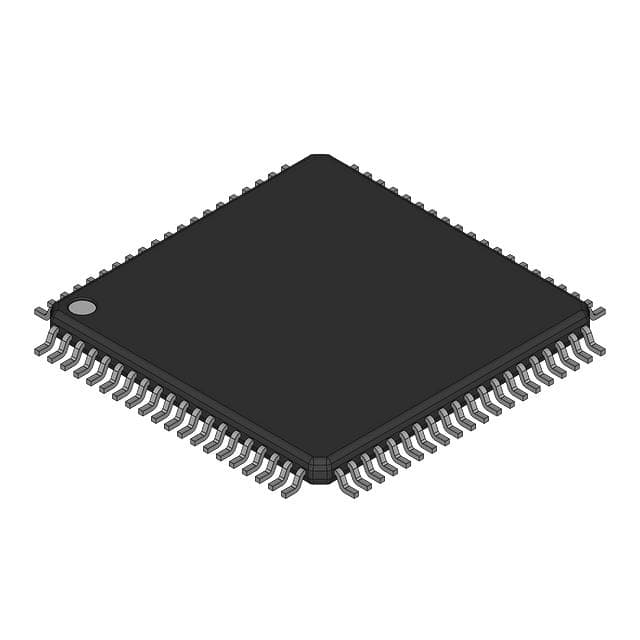
- Part No.:
- HD4074618H
- Manufacturer:
- Renesas
- Category:
- Microcontrollers
- Package:
- -
- Datasheet:
-
 HD4074618H.pdf
- Description:
- MICROCONTROLLER, 4-BIT, OTPROM
- Quantity:
- Payment:

- Shipping:

Inventory:773
Please send an inquiry. Send us your inquiry, and we will respond immediately.
Product details
Overview
HD4074618H from Renesas Electronics is a 4-bit single-chip microcontroller with 8,192-word × 10-bit PROM, 1184-digit × 4-bit RAM, 30 I/O pins (including 10 high-current outputs), on-chip DTMF generator, and integrated LCD controller/driver for 32 segments × 4 commons - used in telecommunication terminals and embedded display systems.
For engineers reviewing the HD4074618H datasheet, HD4074618H pinout, HD4074618H application, or HD4074618H equivalent, this page delivers verified technical context, package mapping to FP-80A, confirmed low-power modes (Stop/Standby/Watch/Subactive), dual oscillator support (400 kHz–800 kHz main + 32.768 kHz watch), and real-world design implications for PROM-based rapid prototyping.
Technical Context
The HD4074618H implements the HMCS400 architecture with a 14-bit program counter, 10-bit instruction word width, and 16-level subroutine stack supporting CAL/RTN/RTNI instructions. It integrates dedicated hardware blocks: three independent timer/counters (A/B/C), clock-synchronous 8-bit serial interface (SCK/SI/SO), and voltage comparator with two analog inputs (COMP0/COMP1) and shared reference (VCref).
Its LCD subsystem drives up to 128 segments via four common outputs (COM1–COM4) and 32 segment outputs (SEG1–SEG32), using internal resistive divider (V1 ≥ V2 ≥ V3 ≥ GND) for bias generation. The DTMF generator uses TONER/TONEC/VTref pins to synthesize standard dual-tone signals compliant with ITU-T Q.23.
Key Specifications
| Parameter | Value and Actual Design Meaning |
|---|---|
| ROM Type & Size | PROM, 8192 × 10-bit - enables one-time programmable firmware for production-ready ZTAT™ development without mask ROM turnaround. |
| RAM Capacity | 1184-digit × 4-bit - supports LCD display data buffering (32 digits at $050–$06F), dual-bank data storage ($100–$2CF), and 16-level subroutine stack ($3C0–$3FF). |
| Instruction Cycle Time | 10 µs at 400 kHz oscillator - defines minimum execution time per instruction; scales to 5 µs at 800 kHz for higher throughput. |
| I/O Pins | 30 total: 10 high-current outputs (15 mA max), software-selectable pull-up MOS on CMOS I/O - simplifies external component count in keypad/display interfaces. |
| Low-Power Modes | Four modes: Stop (CPU halted, RAM retained), Standby (oscillator stopped), Watch (32.768 kHz active), Subactive (reduced clock, DTON flag enabled) - extends battery life in portable telecom devices. |
| DTMF Generator | Dedicated hardware block with TONER/TONEC/VTref pins - generates standardized row/column tones without CPU intervention or external ICs. |
| LCD Driver | 32-segment × 4-common controller with V1/V2/V3 bias pins - directly drives multiplexed LCDs up to 128 segments using internal resistor ladder. |
Pinout & Package
HD4074618H is packaged in an 80-pin plastic flat package (FP-80A), pin-compatible with FP-80B and TFP-80 variants. Pin functions are validated per Renesas HD404618 Series Rev. 6.0 documentation.
| Pin/Terminal | Circuit Role | Design Meaning |
|---|---|---|
| D0–D9 | Bit-addressable I/O port with high-current drive | Support keypad scanning and LED/LCD segment control; 15 mA sink/source capability eliminates external drivers for basic indicators. |
| D10–D13 | Analog input pins (D11/D12 = COMP0/COMP1) | Enable threshold detection (e.g., battery voltage monitoring); VCref sets comparator reference independently of VCC. |
| R00–R03 | Multiplexed serial interface (SCK/SI/SO) and general I/O | Allow synchronous communication with peripherals while retaining GPIO flexibility; SCK/SI/SO share pins to reduce footprint. |
| R30–R33 | Multiplexed timer output (TIMO) and external interrupts (INT0/INT1) | Support event-triggered wake-up and PWM generation; INT1 doubles as timer B event input for precise timing capture. |
| COM1–COM4 | LCD common outputs | Drive LCD backplane lines; paired with SEG1–SEG32 to implement 4-mux static or multiplexed displays. |
| SEG1–SEG32 | LCD segment outputs | Directly source/sink current to LCD segments; memory-mapped LCD data area ($050–$06F) auto-refreshes display content. |
| X1/X2 | 32.768 kHz crystal oscillator inputs | Enable accurate real-time clock functionality; crystal connects between X1 (input) and X2 (output) with load capacitors. |
| OSC1/OSC2 | Main system oscillator pins | Support ceramic resonator (400–800 kHz) or external clock; determines core instruction execution speed and peripheral timing. |
Key Features
| Feature | Design Value |
|---|---|
| ZTAT™ PROM architecture | Enables immediate firmware iteration and final production programming without custom mask ROM - reduces time-to-market from prototype to volume by eliminating wafer-level customization delays. |
| Integrated DTMF generator | Hardware-accelerated tone synthesis compliant with ITU-T Q.23 - eliminates need for external DTMF encoder ICs and associated firmware overhead in telephone handsets or PBX interfaces. |
| On-chip LCD controller/driver | Drives 32×4 multiplexed LCDs with internal bias generation (V1/V2/V3) - removes external LCD driver IC and discrete resistor networks, lowering BOM cost and board space. |
| Four low-power operating modes | Subactive mode retains RAM and enables DTON-flag-triggered wake-up - ideal for battery-powered remote controls requiring instant response after long idle periods. |
| Voltage comparator with dual channels | Two independent analog comparators (COMP0/COMP1) with shared VCref pin - supports simultaneous monitoring of multiple thresholds (e.g., battery low + temperature alert) using single reference source. |
Applications
| Telecom Keypad Interface | Portable Medical Display |
|---|---|
Use Scenario: Embedded DTMF dialer in cordless phone base station with 16-key keypad and 4-digit LCD display. IC Role / Device Role / Timing Role: HD4074618H acts as system controller: scans keypad matrix, generates DTMF tones via dedicated hardware, and refreshes LCD using internal controller. Use Value: Eliminates separate DTMF encoder and LCD driver ICs; PROM allows field-upgradable dialing logic without hardware change. |
Use Scenario: Battery-powered blood pressure monitor with segmented LCD and low-battery warning. IC Role / Device Role / Timing Role: HD4074618H serves as main MCU: reads analog sensor via comparator, updates display, manages power states, and triggers audible alert on threshold breach. Use Value: Integrated voltage comparator monitors battery level against VCref; Watch mode maintains RTC during sleep with <1 µA current draw. |
| Industrial Control Panel | Home Appliance Timer |
Use Scenario: HVAC control panel with 4-line × 16-character LCD, push-button inputs, and relay drivers. IC Role / Device Role / Timing Role: HD4074618H executes control logic, drives LCD segments via COM/SEG pins, and times compressor cycles using Timer A/B. Use Value: High-current D-port pins (15 mA) directly drive LED status indicators; dual oscillator supports both fast processing and accurate real-time scheduling. |
Use Scenario: Microwave oven timer with 4-digit LCD, rotary encoder input, and buzzer output. IC Role / Device Role / Timing Role: HD4074618H handles user input decoding, countdown timing, buzzer waveform generation (via TIMO), and LCD refresh. Use Value: Subactive mode enables instant wake-up from encoder rotation; PROM ensures consistent firmware across production batches without requalification. |
Equivalent & Alternatives
The following parts are listed as comparable options for similar 4-bit microcontroller applications.
| Alternative Part | Technical Difference | Application Difference | Selection Advice |
|---|---|---|---|
| HD404618H | 8192-word mask ROM, fixed firmware image | Suitable for high-volume, unchanging applications where ROM cost advantage outweighs flexibility | Select when firmware is finalized and mask ROM economics justify NRE investment. |
| HD4074618TF | Same PROM core, TFP-80 thin flat package (1.2 mm height vs. FP-80A's 3.5 mm) | Better suited for ultra-thin consumer devices where vertical clearance is constrained | Choose for space-constrained designs requiring identical functionality in lower-profile package. |
Compared with HD404618H and HD4074618TF, the HD4074618H offers identical PROM functionality and FP-80A packaging optimized for standard PCB assembly processes - making it the preferred choice for cost-sensitive industrial panels where board thickness is not limiting and ZTAT™ flexibility is required.
Availability
HD4074618H is available at Aetrix Electronics and suitable for telecom terminal design, portable medical instrumentation, industrial HMI panels, and home appliance control systems requiring stable component supply and long-term lifecycle support.
Supply support for HD4074618H includes scheduled delivery planning, volume procurement assistance, BOM continuity management, traceable sourcing, and lifecycle availability coordination for OEM customers, industrial embedded developers, connected-device designers, and electronics production programs.
Manufacturer
Renesas Electronics Corporation is a global semiconductor leader formed in 2010 through merger of NEC Electronics and Renesas Technology, specializing in microcontrollers, analog, and power solutions for industrial and embedded markets.
The HD4074618H belongs to the legacy HD404618 Series - designed specifically for cost-sensitive, low-power embedded systems requiring integrated DTMF, LCD, and comparator functions in a single 4-bit MCU.
FAQ
What is the memory configuration of the HD4074618H?
The HD4074618H features 8,192-word × 10-bit PROM for program storage and 1,184-digit × 4-bit RAM organized into LCD data area ($050–$06F), dual-bank data storage ($100–$2CF), and 16-level stack ($3C0–$3FF). This layout supports direct LCD refresh, bank-switched variable storage, and deep subroutine nesting - all critical for its target applications like telecom terminals and medical displays.
Does the HD4074618H support external crystal oscillators?
Yes, the HD4074618H supports two independent oscillator systems: a main 400–800 kHz system via OSC1/OSC2 (for CPU and peripherals) and a 32.768 kHz watch crystal via X1/X2 (for RTC and low-power timing). The X1/X2 circuit is dedicated and fully compatible with standard tuning-fork crystals, enabling accurate timekeeping in battery-backed applications.
How does the ZTAT™ PROM feature benefit development workflow?
ZTAT™ (Zero Turn Around Time) in the HD4074618H allows full firmware programming post-assembly - eliminating mask ROM lead times and enabling rapid debug-to-production transitions. Engineers can validate logic on HD4074618H hardware, then burn final code into PROM without respinning PCBs or waiting weeks for custom silicon - accelerating time-to-market for telecom and appliance products.
Can the HD4074618H drive an LCD without external components?
Yes, the HD4074618H integrates a complete LCD controller/driver for 32 segments × 4 commons, including internal resistive bias generation (V1/V2/V3 pins). With proper VCC and ground connections, plus COM/SEG routing, it drives multiplexed LCDs directly - no external driver IC, charge pump, or discrete resistor network is required, reducing BOM count and board area.
What are the key differences between HD4074618H and HD404618H?
The HD4074618H uses PROM for one-time programmable firmware, enabling ZTAT™ development and production flexibility, while the HD404618H uses mask ROM with fixed, factory-programmed code. Both share identical architecture, pinout (FP-80A), peripherals, and electrical specs - but HD4074618H is selected when firmware iteration or small-batch customization is needed before volume production.
HD4074618H Specifications
- Product attributes
- Attribute value
- Manufacturer:
- Renesas
- Package/Case:
- -
- Series:
- *
- Packaging:
- Bulk
- Product Status:
- Active
- Programmable:
- Not Verified
- Core Processor:
- -
- Core Size:
- -
- Speed:
- -
- Connectivity:
- -
- Peripherals:
- -
- Number of I/O:
- -
- Program Memory Size:
- -
- Program Memory Type:
- -
- EEPROM Size:
- -
- RAM Size:
- -
- Voltage - Supply (Vcc/Vdd):
- -
- Data Converters:
- -
- Oscillator Type:
- -
- Operating Temperature:
- -
- Grade:
- -
- Qualification:
- -
- Mounting Type:
- -
- Supplier Device Package:
HD4074618H FAQ
1.How can I place an order for HD4074618H through Aetrix?
Please submit a Request for Quotation (RFQ) for HD4074618H on Aetrix. Our sales agent will provide a competitive quotation and guide you through the order confirmation once you accept the terms.
2.Are the price and stock information for HD4074618H reliable?
The price and inventory of HD4074618H are updated periodically and may fluctuate due to market conditions. Stock and pricing data are typically refreshed every 24 hours. Quotation validity for HD4074618H is usually 5 days.
3.What payment methods are accepted for HD4074618H?
We accept Wire Transfer, PayPal, Credit Card, Western Union, MoneyGram, and Escrow for HD4074618H transactions.
Note: Certain payment methods may incur a processing fee.
4.How is shipping managed for HD4074618H?
HD4074618H orders can be shipped via leading logistics carriers, including DHL, UPS, FedEx, TNT, or Registered Mail.
Once your HD4074618H order is processed, you will receive an email with the shipment details and tracking number.
Note: Tracking information may take up to 24 hours to appear. Express delivery typically takes 3–5 business days.
5.How can I obtain technical support or documentation for HD4074618H?
For technical support, including HD4074618H datasheets, pinout diagrams, or application guidance, please contact our engineering support team. They can provide detailed documentation and assistance for your HD4074618H requirements.
6.How does Aetrix verify that HD4074618H is sourced from the original manufacturer or authorized distributors?
All HD4074618H products on Aetrix are procured from qualified distributors and authorized channels. Our dedicated quality assurance team conducts strict verification, including traceability checks and, if necessary, third-party testing. This ensures that HD4074618H meets industry standards.
7.What is the process for return or replacement of HD4074618H?
All HD4074618H units undergo pre-shipment inspection (PSI). If there is an issue with HD4074618H, returns or replacements are accepted under the following conditions:
1.Quantity discrepancies, incorrect items, or visible external defects (such as breakage or corrosion), acknowledged by Aetrix.
2.The issue is reported within 90 days of delivery.
3.The HD4074618H part is unused and in its original packaging.
Return procedure for HD4074618H:
1.Submit a request within 90 days.
2.Obtain a Return Material Authorization (RMA) from Aetrix.
HD4074618H Tags

-
ATTINY4-TSHR
Microchip Technology
-
ATTINY10-TSHR
Microchip Technology
-
ATTINY10-TS8R
Microchip Technology

-
ATTINY202-SSNR
Microchip Technology
-
ATTINY202-SSFR
Microchip Technology
-
ATTINY402-SSNR
Microchip Technology

-
PIC16F15213T-I/MF
Microchip Technology
-
PIC16F15213-E/MF
Microchip Technology

-
PIC10F200T-I/OT
Microchip Technology
-
ATTINY412-SSNR
Microchip Technology
-
PIC10F202T-I/OT
Microchip Technology

-
ATTINY404-SSNR
Microchip Technology
Tech Hub

TTL and CMOS logic families differ in thresholds, loading, output drive, power and timing. This engineering guide compares 74HC and 74HCT, calculates noise margins and checks 3.3 V/5 V compatibility.

A practical engineering guide to 3.3V and 5V logic compatibility, input thresholds, resistor dividers, translator ICs, MOSFET level shifting, I2C pull-ups, timing limits and power-sequencing risks.

The 74HC595 uses push-pull logic outputs, while the TPIC6B595 uses 50 V open-drain DMOS sinks for higher-power loads. This guide compares timing, current limits, 3.3 V interfacing, load wiring, thermal…

The 74HC595 converts serial data into eight stable parallel outputs. This guide covers pin functions, shift and storage timing, OE and MR behavior, drive-current limits, cascading, voltage compatibilit…

A technical comparison of level-sensitive latches and edge-triggered flip-flops, covering timing windows, setup and hold limits, master–slave operation, time borrowing, race-through, HDL inference and…

A D latch stores one bit while Enable controls when data can pass. This reference covers gate-level operation, truth tables, transparency, setup and hold timing, LE versus OE, common ICs and practical …

An SR latch stores one bit through cross-coupled feedback. This engineering reference covers NOR and NAND implementations, truth tables, forbidden-state recovery, gated operation, switch debouncing, fa…

Latch circuits retain one bit through feedback. This technical reference covers SR and D latches, truth tables, transparency, timing limits, latch-versus-flip-flop behavior, applications and common log…

An engineering guide to LED driver operation, constant-current and constant-voltage outputs, linear and switching topologies, dimming, IC selection, calculations, replacement compatibility, and fault c…

Operational amplifier guide covering op amp basics, feedback, ideal vs real op amps, common configurations, buffer circuits, offset, bias current, gain-bandwidth, slew rate, rail-to-rail limits and sel…


