
 My Inquiry
 My Account


Renesas HD6417750SVF133V
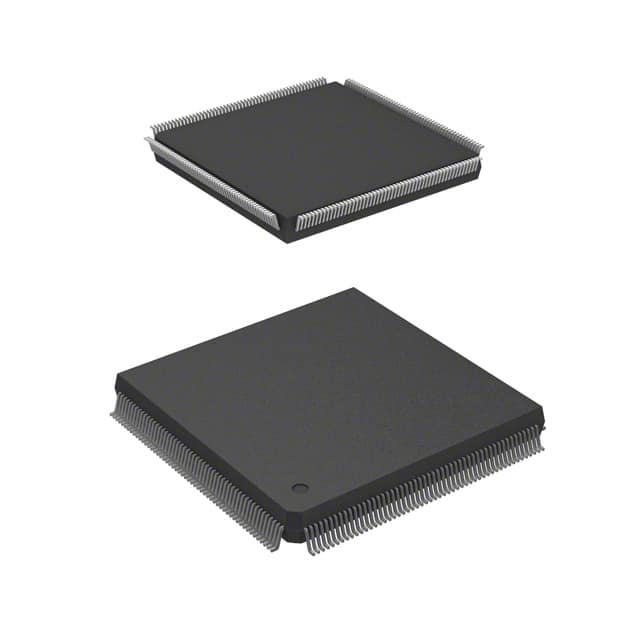
- Part No.:
- HD6417750SVF133V
- Manufacturer:
- Renesas
- Category:
- Microcontrollers
- Package:
- 208-BFQFP Exposed Pad
- Datasheet:
-
 HD6417750SVF133V.pdf
- Description:
- IC MCU 32BIT ROMLESS 208HQFP
- Quantity:
- Payment:

- Shipping:

Inventory:1,477
Please send an inquiry. Send us your inquiry, and we will respond immediately.
Product details
Overview
HD6417750SVF133V from Renesas Electronics is a 32-bit RISC microprocessor in the SuperH™ SH-4 family, implementing the SH-4 CPU core with integrated MMU, 16 KB instruction cache, 16 KB data cache, and peripheral functions including dual serial interfaces (SCI/SCIF), RTC, UBC, BSC, and smart card interface. It operates at 133 MHz with 1.5 V core voltage and 3.3 V I/O, packaged in 208-pin QFP, and targets multimedia system-on-chip applications requiring real-time OS support and memory management.
For engineers reviewing the HD6417750SVF133V datasheet, HD6417750SVF133V pinout, HD6417750SVF133V application, or HD6417750SVF133V equivalent, key selection criteria include its 133 MHz SH-4 core performance, 1.5 V/3.3 V dual-supply operation, MMU-enabled virtual memory support, QFP package thermal and layout constraints, and compatibility with SH-4 software toolchains and Linux-based embedded OS environments.
Technical Context
The HD6417750SVF133V implements the SH-4 superscalar architecture with five-stage pipeline, dual-issue capability, and IEEE 754-compliant FPU. Its memory management unit supports 4 KB page granularity, TLB with 64 entries, and both single/multiple virtual memory modes for multitasking OS deployment.
Peripheral integration includes two asynchronous serial interfaces (SCI and SCIF) with programmable baud rates, a real-time clock with calendar function, user break controller for debugging, bus state controller supporting ROM/SRAM/SDRAM/PCMCIA, and smart card interface compliant with ISO/IEC 7816-3.
Key Specifications
| Parameter | Value and Actual Design Meaning |
|---|---|
| Core Architecture | SH-4 32-bit RISC superscalar CPU with dual-issue pipeline and IEEE 754 FPU |
| Operating Frequency | 133 MHz - delivers sustained integer throughput suitable for real-time multimedia processing |
| Core Supply Voltage | 1.5 V - enables low-power operation while maintaining timing margins for 133 MHz execution |
| I/O Supply Voltage | 3.3 V - ensures TTL/CMOS-compatible signal levels for external memory and peripheral interfacing |
| Cache Configuration | 16 KB instruction cache + 16 KB data cache - reduces memory latency and improves code/data fetch efficiency |
| Memory Management | MMU with 64-entry TLB and 4 KB page support - enables full virtual memory abstraction for Linux and RTOS |
| Package Type | 208-pin Plastic QFP (0.5 mm pitch) - provides mechanical robustness and rework-friendly assembly for industrial PCBs |
Pinout & Package
HD6417750SVF133V is housed in a 208-pin plastic quad flat pack (QFP) with 0.5 mm lead pitch, designed for surface-mount assembly and thermal dissipation up to 75°C ambient. Pin functions are defined per Section 1.4.2 of the Hardware Manual (R01UH0456EJ0702).
| Pin/Terminal | Circuit Role | Design Meaning |
|---|---|---|
| VDD | Core power supply | 1.5 V input for CPU and internal logic; requires local decoupling to suppress switching noise |
| VDDQ | I/O power supply | 3.3 V input for all digital I/O pins; separate from core supply to isolate noise-sensitive analog blocks |
| RESET | Asynchronous reset input | Active-low signal that initializes CPU registers, caches, and peripherals; must be held low ≥100 µs after power stabilization |
| CLKIN | Main clock input | Accepts external crystal or clock source (133 MHz or divided frequency); drives PLL for internal core and bus clocks |
| ADDR[31:0] | Address bus output | 32-bit multiplexed address bus for external memory mapping; supports 4 GB physical address space |
| DATA[15:0] | Data bus bidirectional | 16-bit bidirectional data bus; operates in multiplexed mode with address bus for reduced pin count |
| SCI_TXD / SCI_RXD | Serial communication interface | Full-duplex UART-style interface supporting asynchronous communication up to 3 Mbps for debug or peripheral control |
| SCIF_TXD / SCIF_RXD | High-speed serial interface | Enhanced SCI with FIFO and DMA support; used for high-bandwidth data transfer such as audio streaming |
Key Features
| Feature | Design Value |
|---|---|
| Integrated MMU | Enables full POSIX-compliant OS support (e.g., Linux, VxWorks) via hardware-assisted virtual-to-physical address translation |
| Dual 16 KB Caches | Reduces average memory access time by >60% compared to uncached execution for typical multimedia workloads |
| Real-Time Clock (RTC) | Provides calendar/timekeeping independent of CPU activity; retains time across power-down states using backup battery input |
| Bus State Controller (BSC) | Configures wait states, burst modes, and bus width for diverse memory types (SRAM, SDRAM, PCMCIA) without external glue logic |
| User Break Controller (UBC) | Hardware debug module supporting breakpoints, watchpoints, and trace triggers - essential for kernel-level development and validation |
Applications
| Set-Top Box Platform | Digital Media Player |
|---|---|
Use Scenario: Real-time decoding of MPEG-2/4 video streams with on-screen display and conditional access handling. IC Role / Device Role / Timing Role: Primary application processor executing Linux OS, managing video decode acceleration, and controlling smart card interface for CA modules. Use Value: MMU support enables secure memory partitioning between OS, middleware, and CA firmware; 133 MHz SH-4 core sustains 720p decode throughput with <5 ms interrupt latency. | Use Scenario: Local playback of compressed audio/video files from USB mass storage or network shares. IC Role / Device Role / Timing Role: Central controller coordinating SD/MMC host interface, audio DAC, HDMI transmitter, and IR remote input. Use Value: Dual serial interfaces enable simultaneous debug console (SCI) and audio transport (SCIF); 16 KB caches reduce buffer underrun risk during high-bitrate file streaming. |
| Industrial HMI Terminal | Legacy Protocol Gateway |
Use Scenario: Operator interface for PLC-controlled machinery with touch panel, Ethernet, and alarm logging. IC Role / Device Role / Timing Role: Embedded application processor running real-time OS, driving TFT LCD, and managing EtherNet/IP stack. Use Value: RTC provides accurate timestamping for event logs; BSC simplifies connection to NOR flash and SRAM for deterministic boot and UI responsiveness. | Use Scenario: Bridging Modbus RTU field devices to MQTT-based cloud infrastructure over cellular/Wi-Fi. IC Role / Device Role / Timing Role: Protocol translation engine with dual serial ports (SCI for RS-485 Modbus, SCIF for UART-to-WiFi module) Use Value: SH-4 instruction set and cache reduce protocol stack overhead; 1.5 V core voltage lowers thermal load in sealed enclosures. |
Equivalent & Alternatives
The following parts are listed as comparable options for similar 32-bit RISC microprocessor applications.
| Alternative Part | Technical Difference | Application Difference | Selection Advice |
|---|---|---|---|
| HD6417750SF167 | 167 MHz SH-4 core, 1.8 V core supply, same 208-pin QFP package | Higher clock speed enables faster floating-point computation but increases dynamic power by ~22% | Select when application requires higher deterministic interrupt response or tighter real-time scheduling margins |
| HD6417750SBP200 | 200 MHz SH-4 core, 1.95 V core supply, 256-pin BGA package | BGA packaging offers superior thermal performance and higher pin count for expanded peripheral connectivity | Select when board space allows BGA assembly and system demands >133 MHz throughput with additional I/O or memory bandwidth |
Compared with HD6417750SVF133V, HD6417750SF167 trades lower core voltage stability for higher clock rate, while HD6417750SBP200 shifts to BGA for scalability-both retain identical SH-4 ISA and peripheral register maps, enabling software reuse across the SH7750S family.
Availability
HD6417750SVF133V is available at Aetrix Electronics and suitable for set-top box platforms, digital media players, industrial HMIs, and legacy protocol gateways requiring stable component supply and long-term industrial lifecycle support.
Supply support for HD6417750SVF133V includes scheduled delivery planning, volume procurement assistance, BOM continuity management, traceable sourcing, and lifecycle availability coordination for OEM customers, industrial embedded developers, connected-device designers, and electronics production programs.
Manufacturer
Renesas Electronics Corporation is a Japanese semiconductor manufacturer specializing in microcontrollers, analog, power, and SoC solutions for automotive, industrial, and enterprise markets.
The SH7750 Series was designed as a high-performance 32-bit RISC microprocessor platform for multimedia-rich embedded systems requiring OS support, memory protection, and peripheral integration without external support chips.
FAQ
What is the maximum operating temperature range specified for the HD6417750SVF133V?
The HD6417750SVF133V is rated for an operating temperature range of –20°C to +75°C, as confirmed in Table I.1 of the Hardware Manual (R01UH0456EJ0702). This specification applies to standard-grade industrial use; extended temperature variants (–40°C to +85°C) are not offered for this specific part number, though other SH7750R variants like HD6417750RBA240HV support that range.
Does the HD6417750SVF133V support JTAG debugging?
No, the HD6417750SVF133V does not implement IEEE 1149.1 JTAG. Instead, it uses the User Break Controller (UBC) with dedicated debug pins (UBD0–UBD3) for hardware breakpoints, watchpoints, and trace triggering. Debugging requires Renesas E1/E20 emulators and the High-performance Embedded Workshop IDE, not standard JTAG probes.
Can the HD6417750SVF133V execute code directly from external NOR flash without copying to RAM?
Yes, the HD6417750SVF133V supports XIP (eXecute-In-Place) from external NOR flash via its Bus State Controller (BSC), which configures wait states and access timing. However, instruction cache must be enabled and managed properly to avoid performance penalties; uncached XIP yields significantly lower throughput than cached execution from internal SRAM or SDRAM.
What is the purpose of the VDD-RTC pin on the HD6417750SVF133V?
The VDD-RTC pin supplies a dedicated 3.3 V backup power source to the Real-Time Clock (RTC) circuitry, allowing calendar/timekeeping functionality to persist during main VDD power loss. It must be connected to a coin-cell battery or supercapacitor; if left unconnected, RTC registers reset on power cycle and timekeeping ceases.
Is the HD6417750SVF133V pin-compatible with other SH7750S variants in the same QFP package?
Yes, HD6417750SVF133V is pin-compatible with HD6417750SF167 and HD6417750SF200, all sharing the identical 208-pin QFP footprint and pin function definitions per Section 1.4.2 of the Hardware Manual. This allows drop-in replacement for frequency-scaling within the same board design, provided power delivery and thermal management accommodate the respective core voltage and frequency.
HD6417750SVF133V Specifications
- Product attributes
- Attribute value
- Manufacturer:
- Renesas
- Package/Case:
- 208-BFQFP Exposed Pad
- Series:
- SuperH® SH7750
- Packaging:
- Tray
- Product Status:
- Obsolete
- Programmable:
- Not Verified
- Core Processor:
- SH-4
- Core Size:
- 32-Bit Single-Core
- Speed:
- 133MHz
- Connectivity:
- EBI/EMI, FIFO, SCI, SmartCard
- Peripherals:
- DMA, POR, WDT
- Number of I/O:
- 28
- Program Memory Size:
- -
- Program Memory Type:
- ROMless
- EEPROM Size:
- -
- RAM Size:
- 24K x 8
- Voltage - Supply (Vcc/Vdd):
- 1.4V ~ 1.7V
- Data Converters:
- -
- Oscillator Type:
- External
- Operating Temperature:
- -20°C ~ 75°C (TA)
- Grade:
- -
- Qualification:
- -
- Mounting Type:
- Surface Mount
- Supplier Device Package:
HD6417750SVF133V FAQ
1.How can I place an order for HD6417750SVF133V through Aetrix?
Please submit a Request for Quotation (RFQ) for HD6417750SVF133V on Aetrix. Our sales agent will provide a competitive quotation and guide you through the order confirmation once you accept the terms.
2.Are the price and stock information for HD6417750SVF133V reliable?
The price and inventory of HD6417750SVF133V are updated periodically and may fluctuate due to market conditions. Stock and pricing data are typically refreshed every 24 hours. Quotation validity for HD6417750SVF133V is usually 5 days.
3.What payment methods are accepted for HD6417750SVF133V?
We accept Wire Transfer, PayPal, Credit Card, Western Union, MoneyGram, and Escrow for HD6417750SVF133V transactions.
Note: Certain payment methods may incur a processing fee.
4.How is shipping managed for HD6417750SVF133V?
HD6417750SVF133V orders can be shipped via leading logistics carriers, including DHL, UPS, FedEx, TNT, or Registered Mail.
Once your HD6417750SVF133V order is processed, you will receive an email with the shipment details and tracking number.
Note: Tracking information may take up to 24 hours to appear. Express delivery typically takes 3–5 business days.
5.How can I obtain technical support or documentation for HD6417750SVF133V?
For technical support, including HD6417750SVF133V datasheets, pinout diagrams, or application guidance, please contact our engineering support team. They can provide detailed documentation and assistance for your HD6417750SVF133V requirements.
6.How does Aetrix verify that HD6417750SVF133V is sourced from the original manufacturer or authorized distributors?
All HD6417750SVF133V products on Aetrix are procured from qualified distributors and authorized channels. Our dedicated quality assurance team conducts strict verification, including traceability checks and, if necessary, third-party testing. This ensures that HD6417750SVF133V meets industry standards.
7.What is the process for return or replacement of HD6417750SVF133V?
All HD6417750SVF133V units undergo pre-shipment inspection (PSI). If there is an issue with HD6417750SVF133V, returns or replacements are accepted under the following conditions:
1.Quantity discrepancies, incorrect items, or visible external defects (such as breakage or corrosion), acknowledged by Aetrix.
2.The issue is reported within 90 days of delivery.
3.The HD6417750SVF133V part is unused and in its original packaging.
Return procedure for HD6417750SVF133V:
1.Submit a request within 90 days.
2.Obtain a Return Material Authorization (RMA) from Aetrix.
HD6417750SVF133V Tags

-
ATTINY4-TSHR
Microchip Technology
-
ATTINY10-TSHR
Microchip Technology
-
ATTINY10-TS8R
Microchip Technology

-
ATTINY202-SSNR
Microchip Technology
-
ATTINY202-SSFR
Microchip Technology
-
ATTINY402-SSNR
Microchip Technology
-
PIC16F15213T-I/MF
Microchip Technology
-
PIC16F15213-E/MF
Microchip Technology

-
PIC10F200T-I/OT
Microchip Technology
-
ATTINY412-SSNR
Microchip Technology
-
PIC10F202T-I/OT
Microchip Technology
-
ATTINY404-SSNR
Microchip Technology
Tech Hub

TTL and CMOS logic families differ in thresholds, loading, output drive, power and timing. This engineering guide compares 74HC and 74HCT, calculates noise margins and checks 3.3 V/5 V compatibility.

A practical engineering guide to 3.3V and 5V logic compatibility, input thresholds, resistor dividers, translator ICs, MOSFET level shifting, I2C pull-ups, timing limits and power-sequencing risks.

The 74HC595 uses push-pull logic outputs, while the TPIC6B595 uses 50 V open-drain DMOS sinks for higher-power loads. This guide compares timing, current limits, 3.3 V interfacing, load wiring, thermal…

The 74HC595 converts serial data into eight stable parallel outputs. This guide covers pin functions, shift and storage timing, OE and MR behavior, drive-current limits, cascading, voltage compatibilit…

A technical comparison of level-sensitive latches and edge-triggered flip-flops, covering timing windows, setup and hold limits, master–slave operation, time borrowing, race-through, HDL inference and…

A D latch stores one bit while Enable controls when data can pass. This reference covers gate-level operation, truth tables, transparency, setup and hold timing, LE versus OE, common ICs and practical …

An SR latch stores one bit through cross-coupled feedback. This engineering reference covers NOR and NAND implementations, truth tables, forbidden-state recovery, gated operation, switch debouncing, fa…

Latch circuits retain one bit through feedback. This technical reference covers SR and D latches, truth tables, transparency, timing limits, latch-versus-flip-flop behavior, applications and common log…

An engineering guide to LED driver operation, constant-current and constant-voltage outputs, linear and switching topologies, dimming, IC selection, calculations, replacement compatibility, and fault c…

Operational amplifier guide covering op amp basics, feedback, ideal vs real op amps, common configurations, buffer circuits, offset, bias current, gain-bandwidth, slew rate, rail-to-rail limits and sel…


