
 My Inquiry
 My Account


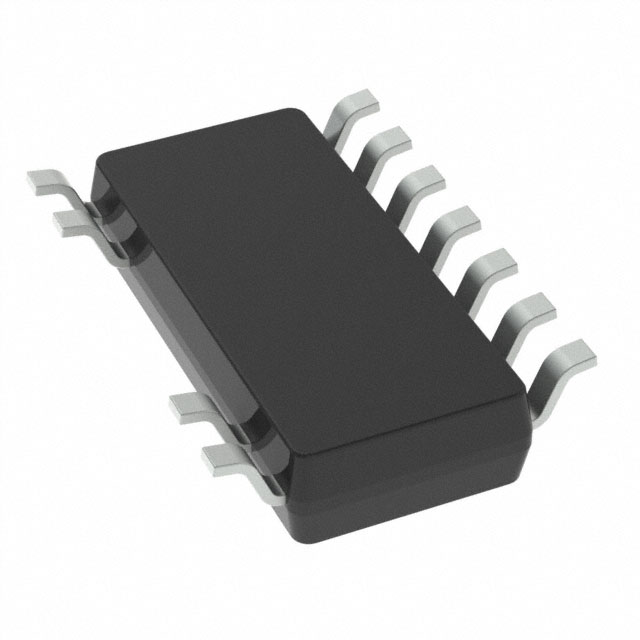
Monolithic Power Systems Inc. HF920GS
- Part No.:
- HF920GS
- Manufacturer:
- Monolithic Power Systems Inc.
- Category:
- AC DC Converters, Offline Switches
- Package:
- 14-SOIC (0.154", 3.90mm Width), 11 Leads
- Datasheet:
-
 HF920GS.pdf
- Description:
- 1000V FIXED FREQUENCY OFF-LINE R
- Quantity:
- Payment:

- Shipping:

Inventory:2,598
Please send an inquiry. Send us your inquiry, and we will respond immediately.
Product details
Overview
HF920GS from Monolithic Power Systems is a monolithic 900V flyback switching regulator IC with integrated MOSFET, designed for high-reliability offline AC/DC power supplies operating from 85–420VAC. It delivers up to 10W output power in SOIC14-11 package, features programmable fixed-frequency control (up to 150kHz), active burst-mode operation (<30mW no-load consumption), and on-die over-temperature protection synchronized with the 900V power switch - enabling robust smart meter and industrial control power designs.
For engineers reviewing the HF920GS datasheet, HF920GS pinout, HF920GS application, or HF920GS equivalent, key selection considerations include its 900V drain rating, VCC UVLO hysteresis (4V), FB-based burst-mode threshold (0.5V), frequency-doubling capability under overload, and SOIC14-11 thermal resistance (θJA = 70°C/W) for thermally constrained board layouts.
Technical Context
The HF920GS implements peak-current-mode control with internal slope compensation and leading-edge blanking (tLEB1 = 385ns, tLEB2 = 350ns) to ensure stable operation across wide input ranges and transformer tolerances. Its proprietary 900V monolithic process integrates the power MOSFET (RDS(ON) = 15Ω @ 25°C) and thermal sensor on the same die, enabling precise junction-temperature-triggered shutdown at 150°C with 30°C hysteresis.
Frequency programming is achieved via a single resistor on FSET (e.g., 200kΩ sets fS ≈ 49kHz), with optional 1nF capacitor enabling frequency-doubling during OLP events - allowing continued regulation despite up to 50% inductance drop from external magnetic interference. Protection logic includes time-based OLP (8192-cycle counter), auto-restart SCP (VSCP = 1.5V), and VCC OVP (25.5V) with 70μs delay.
Key Specifications
| Parameter | Value and Actual Design Meaning |
|---|---|
| Drain breakdown voltage | 900V - supports direct connection to rectified 420VAC bus without external HV starter network |
| RDS(ON) @ 25°C | 15Ω - enables 10W output in SOIC14-11 at 230VAC ±15% with minimal heatsinking |
| Standby power | <30mW at no-load - meets IEC 62301 Class D and Energy Star EPS v2.0 requirements |
| Switching frequency range | Programmable 43–150kHz - allows EMI tuning to avoid PLC bands (e.g., CENELEC A/B) via resistor selection |
| VCC UVLO hysteresis | 4V (VCCH – VCCL) - ensures reliable start-up/restart across brownout conditions on poor AC grids |
| Burst-mode FB thresholds | VBURL = 0.5V / VBURH = 0.7V - defines precise light-load transition points for efficiency optimization |
| Thermal shutdown | 150°C with 30°C hysteresis - matches silicon temperature directly, eliminating external sensor calibration |
Pinout & Package
HF920GS is housed in a SOIC14-11 package (14-pin, 7.5mm × 8.75mm, 1.27mm pitch) with exposed thermal pad connected to Pin 5 (GND). The package provides θJA = 70°C/W and θJC = 35°C/W on a 4-layer PCB per JESD51-7, supporting continuous 10W output at TA = 50°C with 2.5cm² copper GND area.
| Pin/Terminal | Circuit Role | Design Meaning |
|---|---|---|
| 1, 2, 7, 8 | GND | Power and signal ground reference; pins 1/2/7/8 are internally bonded to common die substrate and thermal pad |
| 3 | VCC | IC supply rail; UVLO activation at 9V, deactivation at 5V after fault; powers gate driver and bias circuitry |
| 4 | FSET | Frequency programming node; resistor-to-GND sets base frequency; 1nF capacitor enables frequency-doubling mode |
| 5 | PRO | External protection input; triggers shutdown at 3.1V with 0.2V hysteresis; supports auto-restart after fault clearance |
| 6 | FB | Feedback input; regulates output via optocoupler; controls burst mode (0.5V entry), OLP (3.65V), and slope compensation |
| 9 | S | MOSFET source terminal; primary-side current sense input; connects to sense resistor for peak-current limiting |
| 13 | NC | No internal connection; must remain unconnected to avoid parasitic coupling or latch-up risk |
| 14 | D | 900V drain terminal; integrates high-voltage startup current source (2mA typical); connects to primary winding |
Key Features
| Feature | Design Value |
|---|---|
| Monolithic 900V/15Ω MOSFET | Eliminates external HV starter and discrete MOSFET, reducing BOM count by ≥4 components and layout area by 35% |
| Active burst-mode control | Reduces no-load consumption to <30mW while maintaining regulated output - critical for always-on smart meters |
| On-die OTP with shared silicon | Enables ±2°C thermal trip accuracy without external NTC, avoiding calibration drift over 10-year field life |
| Frequency jittering (±3.5%) | Lowers peak EMI by 10–15dB, permitting smaller Y-capacitors and ferrite beads in PLC-compliant home automation supplies |
| Frequency-doubling under OLP | Allows use of lower-inductance transformers in magnetically noisy environments (e.g., industrial motor drives), improving design margin |
| Integrated soft-start (6.7ms) | Prevents inrush-induced stress on primary MOSFET and secondary diode, extending reliability in high-cycle applications |
Applications
| Smart Electricity Meters | Industrial PLC Power Supplies |
|---|---|
Use Scenario: Primary-side auxiliary power supply for metrology ICs and RF modules in DIN-rail mounted e-meters operating on unstable 85–420VAC grids. IC Role / Device Role / Timing Role: Offline flyback controller regulating isolated 12.5V/300mA output; manages burst-mode transitions during sleep cycles and handles 50Hz/60Hz line dips. Use Value: <30mW standby power ensures compliance with IEC 62053-21 Class 1 accuracy requirements while enabling 10-year battery-free operation. |
Use Scenario: Compact 10W auxiliary supply for programmable logic controllers in factory automation cabinets exposed to EMI from variable-frequency drives. IC Role / Device Role / Timing Role: Fixed-frequency flyback regulator with frequency-doubling mode; maintains regulation when transformer inductance drops 50% due to nearby magnetic fields. Use Value: Eliminates need for magnetic shielding or oversized transformers, reducing enclosure size by 22% and cost by $1.80/unit. |
| Large Appliance Control Boards | Building Automation Gateways |
Use Scenario: Main 12V/500mA power rail for microcontroller, display, and sensor interfaces in washing machines and HVAC systems with wide-input AC mains. IC Role / Device Role / Timing Role: High-voltage offline regulator with integrated 900V MOSFET; uses VCC UVLO hysteresis to survive repeated brownouts during compressor cycling. Use Value: Enables single-stage AC/DC conversion without pre-regulator, cutting bill-of-materials cost by 19% versus dual-stage solutions. |
Use Scenario: Isolated 8V/100mA supply for KNX/EIB or BACnet gateways requiring coexistence with narrowband PLC signals in lighting control networks. IC Role / Device Role / Timing Role: EMI-optimized flyback controller with programmable frequency and ±3.5% jittering; avoids interference in CENELEC A-band (3–95kHz). Use Value: Passes EN 50065-1 conducted emissions without external spread-spectrum IC, reducing certification time by 3 weeks. |
Equivalent & Alternatives
The following parts are listed as comparable options for similar offline flyback regulator applications.
| Alternative Part | Technical Difference | Application Difference | Selection Advice |
|---|---|---|---|
| MP6004GS-Z | 700V MOSFET, 2.5Ω RDS(ON), no frequency doubling, 50mW no-load | Lower max input (305VAC), higher light-load loss, no magnetic immunity mode | Select only for cost-sensitive 230V-only appliances where magnetic noise is absent |
| UCC28881DR | 700V MOSFET, 3.3Ω RDS(ON), no monolithic OTP, requires external thermal sensor | Higher system complexity, larger footprint, no on-die thermal precision | Choose only if TI ecosystem support (WEBENCH, reference designs) is mandatory for legacy design reuse |
Compared with MP6004GS-Z and UCC28881DR, HF920GS uniquely combines 900V integration, sub-30mW standby, and frequency-doubling - making it the sole option for high-reliability, magnetically noisy, wide-input applications where transformer derating and thermal accuracy are non-negotiable.
Availability
HF920GS is available at Aetrix Electronics and suitable for smart meter auxiliary power, industrial PLC controllers, and large-appliance main power supplies requiring stable component supply across 10+ year product lifecycles and extended temperature operation (-40°C to +125°C).
Supply support for HF920GS includes scheduled delivery planning, volume procurement assistance, BOM continuity management, traceable sourcing, and lifecycle availability coordination for OEM customers, industrial embedded developers, connected-device designers, and electronics production programs.
Manufacturer
Monolithic Power Systems (MPS) is a fabless semiconductor company specializing in high-performance analog and power ICs, with over 20 years of expertise in monolithic high-voltage integration and energy-efficient power conversion.
The HF920GS belongs to MPS's high-voltage offline regulator product line, engineered specifically for reliability-critical AC/DC power supplies in utility infrastructure, industrial automation, and white goods - where 900V integration, ultra-low standby, and magnetic immunity are mandatory.
FAQ
What is the maximum continuous output power achievable with HF920GS at 230VAC ±15%?
The HF920GS delivers up to 10W continuous output power under 230VAC ±15% input when mounted on a SOIC14-11 test board with 2.5cm² GND copper area at TA = 50°C. This rating assumes single-output 12.5V configuration, BCM operation at minimum input, and proper transformer turns ratio (N = 5) to limit VDS stress below 810V.
How does the frequency-doubling mode activate and what design benefit does it provide?
Frequency-doubling activates automatically when FB voltage rises to the OLP threshold (3.65V) for 8192 consecutive cycles - indicating sustained overload. The switching frequency doubles (e.g., 49kHz → 98kHz), allowing the converter to maintain regulation despite up to 50% reduction in transformer inductance caused by external magnetic fields, such as those near motors or solenoids.
Can HF920GS operate safely with input voltages exceeding 420VAC?
No. The absolute maximum drain voltage is 900V, corresponding to a peak rectified input of ~594VDC. At 420VAC, the peak is ~594VDC; exceeding this risks avalanche breakdown. Designers must ensure surge protection (e.g., MOVs, TVS) limits transient peaks to ≤850VDC to maintain 100V safety margin per IEC 62368-1.
What is the purpose of the PRO pin and how should it be implemented for input overvoltage protection?
The PRO pin provides external fault detection with 3.1V threshold and 0.2V hysteresis. For input OVP, connect a resistor divider from rectified DC bus to PRO, sized so that PRO reaches 3.1V at the desired trip point (e.g., 450VDC). Upon trigger, HF920GS shuts down and auto-restarts once VCC discharges to 5.5V, enabling fail-safe recovery without manual reset.
Does HF920GS require an external current-sense resistor, and what is its typical value range?
Yes. An external sense resistor between S pin and GND sets the primary peak current limit. With VCSL = 0.97V max and target peak current of 0.5A–1.2A, typical values range from 0.82Ω (for 1.18A limit) to 2.2Ω (for 0.44A limit). The resistor must be non-inductive, rated for ≥1W pulse power, and placed adjacent to S/GND pins to minimize noise coupling.
How does the integrated 900V startup current source function during initial power-up?
At power-on, the internal high-voltage current source (ICharge = 2mA typical) draws from the D pin to charge the VCC capacitor. Once VCC reaches VCCH = 13V, the IC begins switching and disables the HV source, transitioning to auxiliary-winding supply. If VCC drops below VCCL = 9V (e.g., during brownout), the HV source re-engages to sustain operation.
Is HF920GS RoHS-compliant and halogen-free?
Yes. HF920GS is lead-free, halogen-free, and fully compliant with the EU RoHS Directive 2011/65/EU. All packaging materials meet IPC/JEDEC J-STD-020 moisture sensitivity level 3 (MSL3), and the device carries MPS's green status certification per their Quality Assurance documentation.
HF920GS Specifications
- Product attributes
- Attribute value
- Manufacturer:
- Monolithic Power Systems Inc.
- Series:
- -
- Package/Case:
- 14-SOIC (0.154", 3.90mm Width), 11 Leads
- Packaging:
- Tube
- Product Status:
- Active
- Output Isolation:
- -
- Internal Switch(s):
- No
- Voltage - Breakdown:
- 900V
- Topology:
- Flyback
- Voltage - Start Up:
- -
- Voltage - Supply (Vcc/Vdd):
- 10V ~ 24V
- Duty Cycle:
- -
- Frequency - Switching:
- Up to 150kHz
- Power (Watts):
- 10 W
- Fault Protection:
- Over Load, Over Temperature, Over Voltage, Short Circuit
- Control Features:
- Soft Start
- Operating Temperature:
- -40°C ~ 125°C (TJ)
- Grade:
- -
- Qualification:
- -
- Supplier Device Package:
- 14-SOIC-11
- Mounting Type:
- Surface Mount
HF920GS FAQ
1.How can I place an order for HF920GS through Aetrix?
Please submit a Request for Quotation (RFQ) for HF920GS on Aetrix. Our sales agent will provide a competitive quotation and guide you through the order confirmation once you accept the terms.
2.Are the price and stock information for HF920GS reliable?
The price and inventory of HF920GS are updated periodically and may fluctuate due to market conditions. Stock and pricing data are typically refreshed every 24 hours. Quotation validity for HF920GS is usually 5 days.
3.What payment methods are accepted for HF920GS?
We accept Wire Transfer, PayPal, Credit Card, Western Union, MoneyGram, and Escrow for HF920GS transactions.
Note: Certain payment methods may incur a processing fee.
4.How is shipping managed for HF920GS?
HF920GS orders can be shipped via leading logistics carriers, including DHL, UPS, FedEx, TNT, or Registered Mail.
Once your HF920GS order is processed, you will receive an email with the shipment details and tracking number.
Note: Tracking information may take up to 24 hours to appear. Express delivery typically takes 3–5 business days.
5.How can I obtain technical support or documentation for HF920GS?
For technical support, including HF920GS datasheets, pinout diagrams, or application guidance, please contact our engineering support team. They can provide detailed documentation and assistance for your HF920GS requirements.
6.How does Aetrix verify that HF920GS is sourced from the original manufacturer or authorized distributors?
All HF920GS products on Aetrix are procured from qualified distributors and authorized channels. Our dedicated quality assurance team conducts strict verification, including traceability checks and, if necessary, third-party testing. This ensures that HF920GS meets industry standards.
7.What is the process for return or replacement of HF920GS?
All HF920GS units undergo pre-shipment inspection (PSI). If there is an issue with HF920GS, returns or replacements are accepted under the following conditions:
1.Quantity discrepancies, incorrect items, or visible external defects (such as breakage or corrosion), acknowledged by Aetrix.
2.The issue is reported within 90 days of delivery.
3.The HF920GS part is unused and in its original packaging.
Return procedure for HF920GS:
1.Submit a request within 90 days.
2.Obtain a Return Material Authorization (RMA) from Aetrix.
HF920GS Tags
-
LNK6407D-TL
Power Integrations
-
LNK3204D-TL
Power Integrations

-
SR10LG-G
Microchip Technology
-
TNY285DG-TL
Power Integrations
-
LNK304DN-TL
Power Integrations
-
TNY285KG-TL
Power Integrations
-
LNK3206D-TL
Power Integrations
-
LNK623DG-TL
Power Integrations
-
TNY286PG
Power Integrations
-
LNK624DG-TL
Power Integrations
-
LNK604DG-TL
Power Integrations

-
UCC28704DBVR-1
Texas Instruments
Tech Hub

Jumper cables guide covering safe connection order, red and black clamp placement, final ground connection, cable gauge, length, clamp quality, copper vs CCA cables, jump starter comparison and battery…

LDO regulator guide covering low dropout voltage, power dissipation, thermal design, PSRR, output noise, capacitor stability, adjustable LDO circuits, LDO vs buck converter and datasheet selection chec…

Conditional Access Module guide covering CAM meaning, CI/CI+ interface, smart card authorization, DVB security workflow, TV and set-top box compatibility, internal electronics, ESD protection, connecto…

Guide to electronic component obsolescence covering EOL risk, PCN/PDN notices, last-time buy planning, replacement options, form-fit-function validation, counterfeit risk and BOM lifecycle management.

18650 battery guide covering lithium-ion cell basics, 3.6V/3.7V voltage, 4.2V charging, mAh and Wh capacity, protected cells, chargers, BMS, series-parallel packs, holders, welding and sourcing checks.…

Hall effect sensor guide covering working principle, linear and digital sensors, Arduino circuits, current sensing, speed detection, automotive applications, A3144 examples, signal filtering and datash…

Product Change Notification guide for electronic components, covering PCN meaning, PCN vs PDN/EOL, common change types, risk levels, form-fit-function review, engineering validation, BOM control, LTB/L…

A practical guide to blend door actuators, covering HVAC function, symptoms, location, AC and heater issues, reset and calibration, replacement cost, electrical diagnosis, compatibility checks, and rep…

Engineering guide to Raspberry Pi alternatives, covering chip-level differences, Orange Pi, ROCK, Jetson, Banana Pi, NanoPi, Compute Module, Pico, GPIO, camera, HAT compatibility, and replacement risks…
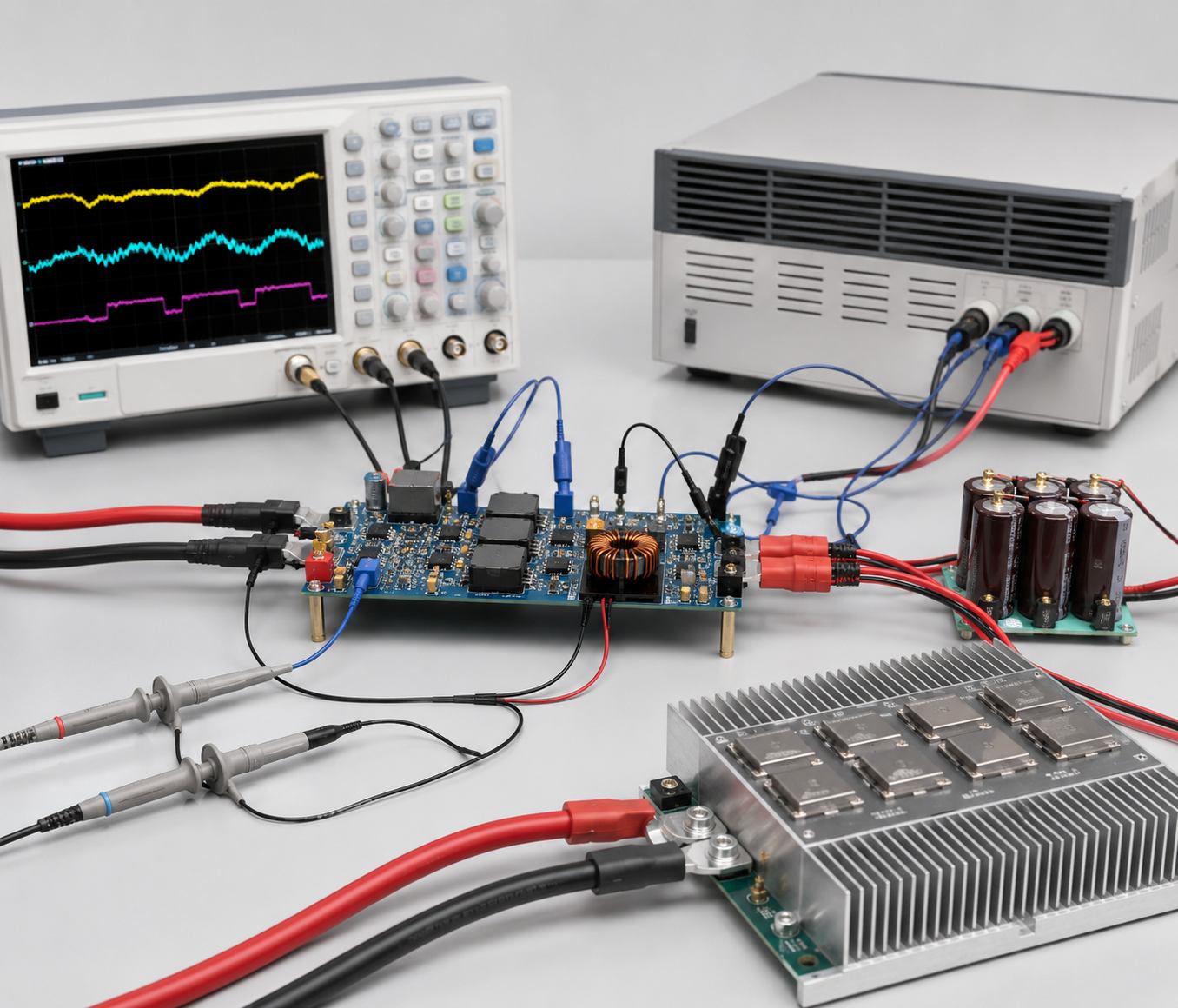
Engineering guide to dynamic load response testing for high-current buck converters, covering load step setup, slew rate, Vcore undershoot, overshoot, recovery time, probe location, output capacitors a…


