
 My Inquiry
 My Account


Asahi Kasei Microdevices/AKM HG106A
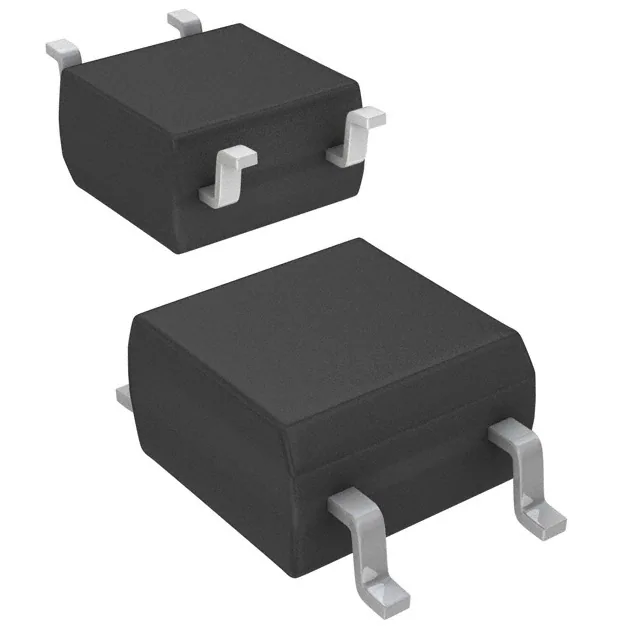
- Part No.:
- HG106A
- Manufacturer:
- Asahi Kasei Microdevices/AKM
- Category:
- Linear, Compass (ICs)
- Package:
- 4-SMD Module
- Datasheet:
-
 HG106A.pdf
- Description:
- SENSOR HALL EFFECT ANALOG 4SOP
- Quantity:
- Payment:

- Shipping:

Inventory:1,729
Please send an inquiry. Send us your inquiry, and we will respond immediately.
Product details
Overview
HG106A from Asahi Kasei Microdevices (AKM) is a GaAs-based linear Hall effect sensor IC designed for contactless magnetic field sensing in industrial and automotive position/current detection systems. It delivers 75–1,000 mV output Hall voltage (VH) at 50 mT and 5 mA input current, with ±16% linearity error, 750 Ω typical input resistance, and operates across −40°C to +125°C ambient temperature.
For engineers reviewing the HG106A datasheet, HG106A pinout, HG106A application, or HG106A equivalent, this page provides verified electrical characteristics, thermal drift behavior, absolute maximum ratings, package dimensions, and real-world use context for magnetic field measurement circuits requiring stable analog output under varying temperature and flux density conditions.
Technical Context
The HG106A integrates a gallium arsenide (GaAs) Hall element with on-chip signal conditioning optimized for analog magnetic field measurement. Its output Hall voltage (VH) scales linearly with magnetic flux density (B) up to 50 mT and exhibits defined temperature coefficients: αVH = ±0.06%/°C and αRin = ±0.3%/°C over −40°C to +125°C.
It operates with a fixed input current (IC) or constant input voltage (VC) biasing scheme, supporting both 2-wire and 3-wire configurations. The device's offset voltage (VOS = 6.3 mV typ.) and input resistance (Rin = 600 Ω typ.) are characterized at 25°C and tracked across temperature via published Rin-T and VOS-T curves.
Key Specifications
| Parameter | Value and Actual Design Meaning |
|---|---|
| Output Hall Voltage (VH) | 75–1,000 mV at B = 50 mT, IC = 5 mA - defines usable magnetic sensitivity range for analog position feedback |
| Input Resistance (Rin) | 750 Ω typ. at 25°C - determines required bias current source compliance and power dissipation |
| Offset Voltage (VOS) | ±16 mV max at 25°C - sets minimum detectable field and zero-field calibration requirement |
| Linearity Error (ΔK) | ±2% max - constrains accuracy of linear B-to-VH conversion in closed-loop sensors |
| Temp. Coeff. of VH (αVH) | ±0.06%/°C - quantifies gain drift over operating temperature, critical for uncalibrated systems |
| Ambient Temp. Range | −40°C to +125°C - enables deployment in engine bay, motor control, and industrial enclosures |
| Max. Input Voltage (VC) | 8 V - limits supply rail selection and series resistor sizing for current biasing |
Pinout & Package
HG106A uses a 4-pin SIP (Single In-line Package) with lead pitch 2.54 mm and body dimensions 4.0 × 3.0 × 1.5 mm. Pin 1: Input (+), Pin 2: Output, Pin 3: Input (−), Pin 4: Ground - configured for 2-terminal current excitation and 2-terminal voltage output.
| Pin/Terminal | Circuit Role | Design Meaning |
|---|---|---|
| 1 (+) | Input Anode | Positive terminal for constant-current or constant-voltage biasing of GaAs Hall element |
| 2 | Output | Analog Hall voltage output referenced to Pin 4; requires external load or buffer amplifier |
| 3 (−) | Input Cathode | Negative return path for bias current; forms differential input pair with Pin 1 |
| 4 | Ground | Reference node for output voltage; must be low-impedance to minimize noise coupling |
Key Features
| Feature | Design Value |
|---|---|
| GaAs Hall element | Higher electron mobility than Si → improved sensitivity and bandwidth for analog field sensing |
| Linear output response | VH ∝ B up to 50 mT → supports direct analog interpretation without digital correction |
| Specified thermal coefficients | αVH = ±0.06%/°C and αRin = ±0.3%/°C → enables first-order temperature compensation design |
| Wide operating temperature | −40°C to +125°C ambient → qualified for under-hood and industrial motor control environments |
| Low offset drift | VOS variation tracked vs. T and IC/VC → allows factory calibration with predictable residual error |
Applications
| Brushless DC Motor Commutation | Automotive Throttle Position Sensing |
|---|---|
Use Scenario: Detect rotor magnet position to time phase switching in 3-phase BLDC drives. IC Role / Device Role / Timing Role: Analog Hall sensor providing continuous angular field feedback for commutation logic. Use Value: Enables smooth torque delivery with <50 mT full-scale range and <2% linearity error at 125°C. | Use Scenario: Measure throttle plate angle via attached permanent magnet in pedal assembly. IC Role / Device Role / Timing Role: Linear magnetic field transducer converting mechanical rotation into proportional analog voltage. Use Value: Delivers stable 75–1000 mV output across −40°C to +125°C with calibrated offset compensation. |
| Industrial Current Sensing | Rotary Encoder Zero-Point Detection |
Use Scenario: Sense conductor current via magnetic field around busbar in motor drive inverters. IC Role / Device Role / Timing Role: Open-loop current transducer using known air-gap flux density proportional to primary current. Use Value: Supports 5 mA excitation and 1 kΩ load compatibility while maintaining ±16 mV offset limit. | Use Scenario: Detect home position of rotating shaft using embedded magnet in incremental encoder assemblies. IC Role / Device Role / Timing Role: Threshold-triggered position flag generator with analog output for fine alignment. Use Value: Provides repeatable 6.3 mV typ. zero-field output enabling precise mechanical zero calibration. |
Equivalent & Alternatives
The following parts are listed as comparable options for similar linear Hall sensor applications.
| Alternative Part | Technical Difference | Application Difference | Selection Advice |
|---|---|---|---|
| Allegro A1302 | Higher sensitivity (2.5 mV/G vs. ~20 mV/mT), integrated regulator, SOIC-8 package | Requires PCB space for 8-pin SOIC; better for low-field (<25 mT) precision sensing | Choose A1302 when needing regulated bias and higher resolution below 25 mT |
| Melexis US5881 | Chopper-stabilized architecture, ±1.5 mV offset max, TO-92 package | Lower offset and drift, but limited to 3.3 V operation and narrower temp range (−40°C to +85°C) | Choose US5881 when ultra-low offset and chopper stability outweigh extended temperature needs |
Compared with HG106A, A1302 offers superior sensitivity and integration but demands more board area and lacks extended temperature rating; US5881 delivers lower offset and drift yet sacrifices high-temp capability and field range - HG106A remains optimal for cost-sensitive, wide-temp analog field measurement where ±2% linearity is acceptable.
Availability
HG106A is available at Aetrix Electronics and suitable for brushless DC motor control, automotive throttle sensing, and industrial current monitoring requiring stable component supply across extended temperature ranges and consistent analog output performance.
Supply support for HG106A includes scheduled delivery planning, volume procurement assistance, BOM continuity management, traceable sourcing, and lifecycle availability coordination for OEM customers, industrial embedded developers, connected-device designers, and electronics production programs.
Manufacturer
Asahi Kasei Microdevices (AKM) is a Japanese semiconductor company specializing in analog and mixed-signal ICs, particularly magnetic sensors, audio codecs, and power management solutions.
The HG106A belongs to AKM's GaAs Hall sensor product line, engineered for high-temperature-stable analog magnetic field measurement in industrial motion control and automotive subsystems where silicon Hall sensors exhibit excessive drift.
FAQ
What is the maximum magnetic flux density the HG106A can accurately measure?
The HG106A is characterized for linear operation up to 50 mT, with output Hall voltage (VH) specified from 75 mV to 1,000 mV in that range. Beyond 50 mT, linearity degrades beyond the ±2% ΔK limit. For reliable analog sensing, HG106A should be used within 0–50 mT, corresponding to 0–500 G per the note 1 conversion (1 mT = 10 G). The device remains functional but non-linear at higher fields.
Does the HG106A require an external voltage regulator or current source?
Yes - the HG106A requires either a stable current source (e.g., 5 mA) or constant voltage supply (e.g., 6 V) applied across Pins 1 and 3. It has no internal regulation. Typical biasing uses a series resistor from a 6–8 V rail to set IC = 5 mA, leveraging its 750 Ω nominal input resistance. Designers must ensure compliance voltage and thermal dissipation (PD ≤ 150 mW) under worst-case conditions.
How does temperature affect the HG106A's output Hall voltage?
The HG106A exhibits a temperature coefficient of output Hall voltage (αVH) of ±0.06%/°C, meaning VH changes by approximately ±0.06% per °C deviation from 25°C. At 125°C, this results in up to ±6% gain shift relative to 25°C. The published VH-T curve confirms monotonic drift, enabling first-order compensation if needed. This behavior is inherent to the GaAs Hall element and is fully characterized in the HG106A datasheet.
What is the purpose of Pin 4 on the HG106A?
Pin 4 serves as the ground reference for the HG106A's output voltage (VH). Though the device is a 4-pin SIP, Pin 4 is electrically tied to the substrate and provides the return path for output current when driving a load. It must be connected to a low-impedance system ground to prevent noise coupling and ensure accurate VH measurement - especially critical in motor control or high-noise industrial environments where the HG106A is commonly deployed.
Can the HG106A be used in safety-critical automotive applications like airbag deployment?
No - AKM explicitly states that HG106A products are neither intended nor authorized for use as critical components in safety, life support, or hazard-related systems unless approved in writing by AKM's Representative Director. The HG106A lacks ASIL certification, redundant architecture, or fault-detection features required for airbag, brake, or steering control systems. It is qualified for non-safety subsystems such as HVAC actuators, seat position sensing, or throttle monitoring where failure does not directly compromise vehicle safety.
HG106A Specifications
- Product attributes
- Attribute value
- Manufacturer:
- Asahi Kasei Microdevices/AKM
- Series:
- -
- Package/Case:
- 4-SMD Module
- Packaging:
- Tape & Reel (TR)
- Product Status:
- Obsolete
- Technology:
- Hall Effect
- Axis:
- Single
- Output Type:
- Analog Voltage
- Sensing Range:
- -
- Voltage - Supply:
- 8V
- Current - Supply (Max):
- -
- Current - Output (Max):
- -
- Resolution:
- -
- Bandwidth:
- -
- Operating Temperature:
- -40°C ~ 125°C
- Grade:
- -
- Qualification:
- -
- Features:
- -
- Supplier Device Package:
- 4-SOP
- Mounting Type:
- Surface Mount
HG106A FAQ
1.How can I place an order for HG106A through Aetrix?
Please submit a Request for Quotation (RFQ) for HG106A on Aetrix. Our sales agent will provide a competitive quotation and guide you through the order confirmation once you accept the terms.
2.Are the price and stock information for HG106A reliable?
The price and inventory of HG106A are updated periodically and may fluctuate due to market conditions. Stock and pricing data are typically refreshed every 24 hours. Quotation validity for HG106A is usually 5 days.
3.What payment methods are accepted for HG106A?
We accept Wire Transfer, PayPal, Credit Card, Western Union, MoneyGram, and Escrow for HG106A transactions.
Note: Certain payment methods may incur a processing fee.
4.How is shipping managed for HG106A?
HG106A orders can be shipped via leading logistics carriers, including DHL, UPS, FedEx, TNT, or Registered Mail.
Once your HG106A order is processed, you will receive an email with the shipment details and tracking number.
Note: Tracking information may take up to 24 hours to appear. Express delivery typically takes 3–5 business days.
5.How can I obtain technical support or documentation for HG106A?
For technical support, including HG106A datasheets, pinout diagrams, or application guidance, please contact our engineering support team. They can provide detailed documentation and assistance for your HG106A requirements.
6.How does Aetrix verify that HG106A is sourced from the original manufacturer or authorized distributors?
All HG106A products on Aetrix are procured from qualified distributors and authorized channels. Our dedicated quality assurance team conducts strict verification, including traceability checks and, if necessary, third-party testing. This ensures that HG106A meets industry standards.
7.What is the process for return or replacement of HG106A?
All HG106A units undergo pre-shipment inspection (PSI). If there is an issue with HG106A, returns or replacements are accepted under the following conditions:
1.Quantity discrepancies, incorrect items, or visible external defects (such as breakage or corrosion), acknowledged by Aetrix.
2.The issue is reported within 90 days of delivery.
3.The HG106A part is unused and in its original packaging.
Return procedure for HG106A:
1.Submit a request within 90 days.
2.Obtain a Return Material Authorization (RMA) from Aetrix.
HG106A Tags
-
DRV5053VAQDBZR
Texas Instruments
-
MMC5603NJ
Memsic Inc.
-
DRV5055A1QDBZR
Texas Instruments
-
MLX90392ELQ-AAA-011-RE
Melexis Technologies NV

-
CT100LW-HS6
Allegro MicroSystems
-
DRV5056A1ELPGMQ1
Texas Instruments
-
A1304ELHLX-T
Allegro MicroSystems
-
MMC5633NJL
Memsic Inc.
-
A1308KUA-2-T
Allegro MicroSystems
-
A1308KUA-1-T
Allegro MicroSystems
-
SI7210-B-04-IVR
Silicon Labs
-
A1308LLHLT-2-T
Allegro MicroSystems
Tech Hub

A practical engineering and sourcing framework covering lifecycle verification, lifetime-buy calculations, replacement qualification, supplier checks and counterfeit-risk controls.

TTL and CMOS logic families differ in thresholds, loading, output drive, power and timing. This engineering guide compares 74HC and 74HCT, calculates noise margins and checks 3.3 V/5 V compatibility.

A practical engineering guide to 3.3V and 5V logic compatibility, input thresholds, resistor dividers, translator ICs, MOSFET level shifting, I2C pull-ups, timing limits and power-sequencing risks.

The 74HC595 uses push-pull logic outputs, while the TPIC6B595 uses 50 V open-drain DMOS sinks for higher-power loads. This guide compares timing, current limits, 3.3 V interfacing, load wiring, thermal…

The 74HC595 converts serial data into eight stable parallel outputs. This guide covers pin functions, shift and storage timing, OE and MR behavior, drive-current limits, cascading, voltage compatibilit…

A technical comparison of level-sensitive latches and edge-triggered flip-flops, covering timing windows, setup and hold limits, master–slave operation, time borrowing, race-through, HDL inference and…

A D latch stores one bit while Enable controls when data can pass. This reference covers gate-level operation, truth tables, transparency, setup and hold timing, LE versus OE, common ICs and practical …

An SR latch stores one bit through cross-coupled feedback. This engineering reference covers NOR and NAND implementations, truth tables, forbidden-state recovery, gated operation, switch debouncing, fa…

Latch circuits retain one bit through feedback. This technical reference covers SR and D latches, truth tables, transparency, timing limits, latch-versus-flip-flop behavior, applications and common log…

An engineering guide to LED driver operation, constant-current and constant-voltage outputs, linear and switching topologies, dimming, IC selection, calculations, replacement compatibility, and fault c…


