
 My Inquiry
 My Account


Analog Devices Inc. HMC553LC3BTR
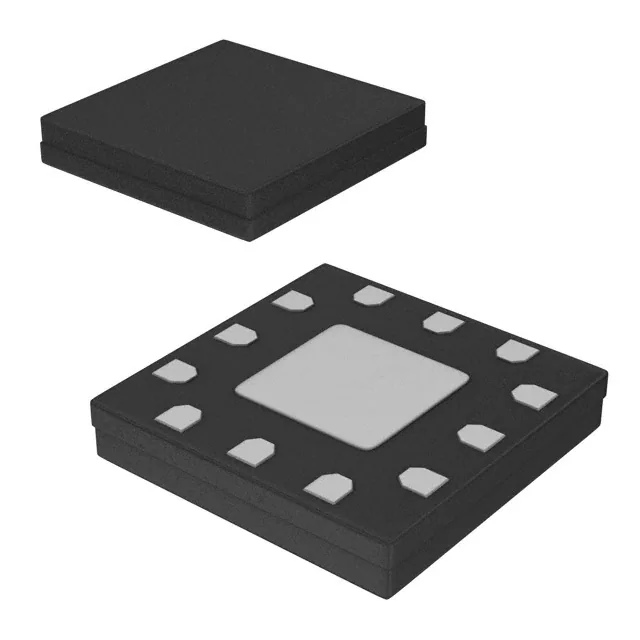
- Part No.:
- HMC553LC3BTR
- Manufacturer:
- Analog Devices Inc.
- Category:
- RF Mixers
- Package:
- 12-VFQFN Exposed Pad
- Datasheet:
-
 HMC553LC3BTR.pdf
- Description:
- IC MMIC MIXER DBL-BAL 12SMD
- Quantity:
- Payment:

- Shipping:

Inventory:3,929
Please send an inquiry. Send us your inquiry, and we will respond immediately.
Product details
Overview
HMC553LC3BTR from Analog Devices (formerly Hittite Microwave) is a GaAs MMIC double-balanced passive mixer operating from 7 to 14 GHz RF/LO and DC–5 GHz IF, delivering 7 dB typical conversion loss, 50 dB LO-to-RF isolation, and +22 dBm input IP3 - used in microwave up/downconversion for point-to-point radios and test equipment.
For engineers reviewing the HMC553LC3BTR datasheet, HMC553LC3BTR pinout, HMC553LC3BTR application, or HMC553LC3BTR equivalent, key selection criteria include its 3×3 mm ceramic SMT package, LO drive sensitivity down to +9 dBm, robust Class 1C ESD rating, and absence of external matching components.
Technical Context
The HMC553LC3BTR implements a passive double-balanced topology using integrated balun structures to achieve high LO-to-RF (50 dB typ.) and LO-to-IF (34 dB typ.) isolation across 7–14 GHz. Its GaAs MESFET process enables DC-coupled 50 Ω ports without external biasing or matching networks.
It operates as either upconverter or downconverter with fixed IF bandwidth (DC–5 GHz), supports LO drive from +9 to +15 dBm, and maintains stable conversion gain and IP3 over –40°C to +85°C ambient temperature.
Key Specifications
| Parameter | Value and Actual Design Meaning |
|---|---|
| RF/LO Frequency Range | 7–14 GHz - covers full Ku-band operation without tuning or reconfiguration. |
| IF Bandwidth | DC–5 GHz - supports baseband and wideband IF signals including zero-IF architectures. |
| Conversion Loss | 7 dB typ. - low signal attenuation enables high dynamic range receiver front-ends. |
| LO-to-RF Isolation | 50 dB typ. - minimizes LO leakage into antenna paths, easing filtering requirements. |
| Input IP3 | +22 dBm - enables handling of strong interferers in dense RF environments. |
| ESD Rating | Class 1C (1,000 V HBM) - ensures robustness during SMT assembly and field handling. |
| Package Size | 3×3 mm ceramic SMT - compact footprint compatible with high-density RF PCB layouts. |
Pinout & Package
12-lead leadless ceramic package (alumina body, gold-over-nickel plating), 3×3 mm outline, MSL3, with exposed ground paddle requiring solder connection to PCB RF ground.
| Pin/Terminal | Circuit Role | Design Meaning |
|---|---|---|
| 1, 3, 4, 6, 7, 9 | GND | RF/DC ground terminals - must be soldered to PCB ground plane for optimal isolation and thermal dissipation. |
| 2 | LO | 50 Ω DC-coupled LO input - accepts +9 to +15 dBm drive without external matching. |
| 5 | IF | DC-coupled IF output - supports DC–5 GHz; current-limited to ±2 mA for DC operation. |
| 8 | RF | 50 Ω DC-coupled RF port - bidirectional use for up/downconversion with no external components. |
| 10, 11, 12 | N/C | No-connect terminals - may be grounded without performance impact. |
Key Features
| Feature | Design Value |
|---|---|
| Passive double-balanced architecture | Eliminates DC bias circuitry and enables true differential LO/RF/IF operation with inherent common-mode rejection. |
| Integrated balun structures | Deliver 50 dB LO-to-RF isolation and suppress even-order spurs without external transformers. |
| DC-coupled 50 Ω ports | Remove need for AC coupling capacitors or impedance-matching networks at RF, LO, and IF interfaces. |
| RoHS-compliant leadless SMT package | Enables automated high-volume assembly and eliminates wire-bond reliability concerns. |
| Wide temperature operation | Specified performance maintained from –40°C to +85°C ambient, supporting outdoor and industrial deployments. |
Applications
| Point-to-Point Radios | Test & Measurement Equipment |
|---|---|
Use Scenario: High-capacity licensed microwave backhaul links operating in 7–13 GHz bands. IC Role / Device Role / Timing Role: Downconverter in receiver chain and upconverter in transmitter chain, translating between RF and intermediate frequency. Use Value: 7 dB conversion loss and +22 dBm IP3 preserve SNR and adjacent-channel selectivity under multi-tone interference. | Use Scenario: Vector network analyzers and spectrum analyzers requiring broadband RF mixing capability. IC Role / Device Role / Timing Role: Core mixer element in first IF stage, enabling swept-frequency analysis from 7–14 GHz. Use Value: DC–5 GHz IF bandwidth allows direct digitization of wide IF spans without additional downconversion stages. |
| Military Communications | Radar Sensors |
Use Scenario: Secure tactical radios and SATCOM terminals deployed in harsh environmental conditions. IC Role / Device Role / Timing Role: Frequency translation component in T/R module signal path, supporting frequency-hopping waveforms. Use Value: Class 1C ESD rating and –40°C to +85°C operation ensure reliability in field-deployed systems. | Use Scenario: Automotive and defense radar front-ends requiring compact, high-isolation mixers for FMCW operation. IC Role / Device Role / Timing Role: Quadrature mixer in I/Q receiver channel for Doppler and range processing. Use Value: 50 dB LO-to-RF isolation prevents LO feedthrough from corrupting weak echo signals in high-gain receive chains. |
Equivalent & Alternatives
The following parts are listed as comparable options for similar passive double-balanced mixer applications.
| Alternative Part | Technical Difference | Application Difference | Selection Advice |
|---|---|---|---|
| HMC1048LP3E | Wider RF/LO range (6–18 GHz), higher conversion loss (8.5 dB typ.), same 3×3 mm package. | Better suited for X/Ku-band multi-band systems requiring extended upper frequency coverage. | Select HMC1048LP3E when >14 GHz operation is required; HMC553LC3BTR offers lower loss in 7–14 GHz band. |
| QH3312 | Lower frequency range (2–12 GHz), 6.5 dB conversion loss, different 4×4 mm QFN package. | Optimized for sub-12 GHz infrastructure where smaller LO drive (+7 dBm) and tighter IF bandwidth (DC–3 GHz) are acceptable. | Choose QH3312 for cost-sensitive L/S-band designs; HMC553LC3BTR provides superior Ku-band isolation and IP3. |
Compared with HMC1048LP3E and QH3312, the HMC553LC3BTR delivers the best balance of conversion loss, LO-to-RF isolation, and Ku-band coverage in a compact 3×3 mm ceramic package - making it optimal for fixed-frequency 7–14 GHz radio and instrumentation designs.
Availability
HMC553LC3BTR is available at Aetrix Electronics and suitable for point-to-point radios, test equipment, and military communications requiring stable component supply, consistent RF performance, and long-term obsolescence management.
Supply support for HMC553LC3BTR includes scheduled delivery planning, volume procurement assistance, BOM continuity management, traceable sourcing, and lifecycle availability coordination for OEM customers, industrial embedded developers, connected-device designers, and electronics production programs.
Manufacturer
Analog Devices acquired Hittite Microwave in 2014 and integrates its high-frequency RF IC portfolio into precision analog and RF solutions for communications, defense, and instrumentation markets.
The HMC553LC3BTR belongs to Hittite's legacy GaAs MMIC mixer product line, designed specifically for high-isolation, low-loss frequency translation in Ku-band wireless infrastructure and test systems.
FAQ
What is the recommended LO drive level for optimal performance of the HMC553LC3BTR?
The HMC553LC3BTR achieves best conversion loss (7 dB typ.) and IP3 (+22 dBm) at +13 dBm LO drive. It remains functional down to +9 dBm, though conversion loss increases by ~1.5 dB. Operation above +15 dBm exceeds absolute maximum rating and risks permanent damage. The HMC553LC3BTR does not require external LO amplification in most Ku-band transceiver designs.
Can the HMC553LC3BTR be used for zero-IF (direct-conversion) receiver applications?
Yes, the HMC553LC3BTR supports zero-IF operation due to its DC–5 GHz IF bandwidth and DC-coupled IF port. However, the IF output must not source or sink more than ±2 mA DC current. For true zero-IF, external baseband amplification and DC offset cancellation circuitry are required - the HMC553LC3BTR itself provides only the RF-to-baseband translation function.
Does the HMC553LC3BTR require external matching components or bias tees?
No. The HMC553LC3BTR features fully 50 Ω matched, DC-coupled RF, LO, and IF ports fabricated in GaAs MESFET technology. No external baluns, bias tees, DC blocks, or impedance-matching networks are needed - simplifying layout and reducing bill-of-materials cost compared to discrete mixer solutions.
What is the thermal management requirement for continuous operation of the HMC553LC3BTR?
The HMC553LC3BTR has a thermal resistance of 364 °C/W (channel-to-ground paddle) and max continuous power dissipation of 178 mW at 85 °C case temperature. To maintain safe junction temperature (<150 °C), the exposed ground paddle must be soldered to a thermally robust PCB ground plane with multiple vias. Derating is 2.75 mW/°C above 85 °C ambient.
Is the HMC553LC3BTR pin-compatible with other Hittite mixer variants like HMC554LC3B?
No. Although both use the same 3×3 mm ceramic package, the HMC553LC3BTR and HMC554LC3B have different pin functions and internal topologies - the latter is a broadband active mixer with integrated LO amplifier. Substituting them requires PCB redesign. Always verify pinout and electrical interface compatibility using the official HMC553LC3BTR datasheet before design-in.
HMC553LC3BTR Specifications
- Product attributes
- Attribute value
- Manufacturer:
- Analog Devices Inc.
- Series:
- -
- Package/Case:
- 12-VFQFN Exposed Pad
- Packaging:
- Tape & Reel (TR)
- Product Status:
- Obsolete
- RF Type:
- General Purpose
- Frequency:
- 7GHz ~ 14GHz
- Number of Mixers:
- 1
- Gain:
- -
- Noise Figure:
- 8dB
- Secondary Attributes:
- Up/Down Converter
- Current - Supply:
- -
- Voltage - Supply:
- -
- Mounting Type:
- Surface Mount
- Supplier Device Package:
- 12-SMT (3x3)
HMC553LC3BTR FAQ
1.How can I place an order for HMC553LC3BTR through Aetrix?
Please submit a Request for Quotation (RFQ) for HMC553LC3BTR on Aetrix. Our sales agent will provide a competitive quotation and guide you through the order confirmation once you accept the terms.
2.Are the price and stock information for HMC553LC3BTR reliable?
The price and inventory of HMC553LC3BTR are updated periodically and may fluctuate due to market conditions. Stock and pricing data are typically refreshed every 24 hours. Quotation validity for HMC553LC3BTR is usually 5 days.
3.What payment methods are accepted for HMC553LC3BTR?
We accept Wire Transfer, PayPal, Credit Card, Western Union, MoneyGram, and Escrow for HMC553LC3BTR transactions.
Note: Certain payment methods may incur a processing fee.
4.How is shipping managed for HMC553LC3BTR?
HMC553LC3BTR orders can be shipped via leading logistics carriers, including DHL, UPS, FedEx, TNT, or Registered Mail.
Once your HMC553LC3BTR order is processed, you will receive an email with the shipment details and tracking number.
Note: Tracking information may take up to 24 hours to appear. Express delivery typically takes 3–5 business days.
5.How can I obtain technical support or documentation for HMC553LC3BTR?
For technical support, including HMC553LC3BTR datasheets, pinout diagrams, or application guidance, please contact our engineering support team. They can provide detailed documentation and assistance for your HMC553LC3BTR requirements.
6.How does Aetrix verify that HMC553LC3BTR is sourced from the original manufacturer or authorized distributors?
All HMC553LC3BTR products on Aetrix are procured from qualified distributors and authorized channels. Our dedicated quality assurance team conducts strict verification, including traceability checks and, if necessary, third-party testing. This ensures that HMC553LC3BTR meets industry standards.
7.What is the process for return or replacement of HMC553LC3BTR?
All HMC553LC3BTR units undergo pre-shipment inspection (PSI). If there is an issue with HMC553LC3BTR, returns or replacements are accepted under the following conditions:
1.Quantity discrepancies, incorrect items, or visible external defects (such as breakage or corrosion), acknowledged by Aetrix.
2.The issue is reported within 90 days of delivery.
3.The HMC553LC3BTR part is unused and in its original packaging.
Return procedure for HMC553LC3BTR:
1.Submit a request within 90 days.
2.Obtain a Return Material Authorization (RMA) from Aetrix.
HMC553LC3BTR Tags
-
MAX2671EUT+T
Analog Devices Inc./Maxim Integrated

-
ADEX-10+
Mini-Circuits
-
ADE-2+
Mini-Circuits
-
ADE-1+
Mini-Circuits
-
LT5560EDD#PBF
Analog Devices Inc.
-
LT5560EDD#TRPBF
Analog Devices Inc.

-
LTC5562IUC#TRPBF
Analog Devices Inc.
-
MAX2681EUT+T
Analog Devices Inc./Maxim Integrated
-
ADE-1ASK+
Mini-Circuits
-
ADE-1L+
Mini-Circuits
-
ADL5350ACPZ-R7
Analog Devices Inc.
-
AD608ARZ-RL
Analog Devices Inc.
Tech Hub

A practical engineering guide to 3.3V and 5V logic compatibility, input thresholds, resistor dividers, translator ICs, MOSFET level shifting, I2C pull-ups, timing limits and power-sequencing risks.

The 74HC595 uses push-pull logic outputs, while the TPIC6B595 uses 50 V open-drain DMOS sinks for higher-power loads. This guide compares timing, current limits, 3.3 V interfacing, load wiring, thermal…

The 74HC595 converts serial data into eight stable parallel outputs. This guide covers pin functions, shift and storage timing, OE and MR behavior, drive-current limits, cascading, voltage compatibilit…

A technical comparison of level-sensitive latches and edge-triggered flip-flops, covering timing windows, setup and hold limits, master–slave operation, time borrowing, race-through, HDL inference and…

A D latch stores one bit while Enable controls when data can pass. This reference covers gate-level operation, truth tables, transparency, setup and hold timing, LE versus OE, common ICs and practical …

An SR latch stores one bit through cross-coupled feedback. This engineering reference covers NOR and NAND implementations, truth tables, forbidden-state recovery, gated operation, switch debouncing, fa…

Latch circuits retain one bit through feedback. This technical reference covers SR and D latches, truth tables, transparency, timing limits, latch-versus-flip-flop behavior, applications and common log…

An engineering guide to LED driver operation, constant-current and constant-voltage outputs, linear and switching topologies, dimming, IC selection, calculations, replacement compatibility, and fault c…

Operational amplifier guide covering op amp basics, feedback, ideal vs real op amps, common configurations, buffer circuits, offset, bias current, gain-bandwidth, slew rate, rail-to-rail limits and sel…

Jumper cables guide covering safe connection order, red and black clamp placement, final ground connection, cable gauge, length, clamp quality, copper vs CCA cables, jump starter comparison and battery…


