
 My Inquiry
 My Account


Monolithic Power Systems Inc. HR1001AGS
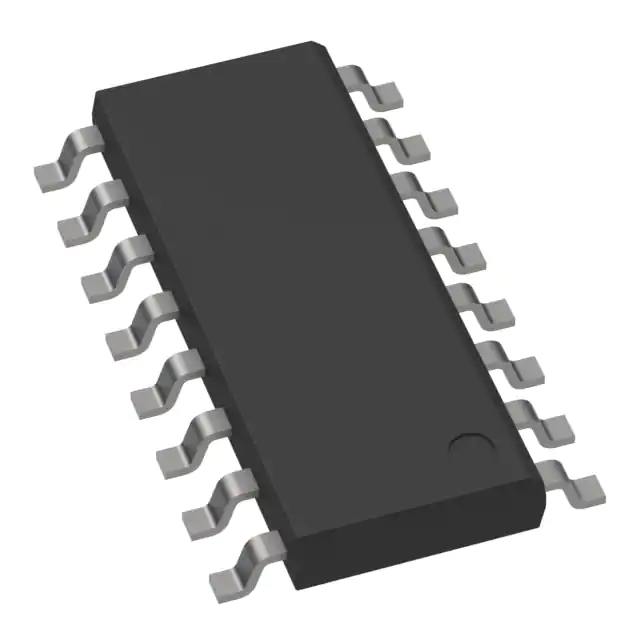
- Part No.:
- HR1001AGS
- Manufacturer:
- Monolithic Power Systems Inc.
- Category:
- Power Supply Controllers, Monitors
- Package:
- 16-SOIC (0.154", 3.90mm Width)
- Datasheet:
-
 HR1001AGS.pdf
- Description:
- IC ENHANCED LLC CONTROLLR 16SOIC
- Quantity:
- Payment:

- Shipping:

Inventory:2,783
Please send an inquiry. Send us your inquiry, and we will respond immediately.
Product details
Overview
HR1001AGS from Monolithic Power Systems is an enhanced LLC resonant half-bridge controller with adaptive dead-time adjustment (ADTA), capacitive mode protection (CMP), and two-level over-current protection (OCP) with auto-recovery. It operates up to 600 kHz, delivers 50% duty cycle control, and integrates 600 V high-side gate driver with bootstrap diode. Used in high-efficiency AC/DC SMPS for LCD TVs and telecom power supplies.
For engineers reviewing the HR1001AGS datasheet, HR1001AGS pinout, HR1001AGS application, or HR1001AGS equivalent, this page provides verified technical context, SOIC-16 package mapping, ADTA timing behavior, CMP fault response, and real-world soft-start frequency shift characteristics - all critical for resonant converter stability and ZVS optimization.
Technical Context
The HR1001AGS implements a variable-frequency, 50% duty-cycle control architecture optimized for LLC resonant converters, using CT capacitor charging/discharging modulated by FSET reference current to set fmin (60 kHz) and fmax (600 kHz). Its oscillator features valley/peak thresholds at 0.9 V and 3.8 V, enabling precise frequency regulation via external RFSET and CCT.
ADTA logic senses dv/dt at SW through HBVS pin using a 5 pF capacitor, dynamically adjusting dead time between 235 ns (min) and 1 µs (max) to maintain zero-voltage switching across load and line variations. CMP monitors CS polarity transitions relative to ±50–131 mV thresholds to block gate drive during capacitive-mode conditions, preventing shoot-through under short-circuit or severe overload.
Key Specifications
| Parameter | Value and Actual Design Meaning |
|---|---|
| Max switching frequency | 600 kHz - enables compact magnetics and high-power-density designs in telecom and server SMPS |
| Oscillator duty cycle | 47–53% - ensures symmetrical half-bridge drive for balanced transformer flux and reduced EMI |
| ADTA dead-time range | 235 ns to 1 µs - adapts to MOSFET transition speed and Lm variation to sustain ZVS across light-to-full load |
| Capacitive mode detection threshold | ±50–131 mV on CS - triggers CMP before body-diode conduction leads to destructive shoot-through |
| Two-level OCP response | Frequency-shift (0.78 V) then latch-off (1.5 V) - limits peak primary current during overload while enabling auto-recovery |
| Brown-in/out threshold | VBO-ON = 2.4 V, VBO-OFF = 1.81 V - provides clean startup/shutdown sequencing aligned with bulk DC input rails |
| High-side driver rating | 600 V BST/SW rating with 0.74 A source / 0.87 A sink - supports fast, robust driving of 600 V GaN or Si MOSFETs |
Pinout & Package
HR1001AGS is housed in a SOIC-16 package with creepage-enhanced layout: Pin 13 (NC) serves as high-voltage spacer between SW (Pin 14) and HG (Pin 15); GND (Pin 10) separates signal and pulsed current return paths per layout best practice.
| Pin/Terminal | Circuit Role | Design Meaning |
|---|---|---|
| 1 SS | Soft-start timing node | External RC network sets initial max frequency and exponential decay profile; internal discharge guarantees safe restart after fault |
| 2 TIMER | OCP duration timer | 130 µA charge current + external RC defines 52 µs CMP delay and 3.5 V shutdown threshold for controlled burst-mode recovery |
| 3 CT | Oscillator timing capacitor | Charged/discharged between 0.9 V and 3.8 V by FSET-programmed current; determines switching frequency with ±2% accuracy |
| 4 FSET | Frequency set reference | 2.0 V precision reference drives external resistor to set min/max frequency; interfaces directly with optocoupler feedback loop |
| 5 BURST | Burst-mode enable | 1.23 V threshold with 30 mV hysteresis disables switching below light-load threshold, reducing Iq to 1.42 mA |
| 6 CS | Current sense input | Dual-threshold comparator (0.78 V OCP, ±50–131 mV CMP) detects primary current polarity and magnitude for protection and ZVS enforcement |
| 7 BO | Line voltage monitor | 2.4 V brown-in / 1.81 V brown-out thresholds ensure stable operation only within valid bulk DC input range |
| 8 LATCH | External shutdown | 1.85 V threshold latches off IC with <420 µA residual current; reset only via VCC UVLO discharge |
| 9 HBVS | dv/dt sensing node | Connects 5 pF capacitor to SW to generate current proportional to dV/dt; enables adaptive dead-time without external logic |
| 10 GND | Signal and power ground | Common return for low-side driver and bias circuitry; requires separate trace routing for pulsed vs. signal currents |
| 11 LG | Low-side gate driver | 0.75 A source / 0.87 A sink peak current with 30 ns rise/fall; referenced to GND for synchronous half-bridge lower switch |
| 12 VCC | Supply input | 13–15.5 V operating range powers IC bias and LG driver; internal clamp at 16.5 V protects against transient overvoltage |
| 13 NC | No-connect spacer | Electrically isolated pin improves creepage distance between SW and HG for reinforced isolation compliance |
| 14 SW | High-side switch source | Return path for high-side gate drive current; requires low-inductance layout to minimize ringing and false CMP triggering |
| 15 HG | High-side floating gate driver | 0.74 A source / 0.87 A sink referenced to SW; integrated bootstrap diode charges BST capacitor in-phase with LG drive |
| 16 BST | Bootstrap supply | Connects to SW via 0.1 µF ceramic capacitor; internal diode enables self-biasing of HG without external charge pump |
Key Features
| Feature | Design Value |
|---|---|
| Adaptive dead-time adjustment (ADTA) | Real-time dv/dt sensing via HBVS eliminates fixed-timing guesswork, ensuring ZVS across wide load and temperature ranges |
| Capacitive mode protection (CMP) | Hardware-based CS polarity detection blocks HG/LG turn-on during capacitive resonance, preventing MOSFET failure under short-circuit |
| Two-level over-current protection | Frequency-shift (0.78 V) followed by latch-off (1.5 V) enables graceful overload handling with programmable recovery timing |
| Non-linear soft-start | Exponential frequency decay from fstart ≥ 4×fmin prevents inrush current while maintaining monotonic VOUT rise |
| 600 V high-side gate driver | Integrated bootstrap diode and 600 V-rated BST/SW pins simplify high-voltage half-bridge design without external level shifters |
Applications
| LCD/PDP TV Power Supply | Telecom AC/DC SMPS |
|---|---|
|
Use Scenario: 24 V/100 W standby-capable main power stage for flat-panel display with dynamic backlight dimming. IC Role / Device Role / Timing Role: LLC controller enforcing ZVS across 10–100% load via ADTA and CMP, regulating output with optocoupler-coupled FSET feedback. Use Value: Enables >94% efficiency at full load and <0.3 W no-load consumption via burst-mode and soft-start, meeting Energy Star 7.0. |
Use Scenario: 48 V/300 W front-end rectifier and LLC resonant converter in telecom shelf power system. IC Role / Device Role / Timing Role: Primary-side controller managing 600 kHz variable-frequency operation, BO-sensed brown-in/out, and dual OCP levels for N+1 redundancy. Use Value: Delivers tight output regulation (±1%) across -40°C to +85°C ambient with minimal external components, reducing BOM count by 30% vs. discrete solutions. |
| Desktop PC ATX PSU | Open-Frame Server SMPS |
|
Use Scenario: +12 V rail generation in 80 PLUS Gold-certified ATX power supply with active PFC front-end. IC Role / Device Role / Timing Role: Resonant half-bridge controller coordinating with PFC IC via shared VCC sequencing and BO monitoring. Use Value: Achieves <150 mV output ripple and <20 µs OCP response time using integrated CS comparator and TIMER-based fault holdoff. |
Use Scenario: 12 V/500 W redundant power module for AI accelerator rack with remote ON/OFF and thermal derating. IC Role / Device Role / Timing Role: Core LLC timing and protection engine with LATCH input for system-level shutdown and OTP-triggered thermal foldback. Use Value: Supports hot-swap capability and lifecycle continuity via SOIC-16 package compatibility and AEC-Q200-aligned stress margins. |
Equivalent & Alternatives
The following parts are listed as comparable options for similar LLC controller applications.
| Alternative Part | Technical Difference | Application Difference | Selection Advice |
|---|---|---|---|
| UCC256301DR | Fixed 500 kHz max frequency; no ADTA; uses external dead-time resistor; 100 V VSW rating | Requires manual dead-time tuning; limited to <400 V bus; lacks CMP hardware | Prefer when cost sensitivity outweighs ZVS robustness and high-voltage operation is not required |
| ICE2HS01G | Fixed 500 kHz oscillator; no burst mode; analog PWM control instead of variable-frequency LLC; 650 V rating | Designed for hard-switched half-bridge, not resonant LLC; no soft-start or CMP | Choose only for legacy hard-switched topologies where resonant control is not implemented |
Compared with UCC256301DR and ICE2HS01G, HR1001AGS uniquely combines adaptive dead-time, capacitive mode protection, and 600 kHz variable-frequency control in a single SOIC-16 package - enabling higher efficiency, smaller magnetics, and intrinsic fault resilience in modern LLC designs.
Availability
HR1001AGS is available at Aetrix Electronics and suitable for LCD TV power supplies, telecom AC/DC SMPS, and open-frame server PSUs requiring stable component supply, long-term lifecycle support, and RoHS-compliant packaging.
Supply support for HR1001AGS includes scheduled delivery planning, volume procurement assistance, BOM continuity management, traceable sourcing, and lifecycle availability coordination for OEM customers, industrial embedded developers, connected-device designers, and electronics production programs.
Manufacturer
Monolithic Power Systems (MPS) is a fabless semiconductor company specializing in high-performance analog and power ICs, with design centers in the US, China, and Taiwan.
The HR1001AGS belongs to MPS's LLC Resonant Controller product line, engineered specifically for high-efficiency, high-power-density AC/DC conversion in consumer, computing, and communications infrastructure.
FAQ
What is the minimum recommended CT capacitor value for stable operation?
The datasheet specifies CT capacitance between 0.1 nF and 1 nF, with ≤330 pF recommended for optimal temperature stability. At 470 pF (typical evaluation condition), oscillator accuracy remains within ±2% across –40°C to +125°C junction temperature, avoiding frequency drift-induced regulation errors.
How does the HR1001AGS implement capacitive mode protection without external comparators?
HR1001AGS embeds dual internal comparators on the CS pin that reference ±50–131 mV thresholds. When LG turns off, CS is compared to VCSNR (–50 to –131 mV); when HG turns off, it compares to VCSPR (+50 to +131 mV). If polarity mismatch occurs, gate drive is blocked for 52 µs before re-evaluation - all handled in hardware with no external components.
Can the HR1001AGS operate without connecting the HBVS pin?
Yes - if HBVS is left unconnected or tied to GND, ADTA disables and dead time defaults to a fixed 350 ns. While functional, this eliminates ZVS assurance at light load and increases risk of hard switching; MPS strongly recommends using the 5 pF HBVS capacitor for full performance.
What is the purpose of the NC pin (Pin 13) in the SOIC-16 package?
Pin 13 is a no-connect spacer designed to increase creepage distance between high-voltage SW (Pin 14) and HG (Pin 15). It has no internal connection and must remain unconnected on PCB to meet reinforced isolation requirements per IEC 60950-1 and UL 62368-1 standards.
How does the two-level OCP function differ from standard current limiting?
Level 1 OCP (VCS = 0.78 V) initiates frequency shift to limit power throughput without interrupting operation; Level 2 OCP (VCS = 1.5 V) triggers immediate shutdown with TIMER-based auto-recovery. This staged response prevents nuisance tripping during transient overloads while guaranteeing safety under sustained faults.
Is burst-mode operation compatible with continuous conduction mode (CCM) PFC front-ends?
Yes - burst mode activates only on the LLC stage (via BURST pin voltage <1.23 V) and does not interfere with upstream CCM PFC controllers. The HR1001AGS maintains regulated VCC and BO monitoring during burst intervals, ensuring seamless re-synchronization when load increases.
What thermal derating applies above 25°C ambient?
With θJA = 80°C/W on a 4-layer JEDEC PCB, maximum continuous power dissipation drops linearly: PDMAX = (150°C − TA) / 80°C/W. At 70°C ambient, PDMAX = 1.0 W; thermal shutdown engages at 150°C junction, recovering at 120°C - confirmed by characterization data on page 7.
HR1001AGS Specifications
- Product attributes
- Attribute value
- Manufacturer:
- Monolithic Power Systems Inc.
- Series:
- -
- Package/Case:
- 16-SOIC (0.154", 3.90mm Width)
- Packaging:
- Tube
- Product Status:
- Active
- Programmable:
- -
- Applications:
- Flyback, Forward Converters, LLC
- Voltage - Input:
- -0.3V ~ 6V
- Voltage - Supply:
- 13V ~ 15.5V
- Current - Supply:
- 3 mA
- Operating Temperature:
- -40°C ~ 125°C (TJ)
- Grade:
- -
- Qualification:
- -
- Mounting Type:
- Surface Mount
- Supplier Device Package:
- 16-SOIC
HR1001AGS FAQ
1.How can I place an order for HR1001AGS through Aetrix?
Please submit a Request for Quotation (RFQ) for HR1001AGS on Aetrix. Our sales agent will provide a competitive quotation and guide you through the order confirmation once you accept the terms.
2.Are the price and stock information for HR1001AGS reliable?
The price and inventory of HR1001AGS are updated periodically and may fluctuate due to market conditions. Stock and pricing data are typically refreshed every 24 hours. Quotation validity for HR1001AGS is usually 5 days.
3.What payment methods are accepted for HR1001AGS?
We accept Wire Transfer, PayPal, Credit Card, Western Union, MoneyGram, and Escrow for HR1001AGS transactions.
Note: Certain payment methods may incur a processing fee.
4.How is shipping managed for HR1001AGS?
HR1001AGS orders can be shipped via leading logistics carriers, including DHL, UPS, FedEx, TNT, or Registered Mail.
Once your HR1001AGS order is processed, you will receive an email with the shipment details and tracking number.
Note: Tracking information may take up to 24 hours to appear. Express delivery typically takes 3–5 business days.
5.How can I obtain technical support or documentation for HR1001AGS?
For technical support, including HR1001AGS datasheets, pinout diagrams, or application guidance, please contact our engineering support team. They can provide detailed documentation and assistance for your HR1001AGS requirements.
6.How does Aetrix verify that HR1001AGS is sourced from the original manufacturer or authorized distributors?
All HR1001AGS products on Aetrix are procured from qualified distributors and authorized channels. Our dedicated quality assurance team conducts strict verification, including traceability checks and, if necessary, third-party testing. This ensures that HR1001AGS meets industry standards.
7.What is the process for return or replacement of HR1001AGS?
All HR1001AGS units undergo pre-shipment inspection (PSI). If there is an issue with HR1001AGS, returns or replacements are accepted under the following conditions:
1.Quantity discrepancies, incorrect items, or visible external defects (such as breakage or corrosion), acknowledged by Aetrix.
2.The issue is reported within 90 days of delivery.
3.The HR1001AGS part is unused and in its original packaging.
Return procedure for HR1001AGS:
1.Submit a request within 90 days.
2.Obtain a Return Material Authorization (RMA) from Aetrix.
HR1001AGS Tags

-
UC3845AD8TR
Texas Instruments
-
UC2843AD8TR
Texas Instruments

-
LM3880MFX-1AE/NOPB
Texas Instruments
-
LM3880MFX-1AA/NOPB
Texas Instruments
-
INA234AIYBJR
Texas Instruments

-
INA700AYWFR
Texas Instruments
-
LM3880MF-1AE/NOPB
Texas Instruments
-
LM3880MF-1AA/NOPB
Texas Instruments
-
LM3881MM/NOPB
Texas Instruments
-
UCC2802DTR
Texas Instruments
-
NCP4305DMTTWG
onsemi
-
INA237AIDGSR
Texas Instruments
Tech Hub

An engineering guide to LED driver operation, constant-current and constant-voltage outputs, linear and switching topologies, dimming, IC selection, calculations, replacement compatibility, and fault c…

Operational amplifier guide covering op amp basics, feedback, ideal vs real op amps, common configurations, buffer circuits, offset, bias current, gain-bandwidth, slew rate, rail-to-rail limits and sel…

Jumper cables guide covering safe connection order, red and black clamp placement, final ground connection, cable gauge, length, clamp quality, copper vs CCA cables, jump starter comparison and battery…

LDO regulator guide covering low dropout voltage, power dissipation, thermal design, PSRR, output noise, capacitor stability, adjustable LDO circuits, LDO vs buck converter and datasheet selection chec…

Conditional Access Module guide covering CAM meaning, CI/CI+ interface, smart card authorization, DVB security workflow, TV and set-top box compatibility, internal electronics, ESD protection, connecto…

Guide to electronic component obsolescence covering EOL risk, PCN/PDN notices, last-time buy planning, replacement options, form-fit-function validation, counterfeit risk and BOM lifecycle management.

18650 battery guide covering lithium-ion cell basics, 3.6V/3.7V voltage, 4.2V charging, mAh and Wh capacity, protected cells, chargers, BMS, series-parallel packs, holders, welding and sourcing checks.…

Hall effect sensor guide covering working principle, linear and digital sensors, Arduino circuits, current sensing, speed detection, automotive applications, A3144 examples, signal filtering and datash…

Product Change Notification guide for electronic components, covering PCN meaning, PCN vs PDN/EOL, common change types, risk levels, form-fit-function review, engineering validation, BOM control, LTB/L…

A practical guide to blend door actuators, covering HVAC function, symptoms, location, AC and heater issues, reset and calibration, replacement cost, electrical diagnosis, compatibility checks, and rep…


