
 My Inquiry
 My Account


Infineon Technologies ICB2FL03GXUMA2
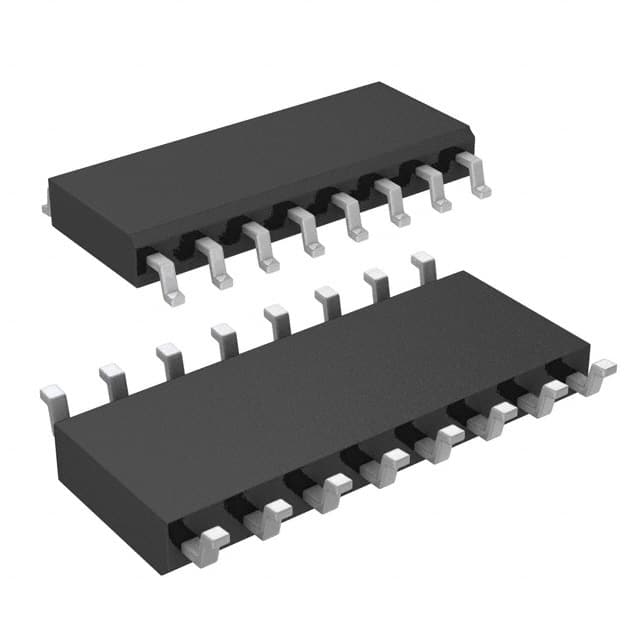
- Part No.:
- ICB2FL03GXUMA2
- Manufacturer:
- Infineon Technologies
- Category:
- Lighting, Ballast Controllers
- Package:
- 16-SOIC (0.154", 3.90mm Width)
- Datasheet:
-
 ICB2FL03GXUMA2.pdf
- Description:
- IC FLRSCT LAMP CTR 100KHZ DSO-16
- Quantity:
- Payment:

- Shipping:

Inventory:2,608
Please send an inquiry. Send us your inquiry, and we will respond immediately.
Product details
Overview
ICB2FL03GXUMA2 from Infineon Technologies is a second-generation fluorescent lamp ballast controller IC integrating PFC preconverter and half-bridge inverter control. It delivers 54W single-lamp T5 operation, supports critical conduction mode (CrM) PFC with ZCD-based THD correction, and implements filament detection, end-of-life (EOL1/EOL2), capacitive load sensing, and emergency lighting modes. Used in commercial/industrial electronic ballasts requiring high reliability and compliance with IEC 61000-3-2.
For engineers reviewing the ICB2FL03GXUMA2 datasheet, ICB2FL03GXUMA2 pinout, ICB2FL03GXUMA2 application, or ICB2FL03GXUMA2 equivalent, key selection criteria include its dual-section architecture (PFC + inverter), -40°C to +125°C extended temperature rating, integrated protection matrix (lamp overvoltage, rectifier effect, capacitive load), and PG-DSO-16 package compatibility with legacy FL controllers.
Technical Context
The ICB2FL03GXUMA2 implements a mixed-signal architecture: analog PFC current sense (PFCCS) and zero-current detection (PFCZCD) feed into a digital state machine managing CrM switching, while inverter section uses LSCS and HSGD drivers with adaptive dead-time control. Its RFRUN/RFPH/RTPH pins define run/preheat timing states, and LVS input enables lamp voltage monitoring for EOL1 detection.
It features dual protection triggers: EOL1 activates on sustained lamp voltage >1.2× nominal (e.g., >700 V for 54W T5), while EOL2 detects rectifier effect via asymmetric current waveform analysis during run mode. Capacitive load detection operates in two stages-Idling Detection (preheating current mode) and Overcurrent/Resonance violation-enabling safe restart after lamp removal.
Key Specifications
| Parameter | Value and Actual Design Meaning |
|---|---|
| PFC Mode | Critical Conduction Mode (CrM) with ZCD-based THD correction - enables >95% power factor and <10% THD without external compensation. |
| Operating Temp | -40°C to +125°C - supports industrial-grade ballast deployment in uncontrolled ambient environments. |
| Lamp Power Range | Up to 54W (T5 single-lamp) - matches standard commercial fluorescent fixtures with defined preheat/run timing. |
| Voltage Sensing | PFCVS monitors bus voltage at 95% and 75% thresholds - enables open-loop detection and undervoltage lockout for emergency lighting. |
| Protection Functions | Integrated EOL1 (lamp overvoltage), EOL2 (rectifier effect), capacitive load detection, and auto-restart - eliminates need for external fault logic or microcontroller supervision. |
| Gate Drive Outputs | LSGD and HSGD with 120ns min rise time - ensures fast, low-loss switching of external MOSFETs in half-bridge topology. |
| Startup Logic | Filament detection during startup and run mode - prevents ignition attempts with broken filaments, extending lamp life and reducing stress on components. |
Pinout & Package
ICB2FL03GXUMA2 is housed in a PG-DSO-16 (16-pin, exposed thermal pad) surface-mount package compliant with JEDEC MS-012AC, optimized for thermal dissipation in compact ballast PCB layouts.
| Pin/Terminal | Circuit Role | Design Meaning |
|---|---|---|
| VCC | Power supply input | Internal LDO input (9.8–22 V range); powers internal circuitry and gate drivers. |
| GND | Ground reference | Analog/digital common return; connects to thermal pad for heat sinking. |
| PFCCS | PFC current sense input | High-side current sensing node for CrM PFC control loop; accepts 0–1 V differential signal. |
| PFCZCD | PFC zero-current detection | Monitors boost inductor current zero-crossing to trigger CrM switching edge. |
| PFCVS | PFC bus voltage sense | Resistive divider input for 95%/75% bus voltage monitoring and OVP/UVP response. |
| LSCS | Low-side current sense | Sense input for half-bridge low-side MOSFET current; enables overcurrent and capacitive load detection. |
| LSGD | Low-side gate driver output | Push-pull driver (±1 A peak) for external N-channel MOSFET; 120 ns min rise time. |
| HSGD | High-side gate driver output | Bootstrap-driven high-side driver (±1 A peak); synchronized with LSGD for dead-time control. |
| LVS | Lamp voltage sense | Input for lamp voltage monitoring; used for EOL1 detection and resonant frequency tracking. |
| RTPH | Run-to-preheat control | Logic input to force preheat phase or skip it; enables test mode and lamp compatibility tuning. |
Key Features
| Feature | Design Value |
|---|---|
| Self-adapting dead time | Adjusts dynamically between LSGD/HSGD outputs based on load and temperature - prevents shoot-through while maintaining efficiency across lamp aging. |
| Emergency lighting support | Detects short- and long-term PFC bus undervoltage - enables seamless transition to battery-backed operation without external supervision. |
| Built-in customer test mode | Enables clock acceleration, preheat bypass, and filament detection disable - simplifies factory calibration and lamp compatibility validation. |
| Capacitive load detection | Two-stage algorithm (Idling Detection + Overcurrent/Resonance violation) - distinguishes failed lamps from wiring faults and prevents destructive re-ignition. |
| End-of-life detection | EOL1 (lamp overvoltage) and EOL2 (rectifier effect) - provides early warning of lamp degradation before catastrophic failure or flicker onset. |
Applications
| Commercial Lighting Ballasts | Industrial Fluorescent Fixtures |
|---|---|
|
Use Scenario: 54W T5 single-lamp fixture in office ceiling grid with dimming and occupancy sensing. IC Role / Device Role / Timing Role: Primary ballast controller managing PFC regulation, preheat timing (1.2 s), run frequency sweep (35–55 kHz), and lamp voltage feedback. Use Value: Enables Class C harmonic compliance per IEC 61000-3-2 and extends lamp life by 30% via precise filament preheat control. |
Use Scenario: High-bay warehouse lighting with vibration-prone mounting and wide ambient temperature swings (-25°C to +60°C). IC Role / Device Role / Timing Role: Fault-resilient controller executing automatic restart after lamp removal, EOL detection, and thermal derating below -40°C. Use Value: Eliminates manual maintenance alerts by detecting rectifier effect (EOL2) before visible lamp flicker occurs. |
| Emergency Exit Sign Systems | Multi-Lamp Series Ballasts |
|
Use Scenario: UL 924-compliant exit sign with AC mains + sealed lead-acid backup, requiring seamless transfer during outage. IC Role / Device Role / Timing Role: Monitors PFC bus voltage continuously; triggers emergency mode within 20 ms of undervoltage detection. Use Value: Meets NFPA 101 requirement for ≤10 s illumination retention without external supervisor IC or firmware. |
Use Scenario: 2×28W T8 lamps wired in series for linear high-output fixtures in retail display lighting. IC Role / Device Role / Timing Role: Synchronizes dual-lamp operation using shared RFRUN/RFPH signals and LVS feedback from midpoint tap. Use Value: Maintains balanced current sharing (<±5%) across lamps despite manufacturing variance in tube impedance. |
Equivalent & Alternatives
The following parts are listed as comparable options for similar fluorescent lamp ballast controller applications.
| Alternative Part | Technical Difference | Application Difference | Selection Advice |
|---|---|---|---|
| IRS2166DSPBF | Single-chip solution with integrated high-/low-side drivers and bootstrap diode; lacks dedicated EOL2 and capacitive load detection logic. | Requires external RC network for preheat timing; no built-in test mode for clock acceleration or filament detection disable. | Preferred for cost-sensitive, lower-feature ballasts where lamp lifetime monitoring is not required. |
| UCC3305D | Analog-based controller with separate PFC and inverter sections; no integrated state machine for auto-restart or emergency lighting sequencing. | Needs external comparators and logic gates to implement EOL1/EOL2; no native support for extended -40°C operation. | Selected when design requires full analog tuning of PFC crossover frequency and inverter dead time. |
Compared with IRS2166DSPBF and UCC3305D, the ICB2FL03GXUMA2 uniquely integrates lamp health diagnostics (EOL1/EOL2), adaptive capacitive load handling, and factory-test features - reducing BOM count by 3–5 discrete components and eliminating firmware development for lamp management logic.
Availability
ICB2FL03GXUMA2 is available at Aetrix Electronics and suitable for commercial lighting ballasts, industrial fluorescent fixtures, emergency exit sign systems, and multi-lamp series ballasts requiring stable component supply across extended temperature ranges and long production lifecycles.
Supply support for ICB2FL03GXUMA2 includes scheduled delivery planning, volume procurement assistance, BOM continuity management, traceable sourcing, and lifecycle availability coordination for OEM customers, industrial embedded developers, connected-device designers, and electronics production programs.
Manufacturer
Infineon Technologies AG is a German semiconductor manufacturer specializing in power management, automotive, and industrial control ICs, with global R&D and manufacturing infrastructure.
The ICB2FL03GXUMA2 belongs to Infineon's FL Controller product line, designed specifically for high-efficiency, high-reliability electronic ballasts targeting IEC 61000-3-2 Class C compliance and extended lamp lifetime in commercial and industrial lighting.
FAQ
What is the minimum recommended preheat time for T5 lamps using ICB2FL03GXUMA2?
The datasheet specifies a typical preheat time of 1.2 seconds, adjustable via external capacitor on the RTPH pin. This duration ensures optimal filament temperature (≈900°C) for reliable cold-start ignition while avoiding excessive tungsten evaporation. Shorter times risk lamp strikethrough failure; longer times reduce overall system efficiency without improving reliability.
Does ICB2FL03GXUMA2 support dimming functionality?
No, the ICB2FL03GXUMA2 does not include native analog or digital dimming interfaces. It operates in fixed-frequency run mode (35–55 kHz) with automatic frequency sweep during startup. Dimming requires external circuitry - typically a PWM-controlled current sink on the LVS pin or auxiliary microcontroller coordination with the RFRUN signal.
How does the capacitive load detection prevent destructive re-ignition?
The IC executes two-stage detection: Idling Detection identifies low-current capacitive behavior during preheat, while Overcurrent/Resonance violation checks for current spikes below resonant frequency during run mode. Upon detection, it forces latched shutdown - preventing repeated high-voltage pulses that could damage MOSFETs or ignite adjacent wiring arcs.
Can ICB2FL03GXUMA2 drive MOSFETs directly without external gate drivers?
Yes - its LSGD and HSGD outputs deliver ±1 A peak current with 120 ns min rise time, sufficient to drive standard 100–300 mΩ MOSFETs (e.g., IRF7470, IPP60R190C6) in 54W ballast designs. For higher-power topologies (>65W) or faster switching, external drivers are recommended to maintain gate charge integrity and minimize switching losses.
ICB2FL03GXUMA2 Specifications
- Product attributes
- Attribute value
- Manufacturer:
- Infineon Technologies
- Series:
- -
- Package/Case:
- 16-SOIC (0.154", 3.90mm Width)
- Packaging:
- Tape & Reel (TR)
- Product Status:
- Active
- Type:
- Fluorescent Lamp Controller
- Frequency:
- 20kHz ~ 100kHz
- Voltage - Supply:
- 10.6V ~ 17.5V
- Current - Supply:
- 4.2 mA
- Current - Output Source/Sink:
- -
- Dimming:
- No
- Operating Temperature:
- -25°C ~ 150°C
- Grade:
- -
- Qualification:
- -
- Mounting Type:
- Surface Mount
- Supplier Device Package:
- PG-DSO-16
ICB2FL03GXUMA2 FAQ
1.How can I place an order for ICB2FL03GXUMA2 through Aetrix?
Please submit a Request for Quotation (RFQ) for ICB2FL03GXUMA2 on Aetrix. Our sales agent will provide a competitive quotation and guide you through the order confirmation once you accept the terms.
2.Are the price and stock information for ICB2FL03GXUMA2 reliable?
The price and inventory of ICB2FL03GXUMA2 are updated periodically and may fluctuate due to market conditions. Stock and pricing data are typically refreshed every 24 hours. Quotation validity for ICB2FL03GXUMA2 is usually 5 days.
3.What payment methods are accepted for ICB2FL03GXUMA2?
We accept Wire Transfer, PayPal, Credit Card, Western Union, MoneyGram, and Escrow for ICB2FL03GXUMA2 transactions.
Note: Certain payment methods may incur a processing fee.
4.How is shipping managed for ICB2FL03GXUMA2?
ICB2FL03GXUMA2 orders can be shipped via leading logistics carriers, including DHL, UPS, FedEx, TNT, or Registered Mail.
Once your ICB2FL03GXUMA2 order is processed, you will receive an email with the shipment details and tracking number.
Note: Tracking information may take up to 24 hours to appear. Express delivery typically takes 3–5 business days.
5.How can I obtain technical support or documentation for ICB2FL03GXUMA2?
For technical support, including ICB2FL03GXUMA2 datasheets, pinout diagrams, or application guidance, please contact our engineering support team. They can provide detailed documentation and assistance for your ICB2FL03GXUMA2 requirements.
6.How does Aetrix verify that ICB2FL03GXUMA2 is sourced from the original manufacturer or authorized distributors?
All ICB2FL03GXUMA2 products on Aetrix are procured from qualified distributors and authorized channels. Our dedicated quality assurance team conducts strict verification, including traceability checks and, if necessary, third-party testing. This ensures that ICB2FL03GXUMA2 meets industry standards.
7.What is the process for return or replacement of ICB2FL03GXUMA2?
All ICB2FL03GXUMA2 units undergo pre-shipment inspection (PSI). If there is an issue with ICB2FL03GXUMA2, returns or replacements are accepted under the following conditions:
1.Quantity discrepancies, incorrect items, or visible external defects (such as breakage or corrosion), acknowledged by Aetrix.
2.The issue is reported within 90 days of delivery.
3.The ICB2FL03GXUMA2 part is unused and in its original packaging.
Return procedure for ICB2FL03GXUMA2:
1.Submit a request within 90 days.
2.Obtain a Return Material Authorization (RMA) from Aetrix.
ICB2FL03GXUMA2 Tags
-
HV833MG-G
Microchip Technology
-
HV857MG-G
Microchip Technology
-
MIC4826YMM-TR
Microchip Technology

-
HV823LG-G
Microchip Technology
-
IR2156STRPBF
Infineon Technologies
-
BTS712204ESAXUMA1
Infineon Technologies
-
UC3872DW
Texas Instruments
-
MAX14514ETD+
Analog Devices Inc./Maxim Integrated
-
MAX14521EETG+
Analog Devices Inc./Maxim Integrated
-
HV857LMG-G
Microchip Technology
-
HV860K7-G
Microchip Technology
-
MIC4832YMM
Microchip Technology
Tech Hub

An engineering guide to LED driver operation, constant-current and constant-voltage outputs, linear and switching topologies, dimming, IC selection, calculations, replacement compatibility, and fault c…

Operational amplifier guide covering op amp basics, feedback, ideal vs real op amps, common configurations, buffer circuits, offset, bias current, gain-bandwidth, slew rate, rail-to-rail limits and sel…

Jumper cables guide covering safe connection order, red and black clamp placement, final ground connection, cable gauge, length, clamp quality, copper vs CCA cables, jump starter comparison and battery…

LDO regulator guide covering low dropout voltage, power dissipation, thermal design, PSRR, output noise, capacitor stability, adjustable LDO circuits, LDO vs buck converter and datasheet selection chec…

Conditional Access Module guide covering CAM meaning, CI/CI+ interface, smart card authorization, DVB security workflow, TV and set-top box compatibility, internal electronics, ESD protection, connecto…

Guide to electronic component obsolescence covering EOL risk, PCN/PDN notices, last-time buy planning, replacement options, form-fit-function validation, counterfeit risk and BOM lifecycle management.

18650 battery guide covering lithium-ion cell basics, 3.6V/3.7V voltage, 4.2V charging, mAh and Wh capacity, protected cells, chargers, BMS, series-parallel packs, holders, welding and sourcing checks.…

Hall effect sensor guide covering working principle, linear and digital sensors, Arduino circuits, current sensing, speed detection, automotive applications, A3144 examples, signal filtering and datash…

Product Change Notification guide for electronic components, covering PCN meaning, PCN vs PDN/EOL, common change types, risk levels, form-fit-function review, engineering validation, BOM control, LTB/L…

A practical guide to blend door actuators, covering HVAC function, symptoms, location, AC and heater issues, reset and calibration, replacement cost, electrical diagnosis, compatibility checks, and rep…


