
 My Inquiry
 My Account


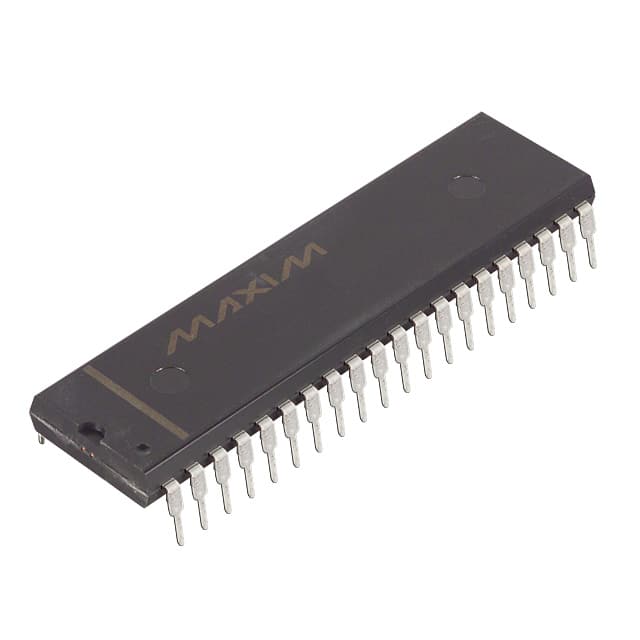
Renesas ICM7211AMIPL
- Part No.:
- ICM7211AMIPL
- Manufacturer:
- Renesas
- Category:
- Display Drivers
- Package:
- 40-DIP (0.600", 15.24mm)
- Datasheet:
-
 ICM7211AMIPL.pdf
- Description:
- IC DRVR 7 SEGMENT 4 DIGIT 40DIP
- Quantity:
- Payment:

- Shipping:

Inventory:4,833
Please send an inquiry. Send us your inquiry, and we will respond immediately.
Product details
Overview
ICM7211AMIPL from Intersil is a non-multiplexed 4-digit, 7-segment LCD display decoder-driver IC with integrated RC oscillator, backplane driver, and 28 segment outputs. It operates from 3V to 6V, draws as low as 10µA (typ) in blank mode, and delivers 150Hz backplane frequency at 5V - designed for microprocessor-controlled alphanumeric displays in industrial instrumentation and embedded front panels.
For engineers reviewing the ICM7211AMIPL datasheet, ICM7211AMIPL pinout, ICM7211AMIPL application, or ICM7211AMIPL equivalent, this device offers direct microprocessor interface via Chip Select–controlled latches, Code B decoding (0–9, dash, E, H, L, P, blank), and synchronized multi-device backplane chaining - critical for cost-sensitive, low-power LCD systems requiring minimal CPU overhead.
Technical Context
The ICM7211AMIPL implements a self-timed architecture with an internal 19kHz free-running RC oscillator divided by 128 to generate a precise 150Hz backplane signal. Its four independent 7-segment output drivers are CMOS-based with matched N/P channel ratios to eliminate DC bias and maximize LCD lifetime.
It uses dual Chip Select inputs (CS1/CS2) to latch 4-bit binary data (B0–B3) and 2-bit digit address (DA1/DA2) on simultaneous low assertion, then decodes and updates selected digit output latches on either CS rising edge - enabling high-speed, non-blocking display updates without ROM-intensive software decoding.
Key Specifications
| Parameter | Value and Actual Design Meaning |
|---|---|
| Display Type | Non-multiplexed 4-digit, 7-segment LCD - eliminates flicker and timing complexity of multiplexed drives. |
| Supply Voltage Range | 3V to 6V - supports single-supply operation across industrial and battery-backed systems. |
| Operating Current (blank) | 10µA typical - enables ultra-low-power standby in portable or energy-harvested devices. |
| Oscillator Frequency | 19kHz (free-running) - sets base timing for stable 150Hz backplane without external crystal. |
| Backplane Frequency | 150Hz - optimized for standard character LCDs; adjustable via OSC pin capacitor. |
| Input Logic Levels | VIH ≥ 4V, VIL ≤ 1V - ensures robust noise margin with TTL/CMOS microcontrollers. |
| Segment Drive Capability | 28 outputs (a1–g4 + decimal points) - fully drives 4-character alphanumeric displays without external buffers. |
Pinout & Package
ICM7211AMIPL is housed in a 40-lead PDIP package (E40.6), through-hole compatible, rated for -40°C to +85°C operation. Pin assignments are validated per Intersil FN3158 Rev 8.00, Page 2 (PDIP top view).
| Pin/Terminal | Circuit Role | Design Meaning |
|---|---|---|
| 1, 40 | VDD / VSS | Power supply (Pin 1) and ground (Pin 40) - decoupling required within 1cm for stable oscillator and low-noise segment drive. |
| 27–30 | B0–B3 | 4-bit binary data inputs (LSB to MSB) - directly accept microcontroller port bits; no external pull-ups needed. |
| 31–32 | DA1, DA2 | 2-bit digit address select - encodes D1–D4 selection (00 = D4, 11 = D1) for latch targeting. |
| 33–34 | CS1, CS2 | Active-low chip select pair - both must be low to load latches; rising edge triggers decode and output update. |
| 5 | BP | Backplane input/output - synchronizes slave devices when OSC (Pin 36) is grounded; drives up to 16 half-inch characters. |
| 36 | OSC | Oscillator input - floating or capacitor-coupled to VDD sets 19kHz base frequency; grounding disables BP driver for external sync. |
| 6–26, 37–39 | a1–g4, DP1–DP4 | 28 segment outputs - each drives one LCD segment; outputs are CMOS with matched rise/fall times to prevent DC stress. |
Key Features
| Feature | Design Value |
|---|---|
| Onboard RC oscillator + ÷128 divider | Eliminates external crystal or clock source - reduces BOM count and layout area for space-constrained designs. |
| Code B decoding (0–9, dash, E, H, L, P, blank) | Supports common alphanumeric front-panel indicators without custom firmware mapping or lookup tables. |
| Chip Select–latched interface | Enables glitch-free, atomic digit updates - prevents partial display corruption during microprocessor interrupts or bus contention. |
| Backplane input/output (BP pin) | Allows master-slave cascading of multiple ICM7211AMIPL units - scales to >4-digit displays using single backplane signal. |
| Matched CMOS segment drivers | Equal rise/fall times (<0.5µs) eliminate net DC voltage across LCD segments - extends display life beyond 100,000 hours. |
Applications
| Industrial Panel Meters | Embedded Instrumentation |
|---|---|
|
Use Scenario: Digital multimeter or process controller displaying measured voltage, current, or temperature on 4-character LCD. IC Role / Device Role / Timing Role: Primary LCD driver handling all segment/backplane timing, decoding, and latching - offloads MCU from real-time display management. Use Value: Enables <10µA standby current and zero-software-decode operation, meeting IEC 61000-4-2 immunity requirements via reduced CPU activity and clean segment switching. |
Use Scenario: HVAC thermostat or PLC HMI showing setpoint, status, and mode (e.g., "HEAT", "COOL", "FAN"). IC Role / Device Role / Timing Role: Standalone display controller interfacing directly to 80C48 or similar 8-bit microcontroller via parallel bus with CS/DA handshaking. Use Value: Delivers flicker-free, non-multiplexed display with built-in 150Hz backplane - avoids ghosting and contrast loss common in low-cost multiplexed alternatives. |
| Portable Test Equipment | Energy Meter Front Panels |
|
Use Scenario: Battery-powered clamp meter or insulation tester requiring long operational life and clear numeric readout. IC Role / Device Role / Timing Role: Low-power display subsystem - leverages 10µA blank-mode current and 3V minimum supply to extend battery runtime. Use Value: Reduces average system power by >80% vs. MCU-driven software decoding, enabling CR2032 coin-cell operation for >1 year in sleep/display-off cycles. |
Use Scenario: DIN-rail mounted kWh meter displaying cumulative consumption, tariff, and phase voltage on 4-digit LCD. IC Role / Device Role / Timing Role: Robust, temperature-stable display driver operating continuously across -40°C to +85°C ambient. Use Value: Guaranteed 150Hz backplane frequency stability over full temp range ensures consistent contrast and readability in outdoor enclosures. |
Equivalent & Alternatives
The following parts are listed as comparable options for similar LCD display driver applications.
| Alternative Part | Technical Difference | Application Difference | Selection Advice |
|---|---|---|---|
| ICM7211AMIPLZ | Pb-free PDIP variant with identical pinout, electrical specs, and RoHS compliance; same thermal resistance (60°C/W). | No functional difference - intended for new designs requiring lead-free assembly; not backward-compatible with SnPb reflow due to wave-solder-only specification. | Select ICM7211AMIPLZ for new production where Pb-free compliance is mandatory and wave soldering is used. |
| MAX7219CNG+ | Serial-interface LED driver (not LCD); 8-digit multiplexed; requires external current-setting resistors and higher supply current (>10mA active). | Designed for LED, not LCD; incompatible segment drive topology, timing, and voltage levels - cannot substitute without redesign. | Only consider MAX7219CNG+ if migrating to LED displays and accepting higher power, serial control, and PCB layout changes. |
Compared with ICM7211AMIPL, the ICM7211AMIPLZ offers identical functionality with Pb-free processing, while the MAX7219CNG+ serves a different display technology and interface paradigm - making it unsuitable as a drop-in replacement but viable only for greenfield LED-based redesigns.
Availability
ICM7211AMIPL is available at Aetrix Electronics and suitable for industrial panel meters, embedded instrumentation, and portable test equipment requiring stable component supply, long-lifecycle support, and legacy-compatible through-hole packaging.
Supply support for ICM7211AMIPL includes scheduled delivery planning, volume procurement assistance, BOM continuity management, traceable sourcing, and lifecycle availability coordination for OEM customers, industrial embedded developers, connected-device designers, and electronics production programs.
Manufacturer
Intersil Corporation is a precision analog and power management semiconductor provider, now part of Renesas Electronics, with expertise in high-reliability industrial and infrastructure solutions.
The ICM7211AMIPL belongs to Intersil's legacy LCD display driver product line, engineered specifically for microprocessor-based alphanumeric front panels where low power, simplicity, and display longevity are primary design constraints.
FAQ
What is the function of the OSC pin (Pin 36) on the ICM7211AMIPL?
The OSC pin on the ICM7211AMIPL serves as the oscillator input for the internal RC timing circuit. When left floating or connected to a capacitor (e.g., 22pF–220pF) to VDD, it sets the free-running frequency at ~19kHz, which is divided by 128 to produce the 150Hz backplane signal. Grounding OSC disables the internal backplane driver, allowing external synchronization via the BP pin - a key feature for multi-device LCD systems. This behavior is confirmed in FN3158 Rev 8.00, Pages 3 and 6.
Does the ICM7211AMIPL support true BCD input, or only Code B?
The ICM7211AMIPL supports both: it natively decodes true 4-bit BCD (0000–1001) into standard seven-segment decimal digits, and also implements "Code B" decoding for extended characters (dash, E, H, L, P, blank). The datasheet explicitly states that B0–B3 accept true binary inputs and correctly decode BCD to decimal outputs - Table 1 on Page 7 confirms valid 0–9 patterns, and the Functional Block Diagram shows a 4-to-7 decoder with programmable logic. This dual capability is intrinsic to the ICM7211AMIPL design.
Can multiple ICM7211AMIPL devices be synchronized to a single backplane signal?
Yes - the ICM7211AMIPL supports master-slave synchronization via its BP (Pin 5) and OSC (Pin 36) pins. When OSC is grounded, the internal backplane driver is disabled, and the BP pin becomes an input that accepts an external 150Hz square wave. Multiple ICM7211AMIPL units can then share one master's BP output, enabling scalable 8-, 12-, or 16-digit displays. Each slave adds ~200pF load; the datasheet recommends external BP generation if more than four devices are chained - verified in FN3158 Rev 8.00, Page 6.
What is the maximum capacitive load the BP output of the ICM7211AMIPL can drive?
The BP output of the ICM7211AMIPL is specified to drive a backplane capacitance equivalent to a 16-character, half-inch LCD display - approximately 5000pF, as confirmed by the "Backplane Rise/Fall Time" test condition (CL = 5000pF) in the Electrical Specifications table (Page 3). The datasheet further notes that the BP driver handles loads up to this value with ≤1.5µs transition times, ensuring sufficient slew rate for reliable LCD contrast across temperature. Exceeding this load risks timing skew and reduced display legibility.
Is the ICM7211AMIPL pin-compatible with the ICM7211AMLPZ variant?
Yes - the ICM7211AMIPL and ICM7211AMIPLZ share identical 40-lead PDIP mechanical dimensions (E40.6), pin numbering, and electrical functionality. The sole difference is the termination finish: ICM7211AMIPLZ uses 100% matte tin for Pb-free compliance, while ICM7211AMIPL is SnPb. Both operate across -40°C to +85°C and exhibit identical thermal resistance (60°C/W). This compatibility is documented in the Ordering Information table on Page 1 of FN3158 Rev 8.00.
ICM7211AMIPL Specifications
- Product attributes
- Attribute value
- Manufacturer:
- Renesas
- Series:
- -
- Package/Case:
- 40-DIP (0.600", 15.24mm)
- Packaging:
- Tube
- Product Status:
- Obsolete
- Display Type:
- LCD
- Configuration:
- 7 Segment
- Interface:
- BCD
- Digits or Characters:
- 4 Digits
- Current - Supply:
- 10 µA
- Voltage - Supply:
- 3V ~ 6V
- Operating Temperature:
- -20°C ~ 85°C
- Grade:
- -
- Qualification:
- -
- Mounting Type:
- Through Hole
- Supplier Device Package:
- 40-PDIP
ICM7211AMIPL FAQ
1.How can I place an order for ICM7211AMIPL through Aetrix?
Please submit a Request for Quotation (RFQ) for ICM7211AMIPL on Aetrix. Our sales agent will provide a competitive quotation and guide you through the order confirmation once you accept the terms.
2.Are the price and stock information for ICM7211AMIPL reliable?
The price and inventory of ICM7211AMIPL are updated periodically and may fluctuate due to market conditions. Stock and pricing data are typically refreshed every 24 hours. Quotation validity for ICM7211AMIPL is usually 5 days.
3.What payment methods are accepted for ICM7211AMIPL?
We accept Wire Transfer, PayPal, Credit Card, Western Union, MoneyGram, and Escrow for ICM7211AMIPL transactions.
Note: Certain payment methods may incur a processing fee.
4.How is shipping managed for ICM7211AMIPL?
ICM7211AMIPL orders can be shipped via leading logistics carriers, including DHL, UPS, FedEx, TNT, or Registered Mail.
Once your ICM7211AMIPL order is processed, you will receive an email with the shipment details and tracking number.
Note: Tracking information may take up to 24 hours to appear. Express delivery typically takes 3–5 business days.
5.How can I obtain technical support or documentation for ICM7211AMIPL?
For technical support, including ICM7211AMIPL datasheets, pinout diagrams, or application guidance, please contact our engineering support team. They can provide detailed documentation and assistance for your ICM7211AMIPL requirements.
6.How does Aetrix verify that ICM7211AMIPL is sourced from the original manufacturer or authorized distributors?
All ICM7211AMIPL products on Aetrix are procured from qualified distributors and authorized channels. Our dedicated quality assurance team conducts strict verification, including traceability checks and, if necessary, third-party testing. This ensures that ICM7211AMIPL meets industry standards.
7.What is the process for return or replacement of ICM7211AMIPL?
All ICM7211AMIPL units undergo pre-shipment inspection (PSI). If there is an issue with ICM7211AMIPL, returns or replacements are accepted under the following conditions:
1.Quantity discrepancies, incorrect items, or visible external defects (such as breakage or corrosion), acknowledged by Aetrix.
2.The issue is reported within 90 days of delivery.
3.The ICM7211AMIPL part is unused and in its original packaging.
Return procedure for ICM7211AMIPL:
1.Submit a request within 90 days.
2.Obtain a Return Material Authorization (RMA) from Aetrix.
ICM7211AMIPL Tags
-
PCA8561AHN/AY
NXP Semiconductors
-
SN74LS47N
Texas Instruments

-
PCF85176T/1Y
NXP Semiconductors
-
PCF85176H/1,518
NXP Semiconductors
-
BU9796AMUV-E2
Rohm Semiconductor
-
PCA85176H/Q900/1,5
NXP Semiconductors
-
PCF8537AH/1,518
NXP Semiconductors
-
LM3914VX/NOPB
Texas Instruments
-
PCF85134HL/1,118
NXP Semiconductors
-
AS1115-BSST
ams-OSRAM USA INC.
-
PCA8534AH/Q900/1,5
NXP Semiconductors
-
LM3914V/NOPB
Texas Instruments
Tech Hub

TTL and CMOS logic families differ in thresholds, loading, output drive, power and timing. This engineering guide compares 74HC and 74HCT, calculates noise margins and checks 3.3 V/5 V compatibility.

A practical engineering guide to 3.3V and 5V logic compatibility, input thresholds, resistor dividers, translator ICs, MOSFET level shifting, I2C pull-ups, timing limits and power-sequencing risks.

The 74HC595 uses push-pull logic outputs, while the TPIC6B595 uses 50 V open-drain DMOS sinks for higher-power loads. This guide compares timing, current limits, 3.3 V interfacing, load wiring, thermal…

The 74HC595 converts serial data into eight stable parallel outputs. This guide covers pin functions, shift and storage timing, OE and MR behavior, drive-current limits, cascading, voltage compatibilit…

A technical comparison of level-sensitive latches and edge-triggered flip-flops, covering timing windows, setup and hold limits, master–slave operation, time borrowing, race-through, HDL inference and…

A D latch stores one bit while Enable controls when data can pass. This reference covers gate-level operation, truth tables, transparency, setup and hold timing, LE versus OE, common ICs and practical …

An SR latch stores one bit through cross-coupled feedback. This engineering reference covers NOR and NAND implementations, truth tables, forbidden-state recovery, gated operation, switch debouncing, fa…

Latch circuits retain one bit through feedback. This technical reference covers SR and D latches, truth tables, transparency, timing limits, latch-versus-flip-flop behavior, applications and common log…

An engineering guide to LED driver operation, constant-current and constant-voltage outputs, linear and switching topologies, dimming, IC selection, calculations, replacement compatibility, and fault c…

Operational amplifier guide covering op amp basics, feedback, ideal vs real op amps, common configurations, buffer circuits, offset, bias current, gain-bandwidth, slew rate, rail-to-rail limits and sel…


