
 My Inquiry
 My Account


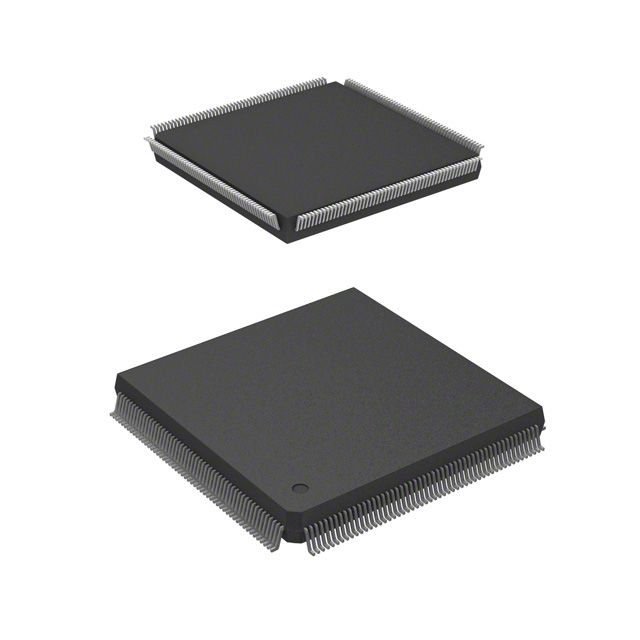
Renesas IDT79RC32V364-100DA
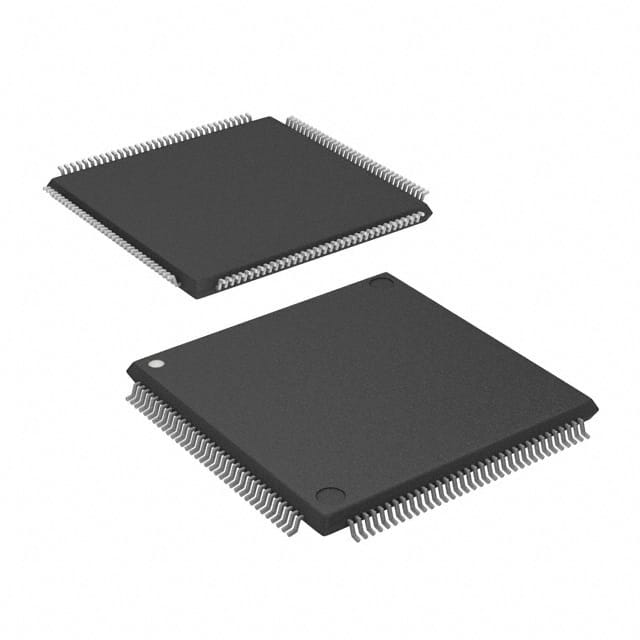
- Part No.:
- IDT79RC32V364-100DA
- Manufacturer:
- Renesas
- Category:
- Microprocessors
- Package:
- 144-LQFP
- Datasheet:
-
 IDT79RC32V364-100DA.pdf
- Description:
- IC MPU 100MHZ 144TQFP
- Quantity:
- Payment:

- Shipping:

Inventory:4,153
Please send an inquiry. Send us your inquiry, and we will respond immediately.
Product details
Overview
IDT79RC32V364-100DA from Integrated Device Technology, Inc. is a 32-bit embedded microprocessor based on the RISCore32300 CPU core, implementing the MIPS 32 ISA with DSP extensions. It operates at 100 MHz, delivers 175 Dhrystone MIPS, integrates 8 kB instruction and 2 kB data caches (2-way set associative), supports 3.3 V core/I/O, and targets cost-sensitive communications and consumer systems.
For engineers reviewing the IDT79RC32V364-100DA datasheet, IDT79RC32V364-100DA pinout, IDT79RC32V364-100DA application, or IDT79RC32V364-100DA equivalent, key selection considerations include its RC4000-compatible MMU with 16-entry TLB mapping up to 512 MB, 66 million MAC/sec DSP capability, enhanced JTAG debug interface with Real-Time Trace mode, and industrial temperature range support.
Technical Context
The IDT79RC32V364-100DA implements a scalar 5-stage pipeline optimized for deterministic real-time interrupt response and low-latency branch handling. Its RISCore32300 core executes MIPS 32 instructions with architectural enhancements including MAD/MSUB, CLZ/CLO, and MUL bypassing HI/LO registers - enabling efficient integer DSP workloads without software overhead.
Virtual memory management uses a fully associative 16-entry TLB supporting variable page sizes (4 kB–16 MB) and per-page cache coherency attributes (uncached, write-back, write-through). The system interface provides programmable 8-/16-/32-bit port widths, burst transfers, and DMA arbitration via BusReq*/BusGnt*, all synchronized to a multiplexed AD[31:0] bus with ALE and ADS* control.
Key Specifications
| Parameter | Value and Actual Design Meaning |
|---|---|
| Clock Frequency | 100 MHz - defines maximum sustained instruction throughput and external bus timing budget |
| Dhrystone MIPS | 175 DMIPS - quantifies integer compute performance for embedded control and protocol stack execution |
| Instruction Cache | 8 kB, 2-way set associative, virtually indexed/physically tagged - enables single-cycle fetches and reduces instruction latency in tight loops |
| Data Cache | 2 kB, 2-way set associative, write-back/write-through configurable per page - balances bandwidth efficiency and memory coherency for mixed data workloads |
| TLB Entries | 16 entries mapping 32 virtual pages - supports flexible memory partitioning and deterministic real-time access to critical code/data regions |
| DSP Capability | 66 million MAC operations/sec - accelerates FIR/IIR filtering, FFT twiddle computation, and voice codec kernels without external coprocessor |
| Power Consumption | Typical 700 mW @ 100 MHz - enables fanless operation in space-constrained xDSL and STB designs |
| Operating Temperature | −40°C to +85°C - qualified for industrial-grade deployment in broadband access equipment and network edge devices |
Pinout & Package
Package: 144-pin TQFP (12 mm × 12 mm, 0.5 mm pitch), lead-free compatible, industrial temperature grade.
| Pin/Terminal | Circuit Role | Design Meaning |
|---|---|---|
| AD[31:4] | Multiplexed Address/Data Bus | High-order 28 bits shared between address setup and data transfer; requires external latch controlled by ALE |
| ADS* | Address Strobe | Active-low signal marking start of bus transaction; used to synchronize external memory controller timing |
| ALE | Address Latch Enable | Edge-triggered strobe to capture AD[31:4] address during multiplexed phase |
| BE*[3:0] | Byte Enables | Selects active byte lanes (0–3) during 32-bit transfers; encodes port width for 8/16/32-bit memory subsystems |
| I/D* | Instruction/Data Indicator | Active-high = instruction fetch; active-low = data access - enables cache partitioning and bus arbitration prioritization |
| Int*[5:0] | Interrupt Inputs | Six active-low level-sensitive interrupts; Int*[3:0] double as boot-mode configuration pins during ColdReset* |
| TCK/TDI/TDO | JTAG Test Interface | IEEE 1149.1-compliant boundary scan and debug; TDO doubles as Real-Time Program Counter (TPC) output in trace mode |
Key Features
| Feature | Design Value |
|---|---|
| MIPS IV-compatible conditional move | Eliminates branch penalties in control-intensive code (e.g., packet header parsing), improving pipeline utilization |
| Per-line cache locking | Enables deterministic worst-case execution time (WCET) for real-time OS kernels and interrupt service routines |
| Variable page-size TLB (4 kB–16 MB) | Reduces TLB miss rate for large buffers (e.g., video frame stores) while preserving fine-grained protection for small code segments |
| Enhanced JTAG with PCST[2:0] trace | Provides non-intrusive real-time program flow visibility at full CPU clock speed - critical for debugging hard real-time deadlines |
| Early restart on data cache miss | Overlaps cache refill with subsequent instruction fetch, sustaining >1 GB/s internal bandwidth despite external memory latency |
Applications
| DSL Modem Baseband Processing | xDSL Line Card Control |
|---|---|
Use Scenario: Real-time processing of G.992.1/G.992.2 ADSL PHY layer tasks including echo cancellation, bit loading, and trellis coding. IC Role / Device Role / Timing Role: Primary integer DSP engine executing firmware-based modem algorithms with deterministic interrupt latency under 1 µs. Use Value: 66 million MAC/sec capability eliminates need for discrete DSP, reducing BOM cost and PCB area in compact DSLAM line cards. | Use Scenario: Managing multiple ADSL2+ ports, coordinating ATM/PTM framing, QoS scheduling, and SNMP agent services. IC Role / Device Role / Timing Role: System controller running Linux-based middleware with MMU-enforced memory protection across port instances. Use Value: RC4000-compatible MMU with 16-entry TLB enables secure, isolated memory partitions for concurrent port firmware execution. |
| Set-Top Box Media Controller | Industrial Ethernet Gateway |
Use Scenario: MPEG-2 transport stream demuxing, conditional access module interfacing, and IR remote decode in consumer STBs. IC Role / Device Role / Timing Role: Application processor executing real-time media framework with guaranteed cache hit rates for audio/video buffers. Use Value: 8 kB instruction and 2 kB data caches with per-line locking ensure sub-millisecond response to channel change events. | Use Scenario: Protocol translation between Modbus RTU and EtherNet/IP in factory automation gateways operating in harsh environments. IC Role / Device Role / Timing Role: Deterministic real-time controller managing dual-network I/O with hardware-accelerated CRC and timestamping. Use Value: Industrial temperature rating (−40°C to +85°C) and 3.3 V I/O tolerance ensure reliable operation in uncontrolled cabinet environments. |
Equivalent & Alternatives
The following parts are listed as comparable options for similar embedded microprocessor applications.
| Alternative Part | Technical Difference | Application Difference | Selection Advice |
|---|---|---|---|
| IDT79RC32V364-133DA | 133 MHz clock, 175 DMIPS @ 133 MHz, 700 mW typical power at higher frequency | Higher throughput for compute-bound DSL PHY layers; increased thermal load requires enhanced heatsinking | Select when system-level timing margins require >100 MHz sustained operation and thermal design accommodates +33% peak power |
| MPC823EVRM | PowerPC 603e core, 80 MHz, no integrated DSP MAC unit, different ISA and toolchain | Legacy telecom control plane where PowerPC ecosystem and existing BSP investment outweigh MIPS compatibility benefits | Choose only if migrating from existing MPC8xx-based designs; not drop-in due to architecture, cache, and interrupt model differences |
Compared with IDT79RC32V364-100DA, the -133DA variant offers higher deterministic throughput for algorithmic workloads but demands stricter thermal management, while the MPC823EVRM requires full software re-architecture and lacks native MAC acceleration - making IDT79RC32V364-100DA optimal for new MIPS-based xDSL and STB designs requiring balanced performance, power, and debug visibility.
Availability
IDT79RC32V364-100DA is available at Aetrix Electronics and suitable for DSL modem baseband processing, xDSL line card control, and set-top box media controller applications requiring stable component supply across extended product lifecycles.
Supply support for IDT79RC32V364-100DA includes scheduled delivery planning, volume procurement assistance, BOM continuity management, traceable sourcing, and lifecycle availability coordination for OEM customers, industrial embedded developers, connected-device designers, and electronics production programs.
Manufacturer
Integrated Device Technology, Inc. (IDT) was a fabless semiconductor company specializing in high-performance timing, memory interface, and embedded processor solutions before its acquisition by Renesas Electronics in 2019.
The IDT79RC32V364-100DA belongs to the RISController™ family - designed specifically for cost-sensitive, real-time embedded systems in broadband access and consumer electronics where MIPS software compatibility, on-chip DSP acceleration, and industrial-grade reliability are essential.
FAQ
What is the maximum operating frequency of the IDT79RC32V364-100DA?
The IDT79RC32V364-100DA is rated for operation at 100 MHz. This frequency is specified under industrial temperature conditions (−40°C to +85°C) and 3.3 V ±5% supply. The device achieves 175 Dhrystone MIPS at this speed, with internal pipeline stages and cache subsystems fully characterized to sustain this clock rate without timing violations. IDT79RC32V364-100DA does not support overclocking beyond its rated specification.
Does the IDT79RC32V364-100DA support JTAG-based real-time tracing?
Yes, the IDT79RC32V364-100DA implements an Enhanced JTAG interface with Real-Time Mode that outputs non-sequential program counter values via the TDO/TPC pin. This allows cycle-accurate instruction flow monitoring at full CPU clock speed without halting execution. The PCST[2:0] status pins provide additional context for trace decoding. IDT79RC32V364-100DA requires no external trace buffer hardware, making it suitable for field-debugging time-critical embedded applications.
What cache coherency models does the IDT79RC32V364-100DA support?
The IDT79RC32V364-100DA supports three per-page cache coherency models controlled by TLB attribute bits: uncached (bypasses cache entirely), non-coherent write-back (cache lines written back to memory on eviction), and non-coherent write-through no write-allocate (writes propagate immediately to memory, no cache allocation on write miss). These modes are configured independently for each 4 kB–16 MB virtual page mapped in the TLB. IDT79RC32V364-100DA does not implement hardware cache coherency protocols like MESI.
Can the IDT79RC32V364-100DA interface directly with SDRAM?
No, the IDT79RC32V364-100DA does not include an integrated SDRAM controller. Its system interface is a generic 32-bit multiplexed address/data bus with programmable timing (ALE, ADS*, RD*, WR*, BE*, CIP*) designed to connect to external memory controllers such as the IDT RC32134 or discrete logic. SDRAM interfacing requires an external controller that manages row/column addressing, refresh, and burst timing. IDT79RC32V364-100DA relies on its large on-chip caches and early-restart capability to mask SDRAM latency.
Is the IDT79RC32V364-100DA pin-compatible with other RC32364 variants?
Yes, the IDT79RC32V364-100DA is pin-compatible with other speed grades in the RC32364 family (e.g., IDT79RC32V364-133DA) and shares identical 144-pin TQFP packaging, pinout, and electrical signaling. All RC32364 variants use the same AD[31:0], BE*[3:0], I/D*, and interrupt pin assignments. However, timing parameters (e.g., setup/hold times, clock-to-output delays) differ per speed grade and must be validated against the respective datasheet revision for IDT79RC32V364-100DA.
IDT79RC32V364-100DA Specifications
- Product attributes
- Attribute value
- Manufacturer:
- Renesas
- Package/Case:
- 144-LQFP
- Series:
- -
- Packaging:
- Tray
- Product Status:
- Obsolete
- Core Processor:
- MIPS32
- Number of Cores/Bus Width:
- 1 Core, 32-Bit
- Speed:
- 100MHz
- Co-Processors/DSP:
- System Control; CP0
- RAM Controllers:
- SDRAM
- Graphics Acceleration:
- No
- Display & Interface Controllers:
- -
- Ethernet:
- -
- SATA:
- -
- USB:
- -
- Voltage - I/O:
- 3.3V
- Operating Temperature:
- 0°C ~ 70°C (TA)
- Grade:
- -
- Qualification:
- -
- Security Features:
- -
- Mounting Type:
- Surface Mount
- Supplier Device Package:
- 144-TQFP (20x20)
- Additional Interfaces:
- -
IDT79RC32V364-100DA FAQ
1.How can I place an order for IDT79RC32V364-100DA through Aetrix?
Please submit a Request for Quotation (RFQ) for IDT79RC32V364-100DA on Aetrix. Our sales agent will provide a competitive quotation and guide you through the order confirmation once you accept the terms.
2.Are the price and stock information for IDT79RC32V364-100DA reliable?
The price and inventory of IDT79RC32V364-100DA are updated periodically and may fluctuate due to market conditions. Stock and pricing data are typically refreshed every 24 hours. Quotation validity for IDT79RC32V364-100DA is usually 5 days.
3.What payment methods are accepted for IDT79RC32V364-100DA?
We accept Wire Transfer, PayPal, Credit Card, Western Union, MoneyGram, and Escrow for IDT79RC32V364-100DA transactions.
Note: Certain payment methods may incur a processing fee.
4.How is shipping managed for IDT79RC32V364-100DA?
IDT79RC32V364-100DA orders can be shipped via leading logistics carriers, including DHL, UPS, FedEx, TNT, or Registered Mail.
Once your IDT79RC32V364-100DA order is processed, you will receive an email with the shipment details and tracking number.
Note: Tracking information may take up to 24 hours to appear. Express delivery typically takes 3–5 business days.
5.How can I obtain technical support or documentation for IDT79RC32V364-100DA?
For technical support, including IDT79RC32V364-100DA datasheets, pinout diagrams, or application guidance, please contact our engineering support team. They can provide detailed documentation and assistance for your IDT79RC32V364-100DA requirements.
6.How does Aetrix verify that IDT79RC32V364-100DA is sourced from the original manufacturer or authorized distributors?
All IDT79RC32V364-100DA products on Aetrix are procured from qualified distributors and authorized channels. Our dedicated quality assurance team conducts strict verification, including traceability checks and, if necessary, third-party testing. This ensures that IDT79RC32V364-100DA meets industry standards.
7.What is the process for return or replacement of IDT79RC32V364-100DA?
All IDT79RC32V364-100DA units undergo pre-shipment inspection (PSI). If there is an issue with IDT79RC32V364-100DA, returns or replacements are accepted under the following conditions:
1.Quantity discrepancies, incorrect items, or visible external defects (such as breakage or corrosion), acknowledged by Aetrix.
2.The issue is reported within 90 days of delivery.
3.The IDT79RC32V364-100DA part is unused and in its original packaging.
Return procedure for IDT79RC32V364-100DA:
1.Submit a request within 90 days.
2.Obtain a Return Material Authorization (RMA) from Aetrix.
IDT79RC32V364-100DA Tags
-
AT91SAM9260B-CU-999
Microchip Technology
-
AT91SAM9G25-CU
Microchip Technology
-
ATSAMA5D27C-CU
Microchip Technology
-
AT91SAM9X35-CU
Microchip Technology
-
AT91SAM9X25-CU
Microchip Technology
-
MCIMX6Y2CVM08AB
NXP Semiconductors
.JPG)
-
AM3352BZCZ100
Texas Instruments
-
AT91SAM9260B-CU
Microchip Technology
-
AT91SAM9260B-QU
Microchip Technology
-
ATSAMA5D31A-CU
Microchip Technology
-
AT91SAM9G20B-CU-999
Microchip Technology
-
MCIMX6Y2CVM05AB
NXP Semiconductors
Tech Hub

TTL and CMOS logic families differ in thresholds, loading, output drive, power and timing. This engineering guide compares 74HC and 74HCT, calculates noise margins and checks 3.3 V/5 V compatibility.

A practical engineering guide to 3.3V and 5V logic compatibility, input thresholds, resistor dividers, translator ICs, MOSFET level shifting, I2C pull-ups, timing limits and power-sequencing risks.

The 74HC595 uses push-pull logic outputs, while the TPIC6B595 uses 50 V open-drain DMOS sinks for higher-power loads. This guide compares timing, current limits, 3.3 V interfacing, load wiring, thermal…

The 74HC595 converts serial data into eight stable parallel outputs. This guide covers pin functions, shift and storage timing, OE and MR behavior, drive-current limits, cascading, voltage compatibilit…

A technical comparison of level-sensitive latches and edge-triggered flip-flops, covering timing windows, setup and hold limits, master–slave operation, time borrowing, race-through, HDL inference and…

A D latch stores one bit while Enable controls when data can pass. This reference covers gate-level operation, truth tables, transparency, setup and hold timing, LE versus OE, common ICs and practical …

An SR latch stores one bit through cross-coupled feedback. This engineering reference covers NOR and NAND implementations, truth tables, forbidden-state recovery, gated operation, switch debouncing, fa…

Latch circuits retain one bit through feedback. This technical reference covers SR and D latches, truth tables, transparency, timing limits, latch-versus-flip-flop behavior, applications and common log…

An engineering guide to LED driver operation, constant-current and constant-voltage outputs, linear and switching topologies, dimming, IC selection, calculations, replacement compatibility, and fault c…

Operational amplifier guide covering op amp basics, feedback, ideal vs real op amps, common configurations, buffer circuits, offset, bias current, gain-bandwidth, slew rate, rail-to-rail limits and sel…


