
 My Inquiry
 My Account


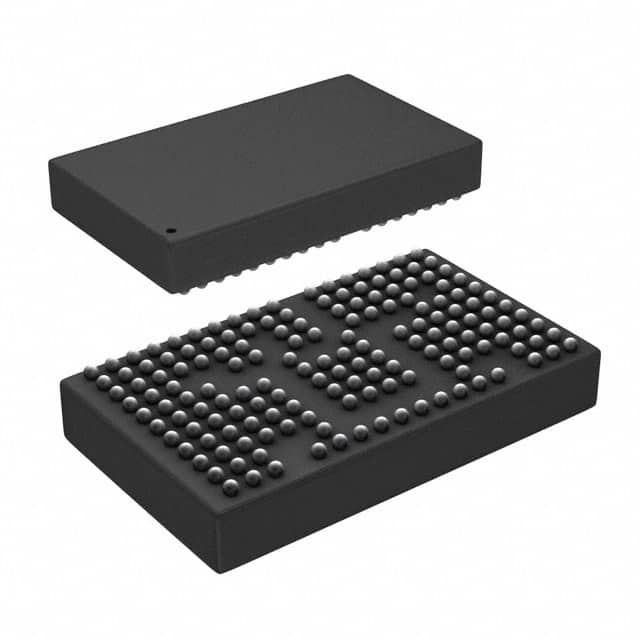
Infineon Technologies IP1201TRPBF
- Part No.:
- IP1201TRPBF
- Manufacturer:
- Infineon Technologies
- Package:
- 159-BBGA Power Module
- Datasheet:
-
 IP1201TRPBF.pdf
- Description:
- IC REG BUCK ADJ SGL/DL 159BGA
- Quantity:
- Payment:

- Shipping:

Inventory:1,750
Please send an inquiry. Send us your inquiry, and we will respond immediately.
Product details
Overview
IP1201TRPBF from Infineon Technologies is a dual-output, 2-phase synchronous buck power block integrating power MOSFETs, PWM controller, gate drivers, and passive components in a single module. It delivers up to 15A per output (30A total in single-output mode), supports 3.14–5.5V input and 0.8–3.3V programmable output, operates at 200–400kHz per phase with 180° phase shift, and includes independent soft-start, overvoltage/overcurrent/overtemperature protection - used in high-density server VRMs and telecom POL converters.
For engineers reviewing the IP1201TRPBF datasheet, IP1201TRPBF pinout, IP1201TRPBF application, or IP1201TRPBF equivalent, key selection criteria include dual-phase current sharing accuracy, thermal derating at 125°C block temperature, external synchronization capability up to 800kHz, and hiccup vs. latch overcurrent response configuration via the HICCUP pin.
Technical Context
The IP1201TRPBF implements a two-phase interleaved synchronous buck architecture with integrated high- and low-side MOSFETs per phase, internal current-mode PWM control, and independent error amplifiers for each output. Its 180° phase shift reduces input/output ripple and improves transient response while enabling compact filter design.
It features a programmable switching frequency (200–400kHz per channel via RT resistor), external sync input (480–800kHz), and dual feedback loops with 0.8V reference voltage, ±2.5% output accuracy over temperature, and 25µA FB bias current - supporting precise point-of-load regulation in multi-rail systems.
Key Specifications
| Parameter | Value and Actual Design Meaning |
|---|---|
| Input Voltage Range | 3.14V to 5.5V - supports standard 3.3V and 5V intermediate bus architectures without external pre-regulation. |
| Output Voltage Range | 0.8V to 3.3V - programmable via external resistive divider; compatible with DDR, FPGA, ASIC core, and I/O rail requirements. |
| Max Output Current | 15A per channel (dual output) or 30A combined (single output) - enables high-current POL delivery in space-constrained layouts. |
| Switching Frequency | 200–400kHz per channel - adjustable via RT resistor; allows optimization of efficiency vs. size trade-off with standard 1.8µH inductors. |
| Thermal Limit | 125°C block temperature - specified safe operating area validated up to 125°C ambient with no heatsink or airflow. |
| Protection Features | Hiccup or latch overcurrent, overvoltage (1.15×VOUT), undervoltage lockout (2.7V), and thermal shutdown (140°C) - ensures robust system-level fault containment. |
| Soft Start | Independent SS1/SS2 pins with 5ms typical time (0.1µF capacitor) - prevents inrush current and enables staggered rail sequencing. |
Pinout & Package
IP1201TRPBF is housed in a thermally enhanced, leadless QFN-style module measuring 15.5mm × 9.25mm × 2.6mm with exposed thermal pad (PGND-connected) and 36-pin perimeter terminations.
| Pin/Terminal | Circuit Role | Design Meaning |
|---|---|---|
| VIN | Primary input power supply | Accepts 3.14–5.5V; connects to bulk capacitance and must be decoupled locally per phase. |
| VOUT1 / VOUT2 | Output power terminals | Deliver regulated DC; each supports up to 15A RMS; require dedicated output capacitors and inductor connections. |
| FB1 / FB2 | Feedback inputs | Resistive divider nodes for closed-loop regulation; 0.8V reference; 25µA bias current affects divider design. |
| SS1 / SS2 | Soft-start control | Capacitor-based timing; 0.25V threshold disables output; enables controlled ramp-up per rail. |
| HICCUP | Overcurrent response select | Pulled low = latch-off; pulled high = hiccup mode; sets fault recovery behavior during short-circuit events. |
| SYNC | External clock input | Accepts 480–800kHz square wave; synchronizes switching to avoid beat frequencies in multi-module systems. |
| PGOOD | Power-good indicator | Open-drain output asserting when both outputs are within ±10% of target; sinks 2mA at 0.25V low. |
| ENABLE | Global enable input | Active-high logic; 2V min high threshold; UVLO active below 2.7V VIN ensures clean startup. |
Key Features
| Feature | Design Value |
|---|---|
| Dual independent outputs | Each output fully configurable (VOUT, soft-start, OVP threshold), enabling asymmetric rail generation (e.g., 1.2V core + 2.5V I/O). |
| Integrated passives & MOSFETs | Eliminates discrete power stage layout sensitivity; reduces BOM count by >12 components versus controller+MOSFET solution. |
| 180° interleaved operation | Halves input ripple current and doubles effective switching frequency - cuts required input capacitance by ~50%. |
| Thermal-aware SOA | Derated current curves provided up to 125°C block temperature; enables reliable operation in sealed enclosures without forced air. |
| External sync & RT programming | Supports deterministic timing across multiple modules and fine-tuned efficiency optimization across load and input conditions. |
Applications
| Server VRM | Telecom POL |
|---|---|
Use Scenario: Regulating CPU/GPU core voltage in 1U rack servers with strict height and thermal constraints. IC Role / Device Role / Timing Role: Dual-phase buck power block delivering 1.0–1.2V @ 20–30A with fast transient response to dynamic load steps. Use Value: 15.5mm × 9.25mm footprint enables placement near processor die; 180° interleaving reduces input cap count and EMI filtering complexity. | Use Scenario: Generating isolated 1.8V and 3.3V rails for baseband processing units in 5G radio units. IC Role / Device Role / Timing Role: Independent dual-output POL regulator synchronized to system clock to suppress switching noise coupling into RF sections. Use Value: External SYNC pin allows alignment to 61.44MHz or 122.88MHz reference clocks; hiccup mode prevents latch-up during antenna SWR faults. |
| FPGA Power Delivery | Industrial PLC I/O Module |
Use Scenario: Supplying configurable core (0.85V) and transceiver (1.2V) rails for Xilinx Versal ACAPs in edge AI accelerators. IC Role / Device Role / Timing Role: Two-phase synchronous buck with independent soft-start sequencing core before transceiver to meet FPGA configuration timing. Use Value: SS1/SS2 pins allow staggered ramp-up; ±2.5% VOUT accuracy ensures reliable bitstream loading under wide temperature range. | Use Scenario: Providing isolated 2.5V analog sensor bias and 3.3V digital logic rails in DIN-rail mounted PLC modules. IC Role / Device Role / Timing Role: Dual-output power block operating from 5V backplane with overtemperature protection for unventilated enclosures. Use Value: 125°C block temperature rating supports continuous operation at 70°C ambient; PGOOD signals enable system-level rail validation before firmware boot. |
Equivalent & Alternatives
The following parts are listed as comparable options for similar dual-output synchronous buck power block applications.
| Alternative Part | Technical Difference | Application Difference | Selection Advice |
|---|---|---|---|
| MP2960GQ-Z (Monolithic Power) | Single-chip dual-output controller (no integrated MOSFETs); requires external power stage; 4.5–16V input. | Higher design flexibility but larger PCB area and greater layout sensitivity; suited for custom thermal solutions. | Select when board space allows discrete power stage and input exceeds 5.5V. |
| TPS546D24 (Texas Instruments) | Single-output, 60A capable digital multiphase controller; supports PMBus; no integrated MOSFETs or passives. | Requires external DrMOS or power stages; targets high-end server CPUs with dynamic phase shedding and telemetry. | Select when digital control, telemetry, or >30A single-rail output is required. |
Compared with MP2960GQ-Z and TPS546D24, the IP1201TRPBF offers lowest component count and smallest footprint for ≤30A dual-rail applications, trading off programmability and telemetry for integration density and thermal simplicity.
Availability
IP1201TRPBF is available at Aetrix Electronics and suitable for server VRMs, telecom POL converters, FPGA power delivery, and industrial PLC I/O modules requiring stable component supply, long-lifecycle support, and consistent thermal performance across production batches.
Supply support for IP1201TRPBF includes scheduled delivery planning, volume procurement assistance, BOM continuity management, traceable sourcing, and lifecycle availability coordination for OEM customers, industrial embedded developers, connected-device designers, and electronics production programs.
Manufacturer
Infineon Technologies is a German semiconductor manufacturer specializing in power management, automotive, and industrial control ICs, with leadership in silicon and silicon carbide power devices.
The IP1201TRPBF belongs to Infineon's iPOWIR® family of integrated power blocks, designed specifically for high-efficiency, low-profile point-of-load conversion in datacenter, networking, and industrial equipment where layout simplicity and thermal predictability are critical.
FAQ
What is the maximum recommended PCB temperature for continuous 15A per channel operation?
The IP1201TRPBF supports 15A per channel continuously at up to 125°C block temperature, as verified in Figure 3 of the datasheet. At 90°C PCB temperature with no airflow or heatsink, derating to 11.5A per channel applies. Thermal design must ensure the exposed thermal pad is soldered to a minimum 4-layer PCB with ≥200mm² copper pour and ≥4 thermal vias.
Can IP1201TRPBF operate with only one output enabled?
Yes - the device supports single-output mode by connecting VOUT1 and VOUT2 together and configuring FB1/FB2 as a single feedback node. In this configuration, it delivers up to 30A total with full 2-phase interleaving. The unused SS2 and FB2 pins must be tied to their respective VOUT or grounded per datasheet Section 8.2.1.
How does the HICCUP pin affect overcurrent protection behavior?
When HICCUP is pulled high, the device enters hiccup mode: it shuts down for ~10ms after overcurrent detection, then retries. When pulled low, it latches off until ENABLE is cycled. This pin directly configures fault recovery - hiccup mode suits intermittent faults (e.g., hot-swap transients), while latch mode suits permanent shorts requiring manual reset.
Is external compensation required for stable loop operation?
No external compensation is required - the IP1201TRPBF integrates type-II compensation networks for both channels. Stability is ensured across the full output voltage (0.8–3.3V) and load (0–15A) range with standard 1.8µH inductors and recommended output capacitor ESL/ESR values listed in Table 10 of the datasheet.
IP1201TRPBF Specifications
- Product attributes
- Attribute value
- Manufacturer:
- Infineon Technologies
- Series:
- iPOWIR™
- Package/Case:
- 159-BBGA Power Module
- Packaging:
- Tape & Reel (TR)
- Product Status:
- Obsolete
- Function:
- Step-Down
- Output Configuration:
- Positive
- Topology:
- Buck
- Output Type:
- Adjustable
- Number of Outputs:
- 1 or 2
- Voltage - Input (Min):
- 3.14V
- Voltage - Input (Max):
- 5.5V
- Voltage - Output (Min/Fixed):
- 0.8V
- Voltage - Output (Max):
- 3.3V
- Current - Output:
- 30A, 15A
- Frequency - Switching:
- 170kHz ~ 460kHz
- Synchronous Rectifier:
- Yes
- Operating Temperature:
- -40°C ~ 125°C (TJ)
- Grade:
- -
- Qualification:
- -
- Mounting Type:
- Surface Mount
- Supplier Device Package:
- 159-BGA Power Block (15.5x9.25)
IP1201TRPBF FAQ
1.How can I place an order for IP1201TRPBF through Aetrix?
Please submit a Request for Quotation (RFQ) for IP1201TRPBF on Aetrix. Our sales agent will provide a competitive quotation and guide you through the order confirmation once you accept the terms.
2.Are the price and stock information for IP1201TRPBF reliable?
The price and inventory of IP1201TRPBF are updated periodically and may fluctuate due to market conditions. Stock and pricing data are typically refreshed every 24 hours. Quotation validity for IP1201TRPBF is usually 5 days.
3.What payment methods are accepted for IP1201TRPBF?
We accept Wire Transfer, PayPal, Credit Card, Western Union, MoneyGram, and Escrow for IP1201TRPBF transactions.
Note: Certain payment methods may incur a processing fee.
4.How is shipping managed for IP1201TRPBF?
IP1201TRPBF orders can be shipped via leading logistics carriers, including DHL, UPS, FedEx, TNT, or Registered Mail.
Once your IP1201TRPBF order is processed, you will receive an email with the shipment details and tracking number.
Note: Tracking information may take up to 24 hours to appear. Express delivery typically takes 3–5 business days.
5.How can I obtain technical support or documentation for IP1201TRPBF?
For technical support, including IP1201TRPBF datasheets, pinout diagrams, or application guidance, please contact our engineering support team. They can provide detailed documentation and assistance for your IP1201TRPBF requirements.
6.How does Aetrix verify that IP1201TRPBF is sourced from the original manufacturer or authorized distributors?
All IP1201TRPBF products on Aetrix are procured from qualified distributors and authorized channels. Our dedicated quality assurance team conducts strict verification, including traceability checks and, if necessary, third-party testing. This ensures that IP1201TRPBF meets industry standards.
7.What is the process for return or replacement of IP1201TRPBF?
All IP1201TRPBF units undergo pre-shipment inspection (PSI). If there is an issue with IP1201TRPBF, returns or replacements are accepted under the following conditions:
1.Quantity discrepancies, incorrect items, or visible external defects (such as breakage or corrosion), acknowledged by Aetrix.
2.The issue is reported within 90 days of delivery.
3.The IP1201TRPBF part is unused and in its original packaging.
Return procedure for IP1201TRPBF:
1.Submit a request within 90 days.
2.Obtain a Return Material Authorization (RMA) from Aetrix.
IP1201TRPBF Tags
-
TPS562201DDCR
Texas Instruments

-
MC34063ABD-TR
STMicroelectronics
-
TPS561201DDCR
Texas Instruments

-
MC33063ADR
Texas Instruments
-
MC34063ADR
Texas Instruments
-
TPS560200DBVR
Texas Instruments
-
AP3012KTR-G1
Diodes Incorporated
-
TLV61048DBVR
Texas Instruments
-
AZ34063UMTR-G1
Diodes Incorporated
-
TPS562200DDCR
Texas Instruments
-
AP62300TWU-7
Diodes Incorporated
-
MC34063EBD-TR
STMicroelectronics
Tech Hub

An engineering guide to LED driver operation, constant-current and constant-voltage outputs, linear and switching topologies, dimming, IC selection, calculations, replacement compatibility, and fault c…

Operational amplifier guide covering op amp basics, feedback, ideal vs real op amps, common configurations, buffer circuits, offset, bias current, gain-bandwidth, slew rate, rail-to-rail limits and sel…

Jumper cables guide covering safe connection order, red and black clamp placement, final ground connection, cable gauge, length, clamp quality, copper vs CCA cables, jump starter comparison and battery…

LDO regulator guide covering low dropout voltage, power dissipation, thermal design, PSRR, output noise, capacitor stability, adjustable LDO circuits, LDO vs buck converter and datasheet selection chec…

Conditional Access Module guide covering CAM meaning, CI/CI+ interface, smart card authorization, DVB security workflow, TV and set-top box compatibility, internal electronics, ESD protection, connecto…

Guide to electronic component obsolescence covering EOL risk, PCN/PDN notices, last-time buy planning, replacement options, form-fit-function validation, counterfeit risk and BOM lifecycle management.

18650 battery guide covering lithium-ion cell basics, 3.6V/3.7V voltage, 4.2V charging, mAh and Wh capacity, protected cells, chargers, BMS, series-parallel packs, holders, welding and sourcing checks.…

Hall effect sensor guide covering working principle, linear and digital sensors, Arduino circuits, current sensing, speed detection, automotive applications, A3144 examples, signal filtering and datash…

Product Change Notification guide for electronic components, covering PCN meaning, PCN vs PDN/EOL, common change types, risk levels, form-fit-function review, engineering validation, BOM control, LTB/L…

A practical guide to blend door actuators, covering HVAC function, symptoms, location, AC and heater issues, reset and calibration, replacement cost, electrical diagnosis, compatibility checks, and rep…


