
 My Inquiry
 My Account


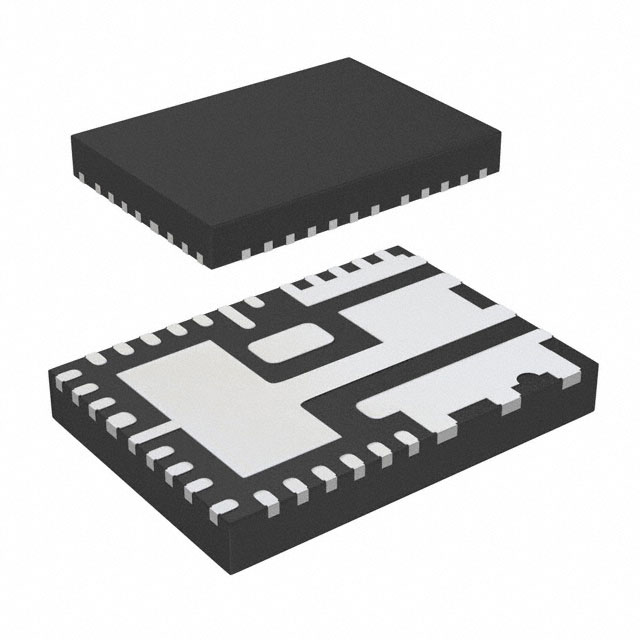
Infineon Technologies IR38365MTRPBFAUMA1
- Part No.:
- IR38365MTRPBFAUMA1
- Manufacturer:
- Infineon Technologies
- Package:
- 34-PowerVFQFN
- Datasheet:
-
 IR38365MTRPBFAUMA1.pdf
- Description:
- IC REG BUCK ADJ 30A 34PQFN
- Quantity:
- Payment:

- Shipping:

Inventory:3,559
Please send an inquiry. Send us your inquiry, and we will respond immediately.
Product details
Overview
IR38365MTRPBFAUMA1 from Infineon Technologies is a 15 A synchronous buck regulator with Intel SVID interface, integrated MOSFET drivers and bootstrap diode, operating from 5.3–16 V input and delivering 0.5–0.875×PVIN output voltage with ±0.5% reference accuracy and -40°C to +125°C junction temperature range. It targets Vmcp CPU rail regulation in Intel VR13/VR12.5 systems.
For engineers reviewing the IR38365MTRPBFAUMA1 datasheet, IR38365MTRPBFAUMA1 pinout, IR38365MTRPBFAUMA1 application, or IR38365MTRPBFAUMA1 equivalent, key selection criteria include SVID compliance (Rev 1.7), absence of PMBus™ support (pin 17 NC), remote differential sensing capability, thermally compensated current limiting, and 5 mm × 7 mm PQFN package with integrated LDO for single-rail 16 V operation.
Technical Context
This device implements a voltage-mode PWM controller with feedforward line regulation and dedicated SVID interface (SV_CLK/SV_DIO/SV_ALERT), supporting Intel VR12.5 and VR13 protocols for dynamic voltage scaling and margining. It integrates high- and low-side OptiMOS™ MOSFETs with RDS(on) of 2.2 mΩ (top) and 0.78 mΩ (bottom) at Tj = 25°C.
The control loop uses an error amplifier with 100–120 dB DC gain, 20–40 MHz GBWP, and 7–20 V/µs slew rate, paired with true differential remote sense inputs (RS+, RS−) and independent PGood sensing (Vsns). Switching frequency is programmable from 150 kHz to 1.5 MHz via SVID commands only - no PMBus™ functionality is present.
Key Specifications
| Parameter | Value and Actual Design Meaning |
|---|---|
| Output Current | 15 A continuous; supports high-current CPU core auxiliary rails without external current sense. |
| Input Voltage Range | 5.3 V to 16 V; enables direct connection to 12 V intermediate bus with internal LDO biasing. |
| Output Voltage Range | 0.5 V to 0.875×PVIN; covers full Intel Vmcp specification range with adaptive scaling. |
| Reference Accuracy | ±0.5% at 0°C–85°C; ensures tight output regulation under transient load steps in server applications. |
| Switching Frequency | 150 kHz to 1.5 MHz; adjustable via SVID to optimize efficiency vs. size trade-off for 1–3 µH inductors. |
| Junction Temp Range | -40°C to +125°C; validated for sustained operation in high-density server motherboard environments. |
| Package | 5 mm × 7 mm PQFN; exposes thermal pad for PCB-level heat extraction via θJB = 4.16°C/W. |
Pinout & Package
IR38365MTRPBFAUMA1 is housed in a thermally enhanced 5 mm × 7 mm PQFN package with exposed thermal pad and 26-pin layout. Pin 17 is NC (no connect), confirming absence of PMBus™ functionality per datasheet Rev 3.6.
| Pin/Terminal | Circuit Role | Design Meaning |
|---|---|---|
| PVIN | Main power input for high-side switch | Connects to 5.3–16 V input bus; requires local 22 µF ×4 + 0.1 µF decoupling near pin 1 and PGND. |
| Boot | High-side gate driver supply | 0.1 µF capacitor to SW; 1 Ω series resistor required if PVIN > 14 V to limit boot diode stress. |
| ENABLE | Global on/off control with UVLO | 0.4–0.65 V threshold; supports sequencing with precise power-up timing in multi-rail CPU VRs. |
| Vsns | Dedicated OVP and Power Good sense | Connects directly to output capacitor; enables independent PGood assertion even when ENABLE is low. |
| FB | Inverting error amplifier input | Accepts feedback from resistor divider or remote sense amplifier output (RSo); sets regulated output voltage. |
| RS+, RS− | Differential remote sense inputs | Compensates for PCB IR drop by measuring voltage directly at load; improves load regulation to ±0.5%. |
| SV_CLK, SV_DIO, SV_ALERT | SVID serial interface | Supports Intel VR13/VR12.5 commands for VID setting, margining, fault reporting, and telemetry readback. |
| PGood | Open-drain power status indicator | Asserts after soft-start and voltage validation; pull-up to VCC (4.99 kΩ typical) defines logic-high level. |
Key Features
| Feature | Design Value |
|---|---|
| Integrated OptiMOS™ MOSFETs | Eliminates external FET selection and layout complexity; achieves <92% peak efficiency at 12 VIN/1.0 VOUT/15 A. |
| True Differential Remote Sensing | RS+/RS− inputs reject common-mode noise and compensate for up to 50 mV PCB voltage drop, maintaining regulation accuracy at load. |
| SVID-Only Interface (No PMBus™) | Reduces BOM count and routing density versus dual-interface parts; simplifies firmware integration in Intel-platform BIOS. |
| Enhanced Pre-Bias Start-Up | Allows safe startup into pre-biased output without reverse current flow - critical for multi-phase CPU VR sequencing. |
| Thermally Compensated Current Limit | Pulse-by-pulse OCP adjusts trip point with junction temperature, preventing false trips during thermal transients in burst-mode operation. |
Applications
| Intel® VR13 Vmcp Rail | Server Memory I/O Regulator |
|---|---|
Use Scenario: Regulation of memory controller I/O voltage (Vmcp) in dual-socket Xeon Scalable platforms with dynamic VID updates. IC Role / Device Role / Timing Role: Primary SVID-controlled buck converter delivering 0.9–1.2 V at up to 15 A with sub-10 µs response to VID changes. Use Value: Meets Intel VR13 spec for Vmcp ripple (<15 mVpp) and load step response (<5% deviation @ 5 A/µs) using integrated MOSFETs and feedforward compensation. | Use Scenario: Powering DDR4/DDR5 memory buffer ICs requiring tightly regulated 1.2 V or 1.1 V with fast transient response. IC Role / Device Role / Timing Role: Standalone point-of-load regulator with remote sense and SVID telemetry for system-level power monitoring. Use Value: Delivers ±0.5% output accuracy across temperature and line/load variations, enabling reliable memory training and signal integrity at 3200+ MT/s. |
| High-End Desktop CPU Auxiliary Rail | Network ASIC I/O Supply |
Use Scenario: Providing clean, sequenced power to CPU uncore logic, graphics voltage domains, or PCIe root complex in enthusiast desktop motherboards. IC Role / Device Role / Timing Role: Secondary SVID-regulated rail synchronized to main Vcore via shared SVID bus and coordinated enable timing. Use Value: Enables independent voltage scaling and margining for non-core domains while sharing same SVID host controller, reducing firmware overhead. | Use Scenario: Supplying configurable I/O voltage to programmable logic devices (FPGAs, network processors) with SVID-compatible power management firmware. IC Role / Device Role / Timing Role: SVID endpoint delivering 0.75–1.2 V at 15 A with real-time telemetry (VOUT, IOUT, TJ) over SV_DIO/SV_CLK. Use Value: Supports dynamic voltage/frequency scaling (DVFS) and thermal throttling in packet processing pipelines without external ADC or monitoring ICs. |
Equivalent & Alternatives
The following parts are listed as comparable options for similar SVID-based buck regulator applications.
| Alternative Part | Technical Difference | Application Difference | Selection Advice |
|---|---|---|---|
| IR38363MTRPbF | Includes PMBus™ interface (pin 17 active), identical SVID, 15 A rating, same package | Supports dual-protocol telemetry (SVID + PMBus™), enabling legacy SMBus host compatibility | Select when system requires PMBus™-based configuration or standalone diagnostics outside Intel SVID stack |
| MP8765GQ-Z | Monolithic 15 A buck with I²C (not SVID), no integrated LDO, 3.3–18 VIN, ±1% VREF | Lacks Intel VR protocol support; requires external VID translation or MCU-based command mapping | Select for non-Intel platforms where SVID is unnecessary and wider input range justifies added firmware complexity |
Compared with IR38363MTRPbF, IR38365MTRPBFAUMA1 reduces pin count and eliminates PMBus™ routing overhead while retaining full VR13 compliance; versus MP8765GQ-Z, it delivers native SVID integration and tighter reference accuracy but requires Intel-specific host firmware.
Availability
IR38365MTRPBFAUMA1 is available at Aetrix Electronics and suitable for Intel VR13 Vmcp regulation, server memory I/O supplies, and high-end desktop CPU auxiliary rails requiring stable component supply, long-term lifecycle assurance, and RoHS-compliant packaging.
Supply support for IR38365MTRPBFAUMA1 includes scheduled delivery planning, volume procurement assistance, BOM continuity management, traceable sourcing, and lifecycle availability coordination for OEM customers, industrial embedded developers, connected-device designers, and electronics production programs.
Manufacturer
Infineon Technologies is a German semiconductor manufacturer specializing in power management, automotive MCUs, and industrial control ICs, with global manufacturing and quality certification to ISO 9001 and IATF 16949.
This device belongs to the OptiMOS™ IPOL family - engineered specifically for Intel-compatible CPU voltage regulation, integrating power stages, controllers, and digital interfaces into compact PQFN packages for server and desktop motherboard applications.
FAQ
Does IR38365MTRPBFAUMA1 support PMBus™ communication?
No. IR38365MTRPBFAUMA1 supports only the Intel SVID interface (SV_CLK, SV_DIO, SV_ALERT). Pin 17 is explicitly designated NC (no connect) in the datasheet, and the functional block diagram confirms absence of PMBus™ logic. Configuration and telemetry must be handled exclusively via SVID commands.
What is the maximum allowable input voltage on the PVIN pin?
The absolute maximum rating for PVIN is 25 V, but the recommended operating range is 5.3 V to 16 V. Exceeding 16 V risks violating the 25 V SW node limit under worst-case duty cycle, and the boot circuit requires a 1 Ω series resistor if PVIN > 14 V to prevent overstress of the internal bootstrap diode.
Can IR38365MTRPBFAUMA1 operate with an external 5 V bias instead of the internal LDO?
Yes. The Vin pin accepts an external 5 V supply (4.5–5.5 V) to power the control circuitry, bypassing the internal LDO. When using external bias, tie Vin to the 5 V source and leave PVIN connected to the main 12 V bus. This configuration reduces self-heating and improves light-load efficiency.
How does the remote sense function handle PCB trace resistance between IC and load?
The RS+ and RS− pins form a true differential amplifier that measures voltage directly at the load terminals. With typical PCB trace resistance up to 50 mΩ, this topology rejects common-mode noise and compensates for IR drop, maintaining output regulation accuracy within ±0.5% across full load and temperature range without requiring additional compensation components.
IR38365MTRPBFAUMA1 Specifications
- Product attributes
- Attribute value
- Manufacturer:
- Infineon Technologies
- Series:
- OptiMOS™ IPOL
- Package/Case:
- 34-PowerVFQFN
- Packaging:
- Tape & Reel (TR)
- Product Status:
- Active
- Function:
- Step-Down
- Output Configuration:
- Positive
- Topology:
- Buck
- Output Type:
- Adjustable
- Number of Outputs:
- 1
- Voltage - Input (Min):
- 1.5V
- Voltage - Input (Max):
- 16V
- Voltage - Output (Min/Fixed):
- 0.5V
- Voltage - Output (Max):
- 14V
- Current - Output:
- 30A
- Frequency - Switching:
- 150kHz ~ 1.5MHz
- Synchronous Rectifier:
- No
- Operating Temperature:
- -40°C ~ 125°C (TJ)
- Grade:
- -
- Qualification:
- -
- Mounting Type:
- Surface Mount
- Supplier Device Package:
- 34-PQFN (5x7)
IR38365MTRPBFAUMA1 FAQ
1.How can I place an order for IR38365MTRPBFAUMA1 through Aetrix?
Please submit a Request for Quotation (RFQ) for IR38365MTRPBFAUMA1 on Aetrix. Our sales agent will provide a competitive quotation and guide you through the order confirmation once you accept the terms.
2.Are the price and stock information for IR38365MTRPBFAUMA1 reliable?
The price and inventory of IR38365MTRPBFAUMA1 are updated periodically and may fluctuate due to market conditions. Stock and pricing data are typically refreshed every 24 hours. Quotation validity for IR38365MTRPBFAUMA1 is usually 5 days.
3.What payment methods are accepted for IR38365MTRPBFAUMA1?
We accept Wire Transfer, PayPal, Credit Card, Western Union, MoneyGram, and Escrow for IR38365MTRPBFAUMA1 transactions.
Note: Certain payment methods may incur a processing fee.
4.How is shipping managed for IR38365MTRPBFAUMA1?
IR38365MTRPBFAUMA1 orders can be shipped via leading logistics carriers, including DHL, UPS, FedEx, TNT, or Registered Mail.
Once your IR38365MTRPBFAUMA1 order is processed, you will receive an email with the shipment details and tracking number.
Note: Tracking information may take up to 24 hours to appear. Express delivery typically takes 3–5 business days.
5.How can I obtain technical support or documentation for IR38365MTRPBFAUMA1?
For technical support, including IR38365MTRPBFAUMA1 datasheets, pinout diagrams, or application guidance, please contact our engineering support team. They can provide detailed documentation and assistance for your IR38365MTRPBFAUMA1 requirements.
6.How does Aetrix verify that IR38365MTRPBFAUMA1 is sourced from the original manufacturer or authorized distributors?
All IR38365MTRPBFAUMA1 products on Aetrix are procured from qualified distributors and authorized channels. Our dedicated quality assurance team conducts strict verification, including traceability checks and, if necessary, third-party testing. This ensures that IR38365MTRPBFAUMA1 meets industry standards.
7.What is the process for return or replacement of IR38365MTRPBFAUMA1?
All IR38365MTRPBFAUMA1 units undergo pre-shipment inspection (PSI). If there is an issue with IR38365MTRPBFAUMA1, returns or replacements are accepted under the following conditions:
1.Quantity discrepancies, incorrect items, or visible external defects (such as breakage or corrosion), acknowledged by Aetrix.
2.The issue is reported within 90 days of delivery.
3.The IR38365MTRPBFAUMA1 part is unused and in its original packaging.
Return procedure for IR38365MTRPBFAUMA1:
1.Submit a request within 90 days.
2.Obtain a Return Material Authorization (RMA) from Aetrix.
IR38365MTRPBFAUMA1 Tags
-
TPS562201DDCR
Texas Instruments
-
MC34063ABD-TR
STMicroelectronics
-
TPS561201DDCR
Texas Instruments

-
MC33063ADR
Texas Instruments
-
MC34063ADR
Texas Instruments

-
TPS560200DBVR
Texas Instruments
-
AP3012KTR-G1
Diodes Incorporated
-
TLV61048DBVR
Texas Instruments
-
AZ34063UMTR-G1
Diodes Incorporated
-
TPS562200DDCR
Texas Instruments
-
AP62300TWU-7
Diodes Incorporated
-
MC34063EBD-TR
STMicroelectronics
Tech Hub
A D latch stores one bit while Enable controls when data can pass. This reference covers gate-level operation, truth tables, transparency, setup and hold timing, LE versus OE, common ICs and practical …
An SR latch stores one bit through cross-coupled feedback. This engineering reference covers NOR and NAND implementations, truth tables, forbidden-state recovery, gated operation, switch debouncing, fa…

Latch circuits retain one bit through feedback. This technical reference covers SR and D latches, truth tables, transparency, timing limits, latch-versus-flip-flop behavior, applications and common log…

An engineering guide to LED driver operation, constant-current and constant-voltage outputs, linear and switching topologies, dimming, IC selection, calculations, replacement compatibility, and fault c…

Operational amplifier guide covering op amp basics, feedback, ideal vs real op amps, common configurations, buffer circuits, offset, bias current, gain-bandwidth, slew rate, rail-to-rail limits and sel…

Jumper cables guide covering safe connection order, red and black clamp placement, final ground connection, cable gauge, length, clamp quality, copper vs CCA cables, jump starter comparison and battery…

LDO regulator guide covering low dropout voltage, power dissipation, thermal design, PSRR, output noise, capacitor stability, adjustable LDO circuits, LDO vs buck converter and datasheet selection chec…

Conditional Access Module guide covering CAM meaning, CI/CI+ interface, smart card authorization, DVB security workflow, TV and set-top box compatibility, internal electronics, ESD protection, connecto…

Guide to electronic component obsolescence covering EOL risk, PCN/PDN notices, last-time buy planning, replacement options, form-fit-function validation, counterfeit risk and BOM lifecycle management.

18650 battery guide covering lithium-ion cell basics, 3.6V/3.7V voltage, 4.2V charging, mAh and Wh capacity, protected cells, chargers, BMS, series-parallel packs, holders, welding and sourcing checks.…


