
 My Inquiry
 My Account


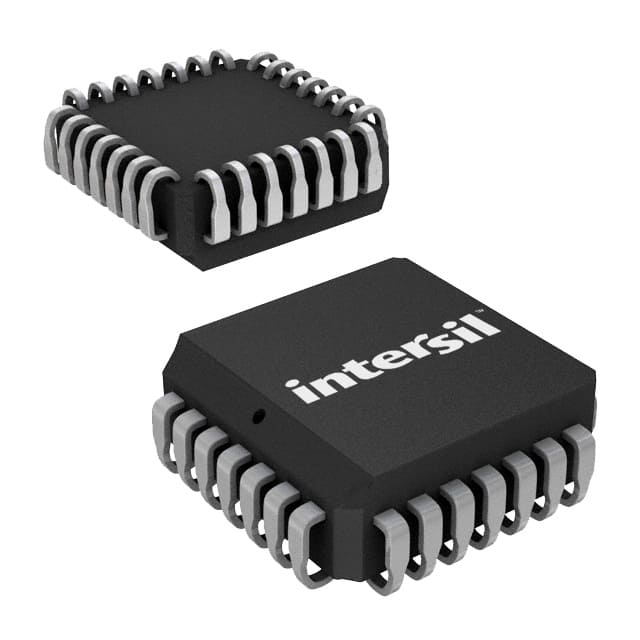
Renesas IS82C59A-12Z96
- Part No.:
- IS82C59A-12Z96
- Manufacturer:
- Renesas
- Category:
- Specialized
- Package:
- 28-LCC (J-Lead)
- Datasheet:
-
 IS82C59A-12Z96.pdf
- Description:
- IC INTERFACE SPECIALIZED 28PLCC
- Quantity:
- Payment:

- Shipping:

Inventory:2,587
Please send an inquiry. Send us your inquiry, and we will respond immediately.
Product details
Overview
IS82C59A-12Z96 from Intersil is a CMOS Priority Interrupt Controller designed to manage up to eight vectored, prioritized interrupt requests in 8080/85 and 80C86/88/286-based systems. It operates at 12.5MHz, supports edge- or level-triggered inputs, features fully static TTL-compatible logic, and delivers low-power operation with ICCOP ≤ 1mA/MHz and ICCSB ≤ 10μA.
For engineers reviewing the IS82C59A-12Z96 datasheet, IS82C59A-12Z96 pinout, IS82C59A-12Z96 application, or IS82C59A-12Z96 equivalent, this device serves as a drop-in replacement for legacy NMOS 8259A in industrial control, embedded instrumentation, and retro-computing platforms requiring programmable priority resolution, cascading to 64 levels, and dual-mode (8080/85 vs. 80C86) vectoring support.
Technical Context
The IS82C59A-12Z96 implements a fully static CMOS architecture with dedicated priority resolver, interrupt mask register (IMR), in-service register (ISR), and interrupt request register (IRR). Its read/write logic accepts Initialization Command Words (ICW1–ICW4) and Operation Command Words (OCW1–OCW3) to configure cascading, masking, AEOI, and microprocessor mode (8080/85 or 80C86/88/286).
It uses three cascade lines (CAS0–CAS2) for master/slave coordination, supports buffered and non-buffered modes via SP/EN, and provides interrupt vectoring through D7–D0 with distinct timing sequences: three INTA pulses for 8080/85 (including CALL opcode 0xCD), two INTA pulses for 80C86/88/286 (vector byte only). Internal pull-ups on IR0–IR7 ensure robust level-triggered operation.
Key Specifications
| Parameter | Value and Actual Design Meaning |
|---|---|
| Max Clock Frequency | 12.5MHz - Enables "no wait-state" operation with 12.5MHz 80C286 CPUs. |
| Interrupt Inputs | 8 (IR0–IR7) - Supports edge- or level-triggered requests with internal pull-up resistors. |
| Supply Voltage | +5V only - Single-rail TTL-compatible operation; no dual-supply or voltage scaling required. |
| Quiescent Current | ≤10μA - Enables ultra-low-power standby in battery-backed or energy-sensitive systems. |
| Active Current | ≤1mA/MHz - Scales linearly with clock frequency; 12.5MHz operation draws ≤12.5mA typical. |
| Cascading Capacity | Up to 64 levels - Achieved via CAS0–CAS2 lines without external logic or glue components. |
| Operating Temperature | −40°C to +85°C - Qualified for industrial-grade embedded applications with extended thermal margin. |
Pinout & Package
IS82C59A-12Z96 is housed in a 28-lead PLCC (Plastic Leaded Chip Carrier) package with Pb-free matte tin termination, RoHS compliant, and rated for −40°C to +85°C operation. The package uses JEDEC standard outline N28.45 and supports tape-and-reel delivery (96-unit reel).
| Pin/Terminal | Circuit Role | Design Meaning |
|---|---|---|
| VCC (Pin 28) | Power Supply Input | +5V supply rail; requires 0.1μF decoupling capacitor to GND (Pin 14). |
| GND (Pin 14) | Ground Reference | System ground return; shared reference for all digital I/O and internal logic. |
| D7–D0 (Pins 11–4) | Bidirectional Data Bus | Transfers ICWs, OCWs, status registers (IRR/ISR/IMR), and 8-bit interrupt vectors. |
| CS (Pin 1) | Chip Select Input | Active-low enable for RD/WR operations; INTA remains functional regardless of CS state. |
| RD (Pin 2) | Read Control Input | Active-low signal enabling status or vector data output onto D7–D0 when CS = L. |
| WR (Pin 3) | Write Control Input | Active-low signal enabling command word (ICW/OCW) latching into internal registers. |
| A0 (Pin 5) | Address Select | Distinguishes command register (A0 = 0) from data register (A0 = 1); tied to CPU A0 (or A1 for 80C86/88). |
| INT (Pin 18) | Interrupt Output | Open-collector compatible output driving CPU INTR; VOH meets 8080/8085/8086 input thresholds. |
| INTA (Pin 17) | Interrupt Acknowledge Input | Active-low CPU signal triggering vector release on D7–D0 during INTA sequence. |
| IR0–IR7 (Pins 23,24,25,22,21,20,19,11) | Interrupt Request Inputs | Asynchronous inputs with internal pull-ups; support edge-triggered (low-to-high) or level-triggered (sustained high) assertion. |
| CAS0–CAS2 (Pins 12,13,27) | Cascade Interface | Outputs for master, inputs for slave; encode slave ID and route vector data in multi-controller systems. |
| SP/EN (Pin 10) | Slave Program / Enable | Dual-function: input to set master (SP=1) or slave (SP=0); output to enable bus transceivers in buffered mode. |
Key Features
| Feature | Design Value |
|---|---|
| Pb-Free + Anneal Construction | RoHS-compliant 100% matte tin termination, qualified for both SnPb and Pb-free reflow per J-STD-020. |
| Pin Compatibility with NMOS 8259A | Direct hardware replacement in legacy designs-no PCB layout changes required. |
| Dual Microprocessor Mode Support | Configurable for 8080/85 (3-interrupt-acknowledge cycle + CALL opcode) or 80C86/88/286 (2-cycle vector-only) timing. |
| Programmable Priority Architecture | Supports fully nested, rotating priority, special mask, and polled modes via OCW2/OCW3. |
| Static CMOS Core | Zero minimum clock frequency; retains state indefinitely at DC-ideal for low-power or pause-capable systems. |
| Individual Masking & Cascading | Each IR line independently maskable; CAS0–CAS2 enables seamless expansion to 64 interrupt levels. |
Applications
| Industrial PLC Backplane | Retro-Computing Expansion Card |
|---|---|
Use Scenario: Managing asynchronous I/O interrupts from analog input modules, motion controllers, and safety relays across a modular backplane. IC Role / Device Role / Timing Role: Central priority arbiter that serializes and routes up to eight field-device interrupts to the main CPU using programmable vector addresses. Use Value: Eliminates polling overhead, reduces CPU load by >70% in real-time scan cycles, and enables deterministic response within 3.2μs (at 12.5MHz). |
Use Scenario: Adding ISA-bus-compatible interrupt handling to vintage 80286/80386 SBCs where original NMOS 8259A parts are obsolete or unreliable. IC Role / Device Role / Timing Role: Drop-in interrupt controller providing identical pinout, timing, and command-set compatibility with legacy BIOS and DOS drivers. Use Value: Restores full IRQ0–IRQ7 functionality without firmware modification; supports both edge- and level-triggered peripherals in mixed-signal retro builds. |
| Embedded Test Equipment | Military Avionics Subsystem |
Use Scenario: Coordinating trigger events from multiple digitizers, arbitrary waveform generators, and calibration sensors in automated test racks. IC Role / Device Role / Timing Role: High-reliability interrupt manager with cascaded configuration supporting synchronized start/stop and error-reporting channels. Use Value: Guarantees sub-microsecond interrupt latency consistency across temperature (−40°C to +85°C), critical for time-domain measurement accuracy. |
Use Scenario: Handling fault alerts, sensor health checks, and communication handshakes in mission-critical flight control interface units. IC Role / Device Role / Timing Role: Radiation-tolerant interrupt handler (via IS82C59A family qualification) managing priority-ranked warnings from gyros, accelerometers, and radio modems. Use Value: Ensures highest-priority faults (e.g., IMU failure) preempt lower-priority telemetry updates-enabling fail-operational behavior per DO-254. |
Equivalent & Alternatives
The following parts are listed as comparable options for similar priority interrupt controller applications.
| Alternative Part | Technical Difference | Application Difference | Selection Advice |
|---|---|---|---|
| IS82C59AZ-12Z96 | Same die, Pb-free PLCC package with identical electrical specs and −40°C to +85°C rating; differs only in marking and RoHS anneal process. | No functional difference; used interchangeably in new designs where Pb-free compliance is mandatory. | Select IS82C59AZ-12Z96 if full RoHS documentation traceability (anneal certificate, J-STD-020 MSL rating) is contractually required. |
| CS82C59A-12Z96 | Same 28-pin PLCC footprint and pinout, but commercial-temp (0°C to +70°C); shares identical ICW/OCW programming model and 12.5MHz max speed. | Limited to non-industrial environments; not qualified for extended temperature cycling or long-term storage below 0°C. | Choose CS82C59A-12Z96 only for cost-sensitive lab or prototype use where ambient temperature remains tightly controlled. |
Compared with IS82C59A-12Z96, IS82C59AZ-12Z96 offers identical performance with enhanced RoHS compliance documentation, while CS82C59A-12Z96 sacrifices industrial temperature range for lower unit cost-making the IS82C59A-12Z96 the optimal balance of ruggedness, compatibility, and supply-chain continuity.
Availability
IS82C59A-12Z96 is available at Aetrix Electronics and suitable for industrial PLC backplanes, retro-computing expansion cards, and embedded test equipment requiring stable component supply, long-lifecycle support, and guaranteed Pb-free compliance.
Supply support for IS82C59A-12Z96 includes scheduled delivery planning, volume procurement assistance, BOM continuity management, traceable sourcing, and lifecycle availability coordination for OEM customers, industrial embedded developers, connected-device designers, and electronics production programs.
Manufacturer
Intersil (now part of Renesas Electronics) is a semiconductor manufacturer specializing in high-reliability analog and mixed-signal ICs for industrial, aerospace, and computing applications.
The IS82C59A product line was engineered to deliver CMOS power efficiency and timing precision in legacy microprocessor interrupt management-targeting system designers modernizing 8080/8086/80286 architectures while maintaining full software and hardware compatibility.
FAQ
What is the maximum operating frequency of the IS82C59A-12Z96?
The IS82C59A-12Z96 is rated for a maximum clock frequency of 12.5MHz. This allows "no wait-state" operation with 12.5MHz 80C286 processors and ensures full timing compliance across its entire specified temperature range (−40°C to +85°C). The "-12" suffix explicitly denotes the 12.5MHz speed grade.
Is the IS82C59A-12Z96 pin-compatible with the original NMOS 8259A?
Yes, the IS82C59A-12Z96 is fully pin-compatible with the NMOS 8259A. It maintains identical pinout, signal definitions, timing relationships, and command-set behavior-enabling direct replacement in existing PCB layouts without redesign or firmware changes.
Does the IS82C59A-12Z96 support both 8080/85 and 80C86/88/286 microprocessor modes?
Yes, the IS82C59A-12Z96 supports both modes via the μPM bit in ICW4. When μPM = 0, it operates in 8080/85 mode (three INTA cycles, including CALL opcode 0xCD); when μPM = 1, it operates in 80C86/88/286 mode (two INTA cycles, vector byte only).
What is the purpose of the CAS0–CAS2 pins on the IS82C59A-12Z96?
The CAS0–CAS2 pins form a private cascade bus enabling master/slave configurations. In master mode, they output slave identification codes; in slave mode, they input those codes to determine vector routing. This allows up to eight IS82C59A-12Z96 devices to be cascaded for 64 total interrupt levels without external logic.
How does the IS82C59A-12Z96 handle power consumption in standby mode?
The IS82C59A-12Z96 features a fully static CMOS design with ICCSB ≤ 10μA maximum in standby. This ultra-low quiescent current enables energy-efficient operation in battery-backed or always-on embedded systems where interrupt latency must be preserved without continuous active power draw.
IS82C59A-12Z96 Specifications
- Product attributes
- Attribute value
- Manufacturer:
- Renesas
- Series:
- -
- Package/Case:
- 28-LCC (J-Lead)
- Packaging:
- Tape & Reel (TR)
- Product Status:
- Active
- Applications:
- -
- Interface:
- -
- Voltage - Supply:
- 4.5V ~ 5.5V
- Supplier Device Package:
- 28-PLCC (11.51x11.51)
- Grade:
- -
- Qualification:
- -
- Mounting Type:
- Surface Mount
IS82C59A-12Z96 FAQ
1.How can I place an order for IS82C59A-12Z96 through Aetrix?
Please submit a Request for Quotation (RFQ) for IS82C59A-12Z96 on Aetrix. Our sales agent will provide a competitive quotation and guide you through the order confirmation once you accept the terms.
2.Are the price and stock information for IS82C59A-12Z96 reliable?
The price and inventory of IS82C59A-12Z96 are updated periodically and may fluctuate due to market conditions. Stock and pricing data are typically refreshed every 24 hours. Quotation validity for IS82C59A-12Z96 is usually 5 days.
3.What payment methods are accepted for IS82C59A-12Z96?
We accept Wire Transfer, PayPal, Credit Card, Western Union, MoneyGram, and Escrow for IS82C59A-12Z96 transactions.
Note: Certain payment methods may incur a processing fee.
4.How is shipping managed for IS82C59A-12Z96?
IS82C59A-12Z96 orders can be shipped via leading logistics carriers, including DHL, UPS, FedEx, TNT, or Registered Mail.
Once your IS82C59A-12Z96 order is processed, you will receive an email with the shipment details and tracking number.
Note: Tracking information may take up to 24 hours to appear. Express delivery typically takes 3–5 business days.
5.How can I obtain technical support or documentation for IS82C59A-12Z96?
For technical support, including IS82C59A-12Z96 datasheets, pinout diagrams, or application guidance, please contact our engineering support team. They can provide detailed documentation and assistance for your IS82C59A-12Z96 requirements.
6.How does Aetrix verify that IS82C59A-12Z96 is sourced from the original manufacturer or authorized distributors?
All IS82C59A-12Z96 products on Aetrix are procured from qualified distributors and authorized channels. Our dedicated quality assurance team conducts strict verification, including traceability checks and, if necessary, third-party testing. This ensures that IS82C59A-12Z96 meets industry standards.
7.What is the process for return or replacement of IS82C59A-12Z96?
All IS82C59A-12Z96 units undergo pre-shipment inspection (PSI). If there is an issue with IS82C59A-12Z96, returns or replacements are accepted under the following conditions:
1.Quantity discrepancies, incorrect items, or visible external defects (such as breakage or corrosion), acknowledged by Aetrix.
2.The issue is reported within 90 days of delivery.
3.The IS82C59A-12Z96 part is unused and in its original packaging.
Return procedure for IS82C59A-12Z96:
1.Submit a request within 90 days.
2.Obtain a Return Material Authorization (RMA) from Aetrix.
IS82C59A-12Z96 Tags
-
NVT4857UKAZ
NXP Semiconductors
-
TCA8418RTWR
Texas Instruments

-
PCA9546APWR
Texas Instruments
-
MD0100N8-G
Microchip Technology
-
PCA9548APW,118
NXP Semiconductors
-
PCA9540BDP,118
NXP Semiconductors
-
PCA9548APWR
Texas Instruments
-
PCA9546APW,118
NXP Semiconductors
-
PTN3360DBS,518
NXP Semiconductors
-
PCA9546ABS,118
NXP Semiconductors
-
PCA9518PWR
Texas Instruments
-
PCA9545APW,118
NXP Semiconductors
Tech Hub

TTL and CMOS logic families differ in thresholds, loading, output drive, power and timing. This engineering guide compares 74HC and 74HCT, calculates noise margins and checks 3.3 V/5 V compatibility.

A practical engineering guide to 3.3V and 5V logic compatibility, input thresholds, resistor dividers, translator ICs, MOSFET level shifting, I2C pull-ups, timing limits and power-sequencing risks.

The 74HC595 uses push-pull logic outputs, while the TPIC6B595 uses 50 V open-drain DMOS sinks for higher-power loads. This guide compares timing, current limits, 3.3 V interfacing, load wiring, thermal…

The 74HC595 converts serial data into eight stable parallel outputs. This guide covers pin functions, shift and storage timing, OE and MR behavior, drive-current limits, cascading, voltage compatibilit…

A technical comparison of level-sensitive latches and edge-triggered flip-flops, covering timing windows, setup and hold limits, master–slave operation, time borrowing, race-through, HDL inference and…

A D latch stores one bit while Enable controls when data can pass. This reference covers gate-level operation, truth tables, transparency, setup and hold timing, LE versus OE, common ICs and practical …

An SR latch stores one bit through cross-coupled feedback. This engineering reference covers NOR and NAND implementations, truth tables, forbidden-state recovery, gated operation, switch debouncing, fa…

Latch circuits retain one bit through feedback. This technical reference covers SR and D latches, truth tables, transparency, timing limits, latch-versus-flip-flop behavior, applications and common log…

An engineering guide to LED driver operation, constant-current and constant-voltage outputs, linear and switching topologies, dimming, IC selection, calculations, replacement compatibility, and fault c…

Operational amplifier guide covering op amp basics, feedback, ideal vs real op amps, common configurations, buffer circuits, offset, bias current, gain-bandwidth, slew rate, rail-to-rail limits and sel…


