
 My Inquiry
 My Account


Renesas ISL23418TFRUZ-T7A
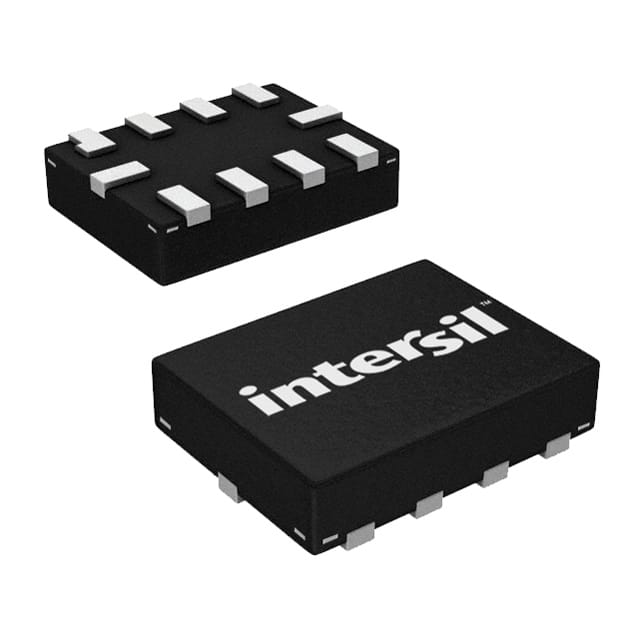
- Part No.:
- ISL23418TFRUZ-T7A
- Manufacturer:
- Renesas
- Category:
- Digital Potentiometers
- Package:
- 10-UFQFN
- Datasheet:
-
 ISL23418TFRUZ-T7A.pdf
- Description:
- IC DGTL POT 100KOHM 10UTQFN
- Quantity:
- Payment:

- Shipping:

Inventory:3,254
Please send an inquiry. Send us your inquiry, and we will respond immediately.
Product details
Overview
ISL23418TFRUZ-T7A from Renesas Electronics (formerly Intersil) is a volatile, single-channel, 128-tap digitally controlled potentiometer (XDCP™) with SPI interface, 100kΩ end-to-end resistance, 10-lead µTQFN package, and extended industrial temperature range (−40°C to +125°C). It functions as a programmable voltage divider or rheostat in precision biasing and gain control circuits for battery-powered instrumentation.
For engineers reviewing the ISL23418TFRUZ-T7A datasheet, ISL23418TFRUZ-T7A pinout, ISL23418TFRUZ-T7A application, or ISL23418TFRUZ-T7A equivalent, key selection criteria include its dual-supply operation (VCC = 1.7–5.5V, VLOGIC = 1.2–5.5V), mid-scale power-on default (64-tap), shutdown mode with RW–RL short, and guaranteed monotonicity in both voltage-divider and rheostat modes.
Technical Context
The ISL23418TFRUZ-T7A implements a resistor ladder with CMOS wiper switches operating in "make-before-break" mode, controlled by an 8-bit volatile Wiper Register (WR) accessible via SPI Mode 0. Its architecture supports daisy-chaining multiple units without additional chip-select lines.
It features independent logic and analog supplies enabling direct interfacing with low-voltage microcontrollers (down to 1.2V VLOGIC), while maintaining full DCP functionality across VCC = 1.7V–5.5V. Shutdown mode forces RH–RL open-circuit and internally connects RW to RL through ~2kΩ, preserving WR contents.
Key Specifications
| Parameter | Value and Actual Design Meaning |
|---|---|
| Total Resistance | 100kΩ - defines maximum end-to-end impedance for gain/bias scaling in analog signal paths |
| Wiper Resistance | 70Ω typical at VCC = 3.3V - limits insertion error and thermal noise in precision voltage division |
| Supply Ranges | VCC = 1.7–5.5V; VLOGIC = 1.2–5.5V - enables mixed-voltage system integration without level shifters |
| Temperature Range | −40°C to +125°C - qualified for under-hood automotive, industrial control, and medical equipment environments |
| Shutdown Current | <2.8µA max - preserves battery life in portable devices during inactive periods |
| INL / DNL | ±0.15 LSB - ensures monotonic response and predictable step-linearity in closed-loop calibration |
| Settling Time | 300ns large-signal - supports fast reconfiguration in dynamic bias adjustment applications |
Pinout & Package
ISL23418TFRUZ-T7A uses a 10-lead 2.1mm × 1.6mm µTQFN package (RoHS-compliant, MSL Level 3, pkg drawing L10.2.1x1.6A).
| Pin/Terminal | Circuit Role | Design Meaning |
|---|---|---|
| RL | DCP low terminal | Fixed end of resistor array; referenced to GND in voltage-divider mode |
| RW | Wiper terminal | Movable contact position set by 8-bit WR register; output node for adjustable voltage/resistance |
| RH | DCP high terminal | Fixed end of resistor array; referenced to VCC in voltage-divider mode |
| VCC | Analog supply | Powers DCP core and internal logic; sets maximum DCP terminal voltage (0–VCC) |
| GND | Ground reference | Common return for analog and digital sections; required for stable wiper operation |
| SCK | SPI clock input | Edge-triggered serial clock (rising edge); supports up to 5MHz at VLOGIC ≥ 1.7V |
| SDI | SPI data input | Receives instruction and data bytes; sampled on SCK rising edge |
| SDO | SPI data output | Tri-state output (push-pull default); drives data on SCK falling edge during read cycles |
| CS | Chip select | Active-low enable; initiates SPI transaction and wakes device from standby |
| VLOGIC | Digital supply | Independent logic rail; enables 1.2V–5.5V SPI compatibility without external level translation |
Key Features
| Feature | Design Value |
|---|---|
| 128-tap resolution | Enables fine-grained analog tuning with 0.78% step size (1/127) across full resistance range |
| Volatile wiper register | Allows real-time dynamic adjustment and immediate readback of wiper position without nonvolatile overhead |
| Power-on mid-scale preset | Guarantees known startup state (64-tap) - eliminates undefined output during system boot |
| Shutdown mode | Disables DCP function while shorting RW to RL (~2kΩ), preventing floating outputs and reducing leakage |
| Daisy-chain SPI support | Permits multi-device control over shared SCK/CS lines using SDO→SDI cascading - reduces GPIO count |
Applications
| Power Supply Margining | RF Power Amplifier Bias Compensation |
|---|---|
Use Scenario: Adjusting feedback resistors in DC-DC converter error amplifiers to validate stability margins across voltage/temp corners. IC Role / Device Role / Timing Role: Programmable voltage divider setting reference voltage for regulation loop. Use Value: Enables automated margin testing without manual resistor changes; 100kΩ tolerance ±2% ensures consistent offset accuracy. | Use Scenario: Dynamically compensating for temperature-induced drift in GaAs FET gate bias networks. IC Role / Device Role / Timing Role: Rheostat-mode current source adjustment for quiescent current stabilization. Use Value: −40°C to +125°C operation and 70ppm/°C TCR maintain bias point stability across environmental stress tests. |
| LCD Bias Compensation | Portable Medical Equipment Calibration |
Use Scenario: Fine-tuning VCOM voltage in TFT-LCD panels to minimize image flicker and gamma shift over temperature. IC Role / Device Role / Timing Role: Precision voltage divider generating adjustable common-mode reference. Use Value: 300ns wiper settling and ±0.15 LSB INL ensure rapid, repeatable calibration during production test sequences. | Use Scenario: Calibrating sensor front-end gain in handheld ECG or pulse oximeter modules before field deployment. IC Role / Device Role / Timing Role: Gain-setting rheostat in programmable-gain amplifier (PGA) feedback path. Use Value: 1.2V VLOGIC support allows direct connection to ultra-low-power MCU I/O, eliminating level-shifter BOM cost and layout area. |
Equivalent & Alternatives
The following parts are listed as comparable options for similar digitally controlled potentiometer applications.
| Alternative Part | Technical Difference | Application Difference | Selection Advice |
|---|---|---|---|
| AD5170BRMZ-100 | Nonvolatile EEPROM memory; 256-tap resolution; I²C interface; 100kΩ; MSOP-10 | Retains wiper setting after power cycle; lacks VLOGIC independence and shutdown mode | Choose when persistent settings are required and I²C is preferred over SPI |
| MCP41HV51-103 | High-voltage tolerant (up to 36V); SPI interface; 100kΩ; 8-pin SOIC; no VLOGIC pin | Supports higher DCP terminal voltages but requires external level shifting for sub-1.8V logic | Choose for industrial analog front-ends where DCP terminals exceed 5.5V |
Compared with AD5170BRMZ-100 and MCP41HV51-103, the ISL23418TFRUZ-T7A uniquely combines 1.2V logic compatibility, integrated shutdown, and µTQFN footprint-making it optimal for space-constrained, battery-operated systems requiring fast, low-power reconfiguration without nonvolatile overhead.
Availability
ISL23418TFRUZ-T7A is available at Aetrix Electronics and suitable for power supply margining, RF amplifier bias compensation, and portable medical equipment calibration requiring stable component supply across extended temperature ranges and long production lifecycles.
Supply support for ISL23418TFRUZ-T7A includes scheduled delivery planning, volume procurement assistance, BOM continuity management, traceable sourcing, and lifecycle availability coordination for OEM customers, industrial embedded developers, connected-device designers, and electronics production programs.
Manufacturer
Renesas Electronics acquired Intersil in 2017 and maintains full support for legacy XDCP™ products including the ISL23418 series.
The ISL23418 product line was designed specifically for low-power, mixed-voltage analog trimming in portable and harsh-environment electronics-emphasizing SPI flexibility, wide supply tolerance, and guaranteed monotonicity.
FAQ
What is the default wiper position of the ISL23418TFRUZ-T7A at power-up?
The ISL23418TFRUZ-T7A powers up with its wiper at mid-scale (64-tap position, WR = 40h), ensuring a defined and repeatable output voltage regardless of prior state. This behavior is hardwired and occurs every time VCC and VLOGIC rise above their minimum thresholds, providing deterministic startup for safety-critical or calibration-sensitive systems using the ISL23418TFRUZ-T7A.
Does the ISL23418TFRUZ-T7A support daisy-chaining with other DCPs?
Yes, the ISL23418TFRUZ-T7A supports SPI daisy-chaining: connect the SDO pin of one device to the SDI pin of the next, while sharing SCK and CS lines. This allows simultaneous configuration of multiple ISL23418TFRUZ-T7A units using a single SPI bus, reducing microcontroller pin count and simplifying PCB routing in multi-channel biasing applications.
What is the maximum allowable voltage on the RH, RL, or RW pins of the ISL23418TFRUZ-T7A?
The RH, RL, and RW pins of the ISL23418TFRUZ-T7A must remain within 0V to VCC at all times-including during power-up, power-down, and normal operation. Exceeding this range risks latch-up or permanent damage. The absolute maximum rating is −0.3V to 6.0V, but functional operation is strictly bounded by VCC, making proper sequencing of VCC and signal sources essential in the ISL23418TFRUZ-T7A design.
How does the shutdown mode affect the wiper terminal (RW) in the ISL23418TFRUZ-T7A?
In shutdown mode (SHDN bit = 0 in ACR), the ISL23418TFRUZ-T7A opens the RH–RL path and internally connects RW to RL through a ~2kΩ resistor. This prevents floating outputs and provides a defined low-impedance path, critical for system safety in fault conditions. Wiper register contents are preserved, and RW returns to its pre-shutdown position within 1.5µs after exit.
Can the ISL23418TFRUZ-T7A operate with VLOGIC = 1.2V while VCC = 5.5V?
Yes, the ISL23418TFRUZ-T7A fully supports independent supply rails: VLOGIC can be as low as 1.2V (enabling direct interface with 1.2V/1.8V MCUs) while VCC operates up to 5.5V (supporting higher-voltage analog signal chains). This decoupling eliminates external level shifters and ensures robust SPI communication even in mixed-supply systems using the ISL23418TFRUZ-T7A.
ISL23418TFRUZ-T7A Specifications
- Product attributes
- Attribute value
- Manufacturer:
- Renesas
- Series:
- XDCP™
- Package/Case:
- 10-UFQFN
- Packaging:
- Tape & Reel (TR)
- Product Status:
- Obsolete
- Programmable:
- Not Verified
- Taper:
- Linear
- Configuration:
- Potentiometer
- Number of Circuits:
- 1
- Number of Taps:
- 128
- Resistance (Ohms):
- 100k
- Interface:
- SPI
- Memory Type:
- Volatile
- Voltage - Supply:
- 1.2V ~ 5.5V, 1.7V ~ 5.5V
- Features:
- -
- Tolerance:
- ±20%
- Temperature Coefficient (Typ):
- 70ppm/°C
- Mounting Type:
- Surface Mount
- Grade:
- -
- Qualification:
- -
- Supplier Device Package:
- 10-UTQFN (2.1x1.6)
- Operating Temperature:
- -40°C ~ 125°C
- Resistance - Wiper (Ohms) (Typ):
- 70
ISL23418TFRUZ-T7A FAQ
1.How can I place an order for ISL23418TFRUZ-T7A through Aetrix?
Please submit a Request for Quotation (RFQ) for ISL23418TFRUZ-T7A on Aetrix. Our sales agent will provide a competitive quotation and guide you through the order confirmation once you accept the terms.
2.Are the price and stock information for ISL23418TFRUZ-T7A reliable?
The price and inventory of ISL23418TFRUZ-T7A are updated periodically and may fluctuate due to market conditions. Stock and pricing data are typically refreshed every 24 hours. Quotation validity for ISL23418TFRUZ-T7A is usually 5 days.
3.What payment methods are accepted for ISL23418TFRUZ-T7A?
We accept Wire Transfer, PayPal, Credit Card, Western Union, MoneyGram, and Escrow for ISL23418TFRUZ-T7A transactions.
Note: Certain payment methods may incur a processing fee.
4.How is shipping managed for ISL23418TFRUZ-T7A?
ISL23418TFRUZ-T7A orders can be shipped via leading logistics carriers, including DHL, UPS, FedEx, TNT, or Registered Mail.
Once your ISL23418TFRUZ-T7A order is processed, you will receive an email with the shipment details and tracking number.
Note: Tracking information may take up to 24 hours to appear. Express delivery typically takes 3–5 business days.
5.How can I obtain technical support or documentation for ISL23418TFRUZ-T7A?
For technical support, including ISL23418TFRUZ-T7A datasheets, pinout diagrams, or application guidance, please contact our engineering support team. They can provide detailed documentation and assistance for your ISL23418TFRUZ-T7A requirements.
6.How does Aetrix verify that ISL23418TFRUZ-T7A is sourced from the original manufacturer or authorized distributors?
All ISL23418TFRUZ-T7A products on Aetrix are procured from qualified distributors and authorized channels. Our dedicated quality assurance team conducts strict verification, including traceability checks and, if necessary, third-party testing. This ensures that ISL23418TFRUZ-T7A meets industry standards.
7.What is the process for return or replacement of ISL23418TFRUZ-T7A?
All ISL23418TFRUZ-T7A units undergo pre-shipment inspection (PSI). If there is an issue with ISL23418TFRUZ-T7A, returns or replacements are accepted under the following conditions:
1.Quantity discrepancies, incorrect items, or visible external defects (such as breakage or corrosion), acknowledged by Aetrix.
2.The issue is reported within 90 days of delivery.
3.The ISL23418TFRUZ-T7A part is unused and in its original packaging.
Return procedure for ISL23418TFRUZ-T7A:
1.Submit a request within 90 days.
2.Obtain a Return Material Authorization (RMA) from Aetrix.
ISL23418TFRUZ-T7A Tags
-
MCP4018T-103E/LT
Microchip Technology
-
MCP4018T-503E/LT
Microchip Technology

-
MCP4011T-103E/SN
Microchip Technology
-
MCP4018T-104E/LT
Microchip Technology
-
MCP4017T-503E/LT
Microchip Technology
-
MCP4018T-502E/LT
Microchip Technology
-
MCP4017T-103E/LT
Microchip Technology
-
MCP4531T-103E/MF
Microchip Technology
-
MCP4021T-202E/SN
Microchip Technology

-
MCP4023T-103E/CH
Microchip Technology
-
MCP4022T-503E/CH
Microchip Technology
-
MCP4551T-502E/MS
Microchip Technology
Tech Hub

TTL and CMOS logic families differ in thresholds, loading, output drive, power and timing. This engineering guide compares 74HC and 74HCT, calculates noise margins and checks 3.3 V/5 V compatibility.

A practical engineering guide to 3.3V and 5V logic compatibility, input thresholds, resistor dividers, translator ICs, MOSFET level shifting, I2C pull-ups, timing limits and power-sequencing risks.

The 74HC595 uses push-pull logic outputs, while the TPIC6B595 uses 50 V open-drain DMOS sinks for higher-power loads. This guide compares timing, current limits, 3.3 V interfacing, load wiring, thermal…

The 74HC595 converts serial data into eight stable parallel outputs. This guide covers pin functions, shift and storage timing, OE and MR behavior, drive-current limits, cascading, voltage compatibilit…

A technical comparison of level-sensitive latches and edge-triggered flip-flops, covering timing windows, setup and hold limits, master–slave operation, time borrowing, race-through, HDL inference and…

A D latch stores one bit while Enable controls when data can pass. This reference covers gate-level operation, truth tables, transparency, setup and hold timing, LE versus OE, common ICs and practical …

An SR latch stores one bit through cross-coupled feedback. This engineering reference covers NOR and NAND implementations, truth tables, forbidden-state recovery, gated operation, switch debouncing, fa…

Latch circuits retain one bit through feedback. This technical reference covers SR and D latches, truth tables, transparency, timing limits, latch-versus-flip-flop behavior, applications and common log…

An engineering guide to LED driver operation, constant-current and constant-voltage outputs, linear and switching topologies, dimming, IC selection, calculations, replacement compatibility, and fault c…

Operational amplifier guide covering op amp basics, feedback, ideal vs real op amps, common configurations, buffer circuits, offset, bias current, gain-bandwidth, slew rate, rail-to-rail limits and sel…


