
 My Inquiry
 My Account


Renesas ISL29501IRZ-T7A
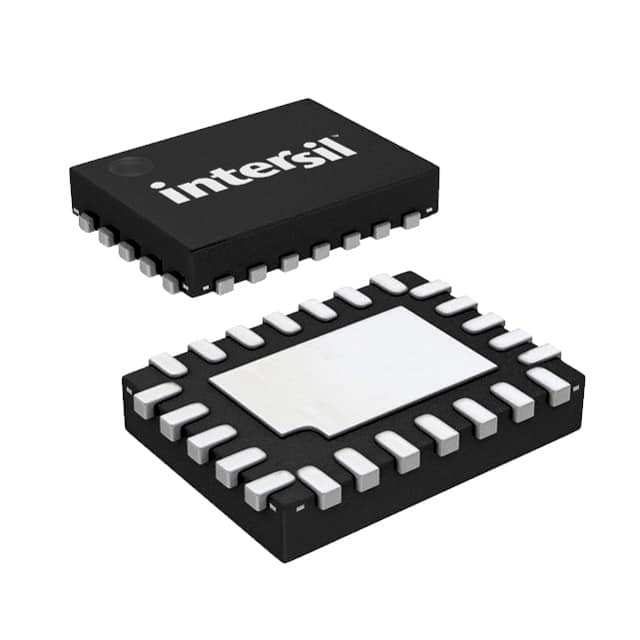
- Part No.:
- ISL29501IRZ-T7A
- Manufacturer:
- Renesas
- Category:
- Sensor and Detector Interfaces
- Package:
- 24-VFQFN Exposed Pad
- Datasheet:
-
 ISL29501IRZ-T7A.pdf
- Description:
- IC TOF SIGNAL PROCESSOR 24QFN
- Quantity:
- Payment:

- Shipping:

Inventory:463
Please send an inquiry. Send us your inquiry, and we will respond immediately.
Product details
Overview
ISL29501IRZ-T7A from Renesas Electronics is a Time-of-Flight (ToF) signal processing IC designed for optical distance and proximity sensing. It integrates an emitter driver (up to 255mA), analog front-end with transimpedance amplifier, on-chip DSP, and I²C interface. Operates at 4.5MHz modulation frequency with 2.7V–3.3V supply, enabling long-range industrial and robotic ranging when paired with external IR emitter and photodiode.
For engineers reviewing the ISL29501IRZ-T7A datasheet, ISL29501IRZ-T7A pinout, ISL29501IRZ-T7A application, or ISL29501IRZ-T7A equivalent, this page delivers verified technical context, real-world design meaning of key specs, validated pin functions, confirmed alternatives, and supply support for drone collision avoidance, silo level monitoring, smart fixture presence detection, and industrial automation systems.
Technical Context
The ISL29501IRZ-T7A implements Square Wave Modulated Indirect Time-of-Flight (SWM-ITOF) using analog quadrature signal processing to extract phase shift between emitted and reflected 4.5MHz square waves. Its fully differential AFE includes a programmable-gain TIA (8kΩ default) and LNA, followed by demodulation into I/Q components for DSP-based distance calculation.
It supports two sampling modes-Continuous (default) and Single Shot-with configurable integration time and auto gain control to prevent ADC saturation at short range. Ambient light rejection is achieved via active DC cancellation in the TIA stage and AC-coupled downstream signal path, ensuring stable operation under varying lighting conditions.
Key Specifications
| Parameter | Value and Actual Design Meaning |
|---|---|
| Modulation Frequency | 4.5 MHz ±0.15 MHz - defines base timing resolution (15 cm/ns delay); enables ~33 m full-cycle unambiguous range. |
| Emitting Current Range | Up to 255 mA pulsed - programmable via dual DACs (Reg 0x90/0x91); supports high-SNR operation with VCSELs or high-power IR LEDs. |
| Supply Voltage | 2.7 V to 3.3 V - three independent rails (AVCC, DVCC, EVCC) require separate decoupling; EVCC needs ≥1 V headroom over emitter forward voltage. |
| I²C Interface | Standard-mode (400 kHz), 1.8 V/3.3 V compatible - supports multi-device addressing via A1/A2 pins; open-drain IRQ output requires 2.7 kΩ pull-up. |
| Operating Temperature | −40 °C to +85 °C - qualified for industrial and automotive-adjacent environments including drone landing systems and gate sensors. |
| Photodiode Input | Differential PDp/PDn with 1 V reverse bias (PDp = 1.7 V, PDn = 0.7 V); supports ≤15 pF detector capacitance for optimal noise performance. |
| Power Consumption | 55 mA active (measuring), 2.5 µA sleep, 1 µA shutdown - enables battery-powered presence detection with configurable duty cycling. |
Pinout & Package
ISL29501IRZ-T7A is housed in a RoHS-compliant, low-profile 24-lead QFN package (4 mm × 5 mm, L24.4x5F), with exposed thermal pad (EPAD) tied to AVSS. The package supports reflow per JEDEC J-STD-020 and has θJA = 35 °C/W.
| Pin/Terminal | Circuit Role | Design Meaning |
|---|---|---|
| PDp / PDn | Photodiode cathode/anode inputs | Differential input to TIA; reverse-biased at 1 V; requires ≤15 pF detector capacitance for robust SNR. |
| EIR / EVSS | Emitting current output / emitter ground | EIR drives emitter anode; EVSS connects to emitter cathode; 1 V headroom required for linear 255 mA drive. |
| CEn | Chip enable (active low) | Hardware master enable; retains register state when toggled; allows fast wake/sleep without I²C traffic. |
| SS | Sample start trigger | Edge-sensitive input (HIGH→LOW); initiates measurement in Single Shot mode or Free Run mode. |
| IRQ | Interrupt request output | Open-drain, active-low signal indicating measurement completion; requires external 2.7 kΩ pull-up to DVCC. |
| SDA / SCL / A1 / A2 | I²C data/clock/address pins | Support 1.8 V/3.3 V logic; A1/A2 set LSBs of 7-bit I²C address (default 0x44); IRQ shares voltage domain with SDA/SCL. |
| RSET | Bias current reference | Connects to 10 kΩ ±1% resistor to AVSS; sets internal bias currents affecting AFE linearity and noise floor. |
Key Features
| Feature | Design Value |
|---|---|
| Wavelength-agnostic ToF architecture | Supports NIR/MWIR emitters (800–1300 nm); enables system-level optimization of emitter/detector pair for SNR and eye safety. |
| On-chip ambient light rejection | Active DC cancellation in TIA + AC-coupled signal chain prevents drift and distance error from ambient light fluctuations. |
| Programmable emitter drive | Dual DAC (range + fine) enables precise 0–255 mA pulsed current tuning to match emitter Vf, thermal limits, and optical power requirements. |
| Auto gain control (AGC) | Dynamic TIA gain adjustment prevents ADC saturation at close range while preserving resolution at long range. |
| Integrated interrupt controller | Configurable IRQ assertion on measurement completion, timeout, or error; reduces host MCU polling overhead in battery-constrained systems. |
Applications
| Drone Collision Avoidance | Industrial Silo Level Monitoring |
|---|---|
Use Scenario: UAVs performing precision landings or obstacle navigation in GPS-denied indoor/outdoor environments. IC Role / Device Role / Timing Role: ISL29501IRZ-T7A computes real-time distance from modulated IR return signal using SWM-ITOF phase analysis. Use Value: Enables sub-10 cm accuracy at >2 m range with low latency (<3 µs wake-to-sample), supporting safe soft-landing protocols. |
Use Scenario: Continuous bulk material level measurement in tall concrete or steel silos under variable dust and lighting. IC Role / Device Role / Timing Role: ISL29501IRZ-T7A processes reflected IR pulses through high-rejection AFE to deliver stable distance output despite ambient light shifts. Use Value: Delivers repeatable 0.5% full-scale accuracy over −40°C to +85°C, eliminating need for recalibration during seasonal temperature swings. |
| Smart Toilet Presence Detection | Automotive Parking Sensor |
Use Scenario: Touchless activation of flush, lid, or bidet functions in residential/commercial restrooms. IC Role / Device Role / Timing Role: ISL29501IRZ-T7A operates in Single Shot mode triggered by PIR or timer, measuring proximity within 0.1–1.5 m. Use Value: Achieves <10 µA average current in sleep + triggered burst mode, extending battery life beyond 2 years on coin cell. |
Use Scenario: Rear bumper-mounted distance sensing for parking assistance in vehicles with limited mounting depth. IC Role / Device Role / Timing Role: ISL29501IRZ-T7A interfaces with 940 nm VCSEL and matched photodiode to reject solar IR interference. Use Value: Provides 2 cm resolution up to 3 m with built-in crosstalk calibration, meeting OEM EMI and functional safety pre-screening requirements. |
Equivalent & Alternatives
The following parts are listed as comparable options for similar ToF signal processing applications.
| Alternative Part | Technical Difference | Application Difference | Selection Advice |
|---|---|---|---|
| VL53L1X (STMicroelectronics) | Integrated SPAD array + lens; fixed 940 nm emitter; no external photodiode support; smaller 2.4 mm × 2.4 mm DFN. | Optimized for short-range (<2 m), high-volume consumer applications; lacks flexibility for custom optics or wavelength selection. | Choose VL53L1X for space-constrained, cost-sensitive designs where integrated optics suffice and external component optimization is unnecessary. |
| TDC1000 (Texas Instruments) | Ultrasonic ToF AFE (not optical); supports piezoelectric transducers; no built-in emitter driver or DSP; requires external MCU for distance calculation. | Suitable for liquid level, tank gauging, or humid environments where optical sensing fails; incompatible with IR-based ranging. | Choose TDC1000 only for ultrasonic-based systems; not a functional substitute for ISL29501IRZ-T7A's optical ToF signal chain or integrated DSP. |
Compared with VL53L1X and TDC1000, the ISL29501IRZ-T7A uniquely combines external emitter/detector flexibility, wavelength agnosticism, and on-chip DSP for optical ToF-making it the only option among the three that supports custom NIR/MWIR system design with calibrated long-range (>3 m) performance and ambient light resilience.
Availability
ISL29501IRZ-T7A is available at Aetrix Electronics and suitable for drone collision avoidance, industrial silo level monitoring, smart fixture presence detection, and automotive parking sensor applications requiring stable component supply across extended temperature ranges and long production lifecycles.
Supply support for ISL29501IRZ-T7A includes scheduled delivery planning, volume procurement assistance, BOM continuity management, traceable sourcing, and lifecycle availability coordination for OEM customers, industrial embedded developers, connected-device designers, and electronics production programs.
Manufacturer
Renesas Electronics is a global semiconductor leader delivering microcontrollers, analog power, and SoC solutions for industrial, automotive, and infrastructure markets.
The ISL29501IRZ-T7A belongs to Renesas' optical sensing product line, engineered specifically for high-accuracy, low-power, externally configurable Time-of-Flight ranging in demanding industrial and robotics applications.
FAQ
What is the maximum emitter current supported by the ISL29501IRZ-T7A?
The ISL29501IRZ-T7A supports up to 255 mA of pulsed emitter current, programmable via dual DAC registers (0x90 for range, 0x91 for fine control). This value assumes adequate headroom (≥1 V) between EVCC and emitter forward voltage; reduced headroom degrades linearity but does not damage the device. The threshold DAC (Reg 0x93) adds up to 30 mA DC bias if needed for laser threshold control.
Does the ISL29501IRZ-T7A include an integrated photodiode or emitter?
No, the ISL29501IRZ-T7A does not include an integrated photodiode or emitter. It is a signal processing IC designed to interface with external components: an IR emitter (LED, VCSEL, or laser) connected to EIR/EVSS, and a photodiode connected differentially to PDp/PDn. This architecture enables system-level optimization of optical performance, wavelength, and power efficiency.
How does the ISL29501IRZ-T7A handle ambient light interference?
The ISL29501IRZ-T7A employs two-stage ambient light rejection: first, active DC cancellation in the TIA stage nulls ambient-induced photocurrent; second, AC coupling in downstream analog stages blocks residual DC drift. This preserves phase integrity for accurate ToF calculation-even under rapidly changing ambient conditions-without requiring optical filtering beyond standard NIR bandpass selection.
What are the I²C address options for the ISL29501IRZ-T7A?
The ISL29501IRZ-T7A uses a 7-bit I²C address determined by A1 and A2 pin states: A2 = high/low and A1 = high/low yield addresses 0x44, 0x45, 0x46, or 0x47. Default configuration (both pins floating or pulled to DVSS) results in 0x44. Address is read-only and cannot be changed via register write; hardware pin strapping is mandatory for multi-device bus operation.
Can the ISL29501IRZ-T7A operate in single-shot mode without external triggering?
Yes, the ISL29501IRZ-T7A supports software-triggered single-shot mode via Command Register (0xB0) write 0x49 ("soft-start"), eliminating dependency on the SS pin. This allows full measurement initiation-including integration, processing, and IRQ assertion-through I²C alone, simplifying host MCU GPIO usage while retaining deterministic timing control.
ISL29501IRZ-T7A Specifications
- Product attributes
- Attribute value
- Manufacturer:
- Renesas
- Package/Case:
- 24-VFQFN Exposed Pad
- Series:
- -
- Packaging:
- Tape & Reel (TR)
- Product Status:
- Active
- Programmable:
- Not Verified
- Type:
- Time to Flight to Digital Converter
- Input Type:
- -
- Output Type:
- -
- Current - Supply:
- -
- Operating Temperature:
- -40°C ~ 85°C
- Grade:
- -
- Qualification:
- -
- Mounting Type:
- Surface Mount
- Supplier Device Package:
- 24-QFN (4x5)
ISL29501IRZ-T7A FAQ
1.How can I place an order for ISL29501IRZ-T7A through Aetrix?
Please submit a Request for Quotation (RFQ) for ISL29501IRZ-T7A on Aetrix. Our sales agent will provide a competitive quotation and guide you through the order confirmation once you accept the terms.
2.Are the price and stock information for ISL29501IRZ-T7A reliable?
The price and inventory of ISL29501IRZ-T7A are updated periodically and may fluctuate due to market conditions. Stock and pricing data are typically refreshed every 24 hours. Quotation validity for ISL29501IRZ-T7A is usually 5 days.
3.What payment methods are accepted for ISL29501IRZ-T7A?
We accept Wire Transfer, PayPal, Credit Card, Western Union, MoneyGram, and Escrow for ISL29501IRZ-T7A transactions.
Note: Certain payment methods may incur a processing fee.
4.How is shipping managed for ISL29501IRZ-T7A?
ISL29501IRZ-T7A orders can be shipped via leading logistics carriers, including DHL, UPS, FedEx, TNT, or Registered Mail.
Once your ISL29501IRZ-T7A order is processed, you will receive an email with the shipment details and tracking number.
Note: Tracking information may take up to 24 hours to appear. Express delivery typically takes 3–5 business days.
5.How can I obtain technical support or documentation for ISL29501IRZ-T7A?
For technical support, including ISL29501IRZ-T7A datasheets, pinout diagrams, or application guidance, please contact our engineering support team. They can provide detailed documentation and assistance for your ISL29501IRZ-T7A requirements.
6.How does Aetrix verify that ISL29501IRZ-T7A is sourced from the original manufacturer or authorized distributors?
All ISL29501IRZ-T7A products on Aetrix are procured from qualified distributors and authorized channels. Our dedicated quality assurance team conducts strict verification, including traceability checks and, if necessary, third-party testing. This ensures that ISL29501IRZ-T7A meets industry standards.
7.What is the process for return or replacement of ISL29501IRZ-T7A?
All ISL29501IRZ-T7A units undergo pre-shipment inspection (PSI). If there is an issue with ISL29501IRZ-T7A, returns or replacements are accepted under the following conditions:
1.Quantity discrepancies, incorrect items, or visible external defects (such as breakage or corrosion), acknowledged by Aetrix.
2.The issue is reported within 90 days of delivery.
3.The ISL29501IRZ-T7A part is unused and in its original packaging.
Return procedure for ISL29501IRZ-T7A:
1.Submit a request within 90 days.
2.Obtain a Return Material Authorization (RMA) from Aetrix.
ISL29501IRZ-T7A Tags

-
RE46C100S8TF
Microchip Technology
-
XTR111AIDRCR
Texas Instruments
-
XTR111AIDGQR
Texas Instruments
-
XTR117AIDGKR
Texas Instruments
-
XTR111AIDGQT
Texas Instruments

-
XTR115UA/2K5
Texas Instruments
-
MAX14626ETT+T
Analog Devices Inc./Maxim Integrated
-
XTR116UA/2K5
Texas Instruments
-
XTR115U/2K5
Texas Instruments
-
XTR116U/2K5
Texas Instruments
-
PGA308AIDGSR
Texas Instruments
-
XTR300AIRGWR
Texas Instruments
Tech Hub

TTL and CMOS logic families differ in thresholds, loading, output drive, power and timing. This engineering guide compares 74HC and 74HCT, calculates noise margins and checks 3.3 V/5 V compatibility.

A practical engineering guide to 3.3V and 5V logic compatibility, input thresholds, resistor dividers, translator ICs, MOSFET level shifting, I2C pull-ups, timing limits and power-sequencing risks.

The 74HC595 uses push-pull logic outputs, while the TPIC6B595 uses 50 V open-drain DMOS sinks for higher-power loads. This guide compares timing, current limits, 3.3 V interfacing, load wiring, thermal…

The 74HC595 converts serial data into eight stable parallel outputs. This guide covers pin functions, shift and storage timing, OE and MR behavior, drive-current limits, cascading, voltage compatibilit…

A technical comparison of level-sensitive latches and edge-triggered flip-flops, covering timing windows, setup and hold limits, master–slave operation, time borrowing, race-through, HDL inference and…

A D latch stores one bit while Enable controls when data can pass. This reference covers gate-level operation, truth tables, transparency, setup and hold timing, LE versus OE, common ICs and practical …

An SR latch stores one bit through cross-coupled feedback. This engineering reference covers NOR and NAND implementations, truth tables, forbidden-state recovery, gated operation, switch debouncing, fa…

Latch circuits retain one bit through feedback. This technical reference covers SR and D latches, truth tables, transparency, timing limits, latch-versus-flip-flop behavior, applications and common log…

An engineering guide to LED driver operation, constant-current and constant-voltage outputs, linear and switching topologies, dimming, IC selection, calculations, replacement compatibility, and fault c…

Operational amplifier guide covering op amp basics, feedback, ideal vs real op amps, common configurations, buffer circuits, offset, bias current, gain-bandwidth, slew rate, rail-to-rail limits and sel…


