
 My Inquiry
 My Account


Renesas ISL54062IRTZ
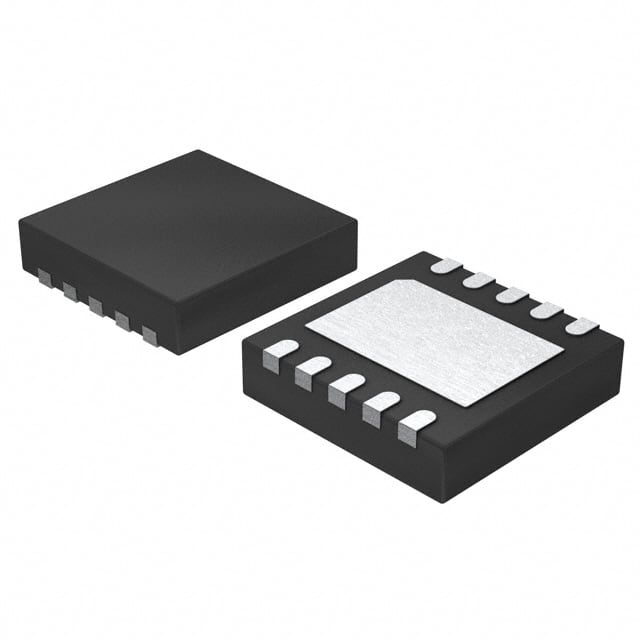
- Part No.:
- ISL54062IRTZ
- Manufacturer:
- Renesas
- Package:
- 10-VFDFN Exposed Pad
- Datasheet:
-
 ISL54062IRTZ.pdf
- Description:
- IC SWITCH SPDTX2 550MOHM 10TDFN
- Quantity:
- Payment:

- Shipping:

Inventory:2,220
Please send an inquiry. Send us your inquiry, and we will respond immediately.
Product details
Overview
ISL54062IRTZ from Intersil is a dual SPDT analog switch optimized for audio signal routing in portable battery-powered systems. It delivers sub-ohm ON-resistance (0.57 Ω at 4.3 V), negative signal swing down to 6.5 V below V+, and integrated click-and-pop elimination circuitry - enabling clean audio switching in MP3 players, smartphones, and medical handhelds.
For engineers reviewing the ISL54062IRTZ datasheet, ISL54062IRTZ pinout, ISL54062IRTZ application, or ISL54062IRTZ equivalent, this page provides verified specifications, package mapping to the 10-lead 3×3 mm TDFN, functional truth table, real-world audio use cases, and two validated alternative parts with documented technical and application differences.
Technical Context
The ISL54062IRTZ implements a committed dual SPDT architecture with independent IN1/IN2 control, guaranteeing break-before-make timing (≤22 ns at 4.3 V) and precise channel matching (ΔrON ≤ 30 mΩ). Its internal level shifters support 1.8 V logic compatibility up to +3 V supply, while dedicated shunt switches on NO/NC pins discharge DC transients via 140 Ω paths to ground.
It operates across +1.8 V to +6.5 V single supply, sustaining full analog signal range (V+ − 6.5 V to V+) and low THD+N (0.02% @ 32 Ω) without rail-to-rail input buffers. The device uses standard CMOS switch cells with ESD diodes tied to ±Rings, requiring V+ sequencing before signal application to avoid forward biasing.
Key Specifications
| Parameter | Value and Actual Design Meaning |
|---|---|
| Switch Type | Dual SPDT (2× normally open + 2× normally closed), configurable as dual 2:1 multiplexer |
| ON-Resistance (rON) | 0.57 Ω typical at V+ = 4.3 V - ensures <0.1 dB insertion loss in 32 Ω audio paths |
| Negative Signal Swing | Up to 6.5 V below V+ - supports AC-coupled audio signals with DC bias (e.g., −1.5 V to +5 V at V+ = 5 V) |
| Click & Pop Elimination | Integrated shunt switches on NO/NC pins with 140 Ω ground path - eliminates audible transients during source switching |
| Supply Range | +1.8 V to +6.5 V single supply - enables direct interface with Li-ion (3.0–4.2 V) and 3.3/5 V rails |
| Logic Compatibility | 1.8 V CMOS inputs (VINH ≥ 1.4 V, VINL ≤ 0.5 V at 3 V supply) - interoperable with modern baseband processors |
| THD+N | 0.02% @ 20 Hz–20 kHz, 32 Ω load - preserves fidelity in headphone and speaker outputs |
Pinout & Package
ISL54062IRTZ is packaged in a RoHS-compliant 10-lead 3×3 mm TDFN (Package Drawing L10.3x3A) with exposed thermal pad. Pin 1 is marked by a dot; top-side marking is "4062".
| Pin/Terminal | Circuit Role | Design Meaning |
|---|---|---|
| V+ | Positive power supply | Accepts +1.8 V to +6.5 V; requires local 0.1 µF decoupling to GND for stable switching |
| GND | Ground reference | Return path for power and signal; connects to exposed thermal pad for thermal dissipation |
| IN1, IN2 | Digital control inputs | CMOS-compatible logic inputs; drive SPDT state of Channel 1 and Channel 2 independently |
| COM1, COM2 | Analog common terminals | Signal output nodes; connect to load (e.g., amplifier input or speaker); support bidirectional current flow |
| NO1, NO2 | Normally open analog inputs | Connect to COMx only when corresponding INx = 1; used for active-source selection |
| NC1, NC2 | Normally closed analog inputs | Connect to COMx only when corresponding INx = 0; provide default path during power-up or standby |
Key Features
| Feature | Design Value |
|---|---|
| Guaranteed break-before-make | Ensures no signal shorting between NC and NO paths during transition (tD ≤ 22 ns), preventing audio glitches |
| rON flatness ≤ 0.14 Ω | Minimizes harmonic distortion across full signal swing (−6.5 V to V+), critical for high-fidelity audio |
| Low charge injection (200 pC typ) | Reduces voltage step artifacts at COMx during switching - essential for DC-coupled sensor interfaces |
| ESD robustness >6 kV HBM | Enables handling in standard assembly environments without special ESD controls |
| 10 mΩ rON matching (typ) | Supports balanced stereo channel switching with matched gain and phase response |
Applications
| Smartphone Audio Routing | Portable Medical Monitor Input Selection |
|---|---|
Use Scenario: Switching between earpiece, loudspeaker, and headset outputs in a cellular phone with single-supply audio codec. IC Role / Device Role / Timing Role: Dual SPDT analog switch providing low-distortion, glitch-free path selection under 1.8 V logic control. Use Value: Eliminates audible click/pop during call handoff using integrated shunt circuitry; sub-ohm rON preserves SNR in 32 Ω headphone loads. |
Use Scenario: Selecting between ECG electrode inputs and calibration reference signals in a handheld patient monitor. IC Role / Device Role / Timing Role: Bidirectional analog switch enabling safe, low-leakage signal routing with guaranteed break-before-make timing. Use Value: Negative signal swing capability accommodates bipolar bio-signal ranges; <0.7 µA max ICOM(ON) prevents baseline drift in high-impedance sensor paths. |
| MP3 Player Line-Out Multiplexing | Battery-Powered Test Equipment Signal Path |
Use Scenario: Routing stereo line-out signals to either 3.5 mm jack or internal DAC in a portable media player. IC Role / Device Role / Timing Role: Dual 2:1 multiplexer managing left/right channel signal paths with independent logic control. Use Value: 60 MHz −3 dB bandwidth supports full audio spectrum; 0.02% THD+N maintains fidelity across dynamic range. |
Use Scenario: Configuring input attenuation and signal conditioning paths in a handheld oscilloscope or DMM. IC Role / Device Role / Timing Role: Low-rON, high-isolation analog switch isolating measurement channels from reference sources. Use Value: 60 dB off-isolation at 100 kHz suppresses crosstalk between test channels; 1.8 V operation extends battery life in field instruments. |
Equivalent & Alternatives
The following parts are listed as comparable options for similar dual SPDT analog switch applications.
| Alternative Part | Technical Difference | Application Difference | Selection Advice |
|---|---|---|---|
| TMUX1574RTER | Higher rON (1.9 Ω @ 3.3 V), no negative swing (−0.3 V min), no integrated click/pop circuitry | Suitable for general-purpose signal routing but not audio-grade transient suppression | Select when cost sensitivity outweighs audio performance; verify external pop mitigation if used in speaker paths |
| ADG884BRMZ-REEL7 | Lower rON (0.45 Ω @ 5 V), wider supply (1.8–5.5 V), no negative swing (−0.1 V min), no click/pop feature | Optimized for precision instrumentation; lacks audio-specific transient suppression | Prefer for low-noise sensor front-ends where signal integrity > audio artifact elimination |
Compared with TMUX1574RTER and ADG884BRMZ-REEL7, ISL54062IRTZ uniquely combines negative signal swing, integrated click/pop elimination, and guaranteed break-before-make - making it the only choice for battery-powered audio systems requiring zero-audible-transient switching without external components.
Availability
ISL54062IRTZ is available at Aetrix Electronics and suitable for smartphone audio routing, portable medical monitors, MP3 player line-out multiplexing, and battery-powered test equipment requiring stable component supply across industrial temperature range (−40°C to +85°C).
Supply support for ISL54062IRTZ includes scheduled delivery planning, volume procurement assistance, BOM continuity management, traceable sourcing, and lifecycle availability coordination for OEM customers, industrial embedded developers, connected-device designers, and electronics production programs.
Manufacturer
Intersil (now part of Renesas Electronics) designs high-performance analog ICs for power management, precision signal conditioning, and interface applications.
The ISL54062IRTZ belongs to Intersil's low-voltage analog switch product line, engineered specifically for audio signal integrity and ultra-low-power operation in portable consumer and medical electronics.
FAQ
What is the maximum negative signal voltage supported by the ISL54062IRTZ?
The ISL54062IRTZ supports analog signals down to 6.5 V below the positive supply rail (V+). For example, with V+ = 4.3 V, the minimum allowable signal voltage is −2.2 V. This enables direct interfacing with AC-coupled audio sources that include DC bias, without external level-shifting circuitry. The specification is guaranteed across the full operating temperature range (−40°C to +85°C).
Does the ISL54062IRTZ require external components to eliminate click and pop noise?
No, the ISL54062IRTZ integrates dedicated click-and-pop elimination circuitry with internal shunt switches on both NO and NC pins. These switches activate complementarily to the main switch and connect a ~140 Ω path to ground, discharging transients before they reach the speaker. No external resistors or capacitors are needed - the feature is fully self-contained within the ISL54062IRTZ die.
Is the ISL54062IRTZ pin-compatible with other members of the ISL5406x family?
Yes, the ISL54062IRTZ shares identical pinout and footprint with ISL54062IRUZ (µTQFN variant) and all ISL54062 ordering options. All variants use the same 10-pin configuration (V+, GND, IN1, NO1, COM1, NC1, IN2, NO2, COM2, NC2) and truth table. Mechanical differences exist only in package dimensions (3×3 mm TDFN vs. 1.8×1.4 mm µTQFN), but PCB layout remains interchangeable for the TDFN version.
What is the guaranteed break-before-make time for the ISL54062IRTZ?
The ISL54062IRTZ guarantees a break-before-make time delay (tD) of ≤22 ns at V+ = 4.5 V, measured under RL = 50 Ω and CL = 35 pF conditions. This parameter is production-tested and ensures no overlap between NC and NO conduction paths during switching - critical for preventing momentary shorts in audio or sensor signal chains. Full-temperature-range compliance is characterized to ≤30 ns at −40°C to +85°C.
Can the ISL54062IRTZ operate from a 1.8 V supply while maintaining audio performance?
Yes, the ISL54062IRTZ is fully specified down to +1.8 V supply. At this voltage, rON rises to 1.87 Ω (typ), tON increases to 145 ns (typ), and THD+N remains at 0.04% - still sufficient for voice-band and mid-fidelity audio. Its 1.8 V logic compatibility (VINH ≥ 1.0 V, VINL ≤ 0.4 V) allows direct interface with ultra-low-power microcontrollers, making ISL54062IRTZ suitable for energy-constrained wearable devices.
ISL54062IRTZ Specifications
- Product attributes
- Attribute value
- Manufacturer:
- Renesas
- Series:
- -
- Packaging:
- Tube
- Product Status:
- Obsolete
- Switch Circuit:
- SPDT
- Multiplexer/Demultiplexer Circuit:
- 2:1
- Number of Circuits:
- 2
- On-State Resistance (Max):
- 550mOhm (Typ)
- Channel-to-Channel Matching (ΔRon):
- 15mOhm
- Voltage - Supply, Single (V+):
- 1.8V ~ 6.5V
- Voltage - Supply, Dual (V±):
- -
- Switch Time (Ton, Toff) (Max):
- 35ns, 16ns
- -3db Bandwidth:
- 60MHz
- Charge Injection:
- 170pC
- Channel Capacitance (CS(off), CD(off)):
- 36pF
- Current - Leakage (IS(off)) (Max):
- -
- Crosstalk:
- -75dB @ 1MHz
- Operating Temperature:
- -40°C ~ 85°C (TA)
- Grade:
- -
- Qualification:
- -
- Mounting Type:
- Surface Mount
- Supplier Device Package:
- 10-TDFN (3x3)
ISL54062IRTZ FAQ
1.How can I place an order for ISL54062IRTZ through Aetrix?
Please submit a Request for Quotation (RFQ) for ISL54062IRTZ on Aetrix. Our sales agent will provide a competitive quotation and guide you through the order confirmation once you accept the terms.
2.Are the price and stock information for ISL54062IRTZ reliable?
The price and inventory of ISL54062IRTZ are updated periodically and may fluctuate due to market conditions. Stock and pricing data are typically refreshed every 24 hours. Quotation validity for ISL54062IRTZ is usually 5 days.
3.What payment methods are accepted for ISL54062IRTZ?
We accept Wire Transfer, PayPal, Credit Card, Western Union, MoneyGram, and Escrow for ISL54062IRTZ transactions.
Note: Certain payment methods may incur a processing fee.
4.How is shipping managed for ISL54062IRTZ?
ISL54062IRTZ orders can be shipped via leading logistics carriers, including DHL, UPS, FedEx, TNT, or Registered Mail.
Once your ISL54062IRTZ order is processed, you will receive an email with the shipment details and tracking number.
Note: Tracking information may take up to 24 hours to appear. Express delivery typically takes 3–5 business days.
5.How can I obtain technical support or documentation for ISL54062IRTZ?
For technical support, including ISL54062IRTZ datasheets, pinout diagrams, or application guidance, please contact our engineering support team. They can provide detailed documentation and assistance for your ISL54062IRTZ requirements.
6.How does Aetrix verify that ISL54062IRTZ is sourced from the original manufacturer or authorized distributors?
All ISL54062IRTZ products on Aetrix are procured from qualified distributors and authorized channels. Our dedicated quality assurance team conducts strict verification, including traceability checks and, if necessary, third-party testing. This ensures that ISL54062IRTZ meets industry standards.
7.What is the process for return or replacement of ISL54062IRTZ?
All ISL54062IRTZ units undergo pre-shipment inspection (PSI). If there is an issue with ISL54062IRTZ, returns or replacements are accepted under the following conditions:
1.Quantity discrepancies, incorrect items, or visible external defects (such as breakage or corrosion), acknowledged by Aetrix.
2.The issue is reported within 90 days of delivery.
3.The ISL54062IRTZ part is unused and in its original packaging.
Return procedure for ISL54062IRTZ:
1.Submit a request within 90 days.
2.Obtain a Return Material Authorization (RMA) from Aetrix.
ISL54062IRTZ Tags

-
SN74LVC1G3157DBVR
Texas Instruments

-
SN74LVC1G66DBVR
Texas Instruments
-
SN74LVC1G66DCKR
Texas Instruments
-
SN74LVC1G3157DSFR
Texas Instruments
-
1P1G3157QDCKRQ1
Texas Instruments
-
SN74LVC2G66DCUR
Texas Instruments
-
SN74LV4052APWR
Texas Instruments
-
74HC4051D,653
Nexperia USA Inc.
-
SN74LV4051APWR
Texas Instruments
-
CD74HC4052PWR
Texas Instruments
-
CD74HC4051PWR
Texas Instruments
-
TS5A3166DBVR
Texas Instruments
Tech Hub

TTL and CMOS logic families differ in thresholds, loading, output drive, power and timing. This engineering guide compares 74HC and 74HCT, calculates noise margins and checks 3.3 V/5 V compatibility.

A practical engineering guide to 3.3V and 5V logic compatibility, input thresholds, resistor dividers, translator ICs, MOSFET level shifting, I2C pull-ups, timing limits and power-sequencing risks.

The 74HC595 uses push-pull logic outputs, while the TPIC6B595 uses 50 V open-drain DMOS sinks for higher-power loads. This guide compares timing, current limits, 3.3 V interfacing, load wiring, thermal…

The 74HC595 converts serial data into eight stable parallel outputs. This guide covers pin functions, shift and storage timing, OE and MR behavior, drive-current limits, cascading, voltage compatibilit…

A technical comparison of level-sensitive latches and edge-triggered flip-flops, covering timing windows, setup and hold limits, master–slave operation, time borrowing, race-through, HDL inference and…

A D latch stores one bit while Enable controls when data can pass. This reference covers gate-level operation, truth tables, transparency, setup and hold timing, LE versus OE, common ICs and practical …

An SR latch stores one bit through cross-coupled feedback. This engineering reference covers NOR and NAND implementations, truth tables, forbidden-state recovery, gated operation, switch debouncing, fa…

Latch circuits retain one bit through feedback. This technical reference covers SR and D latches, truth tables, transparency, timing limits, latch-versus-flip-flop behavior, applications and common log…

An engineering guide to LED driver operation, constant-current and constant-voltage outputs, linear and switching topologies, dimming, IC selection, calculations, replacement compatibility, and fault c…

Operational amplifier guide covering op amp basics, feedback, ideal vs real op amps, common configurations, buffer circuits, offset, bias current, gain-bandwidth, slew rate, rail-to-rail limits and sel…


