
 My Inquiry
 My Account


Renesas ISL6298-2CR4Z
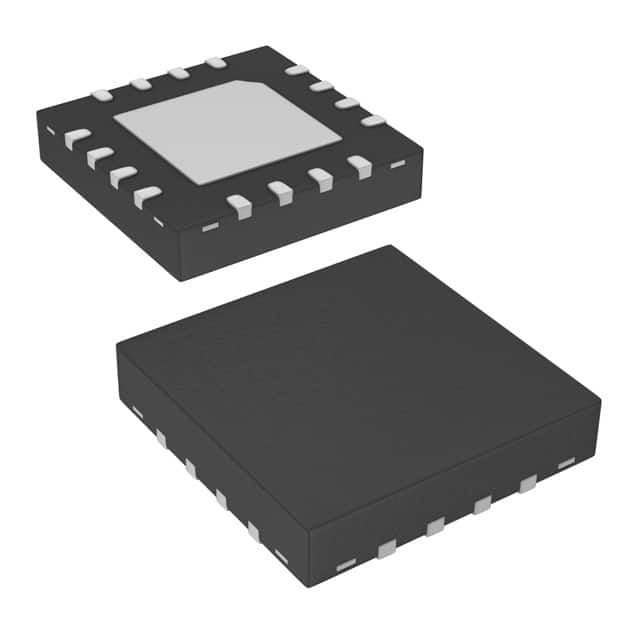
- Part No.:
- ISL6298-2CR4Z
- Manufacturer:
- Renesas
- Category:
- Battery Chargers
- Package:
- 16-VQFN Exposed Pad
- Datasheet:
-
 ISL6298-2CR4Z.pdf
- Description:
- IC BATT CHG LI-ION 1CELL 16QFN
- Quantity:
- Payment:

- Shipping:

Inventory:100
Please send an inquiry. Send us your inquiry, and we will respond immediately.
Product details
Overview
ISL6298-2CR4Z from Renesas (formerly Intersil) is a thermally enhanced 16-lead 4×4 mm QFN linear battery charger IC for single-cell Li-ion/Li-polymer batteries, delivering programmable constant-current up to 450 mA, ±1% voltage regulation at 4.20 V, and integrated thermal foldback protection. It operates across -20°C to +70°C and targets low-power portable devices such as Bluetooth headsets and MP3 players.
For engineers reviewing the ISL6298-2CR4Z datasheet, ISL6298-2CR4Z pinout, ISL6298-2CR4Z application, or ISL6298-2CR4Z equivalent, this page provides verified technical context, validated pin functions, confirmed CC/CV charging behavior, real-world thermal foldback thresholds, and two manufacturer-validated alternative parts with documented functional differences.
Technical Context
The ISL6298-2CR4Z implements a fully integrated CC/CV charge algorithm with preconditioning (20% of programmed CC current below 2.8 V), user-programmable end-of-charge threshold (via IMIN), and fixed 4.20 V regulated output voltage (±1% accuracy). Its internal 2.8 V reference (V2P8) powers external NTC circuitry and enables adapter presence detection.
Charge timing is governed by an internal oscillator tied to an external CTIME capacitor (e.g., 15 nF yields 3.5-hour fast-charge timeout), while thermal foldback activates at 100°C (±15°C) with 25 mA/°C current reduction slope. The device supports battery removal detection via TEMP pin voltage monitoring against VRMV (2.25 V) and temperature windowing using VTMIN (2.8 V) and VTMAX (0.38 V).
Key Specifications
| Parameter | Value and Actual Design Meaning |
|---|---|
| Output Voltage | 4.20 V ±1% - precise CV termination point for Li-ion cells; ensures full capacity without overvoltage stress. |
| Max Charge Current | 450 mA - programmable via IREF resistor; enables optimization for battery capacity and thermal budget. |
| End-of-Charge Threshold | 25 mA typical (RIMIN = 80 kΩ) - sets minimum current level before STATUS asserts EOC; prevents premature termination during thermal foldback. |
| Recharge Threshold | 4.0 V - restarts charging when battery self-discharges below this voltage; maintains full state-of-charge in standby. |
| Thermal Foldback Start | 100°C ±15°C - initiates linear current reduction to prevent junction overheating in space-constrained PCB layouts. |
| Operating Temp Range | -20°C to +70°C ambient - validated for consumer portable equipment environments, not extended industrial or automotive ranges. |
| V2P8 Reference Output | 2.8 V ±3% - powers external NTC bias network and serves as pull-up source for open-drain STATUS/FAULT pins. |
Pinout & Package
ISL6298-2CR4Z uses a thermally enhanced 16-lead 4×4 mm QFN package (L16.4x4) with exposed thermal pad. Pin numbering follows top-view layout per FN9173 Rev 4.00, Page 2.
| Pin/Terminal | Circuit Role | Design Meaning |
|---|---|---|
| VIN (Pins 1, 15, 16) | Input power supply | Accepts 4.3–6.5 V wall adapter input; multiple pins reduce trace resistance and improve thermal conduction. |
| FAULT (Pin 2) | Open-drain fault indicator | Pulled LOW on TEMP window violation, battery removal, or TIMEOUT fault; requires external pull-up to V2P8 or VIN. |
| STATUS (Pin 3) | Open-drain charge status | Pulled LOW during active charging; transitions HIGH and latches upon meeting EOC conditions (VBAT > 4.0 V & ICHARGE < IEOC). |
| TIME (Pin 4) | Oscillator timing node | Connects to GND via CTIME capacitor (e.g., 15 nF); sets both oscillator period (3.0 ms typ.) and total fast-charge timeout (3.5 hrs). |
| GND (Pin 5) | System ground reference | Primary return path for charge current and internal logic; must be low-impedance connection to thermal pad. |
| TOEN (Pin 6) | Timeout enable control | Pull LOW to disable safety timer; floating or HIGH enables 22-bit counter-based timeout; not available on DFN variant. |
| EN (Pin 7) | Charger enable input | Open-drain compatible; floating = enabled, LOW = shutdown (<30 µA VIN current, <3 µA battery leakage). |
| V2P8 (Pin 8) | 2.8 V reference output | Internal LDO output; powers NTC circuitry and serves as pull-up for STATUS/FAULT; max 2 mA load recommended. |
| IREF (Pin 9) | Constant-current programming | Sets CC current via external resistor (e.g., 80 kΩ → 250 mA); internal 0.8 V reference enables 25,000× current mirror scaling. |
| IMIN (Pin 10) | End-of-charge current setting | Defines IEOC threshold via resistor to GND (e.g., 80 kΩ → 25 mA); internally tied to V2P8 on DFN variants. |
| TEMP (Pin 11) | NTC thermistor interface | Monitors battery temperature via external NTC; detects removal (VRMV = 2.25 V) and out-of-window faults (VTMIN = 2.8 V, VTMAX = 0.38 V). |
| VBAT (Pins 12, 13, 14) | Battery connection | Direct connection to single-cell Li-ion anode; multiple pins minimize IR drop and enhance thermal dissipation to PCB. |
Key Features
| Feature | Design Value |
|---|---|
| Integrated pass FET and current sense | Eliminates need for external MOSFET and sense resistor; reduces BOM count and layout area in compact portable designs. |
| No external blocking diode required | Prevents reverse current flow from battery to input during adapter removal; avoids 0.3–0.7 V forward drop and associated power loss. |
| Programmable safety timer | Configurable fast-charge timeout (e.g., 14 min to 3.5 hrs) prevents indefinite charging of faulty or shorted batteries. |
| Trickle preconditioning | Applies 20% of CC current when VBAT < 2.8 V; safely recovers deeply discharged Li-ion cells before full-rate charging. |
| NTC thermistor interface | Dual-function TEMP pin supports battery temperature monitoring and pack insertion detection using standard NTC networks. |
| Charge current thermal foldback | Reduces charge current linearly above 100°C (25 mA/°C slope); maintains safe operation without external thermal sensors or PCB redesign. |
Applications
| Bluetooth Headset Charging | MP3 Player Battery Management |
|---|---|
Use Scenario: Compact wearable audio device with 150–300 mAh Li-polymer battery, charged via micro-USB wall adapter. IC Role / Device Role / Timing Role: Linear charger IC providing CC/CV profile, thermal foldback during pocket-charging, and battery removal detection during headset swap. Use Value: Enables safe, space-efficient charging without external FET or thermal sensor; V2P8 powers NTC bias and STATUS indicates charge completion to host MCU. |
Use Scenario: Portable media player with removable 400–600 mAh Li-ion battery, requiring reliable full-charge indication and adapter presence detection. IC Role / Device Role / Timing Role: Primary battery charger managing preconditioning, CV hold, and recharge initiation at 4.0 V; TIME pin configures 3.5-hour safety timeout. Use Value: Eliminates discrete charge controller complexity; STATUS latch simplifies firmware polling; IMIN resistor allows precise EOC tuning for varying battery aging profiles. |
| Mini-Disk (MD) Player Power System | Standalone USB Battery Charger |
Use Scenario: Legacy portable audio device with low-capacity Li-ion cell, operating in variable ambient temperatures (-10°C to +50°C). IC Role / Device Role / Timing Role: Integrated charger with NTC-based temperature windowing (VTMIN/VTMAX) and thermal foldback to maintain reliability during extended playback/charge cycles. Use Value: Prevents charging outside safe thermal range; 1% voltage accuracy preserves cycle life; TOEN pin allows timeout disable for diagnostic firmware updates. |
Use Scenario: Dedicated desktop USB-powered charger for replacement batteries, requiring visual status feedback and fault reporting. IC Role / Device Role / Timing Role: Self-contained charging solution using STATUS/FAULT open-drain outputs to drive LEDs; V2P8 powers LED current-limiting resistors. Use Value: Reduces component count vs. discrete solutions; FAULT pin directly signals overtemperature or missing battery; no external microcontroller needed for basic operation. |
Equivalent & Alternatives
The following parts are listed as comparable options for similar single-cell Li-ion linear charger applications.
| Alternative Part | Technical Difference | Application Difference | Selection Advice |
|---|---|---|---|
| BQ24040DRVR | Fixed 4.2 V output, 1 A max charge current, integrated LDO for system power, no NTC interface. | Supports higher current and system power path; lacks temperature monitoring and battery removal detection. | Choose for higher-current applications needing system power rail; avoid where NTC-based thermal safety is mandatory. |
| TP4056 | Fixed 4.2 V output, 1 A max current, no programmable EOC, no thermal foldback, no V2P8 reference. | Ultra-low-cost solution for basic charging; requires external components for status indication and thermal protection. | Choose for cost-sensitive, non-safety-critical consumer products; avoid where precise EOC, thermal foldback, or adapter detection is required. |
Compared with BQ24040DRVR and TP4056, the ISL6298-2CR4Z delivers superior thermal safety via integrated foldback and NTC interface, tighter voltage accuracy (±1% vs ±1.5%), and dedicated V2P8 reference for simplified peripheral biasing-making it optimal for compact, thermally constrained portable devices requiring robust battery management.
Availability
ISL6298-2CR4Z is available at Aetrix Electronics and suitable for Bluetooth headsets, MP3 players, and mini-disk players requiring stable component supply, long-term lifecycle support, and RoHS-compliant packaging.
Supply support for ISL6298-2CR4Z includes scheduled delivery planning, volume procurement assistance, BOM continuity management, traceable sourcing, and lifecycle availability coordination for OEM customers, industrial embedded developers, connected-device designers, and electronics production programs.
Manufacturer
Renesas Electronics Corporation (acquired Intersil in 2017) is a global semiconductor leader specializing in microcontrollers, analog power management, and battery solutions for industrial, automotive, and consumer markets.
The ISL6298-2CR4Z belongs to Renesas' legacy linear battery charger product line, designed specifically for low-current, space-constrained portable electronics requiring high-voltage accuracy, integrated thermal protection, and minimal external component count.
FAQ
What is the exact output voltage regulation accuracy of the ISL6298-2CR4Z?
The ISL6298-2CR4Z regulates battery voltage to 4.20 V with ±1% accuracy (4.158 V to 4.242 V) across temperature and line variations. This specification is guaranteed per FN9173 Rev 4.00, Electrical Specifications table, and applies specifically to the "-2" variant, distinguishing it from the base ISL6298 (4.10 V nominal).
How does the ISL6298-2CR4Z handle battery removal during charging?
The ISL6298-2CR4Z detects battery removal via the TEMP pin: when the NTC thermistor disconnects, TEMP voltage rises above VRMV (2.25 V), causing immediate FAULT pin assertion (LOW) and charger disable. Reinsertion resets the condition and initiates a new charge cycle, as confirmed in the Pin Description and Theory of Operation sections of FN9173.
Can the ISL6298-2CR4Z operate without an NTC thermistor?
Yes-the ISL6298-2CR4Z supports NTC-free operation. Per Figure 18 in FN9173, the TEMP pin can be shorted to IREF, disabling temperature monitoring while retaining full charging functionality. In this mode, only battery removal detection remains active via the same VRMV threshold.
What is the function of the TOEN pin on the ISL6298-2CR4Z, and is it present on all packages?
The TOEN pin (Pin 6) disables the fast-charge safety timer when pulled LOW. It is present only on the 16-lead QFN package (e.g., ISL6298-2CR4Z); the 10-lead DFN variant leaves TOEN floating internally and cannot disable timeout. This distinction is explicitly stated in the Ordering Information and Pin Description sections of FN9173.
How is end-of-charge indicated on the ISL6298-2CR4Z, and what conditions must be met?
The ISL6298-2CR4Z asserts end-of-charge by pulling the STATUS pin HIGH (open-drain, requires external pull-up). This occurs only when two conditions are simultaneously met: battery voltage exceeds VRECHRG (4.0 V) and charge current falls below the programmed IEOC threshold (e.g., 25 mA with RIMIN = 80 kΩ), as defined in the EOC Conditions section of FN9173.
ISL6298-2CR4Z Specifications
- Product attributes
- Attribute value
- Manufacturer:
- Renesas
- Series:
- -
- Package/Case:
- 16-VQFN Exposed Pad
- Packaging:
- Tube
- Product Status:
- Obsolete
- Battery Chemistry:
- Lithium Ion/Polymer
- Number of Cells:
- 1
- Current - Charging:
- Constant - Programmable
- Programmable Features:
- Timer
- Fault Protection:
- Over Temperature
- Charge Current - Max:
- 450mA
- Battery Pack Voltage:
- 4.2V
- Voltage - Supply (Max):
- 6.5V
- Interface:
- -
- Operating Temperature:
- -20°C ~ 70°C (TA)
- Grade:
- -
- Qualification:
- -
- Mounting Type:
- Surface Mount
- Supplier Device Package:
- 16-QFN (4x4)
ISL6298-2CR4Z FAQ
1.How can I place an order for ISL6298-2CR4Z through Aetrix?
Please submit a Request for Quotation (RFQ) for ISL6298-2CR4Z on Aetrix. Our sales agent will provide a competitive quotation and guide you through the order confirmation once you accept the terms.
2.Are the price and stock information for ISL6298-2CR4Z reliable?
The price and inventory of ISL6298-2CR4Z are updated periodically and may fluctuate due to market conditions. Stock and pricing data are typically refreshed every 24 hours. Quotation validity for ISL6298-2CR4Z is usually 5 days.
3.What payment methods are accepted for ISL6298-2CR4Z?
We accept Wire Transfer, PayPal, Credit Card, Western Union, MoneyGram, and Escrow for ISL6298-2CR4Z transactions.
Note: Certain payment methods may incur a processing fee.
4.How is shipping managed for ISL6298-2CR4Z?
ISL6298-2CR4Z orders can be shipped via leading logistics carriers, including DHL, UPS, FedEx, TNT, or Registered Mail.
Once your ISL6298-2CR4Z order is processed, you will receive an email with the shipment details and tracking number.
Note: Tracking information may take up to 24 hours to appear. Express delivery typically takes 3–5 business days.
5.How can I obtain technical support or documentation for ISL6298-2CR4Z?
For technical support, including ISL6298-2CR4Z datasheets, pinout diagrams, or application guidance, please contact our engineering support team. They can provide detailed documentation and assistance for your ISL6298-2CR4Z requirements.
6.How does Aetrix verify that ISL6298-2CR4Z is sourced from the original manufacturer or authorized distributors?
All ISL6298-2CR4Z products on Aetrix are procured from qualified distributors and authorized channels. Our dedicated quality assurance team conducts strict verification, including traceability checks and, if necessary, third-party testing. This ensures that ISL6298-2CR4Z meets industry standards.
7.What is the process for return or replacement of ISL6298-2CR4Z?
All ISL6298-2CR4Z units undergo pre-shipment inspection (PSI). If there is an issue with ISL6298-2CR4Z, returns or replacements are accepted under the following conditions:
1.Quantity discrepancies, incorrect items, or visible external defects (such as breakage or corrosion), acknowledged by Aetrix.
2.The issue is reported within 90 days of delivery.
3.The ISL6298-2CR4Z part is unused and in its original packaging.
Return procedure for ISL6298-2CR4Z:
1.Submit a request within 90 days.
2.Obtain a Return Material Authorization (RMA) from Aetrix.
ISL6298-2CR4Z Tags

-
BQ21040DBVR
Texas Instruments
-
MCP73812T-420I/OT
Microchip Technology
-
MCP73831T-2ACI/OT
Microchip Technology
-
MCP73832T-2ACI/OT
Microchip Technology
-
MCP73831T-2DCI/OT
Microchip Technology
-
MCP73832T-2DCI/OT
Microchip Technology
-
MCP73831T-2ATI/OT
Microchip Technology
-
MCP73832T-2ATI/OT
Microchip Technology
-
MCP73831T-5ACI/OT
Microchip Technology
-
MCP73832T-2ACI/MC
Microchip Technology
-
MCP73831T-2ACI/MC
Microchip Technology
-
MCP73831T-2ATI/MC
Microchip Technology
Tech Hub

TTL and CMOS logic families differ in thresholds, loading, output drive, power and timing. This engineering guide compares 74HC and 74HCT, calculates noise margins and checks 3.3 V/5 V compatibility.

A practical engineering guide to 3.3V and 5V logic compatibility, input thresholds, resistor dividers, translator ICs, MOSFET level shifting, I2C pull-ups, timing limits and power-sequencing risks.

The 74HC595 uses push-pull logic outputs, while the TPIC6B595 uses 50 V open-drain DMOS sinks for higher-power loads. This guide compares timing, current limits, 3.3 V interfacing, load wiring, thermal…

The 74HC595 converts serial data into eight stable parallel outputs. This guide covers pin functions, shift and storage timing, OE and MR behavior, drive-current limits, cascading, voltage compatibilit…

A technical comparison of level-sensitive latches and edge-triggered flip-flops, covering timing windows, setup and hold limits, master–slave operation, time borrowing, race-through, HDL inference and…

A D latch stores one bit while Enable controls when data can pass. This reference covers gate-level operation, truth tables, transparency, setup and hold timing, LE versus OE, common ICs and practical …

An SR latch stores one bit through cross-coupled feedback. This engineering reference covers NOR and NAND implementations, truth tables, forbidden-state recovery, gated operation, switch debouncing, fa…

Latch circuits retain one bit through feedback. This technical reference covers SR and D latches, truth tables, transparency, timing limits, latch-versus-flip-flop behavior, applications and common log…

An engineering guide to LED driver operation, constant-current and constant-voltage outputs, linear and switching topologies, dimming, IC selection, calculations, replacement compatibility, and fault c…

Operational amplifier guide covering op amp basics, feedback, ideal vs real op amps, common configurations, buffer circuits, offset, bias current, gain-bandwidth, slew rate, rail-to-rail limits and sel…


