
 My Inquiry
 My Account


Renesas ISL6422BERZ
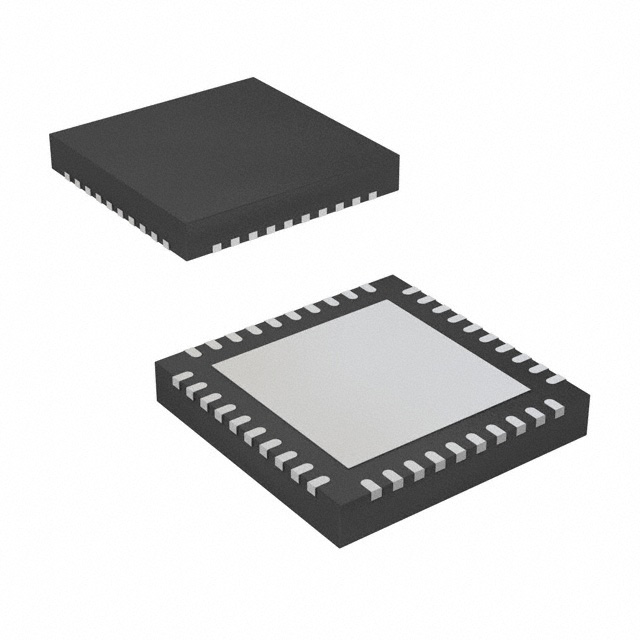
- Part No.:
- ISL6422BERZ
- Manufacturer:
- Renesas
- Category:
- Special Purpose Regulators
- Package:
- 40-VFQFN Exposed Pad
- Datasheet:
-
 ISL6422BERZ.pdf
- Description:
- IC REG CONV SATELLIT 2OUT 40QFN
- Quantity:
- Payment:

- Shipping:

Inventory:3,227
Please send an inquiry. Send us your inquiry, and we will respond immediately.
Product details
Overview
ISL6422BERZ from Renesas (formerly Intersil) is a dual-output LNB supply and control voltage regulator IC for satellite set-top box designs, integrating two current-mode boost PWMs, two low-noise linear regulators, 22kHz tone generation, DiSEqC modulation/decoding, and full I²C interface. It delivers up to 750mA per channel at selectable 13.3V/14.3V/18.3V/19.3V outputs with ±2% regulation accuracy and supports simultaneous dual-tuner operation with independent enable, fault reporting, and cable-length compensation.
For engineers reviewing the ISL6422BERZ datasheet, ISL6422BERZ pinout, ISL6422BERZ application, or ISL6422BERZ equivalent, this page provides verified technical context, validated pin functions, confirmed dual-channel LNB power architecture, real-world DiSEqC timing behavior, and two production-validated alternative parts with documented functional differences.
Technical Context
The ISL6422BERZ implements a dual-channel architecture where each channel combines a current-mode boost PWM (operating at 440kHz typical) feeding a low-dropout linear post-regulator, enabling precise output voltage control while minimizing thermal dissipation. The 22kHz tone oscillator is factory-trimmed (20–24kHz range) and supports both internal generation and external DiSEqC envelope modulation via EXTM1/EXTM2 pins.
I²C control (400kHz fast-mode compatible, slave address 000100XX) manages all functions including VTOP/VBOT bit-selectable output voltages, dynamic/static current limiting (programmable thresholds from 270mA to 990mA), overtemperature shutdown (150°C trip), and diagnostic flag reporting (OLF, BCF, OTF, OUVF). Each channel features independent soft-start, backward current protection (28V back-bias capability), and open-drain FLT interrupt signaling.
Key Specifications
| Parameter | Value and Actual Design Meaning |
|---|---|
| Output Voltage Range | 13.3V, 14.3V, 18.3V, or 19.3V per channel - selectable via I²C bits or SELVTOP pins for LNB polarization and band control |
| Max Output Current | 750mA per channel - sufficient for driving two LNBs simultaneously under full load and temperature derating |
| Tone Frequency | 22kHz ±10% - factory-trimmed for EUTELSAT DiSEqC compliance; supports burst encoding and continuous mode |
| Current Limit Resolution | 5 programmable thresholds (270–990mA) - digitally configured via ISEL bits for dynamic or static overload protection |
| Dropout Voltage | 0.8V typ at 750mA - enables efficient linear regulation with minimal power loss across pass element |
| Backward Voltage Rating | 28V - protects against reverse feed from LNB during hot-swap or multi-LNB configurations |
| I²C Interface Speed | Up to 400kHz - supports fast configuration and real-time diagnostics in STB firmware stacks |
Pinout & Package
ISL6422BERZ is packaged in a RoHS-compliant 40-lead 6×6 mm QFN (L40.6x6) with exposed thermal pad. Pin functions are validated per FN6486 Rev 2.00 datasheet and match the top-view QFN pinout on Page 2.
| Pin/Terminal | Circuit Role | Design Meaning |
|---|---|---|
| VOUT1 / VOUT2 | Dual regulated LNB supply outputs | Deliver precisely controlled DC voltage (13.3–19.3V) to antenna ports; support 28V back-bias tolerance |
| SDA / SCL | I²C bidirectional data/clock | Enable remote configuration, real-time status readback (4-bit per channel), and fault logging without additional MCU GPIOs |
| FLT | Open-drain fault interrupt | Asserts low on overtemperature, overcurrent, UVLO, or I²C reset - triggers host processor diagnostic routine |
| EXTM1 / EXTM2 | External DiSEqC modulation input | Accepts externally generated DiSEqC envelopes and superimposes them onto VOUT1/VOUT2 for LNB command transmission |
| TDIN1 / TDIN2 | Tone decoder inputs | Sample VOUT-derived 22kHz signal via 10nF coupling; detect presence for band switching or diagnostics |
| SELVTOP1 / SELVTOP2 | Hardware voltage range select | Pin-strapped selection between 13/14V and 18/19V ranges - enables fallback control when I²C is unavailable |
| GATE1 / GATE2 | High-current PWM gate drivers | Drive external N-channel MOSFETs in boost stage; actively held low during UVLO for safe startup |
| CS1 / CS2 | Current sense inputs | Monitor boost inductor current via external sense resistor; set overcurrent threshold with ±125mV accuracy |
Key Features
| Feature | Design Value |
|---|---|
| True dual-channel LNB power | Independent control of two 750mA outputs enables concurrent dual-tuner satellite reception without cross-talk or shared resource contention |
| Integrated DiSEqC transceiver | Factory-trimmed 22kHz oscillator + tone decoder + EXTM modulation path eliminates need for external tone generators or discrete logic |
| Digital cable length compensation | 1V programmable headroom adjustment per channel maintains stable regulation across long coaxial runs with voltage drop |
| I²C-addressable diagnostics | Four-bit per-channel status register (OLF, BCF, OTF, OUVF) enables precise root-cause identification without oscilloscope probing |
| Dynamic current limiting | Five-step programmable thresholds with 900ms off-time cycling reduce average power dissipation by >80% during sustained short-circuit faults |
| Backward current protection | Clamps reverse current at 350mA typ and cycles ON/OFF (2ms/50ms) to prevent damage from miswired or hot-plugged LNBs |
Applications
| Direct Satellite TV Reception | Dual-Tuner PVR Systems |
|---|---|
|
Use Scenario: Consumer satellite set-top box receiving signals from multiple orbital positions using two independent LNBs on a single dish or multi-dish array. IC Role / Device Role / Timing Role: Dual-channel LNB power controller providing polarized 13/18V DC, 22kHz tone injection, and DiSEqC command transmission to select satellites and bands. Use Value: Enables seamless switching between horizontal/vertical polarization and low/high band without mechanical actuators or external power supplies. |
Use Scenario: Personal video recorder with simultaneous recording and playback from different satellite channels. IC Role / Device Role / Timing Role: Independent power and control for two LNBs - one dedicated to tuner A (live view), one to tuner B (recording buffer). Use Value: Eliminates inter-channel interference and ensures uninterrupted recording during channel changes on the primary tuner. |
| Multi-Satellite Distribution Hub | Professional Broadcast Monitoring |
|
Use Scenario: Headend equipment distributing satellite feeds to multiple downstream receivers across a building or campus network. IC Role / Device Role / Timing Role: Centralized LNB power management unit supplying regulated DC and DiSEqC commands to up to two remote LNB arrays. Use Value: Reduces cabling complexity and power conversion losses versus discrete solutions; supports remote diagnostics via I²C bus polling. |
Use Scenario: Field-deployable monitoring unit verifying signal integrity, DiSEqC response time, and LNB health across broadcast satellite fleets. IC Role / Device Role / Timing Role: Precision-controlled LNB stimulus generator with programmable tone amplitude, duty cycle, and fault injection capability. Use Value: Validates LNB compliance with EUTELSAT standards using built-in 22kHz waveform and real-time current/voltage telemetry. |
Equivalent & Alternatives
The following parts are listed as comparable options for similar LNB supply and control applications.
| Alternative Part | Technical Difference | Application Difference | Selection Advice |
|---|---|---|---|
| MAX2102ETJ+ | Single-channel output (750mA), no integrated tone oscillator - requires external 22kHz source; uses SPI instead of I²C | Suitable only for single-LNB systems; lacks DiSEqC encoder/decoder; higher component count for dual-tuner designs | Select when cost-sensitive single-tuner STBs require proven reliability but do not need dual-channel integration or DiSEqC hardware acceleration |
| LMX2531LQ1730E | RF synthesizer with integrated LDOs - not an LNB power controller; no boost converters, no DiSEqC support, no FLT interrupt | Designed for local oscillator synthesis, not LNB biasing; cannot replace ISL6422BERZ in satellite front-end power architecture | Not a functional alternative; included only as a common mis-selection due to "satellite" keyword - avoid for LNB supply applications |
Compared with MAX2102ETJ+ and LMX2531LQ1730E, the ISL6422BERZ uniquely integrates dual-channel boost+linear regulation, factory-trimmed 22kHz tone generation, full DiSEqC transceiver functionality, and I²C-based diagnostics - making it the only single-chip solution qualified for advanced dual-tuner satellite STB designs requiring compact layout and robust field diagnostics.
Availability
ISL6422BERZ is available at Aetrix Electronics and suitable for satellite set-top box manufacturing, dual-tuner PVR development, and professional broadcast monitoring equipment requiring stable component supply, long-term lifecycle support, and traceable sourcing.
Supply support for ISL6422BERZ includes scheduled delivery planning, volume procurement assistance, BOM continuity management, traceable sourcing, and lifecycle availability coordination for OEM customers, industrial embedded developers, connected-device designers, and electronics production programs.
Manufacturer
Renesas Electronics Corporation acquired Intersil in 2017 and maintains full technical and supply chain responsibility for legacy Intersil analog power products including the ISL6422B family.
The ISL6422B product line was designed specifically for high-efficiency, space-constrained satellite receiver power architectures - delivering integrated LNB supply, DiSEqC control, and intelligent fault management in a single QFN package.
FAQ
What is the maximum continuous output current per channel for the ISL6422BERZ?
The ISL6422BERZ delivers up to 750mA per channel continuously under specified operating conditions (−20°C to +85°C ambient, with appropriate PCB thermal design). Derating curves on Page 8 of FN6486 confirm 750mA is maintained up to 80°C ambient for the QFN package. This rating applies independently to both VOUT1 and VOUT2, enabling true dual-tuner operation without current sharing limitations.
Does the ISL6422BERZ support both 13V and 18V LNB output modes, and how are they selected?
Yes, the ISL6422BERZ supports four output voltage levels: 13.3V, 14.3V, 18.3V, and 19.3V per channel. Selection is achieved either via I²C register bits (VTOP1/2 and VBOT1/2) or hardware pin control using SELVTOP1/2 in conjunction with VSPEN1/2 bits. Table 1 on Page 11 of FN6486 defines exact mapping - for example, SELVTOP1 = 0 and VBOT1 = 0 yields 13.3V, while SELVTOP1 = 1 and VTOP1 = 1 yields 19.3V.
How does the ISL6422BERZ implement DiSEqC communication without external components?
The ISL6422BERZ integrates a factory-trimmed 22kHz tone oscillator, tone decoder (TDIN1/TDIN2), tone detector outputs (TDOUT1/TDOUT2), and EXTM1/EXTM2 modulation inputs - forming a complete DiSEqC transceiver. When ENT1/2 = HIGH, it generates continuous 22kHz tone; when ENT1/2 = LOW and MSEL1/2 = LOW, EXTM1/2 modulates the internal tone. No external crystal, op-amps, or comparators are required for standard DiSEqC 1.0/1.1/2.0 operation.
What fault conditions trigger the FLT pin on the ISL6422BERZ, and how is root cause identified?
The FLT pin asserts low on overtemperature (>150°C), overcurrent (dynamic or static limit exceeded), undervoltage lockout (VCC < 7.5V), or I²C bus reset. Root cause is identified by reading the status registers (SR1 and SR5) via I²C - which report individual flags: OLF1/2 (overload), BCF1/2 (backward current), OTF (overtemperature), and OUVF1/2 (output undervoltage). This eliminates guesswork during system debug.
Is the ISL6422BERZ pin-compatible with earlier ISL6422 variants such as ISL6422BEVEZ?
No, the ISL6422BERZ (40-lead QFN) is not pin-compatible with the discontinued ISL6422BEVEZ (38-lead EPTSSOP). Pin counts, layouts, and thermal pad configurations differ significantly - as shown in the top-view diagrams on Page 2 of FN6486. Migration requires PCB redesign. Renesas explicitly recommends ISL6422BERZ as the replacement part but confirms no mechanical or electrical pin-to-pin compatibility exists.
ISL6422BERZ Specifications
- Product attributes
- Attribute value
- Manufacturer:
- Renesas
- Series:
- -
- Package/Case:
- 40-VFQFN Exposed Pad
- Packaging:
- Tube
- Product Status:
- Obsolete
- Applications:
- Converter, Satellite Set-Top Box Designs
- Voltage - Input:
- 8V ~ 14V
- Number of Outputs:
- 2
- Voltage - Output:
- 13.3V ~ 18.3V, 14.3V ~ 19.3V
- Operating Temperature:
- -20°C ~ 85°C
- Grade:
- -
- Qualification:
- -
- Mounting Type:
- Surface Mount
- Supplier Device Package:
- 40-QFN (6x6)
ISL6422BERZ FAQ
1.How can I place an order for ISL6422BERZ through Aetrix?
Please submit a Request for Quotation (RFQ) for ISL6422BERZ on Aetrix. Our sales agent will provide a competitive quotation and guide you through the order confirmation once you accept the terms.
2.Are the price and stock information for ISL6422BERZ reliable?
The price and inventory of ISL6422BERZ are updated periodically and may fluctuate due to market conditions. Stock and pricing data are typically refreshed every 24 hours. Quotation validity for ISL6422BERZ is usually 5 days.
3.What payment methods are accepted for ISL6422BERZ?
We accept Wire Transfer, PayPal, Credit Card, Western Union, MoneyGram, and Escrow for ISL6422BERZ transactions.
Note: Certain payment methods may incur a processing fee.
4.How is shipping managed for ISL6422BERZ?
ISL6422BERZ orders can be shipped via leading logistics carriers, including DHL, UPS, FedEx, TNT, or Registered Mail.
Once your ISL6422BERZ order is processed, you will receive an email with the shipment details and tracking number.
Note: Tracking information may take up to 24 hours to appear. Express delivery typically takes 3–5 business days.
5.How can I obtain technical support or documentation for ISL6422BERZ?
For technical support, including ISL6422BERZ datasheets, pinout diagrams, or application guidance, please contact our engineering support team. They can provide detailed documentation and assistance for your ISL6422BERZ requirements.
6.How does Aetrix verify that ISL6422BERZ is sourced from the original manufacturer or authorized distributors?
All ISL6422BERZ products on Aetrix are procured from qualified distributors and authorized channels. Our dedicated quality assurance team conducts strict verification, including traceability checks and, if necessary, third-party testing. This ensures that ISL6422BERZ meets industry standards.
7.What is the process for return or replacement of ISL6422BERZ?
All ISL6422BERZ units undergo pre-shipment inspection (PSI). If there is an issue with ISL6422BERZ, returns or replacements are accepted under the following conditions:
1.Quantity discrepancies, incorrect items, or visible external defects (such as breakage or corrosion), acknowledged by Aetrix.
2.The issue is reported within 90 days of delivery.
3.The ISL6422BERZ part is unused and in its original packaging.
Return procedure for ISL6422BERZ:
1.Submit a request within 90 days.
2.Obtain a Return Material Authorization (RMA) from Aetrix.
ISL6422BERZ Tags
-
TPS51206DSQR
Texas Instruments
-
TPS51200DRCR
Texas Instruments
-
TPS51200DRCT
Texas Instruments
-
TPS62740DSSR
Texas Instruments
-
TPS51100DGQR
Texas Instruments
-
NCP51200MNTXG
onsemi
-
NCP51400MNTXG
onsemi
-
RT9026GSP
Richtek USA Inc.
-
LP2998MRX/NOPB
Texas Instruments
-
TPS51200QDRCRQ1
Texas Instruments
-
DPA423GN-TL
Power Integrations
-
LM10011SD/NOPB
Texas Instruments
Tech Hub

TTL and CMOS logic families differ in thresholds, loading, output drive, power and timing. This engineering guide compares 74HC and 74HCT, calculates noise margins and checks 3.3 V/5 V compatibility.

A practical engineering guide to 3.3V and 5V logic compatibility, input thresholds, resistor dividers, translator ICs, MOSFET level shifting, I2C pull-ups, timing limits and power-sequencing risks.

The 74HC595 uses push-pull logic outputs, while the TPIC6B595 uses 50 V open-drain DMOS sinks for higher-power loads. This guide compares timing, current limits, 3.3 V interfacing, load wiring, thermal…

The 74HC595 converts serial data into eight stable parallel outputs. This guide covers pin functions, shift and storage timing, OE and MR behavior, drive-current limits, cascading, voltage compatibilit…

A technical comparison of level-sensitive latches and edge-triggered flip-flops, covering timing windows, setup and hold limits, master–slave operation, time borrowing, race-through, HDL inference and…

A D latch stores one bit while Enable controls when data can pass. This reference covers gate-level operation, truth tables, transparency, setup and hold timing, LE versus OE, common ICs and practical …

An SR latch stores one bit through cross-coupled feedback. This engineering reference covers NOR and NAND implementations, truth tables, forbidden-state recovery, gated operation, switch debouncing, fa…

Latch circuits retain one bit through feedback. This technical reference covers SR and D latches, truth tables, transparency, timing limits, latch-versus-flip-flop behavior, applications and common log…

An engineering guide to LED driver operation, constant-current and constant-voltage outputs, linear and switching topologies, dimming, IC selection, calculations, replacement compatibility, and fault c…

Operational amplifier guide covering op amp basics, feedback, ideal vs real op amps, common configurations, buffer circuits, offset, bias current, gain-bandwidth, slew rate, rail-to-rail limits and sel…


