
 My Inquiry
 My Account


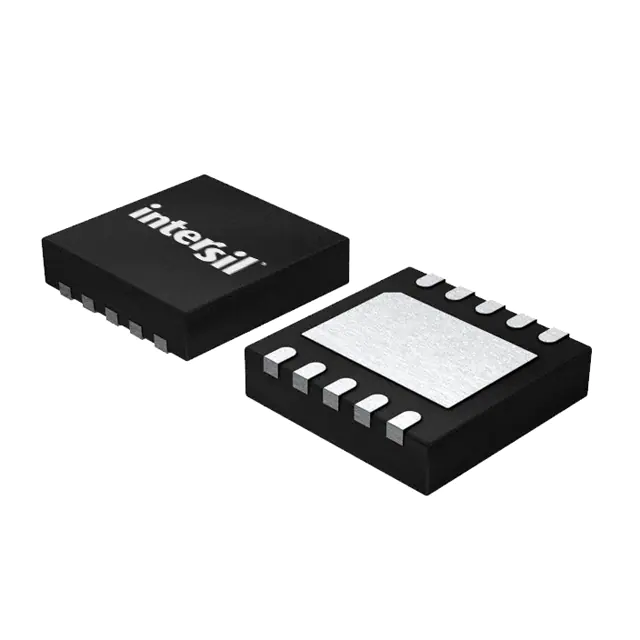
Renesas ISL78692-1CR3Z
- Part No.:
- ISL78692-1CR3Z
- Manufacturer:
- Renesas
- Category:
- Battery Chargers
- Package:
- 10-VFDFN Exposed Pad
- Datasheet:
-
 ISL78692-1CR3Z.pdf
- Description:
- IC BATT CHG LI-ION 1CELL 10DFN
- Quantity:
- Payment:

- Shipping:

Inventory:3,865
Please send an inquiry. Send us your inquiry, and we will respond immediately.
Product details
Overview
ISL78692-1CR3Z from Renesas (formerly Intersil) is an AEC-Q100 qualified linear battery charger IC for single-cell Li-ion/Li-polymer batteries, delivering 4.1V ±1% regulated output voltage, programmable constant charge current up to 500mA (via 160kΩ IREF resistor), and operation down to 2.65V input during cold-crank automotive conditions. It integrates power MOSFET, current sensing, thermal foldback, NTC thermistor interface, and automatic recharge - deployed in eCall systems and automotive backup battery modules.
For engineers reviewing the ISL78692-1CR3Z datasheet, ISL78692-1CR3Z pinout, ISL78692-1CR3Z application, or ISL78692-1CR3Z equivalent, key selection criteria include its -40°C to +85°C automotive temperature range, 3×3mm DFN thermal package, CC/CV charging profile with 3.9V recharge threshold, and fault-safe operation under over-temperature, battery removal, and timeout conditions.
Technical Context
The ISL78692-1CR3Z implements a dual-mode linear charging architecture: it operates as a precision CC/CV regulator with integrated pass transistor when powered by a voltage source (e.g., USB or 5V adapter), and transitions to switch-mode-like behavior with minimal dissipation when supplied by a current-limited source. Its internal 100,000:1 current mirror enables accurate scaling of IREF-set reference current to full charge current.
Charging sequencing is governed by a 22-stage binary counter clocked by a user-programmable oscillator (CTIME pin), enforcing strict 3.5-hour TIMEOUT (with 15nF capacitor) and 1/8 TIMEOUT trickle limit. Thermal protection activates at ≥85°C junction temperature, reducing charge current at 100mA/°C foldback gain to maintain safe operation on thermally constrained PCBs.
Key Specifications
| Parameter | Value and Actual Design Meaning |
|---|---|
| Output Voltage | 4.10 V ±1% - ensures precise Li-ion cell termination without overvoltage stress or capacity loss. |
| Charge Current Range | 430–570 mA (typ. 500 mA @ RIREF = 160kΩ) - supports robust fast-charge while enabling thermal management via external resistor selection. |
| Recharge Threshold | 3.9 V (min 3.7 V, max 4.05 V) - triggers automatic top-up when battery self-discharges below safe retention level. |
| Input Voltage Range | 2.65 V to 5.5 V - guarantees startup and regulation during automotive cold-crank (2.65 V) and standard USB/adapter operation (4.3–5.5 V). |
| Thermal Foldback Threshold | 85°C (min), 125°C (max) - initiates progressive current reduction to prevent junction overheating on compact layouts. |
| NTC Interface Accuracy | VTMIN = 1.51 V ±60 mV, VTMAX = 0.38 V ±20 mV - defines precise battery temperature window (typically 0°C to 45°C) using standard 10kΩ NTC. |
| Ambient Temperature Range | -40°C to +85°C - validated for under-hood and cabin-mounted automotive electronics per AEC-Q100 Grade 2. |
Pinout & Package
ISL78692-1CR3Z is housed in a thermally enhanced 10-lead 3×3 mm DFN package (Pb-free, L10.3x3 drawing) with exposed metal pad (EPAD) tied to GND for optimal heat transfer. The package supports reflow per IPC/JEDEC J-STD-020 and meets MSL3 handling requirements.
| Pin/Terminal | Circuit Role | Design Meaning |
|---|---|---|
| VIN (Pin 1) | Input power supply | Accepts 2.65–5.5 V sources; powers internal circuitry and charges battery; enables cold-crank operation. |
| FAULT (Pin 2) | Open-drain fault indicator | Pulled LOW on battery removal, over-temperature, or timeout - signals system-level error handling. |
| STATUS (Pin 3) | Open-drain charge status | Pulled LOW during active charging; HIGH and latched at end-of-charge (EOC); resets on new cycle. |
| TIME (Pin 4) | Oscillator timing control | Connects to timing capacitor (e.g., 15 nF) to set 3.0 ms typical period and define 3.5-hour safety timeout. |
| GND (Pin 5) | System ground reference | Primary return path; EPAD must be connected to same GND plane for thermal and electrical integrity. |
| EN (Pin 6) | Enable logic input | LOW disables charger; floating or >1.2 V enables - allows host MCU control or passive enable. |
| V2P8 (Pin 7) | 2.8 V reference output | Stable bias for NTC circuit and external logic; sourced up to 2 mA; active only when VIN > 3.4 V. |
| IREF (Pin 8) | Charge current programming | Sets CC current via external resistor (e.g., 160 kΩ → 500 mA); also accepts logic-level inputs for dynamic control. |
| TEMP (Pin 9) | NTC thermistor interface | Forms window comparator with internal references; detects battery temperature faults and removal. |
| VBAT (Pin 10) | Battery connection node | Direct connection to single-cell Li-ion anode; monitors voltage for recharge, trickle, and EOC decisions. |
Key Features
| Feature | Design Value |
|---|---|
| Integrated linear charger with MOSFET and current sense | Eliminates 4–6 external components (pass FET, sense resistor, op-amp, references), reducing BOM count and layout area. |
| Programmable CC current up to 1 A (500 mA typical) | Enables design flexibility across battery capacities (e.g., 500–1000 mAh) using single resistor value without changing IC. |
| Charge current thermal foldback (100 mA/°C) | Maintains safe junction temperature on space-constrained automotive PCBs without requiring heatsinks or forced airflow. |
| NTC thermistor interface with programmable window | Supports industry-standard 10 kΩ NTCs to enforce charging only within 0°C–45°C, preventing lithium plating or thermal runaway. |
| Preconditioning trickle charge (2.8 V threshold) | Restores deeply discharged cells (<2.8 V) at 10% of fast-charge current before CC mode, avoiding damage from high-current injection. |
| AEC-Q100 Grade 2 qualification | Validated for automotive applications including eCall, telematics, and ADAS backup power with full reliability testing. |
Applications
| eCall Telematics Module | Automotive Cabin Infotainment Backup |
|---|---|
Use Scenario: Powers GPS and cellular modem during vehicle crash event when main battery is disconnected or depleted. IC Role / Device Role / Timing Role: Single-cell Li-ion charger maintaining backup battery at 4.1 V with automatic recharge at 3.9 V and thermal foldback during extended idle periods. Use Value: Ensures >10-minute emergency call duration after main power loss, meeting UNECE R156 compliance via guaranteed cold-crank startup (2.65 V) and AEC-Q100 reliability. |
Use Scenario: Maintains SRAM and real-time clock in head unit during ignition-off state to retain settings and time. IC Role / Device Role / Timing Role: Linear charger with trickle mode and 3.5-hour timeout protecting against deep discharge during long-term parking. Use Value: Prevents data loss and clock drift by sustaining >3.0 V battery voltage for >72 hours, enabled by <1 µA battery leakage and precise 4.1 V regulation. |
| ADAS Camera Power Backup | Engine Control Unit (ECU) Non-Volatile Memory Keep-Alive |
Use Scenario: Supplies continuous power to front-facing camera module during engine start-stop cycles where 12 V rail dips below 6 V. IC Role / Device Role / Timing Role: Cold-crank tolerant charger operating down to 2.65 V input while regulating 4.1 V battery output and monitoring temperature via NTC. Use Value: Eliminates video dropout during cranking by sustaining camera operation through 200 ms <4 V transients, verified per ISO 16750-2 Pulse 4a. |
Use Scenario: Preserves flash memory configuration and calibration data in ECU during battery disconnect or maintenance. IC Role / Device Role / Timing Role: Low-quiescent charger with <3 µA standby current (VIN = 0 V) and automatic recharge, interfacing with 10 kΩ NTC for under-hood thermal safety. Use Value: Guarantees >10-year data retention by limiting battery self-discharge to <0.5%/month via 700 nA reverse leakage and precise 4.1 V CV regulation. |
Equivalent & Alternatives
The following parts are listed as comparable options for similar single-cell Li-ion linear charger applications.
| Alternative Part | Technical Difference | Application Difference | Selection Advice |
|---|---|---|---|
| BQ24075RGTR | 4.2 V fixed output (vs. ISL78692-1CR3Z's 4.1 V); no cold-crank support below 3.5 V; lacks AEC-Q100 qualification. | Targeted at consumer portable devices; not validated for automotive ambient or vibration requirements. | Select if 4.2 V termination is required and automotive qualification is unnecessary. |
| MP2617GQ-Z | 4.2 V output; supports USB OTG boost; includes I²C interface; no NTC window comparator or thermal foldback. | Designed for smart battery packs with host communication; requires external thermal management circuitry. | Choose when digital control and bidirectional power are needed, and thermal safety is handled externally. |
Compared with BQ24075RGTR and MP2617GQ-Z, the ISL78692-1CR3Z uniquely combines AEC-Q100 qualification, 2.65 V cold-crank operation, integrated thermal foldback, and automotive-grade NTC monitoring - making it the only option qualified for safety-critical automotive backup power without external supervision.
Availability
ISL78692-1CR3Z is available at Aetrix Electronics and suitable for automotive telematics, eCall systems, and backup battery modules requiring stable component supply across extended temperature ranges and long production lifecycles.
Supply support for ISL78692-1CR3Z includes scheduled delivery planning, volume procurement assistance, BOM continuity management, traceable sourcing, and lifecycle availability coordination for OEM customers, industrial embedded developers, connected-device designers, and electronics production programs.
Manufacturer
Renesas Electronics Corporation acquired Intersil in 2017 and maintains full technical and manufacturing responsibility for the ISL78692-1CR3Z. Renesas is a global semiconductor leader specializing in microcontrollers, analog, and power management solutions for automotive and industrial markets.
The ISL78692-1CR3Z belongs to Renesas' automotive-grade battery management IC portfolio, designed specifically for reliable, low-risk integration into safety-critical vehicle subsystems such as emergency call systems and ADAS keep-alive circuits.
FAQ
What is the minimum input voltage required for ISL78692-1CR3Z to initiate charging?
The ISL78692-1CR3Z guarantees operation down to 2.65 V input after startup, enabling reliable charging during automotive cold-crank events where battery voltage sags below 6 V. This is validated across the full -40°C to +85°C ambient range and is distinct from the 3.4 V typical POR rising threshold required for initial power-on reset.
How does ISL78692-1CR3Z implement thermal protection, and what is the foldback behavior?
The ISL78692-1CR3Z reduces charge current at 100 mA/°C once junction temperature exceeds 85°C (min), with full current cutoff near 110°C. This foldback is implemented via an internal temperature-dependent current source (IT) that subtracts from the IREF-set reference, preserving safe operation on thermally limited PCBs without external sensors or firmware intervention.
Can ISL78692-1CR3Z be used with current-limited adapters, and how does it behave differently than with voltage sources?
Yes - when supplied by a current-limited adapter, the ISL78692-1CR3Z drives its main MOSFET into saturation rather than linear regulation, reducing power dissipation significantly. In this mode, peak dissipation shifts from CC mode onset to early CV mode, and thermal foldback remains fully active to protect against overheating on small PCBs.
What is the function of the TIME pin on ISL78692-1CR3Z, and how is it configured?
The TIME pin sets the internal oscillator period (e.g., 15 nF → 3.0 ms typical) which directly determines the 3.5-hour total charge timeout and 15-cycle preconditioning window. It uses a 10 µA constant-current charge/discharge of the external capacitor between 0.5 V and 1.5 V thresholds, providing predictable timing without crystal or external clock.
Does ISL78692-1CR3Z support automatic recharge, and at what battery voltage does it trigger?
Yes - the ISL78692-1CR3Z automatically initiates a new charge cycle when battery voltage falls to the recharge threshold VRECHRG of 3.9 V (typical, 3.7–4.05 V range). This ensures the Li-ion cell remains within optimal voltage range for longevity and readiness, without requiring host MCU polling or intervention.
ISL78692-1CR3Z Specifications
- Product attributes
- Attribute value
- Manufacturer:
- Renesas
- Series:
- -
- Package/Case:
- 10-VFDFN Exposed Pad
- Packaging:
- Tray
- Product Status:
- Last Time Buy
- Battery Chemistry:
- Lithium Ion/Polymer
- Number of Cells:
- 1
- Current - Charging:
- Constant - Programmable
- Programmable Features:
- Timer
- Fault Protection:
- Over Temperature
- Charge Current - Max:
- 1A
- Battery Pack Voltage:
- 4.1V
- Voltage - Supply (Max):
- 5.5V
- Interface:
- USB
- Operating Temperature:
- -40°C ~ 85°C (TA)
- Grade:
- Automotive
- Qualification:
- AEC-Q100
- Mounting Type:
- Surface Mount
- Supplier Device Package:
- 10-DFN (3x3)
ISL78692-1CR3Z FAQ
1.How can I place an order for ISL78692-1CR3Z through Aetrix?
Please submit a Request for Quotation (RFQ) for ISL78692-1CR3Z on Aetrix. Our sales agent will provide a competitive quotation and guide you through the order confirmation once you accept the terms.
2.Are the price and stock information for ISL78692-1CR3Z reliable?
The price and inventory of ISL78692-1CR3Z are updated periodically and may fluctuate due to market conditions. Stock and pricing data are typically refreshed every 24 hours. Quotation validity for ISL78692-1CR3Z is usually 5 days.
3.What payment methods are accepted for ISL78692-1CR3Z?
We accept Wire Transfer, PayPal, Credit Card, Western Union, MoneyGram, and Escrow for ISL78692-1CR3Z transactions.
Note: Certain payment methods may incur a processing fee.
4.How is shipping managed for ISL78692-1CR3Z?
ISL78692-1CR3Z orders can be shipped via leading logistics carriers, including DHL, UPS, FedEx, TNT, or Registered Mail.
Once your ISL78692-1CR3Z order is processed, you will receive an email with the shipment details and tracking number.
Note: Tracking information may take up to 24 hours to appear. Express delivery typically takes 3–5 business days.
5.How can I obtain technical support or documentation for ISL78692-1CR3Z?
For technical support, including ISL78692-1CR3Z datasheets, pinout diagrams, or application guidance, please contact our engineering support team. They can provide detailed documentation and assistance for your ISL78692-1CR3Z requirements.
6.How does Aetrix verify that ISL78692-1CR3Z is sourced from the original manufacturer or authorized distributors?
All ISL78692-1CR3Z products on Aetrix are procured from qualified distributors and authorized channels. Our dedicated quality assurance team conducts strict verification, including traceability checks and, if necessary, third-party testing. This ensures that ISL78692-1CR3Z meets industry standards.
7.What is the process for return or replacement of ISL78692-1CR3Z?
All ISL78692-1CR3Z units undergo pre-shipment inspection (PSI). If there is an issue with ISL78692-1CR3Z, returns or replacements are accepted under the following conditions:
1.Quantity discrepancies, incorrect items, or visible external defects (such as breakage or corrosion), acknowledged by Aetrix.
2.The issue is reported within 90 days of delivery.
3.The ISL78692-1CR3Z part is unused and in its original packaging.
Return procedure for ISL78692-1CR3Z:
1.Submit a request within 90 days.
2.Obtain a Return Material Authorization (RMA) from Aetrix.
ISL78692-1CR3Z Tags

-
BQ21040DBVR
Texas Instruments

-
MCP73812T-420I/OT
Microchip Technology
-
MCP73831T-2ACI/OT
Microchip Technology
-
MCP73832T-2ACI/OT
Microchip Technology
-
MCP73831T-2DCI/OT
Microchip Technology
-
MCP73832T-2DCI/OT
Microchip Technology
-
MCP73831T-2ATI/OT
Microchip Technology
-
MCP73832T-2ATI/OT
Microchip Technology
-
MCP73831T-5ACI/OT
Microchip Technology
-
MCP73832T-2ACI/MC
Microchip Technology
-
MCP73831T-2ACI/MC
Microchip Technology
-
MCP73831T-2ATI/MC
Microchip Technology
Tech Hub

TTL and CMOS logic families differ in thresholds, loading, output drive, power and timing. This engineering guide compares 74HC and 74HCT, calculates noise margins and checks 3.3 V/5 V compatibility.

A practical engineering guide to 3.3V and 5V logic compatibility, input thresholds, resistor dividers, translator ICs, MOSFET level shifting, I2C pull-ups, timing limits and power-sequencing risks.

The 74HC595 uses push-pull logic outputs, while the TPIC6B595 uses 50 V open-drain DMOS sinks for higher-power loads. This guide compares timing, current limits, 3.3 V interfacing, load wiring, thermal…

The 74HC595 converts serial data into eight stable parallel outputs. This guide covers pin functions, shift and storage timing, OE and MR behavior, drive-current limits, cascading, voltage compatibilit…

A technical comparison of level-sensitive latches and edge-triggered flip-flops, covering timing windows, setup and hold limits, master–slave operation, time borrowing, race-through, HDL inference and…

A D latch stores one bit while Enable controls when data can pass. This reference covers gate-level operation, truth tables, transparency, setup and hold timing, LE versus OE, common ICs and practical …

An SR latch stores one bit through cross-coupled feedback. This engineering reference covers NOR and NAND implementations, truth tables, forbidden-state recovery, gated operation, switch debouncing, fa…

Latch circuits retain one bit through feedback. This technical reference covers SR and D latches, truth tables, transparency, timing limits, latch-versus-flip-flop behavior, applications and common log…

An engineering guide to LED driver operation, constant-current and constant-voltage outputs, linear and switching topologies, dimming, IC selection, calculations, replacement compatibility, and fault c…

Operational amplifier guide covering op amp basics, feedback, ideal vs real op amps, common configurations, buffer circuits, offset, bias current, gain-bandwidth, slew rate, rail-to-rail limits and sel…


