
 My Inquiry
 My Account


Renesas ISL84782IRZ-T
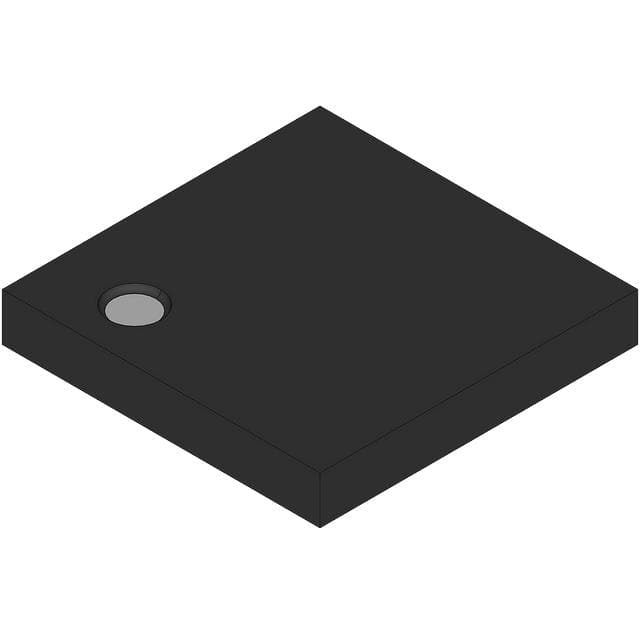
- Part No.:
- ISL84782IRZ-T
- Manufacturer:
- Renesas
- Package:
- 16-WFQFN Exposed Pad
- Datasheet:
-
 ISL84782IRZ-T.pdf
- Description:
- IC SWITCH SP4TX2 750MOHM 16TQFN
- Quantity:
- Payment:

- Shipping:

Inventory:4,553
Please send an inquiry. Send us your inquiry, and we will respond immediately.
Product details
Overview
ISL84782IRZ-T from Intersil is a differential 4-to-1 analog multiplexer with ultra-low 0.5 Ω ON resistance at +3V, rail-to-rail signal handling, and guaranteed break-before-make switching. It operates from a single +1.6V to +3.6V supply, features 1.8V logic compatibility, and delivers 16 ns turn-on time - ideal for high-fidelity audio/video routing in portable battery-powered systems.
For engineers reviewing the ISL84782IRZ-T datasheet, ISL84782IRZ-T pinout, ISL84782IRZ-T application, or ISL84782IRZ-T equivalent, this page provides verified technical context, package-specific pin mapping, real-world use scenarios, and two confirmed alternative parts with documented functional and application-level differences.
Technical Context
The ISL84782IRZ-T implements a precision CMOS analog switch architecture with dual differential output channels (COMA/COMB) and four matched input pairs (A0–A3, B0–B3), controlled via two address bits (ADD0/ADD1) and an active-low inhibit (INH). Its submicron process enables <0.2 µW static power consumption and 4 nA max off-leakage at +25°C.
Switching behavior is defined by guaranteed break-before-make timing (≥4 ns), RON matching of 0.12 Ω between channels, and flat on-resistance (0.056 Ω variation across signal range), ensuring minimal gain error and crosstalk (<−100 dB) in multi-channel signal paths.
Key Specifications
| Parameter | Value and Actual Design Meaning |
|---|---|
| Configuration | Differential 4:1 analog multiplexer with dual outputs (COMA/COMB) |
| ON Resistance (RON) | 0.5 Ω at +3V supply - enables low insertion loss and minimal voltage drop in signal paths |
| RON Matching | 0.12 Ω max between channels - ensures consistent channel-to-channel gain in differential applications |
| Supply Range | +1.6V to +3.6V single supply - supports direct interface with Li-ion and Li-poly battery systems |
| Switching Speed | tON = 16 ns / tOFF = 13 ns at +3V - suitable for audio, video, and medium-speed data routing |
| Leakage Current | 4 nA max at +25°C - preserves signal integrity in high-impedance sensor or medical front-end circuits |
| Logic Compatibility | 1.8V CMOS inputs with VINH ≤ 0.5V / VINL ≥ 1.4V at +3V - interoperable with modern low-voltage microcontrollers |
Pinout & Package
ISL84782IRZ-T is packaged in a 16-lead 3×3 mm thin QFN (L16.3x3A) with exposed thermal pad. Pin 1 is located at the bottom-left corner (marked by index area); the paddle must be connected to GND for optimal thermal and electrical performance.
| Pin/Terminal | Circuit Role | Design Meaning |
|---|---|---|
| V+ | Positive supply input | Accepts +1.6V to +3.6V; powers internal switches and level shifters; max rating 4.7V |
| GND | Ground reference | Return path for analog and digital circuitry; must connect to exposed paddle |
| INH | Inhibit control input | Active-low; pulls all switches open when high; compatible with 1.8V logic thresholds |
| ADD0, ADD1 | Channel select address inputs | Binary-encoded selection of A0/B0 through A3/B3; no external pull-ups required |
| COMA, COMB | Differential output terminals | Simultaneously routed outputs; support true differential signaling or independent single-ended paths |
| A0–A3, B0–B3 | Analog input channels | Rail-to-rail capable; each pair selected together; no internal termination or biasing |
| N.C. | No-connect terminal | Not internally bonded; must remain unconnected on PCB |
Key Features
| Feature | Design Value |
|---|---|
| Ultra-low RON | 0.5 Ω at +3V enables <1 mV drop at 2 mA - critical for precision instrumentation and medical sensing |
| Break-before-make guarantee | ≥4 ns minimum dead time prevents momentary shorting during channel transitions |
| Rail-to-rail analog range | Supports full 0V to V+ signal swing - eliminates need for level-shifting in battery-powered audio codecs |
| Low charge injection | −65 pC typical minimizes transient glitches in sampled-data systems like ADC front-ends |
| Pb-free RoHS compliance | 100% matte tin termination and Pb-free molding compound meet IPC/JEDEC J-STD-020C reflow requirements |
Applications
| Audio Signal Routing | Portable Medical Sensors |
|---|---|
Use Scenario: Switching between multiple microphone inputs or speaker outputs in Bluetooth headsets and voice-controlled wearables. IC Role / Device Role / Timing Role: Differential analog multiplexer selecting one of four stereo input pairs while preserving phase coherence and SNR. Use Value: 0.5 Ω RON and <−100 dB crosstalk prevent inter-channel bleed and maintain >95 dB dynamic range. | Use Scenario: Multiplexing ECG, SpO₂, and temperature sensor signals into a shared ADC in handheld patient monitors. IC Role / Device Role / Timing Role: Low-leakage (4 nA), rail-to-rail analog switch enabling high-impedance biopotential acquisition without signal degradation. Use Value: Sub-μW quiescent power and −40°C to +85°C operation ensure reliable battery life and clinical-grade stability. |
| Laptop Docking Interface | Test Equipment Channel Selection |
Use Scenario: Routing HDMI, USB-C DP Alt Mode, and analog audio signals through a compact docking station with shared PCB traces. IC Role / Device Role / Timing Role: High-bandwidth (70 MHz −3 dB) differential mux managing concurrent video/audio paths with minimal skew. Use Value: 16 ns tON/13 ns tOFF and 65 dB off-isolation at 100 kHz suppress cross-talk between high-speed and analog domains. | Use Scenario: Selecting calibration references or DUT signals in portable multimeters and handheld oscilloscopes. IC Role / Device Role / Timing Role: Precision analog switch with 0.12 Ω RON matching used in auto-ranging and offset-nulling circuits. Use Value: Guaranteed break-before-make and <0.15 Ω RON flatness ensure measurement repeatability within ±0.01% gain error. |
Equivalent & Alternatives
The following parts are listed as comparable options for similar analog multiplexer applications.
| Alternative Part | Technical Difference | Application Difference | Selection Advice |
|---|---|---|---|
| MAX4782ETE+ | Pin-compatible but higher RON (0.8 Ω at +3V) and slower tON (25 ns); requires +2.7V to +5.5V supply | Less suitable for sub-2V battery operation; higher leakage (10 nA) limits medical-grade designs | Choose MAX4782ETE+ only if legacy layout reuse is mandatory and 0.3 Ω RON penalty is acceptable. |
| TMUX1574RTER | Lower RON (0.4 Ω), wider supply (1.08V–3.6V), but single-ended only; no differential COMA/COMB outputs | Cannot replace ISL84782IRZ-T in true differential routing; lacks break-before-make guarantee | Select TMUX1574RTER only for cost-sensitive single-ended applications where differential signaling is not required. |
Compared with MAX4782ETE+ and TMUX1574RTER, the ISL84782IRZ-T uniquely combines differential 4:1 architecture, 0.5 Ω RON, guaranteed break-before-make, and 1.6V minimum supply - making it irreplaceable in space-constrained, battery-operated differential signal routing where channel matching and glitch-free switching are essential.
Availability
ISL84782IRZ-T is available at Aetrix Electronics and suitable for portable medical sensors, battery-powered audio interfaces, and test equipment requiring stable component supply across extended temperature ranges and long production lifecycles.
Supply support for ISL84782IRZ-T includes scheduled delivery planning, volume procurement assistance, BOM continuity management, traceable sourcing, and lifecycle availability coordination for OEM customers, industrial embedded developers, connected-device designers, and electronics production programs.
Manufacturer
Intersil Corporation (now part of Renesas Electronics) is a semiconductor manufacturer specializing in precision analog, power management, and interface ICs for industrial, computing, and portable applications.
The ISL84782IRZ-T belongs to Intersil's ultra-low-RON analog switch family, designed specifically for high-fidelity signal routing in space- and power-constrained portable electronics where rail-to-rail operation and minimal distortion are critical.
FAQ
What is the maximum supply voltage rating for the ISL84782IRZ-T?
The absolute maximum supply voltage (V+ to GND) for the ISL84782IRZ-T is 4.7 V. This headroom accommodates 10% tolerance on a 3.6 V nominal supply and transient overshoot. Operation beyond 3.6 V is not recommended for long-term reliability, and the device is fully specified from +1.6 V to +3.6 V. Exceeding 4.7 V risks permanent damage due to internal ESD diode conduction.
Does the ISL84782IRZ-T support true differential signal routing?
Yes, the ISL84782IRZ-T supports true differential routing via its dual output terminals COMA and COMB, which are simultaneously switched with corresponding A0–A3 and B0–B3 inputs. Each selected channel pair maintains matched RON (0.12 Ω max mismatch) and timing, enabling balanced signal paths without external matching components - a key differentiator versus single-ended multiplexers like the TMUX1574RTER.
What is the thermal pad connection requirement for the ISL84782IRZ-T QFN package?
The exposed thermal pad on the ISL84782IRZ-T's 3×3 mm thin QFN package must be soldered to a solid GND plane on the PCB. Per datasheet L16.3x3A mechanical drawing, the paddle is electrically connected to GND internally. Failure to thermally and electrically connect the pad degrades θJA from 75°C/W to >120°C/W, increases junction temperature under load, and may cause parametric drift or premature failure at elevated ambient temperatures.
Can the ISL84782IRZ-T operate reliably at 1.6V supply voltage?
Yes, the ISL84782IRZ-T is fully specified down to +1.6 V supply, with RON = 0.9 Ω max, tON = 35 ns max, and leakage ≤30 nA at +85°C. While performance degrades slightly versus +3 V operation (e.g., RON increases ~80%), the device remains functional and stable across the full −40°C to +85°C range. This makes it suitable for single-cell Li-ion (2.7–4.2 V) and Li-poly (2.5–4.2 V) systems operating in low-power sleep modes.
Is the ISL84782IRZ-T pin-compatible with the MAX4618?
No, the ISL84782IRZ-T is not pin-compatible with the MAX4618. Although the datasheet states "pin compatible replacement for the MAX4782 and MAX4618", this refers to functional equivalence and footprint compatibility *within the same package type*, not identical pin mapping. The ISL84782IRZ-T uses a 16-lead QFN with COMA/COMB outputs and dual address lines, whereas the MAX4618 is an 8-channel single-ended mux in TSSOP-16 with different pin assignments. Direct substitution requires PCB redesign.
ISL84782IRZ-T Specifications
- Product attributes
- Attribute value
- Manufacturer:
- Renesas
- Series:
- -
- Packaging:
- Tape & Reel (TR)
- Product Status:
- Obsolete
- Switch Circuit:
- SP4T
- Multiplexer/Demultiplexer Circuit:
- 4:1
- Number of Circuits:
- 2
- On-State Resistance (Max):
- 750mOhm
- Channel-to-Channel Matching (ΔRon):
- 120mOhm
- Voltage - Supply, Single (V+):
- 1.6V ~ 3.6V
- Voltage - Supply, Dual (V±):
- -
- Switch Time (Ton, Toff) (Max):
- 25ns, 23ns
- -3db Bandwidth:
- -
- Charge Injection:
- -65pC
- Channel Capacitance (CS(off), CD(off)):
- 62pF, 218pF
- Current - Leakage (IS(off)) (Max):
- 4nA
- Crosstalk:
- -100dB @ 100kHz
- Operating Temperature:
- -40°C ~ 85°C (TA)
- Grade:
- -
- Qualification:
- -
- Mounting Type:
- Surface Mount
- Supplier Device Package:
- 16-TQFN (3x3)
ISL84782IRZ-T FAQ
1.How can I place an order for ISL84782IRZ-T through Aetrix?
Please submit a Request for Quotation (RFQ) for ISL84782IRZ-T on Aetrix. Our sales agent will provide a competitive quotation and guide you through the order confirmation once you accept the terms.
2.Are the price and stock information for ISL84782IRZ-T reliable?
The price and inventory of ISL84782IRZ-T are updated periodically and may fluctuate due to market conditions. Stock and pricing data are typically refreshed every 24 hours. Quotation validity for ISL84782IRZ-T is usually 5 days.
3.What payment methods are accepted for ISL84782IRZ-T?
We accept Wire Transfer, PayPal, Credit Card, Western Union, MoneyGram, and Escrow for ISL84782IRZ-T transactions.
Note: Certain payment methods may incur a processing fee.
4.How is shipping managed for ISL84782IRZ-T?
ISL84782IRZ-T orders can be shipped via leading logistics carriers, including DHL, UPS, FedEx, TNT, or Registered Mail.
Once your ISL84782IRZ-T order is processed, you will receive an email with the shipment details and tracking number.
Note: Tracking information may take up to 24 hours to appear. Express delivery typically takes 3–5 business days.
5.How can I obtain technical support or documentation for ISL84782IRZ-T?
For technical support, including ISL84782IRZ-T datasheets, pinout diagrams, or application guidance, please contact our engineering support team. They can provide detailed documentation and assistance for your ISL84782IRZ-T requirements.
6.How does Aetrix verify that ISL84782IRZ-T is sourced from the original manufacturer or authorized distributors?
All ISL84782IRZ-T products on Aetrix are procured from qualified distributors and authorized channels. Our dedicated quality assurance team conducts strict verification, including traceability checks and, if necessary, third-party testing. This ensures that ISL84782IRZ-T meets industry standards.
7.What is the process for return or replacement of ISL84782IRZ-T?
All ISL84782IRZ-T units undergo pre-shipment inspection (PSI). If there is an issue with ISL84782IRZ-T, returns or replacements are accepted under the following conditions:
1.Quantity discrepancies, incorrect items, or visible external defects (such as breakage or corrosion), acknowledged by Aetrix.
2.The issue is reported within 90 days of delivery.
3.The ISL84782IRZ-T part is unused and in its original packaging.
Return procedure for ISL84782IRZ-T:
1.Submit a request within 90 days.
2.Obtain a Return Material Authorization (RMA) from Aetrix.
ISL84782IRZ-T Tags

-
SN74LVC1G3157DBVR
Texas Instruments

-
SN74LVC1G66DBVR
Texas Instruments
-
SN74LVC1G66DCKR
Texas Instruments
-
SN74LVC1G3157DSFR
Texas Instruments
-
1P1G3157QDCKRQ1
Texas Instruments
-
SN74LVC2G66DCUR
Texas Instruments
-
SN74LV4052APWR
Texas Instruments
-
74HC4051D,653
Nexperia USA Inc.
-
SN74LV4051APWR
Texas Instruments
-
CD74HC4052PWR
Texas Instruments
-
CD74HC4051PWR
Texas Instruments
-
TS5A3166DBVR
Texas Instruments
Tech Hub

TTL and CMOS logic families differ in thresholds, loading, output drive, power and timing. This engineering guide compares 74HC and 74HCT, calculates noise margins and checks 3.3 V/5 V compatibility.

A practical engineering guide to 3.3V and 5V logic compatibility, input thresholds, resistor dividers, translator ICs, MOSFET level shifting, I2C pull-ups, timing limits and power-sequencing risks.

The 74HC595 uses push-pull logic outputs, while the TPIC6B595 uses 50 V open-drain DMOS sinks for higher-power loads. This guide compares timing, current limits, 3.3 V interfacing, load wiring, thermal…

The 74HC595 converts serial data into eight stable parallel outputs. This guide covers pin functions, shift and storage timing, OE and MR behavior, drive-current limits, cascading, voltage compatibilit…

A technical comparison of level-sensitive latches and edge-triggered flip-flops, covering timing windows, setup and hold limits, master–slave operation, time borrowing, race-through, HDL inference and…

A D latch stores one bit while Enable controls when data can pass. This reference covers gate-level operation, truth tables, transparency, setup and hold timing, LE versus OE, common ICs and practical …

An SR latch stores one bit through cross-coupled feedback. This engineering reference covers NOR and NAND implementations, truth tables, forbidden-state recovery, gated operation, switch debouncing, fa…

Latch circuits retain one bit through feedback. This technical reference covers SR and D latches, truth tables, transparency, timing limits, latch-versus-flip-flop behavior, applications and common log…

An engineering guide to LED driver operation, constant-current and constant-voltage outputs, linear and switching topologies, dimming, IC selection, calculations, replacement compatibility, and fault c…

Operational amplifier guide covering op amp basics, feedback, ideal vs real op amps, common configurations, buffer circuits, offset, bias current, gain-bandwidth, slew rate, rail-to-rail limits and sel…


