
 My Inquiry
 My Account


Renesas ISL91211AII-EV1Z
- Part No.:
- ISL91211AII-EV1Z
- Manufacturer:
- Renesas
- Package:
- Datasheet:
-
 ISL91211AII-EV1Z.pdf
- Description:
- EVAL BOARD FOR ISL91211A
- Quantity:
- Payment:

- Shipping:

Inventory:4,938
Please send an inquiry. Send us your inquiry, and we will respond immediately.
Product details
Overview
ISL91211AII-EV1Z from Renesas is an evaluation board designed to validate the ISL91211A triple-output, 4-phase programmable PMIC in real-world power delivery applications. It supports configurable 2+1+1 phase operation, delivers up to 10A on VOUT1 and 5A per remaining output, features SPI/I²C programmability, ±0.7% system accuracy with remote sensing, and operates from 2.5V–5.5V input for smartphone and AI processor power rails.
For engineers reviewing the ISL91211AII-EV1Z datasheet, ISL91211AII-EV1Z pinout, ISL91211AII-EV1Z application, or ISL91211AII-EV1Z equivalent, this board enables rapid characterization of dynamic voltage scaling (3mV/µs), fast load transient response (50A/µs per phase), multiphase efficiency optimization, and fault protection behavior-including UV/OV/OC/OT detection-under actual PCB layout and thermal conditions.
Technical Context
The ISL91211AII-EV1Z implements a hardware reference design for the ISL91211A PMIC using Renesas' proprietary R5 control architecture, enabling ultra-fast transient response without external compensation and seamless DCM/CCM transitions. It integrates four synchronous buck controllers with low-RDS(ON) MOSFETs (23mΩ HS / 9mΩ LS) and supports reconfigurable power stage assignment across three outputs.
This evaluation platform exposes all 54-ball WLCSP signals-including PVIN_A/B/C/D, PH_A/B/C/D, RTN1–RTN3, MPIO0–3, GPIO0–2, INT, WDOG_RST, and I²C/SPI pins-enabling full validation of programmable PWM frequency (2–6MHz), independent DVS per output, soft-start sequencing, and protection features like overtemperature shutdown (143–162°C) and current limiting.
Key Specifications
| Parameter | Value and Actual Design Meaning |
|---|---|
| Target Device | ISL91211A triple-output, 4-phase PMIC (2+1+1 configuration) |
| Input Voltage Range | 2.5V–5.5V AVIN/PVIN - supports single-cell Li-ion and USB PD source inputs |
| Output Capability | VOUT1: up to 10A (2-phase); VOUT2/VOUT3: up to 5A each (1-phase) - validated at 3.8VIN/1.0VOUT |
| Control Interface | I²C (up to 3.4MHz) and SPI (up to 26MHz) - enables register-level configuration and telemetry readback |
| Dynamic Performance | 3mV/µs DVS slew rate; 50A/µs per-phase load step capability - critical for AI/SoC DVFS timing compliance |
| Accuracy & Sensing | ±0.7% system output accuracy with remote voltage sensing (RTN1–RTN3) - minimizes IR drop errors in high-current paths |
| Protection Features | UV/OV/OC/OT fault detection with interrupt reporting; thermal shutdown at 143–162°C - ensures robust system-level reliability |
Availability
ISL91211AII-EV1Z is available at Aetrix Electronics and suitable for smartphone power subsystem validation, AI processor core rail testing, AR/VR glasses power architecture prototyping, and optical transceiver module development requiring stable component supply and full-feature evaluation access.
Supply support for ISL91211AII-EV1Z includes scheduled delivery planning, volume procurement assistance, BOM continuity management, traceable sourcing, and lifecycle availability coordination for OEM customers, industrial embedded developers, connected-device designers, and electronics production programs.
Manufacturer
Renesas Electronics is a global semiconductor leader specializing in microcontrollers, analog power management, and embedded solutions for automotive, industrial, and consumer markets.
The ISL91211AII-EV1Z belongs to Renesas' high-density PMIC product line, engineered specifically for space-constrained, high-efficiency mobile and edge AI platforms demanding multi-rail programmability, fast transient response, and minimal external component count.
FAQ
What is the primary function of the ISL91211AII-EV1Z evaluation board?
The ISL91211AII-EV1Z evaluation board is a fully assembled and tested hardware platform designed to accelerate development and validation of the ISL91211A triple-output, 4-phase PMIC. It provides accessible test points, jumpers for configuration, and pre-routed layout matching Renesas' recommended guidelines-enabling immediate evaluation of dynamic voltage scaling, multiphase efficiency, transient response, and fault handling without custom PCB design. The ISL91211AII-EV1Z directly interfaces with standard lab equipment and host controllers via its exposed I²C/SPI headers.
Does the ISL91211AII-EV1Z support both ISL91211A and ISL91211B devices?
No-the ISL91211AII-EV1Z is specifically configured for the ISL91211A triple-output variant (2+1+1 phase configuration). Its schematic, layout, and default firmware are optimized for VOUT1–VOUT3 operation, with VOUT4/RTN4 shorted to ground as specified in the ISL91211A datasheet. For the quad-output ISL91211B (1+1+1+1), Renesas provides the separate ISL91211BII-EV1Z evaluation board. Using the ISL91211AII-EV1Z with an ISL91211B IC may result in incorrect biasing or missing functionality.
What power supply requirements must be met to operate the ISL91211AII-EV1Z?
The ISL91211AII-EV1Z requires two independent DC supplies: one for the analog/digital core (AVIN, 2.5V–5.5V) and one per power stage (PVIN_A/B/C/D, also 2.5V–5.5V). All PVIN rails must be externally supplied and synchronized during startup. The board includes onboard LDOs for VIO (1.8V) and AVIN_FILT (2.5V–5.5V filtered analog supply), but these depend on correct external PVIN/AVIN sequencing. Input decoupling capacitors are pre-installed per Renesas' layout recommendations.
How is dynamic voltage scaling (DVS) implemented and verified on the ISL91211AII-EV1Z?
DVS on the ISL91211AII-EV1Z is implemented via I²C or SPI register writes to the BUCKx_VOUT registers, with programmable slew rates up to 3mV/µs. The board exposes dedicated test points for VOUT1–VOUT3 and corresponding RTN sense lines, allowing oscilloscope-based measurement of DVS transition time, overshoot, and settling behavior under load. Real-time telemetry-including output voltage, current, temperature, and fault status-is accessible through the ISL91211A's integrated ADC and status registers, readable via the evaluation software.
Can the ISL91211AII-EV1Z be used for production-level thermal validation?
Yes-the ISL91211AII-EV1Z incorporates thermal vias, copper pour, and footprint alignment matching the ISL91211A's 2.551mm × 3.67mm 54-ball WLCSP package, enabling representative junction-to-ambient thermal resistance (θJA = 42°C/W typical). Onboard temperature sensors and the ISL91211A's internal die temperature monitor (143–162°C shutdown threshold) allow correlation between ambient, case, and junction temperatures under sustained 10A loads. However, final thermal design validation should occur on the target end-product PCB.
ISL91211AII-EV1Z Specifications
- Product attributes
- Attribute value
- Manufacturer:
- Renesas
- Series:
- -
- Packaging:
- Box
- Product Status:
- Active
- Main Purpose:
- DC/DC, Step Down
- Outputs and Type:
- 3 Non-Isolated Outputs
- Voltage - Output:
- -
- Current - Output:
- 0.3V ~ 1.2V
- Voltage - Input:
- 5A
- Regulator Topology:
- 2.5V ~ 5.5V
- Frequency - Switching:
- Buck
- Contents:
- 4MHz
- Utilized IC / Part:
- Board(s)
- Power - Output:
- ISL91211A
ISL91211AII-EV1Z FAQ
1.How can I place an order for ISL91211AII-EV1Z through Aetrix?
Please submit a Request for Quotation (RFQ) for ISL91211AII-EV1Z on Aetrix. Our sales agent will provide a competitive quotation and guide you through the order confirmation once you accept the terms.
2.Are the price and stock information for ISL91211AII-EV1Z reliable?
The price and inventory of ISL91211AII-EV1Z are updated periodically and may fluctuate due to market conditions. Stock and pricing data are typically refreshed every 24 hours. Quotation validity for ISL91211AII-EV1Z is usually 5 days.
3.What payment methods are accepted for ISL91211AII-EV1Z?
We accept Wire Transfer, PayPal, Credit Card, Western Union, MoneyGram, and Escrow for ISL91211AII-EV1Z transactions.
Note: Certain payment methods may incur a processing fee.
4.How is shipping managed for ISL91211AII-EV1Z?
ISL91211AII-EV1Z orders can be shipped via leading logistics carriers, including DHL, UPS, FedEx, TNT, or Registered Mail.
Once your ISL91211AII-EV1Z order is processed, you will receive an email with the shipment details and tracking number.
Note: Tracking information may take up to 24 hours to appear. Express delivery typically takes 3–5 business days.
5.How can I obtain technical support or documentation for ISL91211AII-EV1Z?
For technical support, including ISL91211AII-EV1Z datasheets, pinout diagrams, or application guidance, please contact our engineering support team. They can provide detailed documentation and assistance for your ISL91211AII-EV1Z requirements.
6.How does Aetrix verify that ISL91211AII-EV1Z is sourced from the original manufacturer or authorized distributors?
All ISL91211AII-EV1Z products on Aetrix are procured from qualified distributors and authorized channels. Our dedicated quality assurance team conducts strict verification, including traceability checks and, if necessary, third-party testing. This ensures that ISL91211AII-EV1Z meets industry standards.
7.What is the process for return or replacement of ISL91211AII-EV1Z?
All ISL91211AII-EV1Z units undergo pre-shipment inspection (PSI). If there is an issue with ISL91211AII-EV1Z, returns or replacements are accepted under the following conditions:
1.Quantity discrepancies, incorrect items, or visible external defects (such as breakage or corrosion), acknowledged by Aetrix.
2.The issue is reported within 90 days of delivery.
3.The ISL91211AII-EV1Z part is unused and in its original packaging.
Return procedure for ISL91211AII-EV1Z:
1.Submit a request within 90 days.
2.Obtain a Return Material Authorization (RMA) from Aetrix.
ISL91211AII-EV1Z Tags
-
DFR0571
DFRobot
-
DFR0379
DFRobot
-
DFR0205
DFRobot
-
1385
Adafruit Industries LLC
-
COM-15208
SparkFun Electronics
-
1944
Adafruit Industries LLC
-
2465
Adafruit Industries LLC
-
DC2468A
Analog Devices Inc.
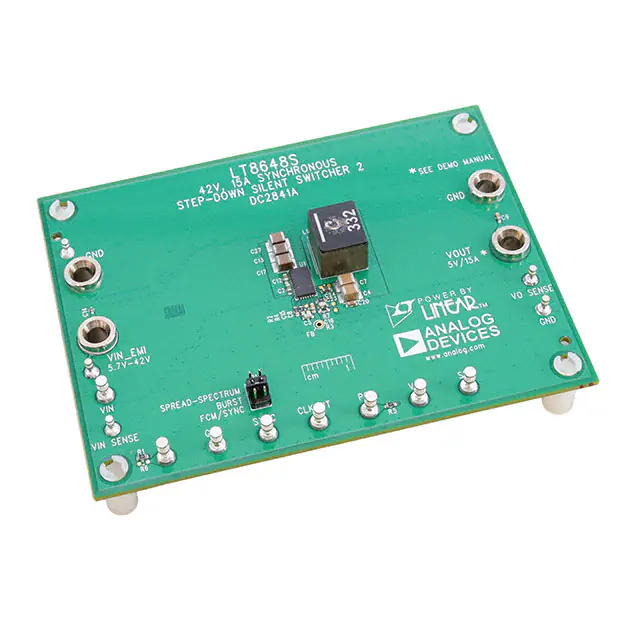
-
DC2841A
Analog Devices Inc.

-
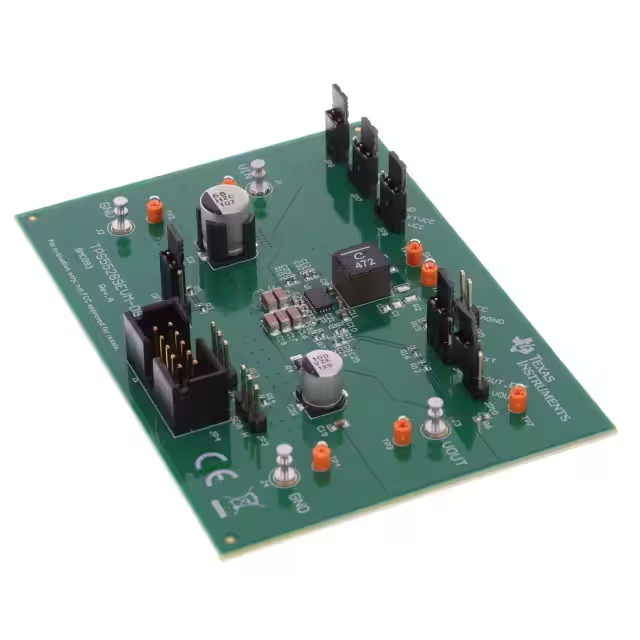
TPS552892EVM-111
Texas Instruments
-
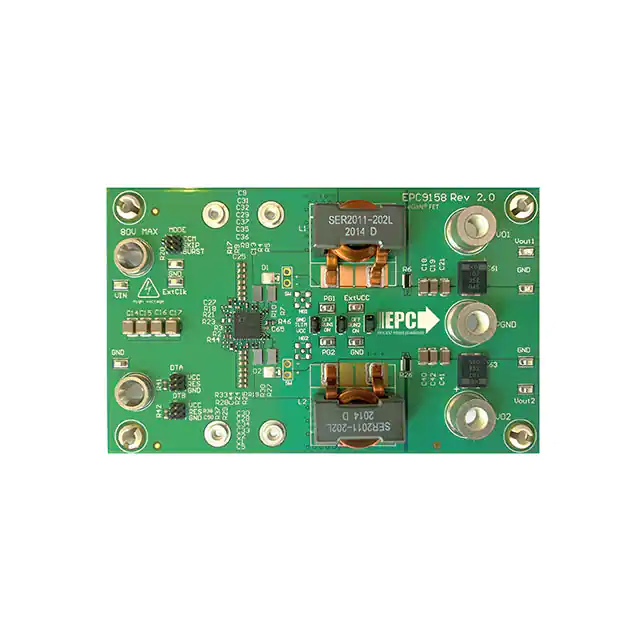
TPS55289EVM-093
Texas Instruments
-
EPC9158
EPC
Tech Hub

TTL and CMOS logic families differ in thresholds, loading, output drive, power and timing. This engineering guide compares 74HC and 74HCT, calculates noise margins and checks 3.3 V/5 V compatibility.

A practical engineering guide to 3.3V and 5V logic compatibility, input thresholds, resistor dividers, translator ICs, MOSFET level shifting, I2C pull-ups, timing limits and power-sequencing risks.

The 74HC595 uses push-pull logic outputs, while the TPIC6B595 uses 50 V open-drain DMOS sinks for higher-power loads. This guide compares timing, current limits, 3.3 V interfacing, load wiring, thermal…

The 74HC595 converts serial data into eight stable parallel outputs. This guide covers pin functions, shift and storage timing, OE and MR behavior, drive-current limits, cascading, voltage compatibilit…

A technical comparison of level-sensitive latches and edge-triggered flip-flops, covering timing windows, setup and hold limits, master–slave operation, time borrowing, race-through, HDL inference and…

A D latch stores one bit while Enable controls when data can pass. This reference covers gate-level operation, truth tables, transparency, setup and hold timing, LE versus OE, common ICs and practical …

An SR latch stores one bit through cross-coupled feedback. This engineering reference covers NOR and NAND implementations, truth tables, forbidden-state recovery, gated operation, switch debouncing, fa…

Latch circuits retain one bit through feedback. This technical reference covers SR and D latches, truth tables, transparency, timing limits, latch-versus-flip-flop behavior, applications and common log…

An engineering guide to LED driver operation, constant-current and constant-voltage outputs, linear and switching topologies, dimming, IC selection, calculations, replacement compatibility, and fault c…

Operational amplifier guide covering op amp basics, feedback, ideal vs real op amps, common configurations, buffer circuits, offset, bias current, gain-bandwidth, slew rate, rail-to-rail limits and sel…


