
 My Inquiry
 My Account


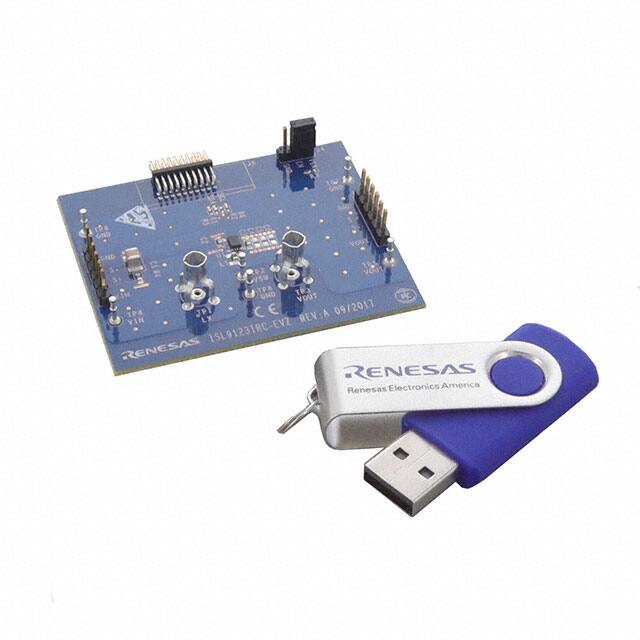
Renesas ISL9123IRC-EVZ
- Part No.:
- ISL9123IRC-EVZ
- Manufacturer:
- Renesas
- Package:
- Datasheet:
-
 ISL9123IRC-EVZ.pdf
- Description:
- EVAL BOARD FOR ISL9123
- Quantity:
- Payment:

- Shipping:

Inventory:4,516
Please send an inquiry. Send us your inquiry, and we will respond immediately.
Product details
Overview
ISL9123IRC-EVZ from Renesas Electronics is an ultra-low quiescent current (950nA) buck switching regulator in 1.8mm×1.0mm 8-bump WLCSP, delivering up to 600mA output current with I²C-adjustable output voltage (0.4V–5.375V). It features adaptive frequency hysteretic control, automatic and forced bypass modes, and auxiliary switched output (VSW), targeting power-constrained wearable and IoT applications.
For engineers reviewing the ISL9123IRC-EVZ datasheet, ISL9123IRC-EVZ pinout, ISL9123IRC-EVZ application, or ISL9123IRC-EVZ equivalent, key selection criteria include its 7nA shutdown current, 86% efficiency at 10µA load (3.6V→3.3V), I²C register-based dynamic voltage scaling, soft-start ramp rate programmability, and thermal/overcurrent protection behavior under real-world transient conditions.
Technical Context
The ISL9123IRC-EVZ implements a hysteretic PWM controller with integrated P- and N-channel MOSFETs (rDSON = 50–140mΩ), supporting seamless PFM/PWM transition and auto-bypass operation when VIN approaches VOUT. Its digital core manages I²C register access (CONV_CFG, VSET, INTFLG_MASK), enabling runtime configuration of output voltage, ramp rate (0.78–6.25 mV/µs), and fault response mode (Hiccup/Shutdown/Current Limit).
It operates across –40°C to +85°C ambient, with undervoltage lockout (1.791V, 100mV hysteresis), thermal shutdown (140°C, 25°C hysteresis), and peak inductor current limiting (1.4A typical). The auxiliary VSW output-internally shorted to VOUT in ISL9123B but functional in ISL9123/A-is confirmed active in this variant per pin assignment and block diagram.
Key Specifications
| Parameter | Value and Actual Design Meaning |
|---|---|
| Quiescent Current | 950nA in regulation mode - enables multi-year battery life in always-on wearables. |
| Output Voltage Range | 0.4V to 5.375V via I²C - supports dynamic core voltage scaling for low-power MCUs and SoCs. |
| Max Output Current | 600mA at VIN > 2.5V - sufficient for RF transceivers, sensors, and display drivers in compact devices. |
| Efficiency | 97% peak (3.6V→3.3V), 86% at 10µA load - maintains high conversion efficiency across µA-to-mA load range. |
| Package | 1.8mm × 1.0mm 8-bump WLCSP - minimizes PCB area and enables ultra-thin form factors. |
| I²C Interface | Fast-mode (400kHz), register-based control - allows host MCU to configure VOUT, ramp rate, and fault handling without external components. |
| Protection Features | Hiccup-mode OCP (100ms retry), thermal shutdown (140°C), UVLO (1.791V) - ensures robust operation in thermally constrained environments. |
Pinout & Package
ISL9123IRC-EVZ uses an 8-bump Wafer-Level Chip-Scale Package (WLCSP) measuring 1.8mm × 1.0mm. The package is bottom-soldered with solder bumps aligned to standard PCB pads; no exposed thermal pad or additional mounting features are present.
| Pin/Terminal | Circuit Role | Design Meaning |
|---|---|---|
| GND (A1) | Ground reference | Primary return path for power and signal; must be connected to low-impedance system ground plane. |
| VSW (A2) | Auxiliary switched output | Independent NMOS output (rDSON = 55–70mΩ); usable as secondary LDO-like rail or enable signal generator. |
| LX (B1) | Switch node | Connects to external 1µH inductor; carries high di/dt switching current - requires tight layout and minimal trace length. |
| VOUT (B2) | Regulated output | Main buck output; supplies load directly; requires ≥6µF effective capacitance (e.g., 22µF 0603 ceramic). |
| VIN (C1) | Input supply | Accepts 1.8V–5.5V; requires ≥5µF input capacitance near package; filtered before entering sensitive analog core. |
| EN (C2) | Enable control | Active-high logic input; must be pulled HIGH to operate; minimum 50µs LOW pulse required for full disable. |
| SCL (D1) | I²C clock | Fast-mode (400kHz) serial clock; requires external pull-up to VIN or I/O rail; not floating. |
| SDA (D2) | I²C data | Open-drain bidirectional data line; shares pull-up with SCL; supports read/write of VSET and CONV_CFG registers. |
Key Features
| Feature | Design Value |
|---|---|
| Ultra-low IQ regulation | 950nA quiescent current extends battery life in energy-harvesting and coin-cell-powered systems. |
| Adaptive hysteretic control | Eliminates external compensation network; provides fast transient response and stable operation with minimal output capacitance. |
| Programmable DVS ramp rate | Configurable soft-start and dynamic voltage scaling (0.78–6.25 mV/µs) prevents inrush current and meets SoC sequencing requirements. |
| Forced Bypass mode | Reduces supply current to 140nA when regulation is unnecessary - ideal for standby or sleep states in sensor nodes. |
| Auxiliary VSW output | Provides independent 600mA-capable switched rail for peripherals (e.g., backlight, audio amp), reducing need for second regulator. |
Applications
| Smart Wearables | Wireless Audio |
|---|---|
Use Scenario: Power management in compact smartwatches with dual-core processors and OLED displays. IC Role / Device Role / Timing Role: Primary buck regulator supplying dynamically scaled core voltage (0.7V–1.2V) and I/O rail (1.8V–3.3V) via I²C commands. Use Value: 950nA IQ and 86% efficiency at µA loads extend battery runtime beyond 7 days on a 100mAh cell. | Use Scenario: Dual-rail power for Bluetooth LE earbuds with ANC processing and Class-D amplifier. IC Role / Device Role / Timing Role: Main VDD supply (1.2V) and auxiliary VSW rail (3.3V) for codec and RF section, synchronized via host MCU. Use Value: Single-chip solution replaces two discrete regulators, saving 1.2mm² PCB area and simplifying BOM. |
| IoT Sensor Nodes | Portable Medical Devices |
Use Scenario: Battery-powered environmental sensor (temp/humidity/pressure) transmitting via sub-GHz RF. IC Role / Device Role / Timing Role: Always-on buck regulator powering MCU and sensor during deep-sleep (10µA load), then scaling up to 600mA during transmission burst. Use Value: Auto-bypass and forced bypass modes reduce average current by >50% vs fixed-frequency alternatives. | Use Scenario: Hearing aid with real-time DSP, MEMS microphone, and rechargeable Li-ion battery. IC Role / Device Role / Timing Role: Primary power source delivering regulated 0.9V core and 1.8V interface rails, with soft-discharge enabled on shutdown. Use Value: 125Ω internal soft-discharge resistor (ISL9123 variant) safely drains output caps without external circuitry. |
Equivalent & Alternatives
The following parts are listed as comparable options for similar buck regulator applications.
| Alternative Part | Technical Difference | Application Difference | Selection Advice |
|---|---|---|---|
| ISL9123II2Z | Same die, factory-programmed default VOUT = 2.1V; no I²C required for fixed-output use. | Best for cost-sensitive designs where output voltage is static and host MCU lacks I²C resources. | Select ISL9123II2Z if eliminating I²C routing and firmware overhead is prioritized over dynamic voltage control. |
| TPS62840DRVR | Lower IQ (300nA), same 600mA rating, but only supports 0.6V–3.3V output and lacks auxiliary VSW output. | Suitable for simpler single-rail applications where VSW functionality is unused and tighter VOUT range suffices. | Choose TPS62840DRVR when ultra-low IQ dominates design goals and auxiliary switching capability is unnecessary. |
Compared with ISL9123II2Z, ISL9123IRC-EVZ trades factory-set simplicity for full I²C configurability and VSW flexibility; versus TPS62840DRVR, it offers wider output range and dual-rail capability at the cost of slightly higher IQ and larger footprint.
Availability
ISL9123IRC-EVZ is available at Aetrix Electronics and suitable for smart wearables, wireless audio, and IoT sensor nodes requiring stable component supply, long-term lifecycle support, and guaranteed traceable sourcing.
Supply support for ISL9123IRC-EVZ includes scheduled delivery planning, volume procurement assistance, BOM continuity management, traceable sourcing, and lifecycle availability coordination for OEM customers, industrial embedded developers, connected-device designers, and electronics production programs.
Manufacturer
Renesas Electronics is a global semiconductor leader specializing in microcontrollers, analog power, and connectivity solutions for automotive, industrial, and consumer markets.
The ISL9123 family targets ultra-low-power portable electronics, delivering high-efficiency buck conversion with intelligent power management features like I²C-controlled DVS and auxiliary switching in wafer-level packaging.
FAQ
What is the quiescent current of the ISL9123IRC-EVZ in regulation mode?
The ISL9123IRC-EVZ draws 950nA quiescent current in regulation mode at VIN = 3.6V and zero load. This value is measured when the device is actively regulating VOUT but delivering no output current, making it suitable for multi-year battery operation in always-on applications such as fitness trackers and environmental sensors. The ISL9123IRC-EVZ achieves this ultra-low IQ through optimized biasing and adaptive hysteretic control architecture.
Does the ISL9123IRC-EVZ support I²C voltage adjustment, and what is its output voltage range?
Yes, the ISL9123IRC-EVZ supports full I²C-based voltage adjustment across 0.4V to 5.375V in 12.5mV steps. This range is confirmed for the ISL9123/A variant (which ISL9123IRC-EVZ belongs to) per datasheet Section 3.3 and Figure 3 block diagram. The VSET register (address 0x02) controls output voltage, enabling dynamic scaling for processors and SoCs. The ISL9123IRC-EVZ does not support the narrower 0.4V–1.180V range reserved for ISL9123B.
What is the function of the VSW pin on the ISL9123IRC-EVZ, and how is it used?
The VSW pin on the ISL9123IRC-EVZ is an auxiliary switched output capable of delivering up to 600mA with rDSON = 55–70mΩ. As confirmed in Pin Descriptions (Section 2.2) and Block Diagram (Figure 3), VSW is an independent NMOS switch tied to the same control logic as the main LX node but with separate routing. It can power peripherals like LEDs, audio amplifiers, or sensors without requiring a second regulator. When unused, VSW must be left floating per datasheet guidance.
How does the ISL9123IRC-EVZ handle overcurrent conditions, and what protection modes are available?
The ISL9123IRC-EVZ provides three configurable overcurrent protection modes - Hiccup, Shutdown, and Current Limit - selected via OC_FAULT_MODE bits in the INTFLG_MASK register. In Hiccup mode, it shuts down for 100ms then retries; in Shutdown mode, it latches off until EN or VIN is cycled; in Current Limit mode, it sustains maximum safe current while allowing VOUT to droop. These behaviors are validated in Section 5.4 and Figure 17–18 of the ISL9123IRC-EVZ datasheet.
What package type and dimensions does the ISL9123IRC-EVZ use, and what are its thermal characteristics?
The ISL9123IRC-EVZ uses an 8-bump WLCSP package measuring 1.8mm × 1.0mm with 0.4mm bump pitch. Its thermal resistance is θJA = 110°C/W and θJB = 28°C/W (per Section 3.2), enabling operation up to +85°C ambient. The package has no exposed thermal pad; heat dissipation relies on solder bumps and PCB copper area. Thermal shutdown activates at 140°C with 25°C hysteresis, ensuring reliability in sealed enclosures like earbuds and wearables.
ISL9123IRC-EVZ Specifications
- Product attributes
- Attribute value
- Manufacturer:
- Renesas
- Series:
- -
- Packaging:
- Box
- Product Status:
- Active
- Main Purpose:
- -
- Outputs and Type:
- -
- Voltage - Output:
- -
- Current - Output:
- -
- Voltage - Input:
- -
- Regulator Topology:
- -
- Frequency - Switching:
- -
- Contents:
- -
- Utilized IC / Part:
- Board(s)
- Power - Output:
- ISL9123
ISL9123IRC-EVZ FAQ
1.How can I place an order for ISL9123IRC-EVZ through Aetrix?
Please submit a Request for Quotation (RFQ) for ISL9123IRC-EVZ on Aetrix. Our sales agent will provide a competitive quotation and guide you through the order confirmation once you accept the terms.
2.Are the price and stock information for ISL9123IRC-EVZ reliable?
The price and inventory of ISL9123IRC-EVZ are updated periodically and may fluctuate due to market conditions. Stock and pricing data are typically refreshed every 24 hours. Quotation validity for ISL9123IRC-EVZ is usually 5 days.
3.What payment methods are accepted for ISL9123IRC-EVZ?
We accept Wire Transfer, PayPal, Credit Card, Western Union, MoneyGram, and Escrow for ISL9123IRC-EVZ transactions.
Note: Certain payment methods may incur a processing fee.
4.How is shipping managed for ISL9123IRC-EVZ?
ISL9123IRC-EVZ orders can be shipped via leading logistics carriers, including DHL, UPS, FedEx, TNT, or Registered Mail.
Once your ISL9123IRC-EVZ order is processed, you will receive an email with the shipment details and tracking number.
Note: Tracking information may take up to 24 hours to appear. Express delivery typically takes 3–5 business days.
5.How can I obtain technical support or documentation for ISL9123IRC-EVZ?
For technical support, including ISL9123IRC-EVZ datasheets, pinout diagrams, or application guidance, please contact our engineering support team. They can provide detailed documentation and assistance for your ISL9123IRC-EVZ requirements.
6.How does Aetrix verify that ISL9123IRC-EVZ is sourced from the original manufacturer or authorized distributors?
All ISL9123IRC-EVZ products on Aetrix are procured from qualified distributors and authorized channels. Our dedicated quality assurance team conducts strict verification, including traceability checks and, if necessary, third-party testing. This ensures that ISL9123IRC-EVZ meets industry standards.
7.What is the process for return or replacement of ISL9123IRC-EVZ?
All ISL9123IRC-EVZ units undergo pre-shipment inspection (PSI). If there is an issue with ISL9123IRC-EVZ, returns or replacements are accepted under the following conditions:
1.Quantity discrepancies, incorrect items, or visible external defects (such as breakage or corrosion), acknowledged by Aetrix.
2.The issue is reported within 90 days of delivery.
3.The ISL9123IRC-EVZ part is unused and in its original packaging.
Return procedure for ISL9123IRC-EVZ:
1.Submit a request within 90 days.
2.Obtain a Return Material Authorization (RMA) from Aetrix.
ISL9123IRC-EVZ Tags
-
DFR0571
DFRobot
-
DFR0379
DFRobot
-
DFR0205
DFRobot
-
1385
Adafruit Industries LLC
-
COM-15208
SparkFun Electronics
-
1944
Adafruit Industries LLC
-
2465
Adafruit Industries LLC
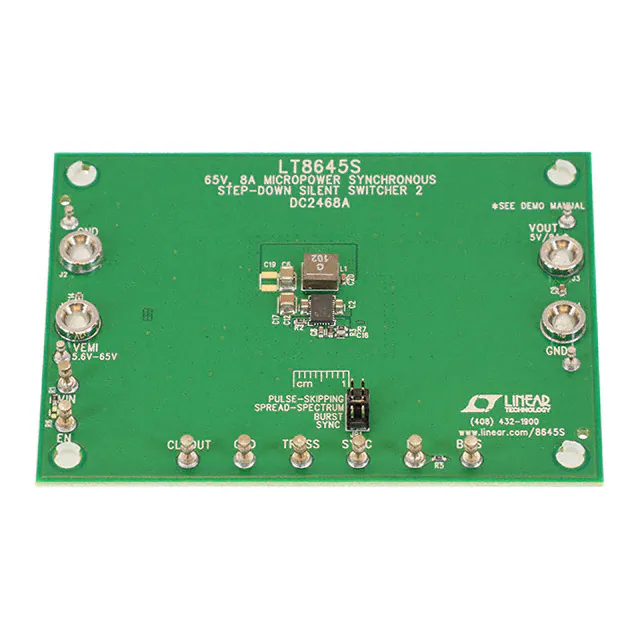
-
DC2468A
Analog Devices Inc.
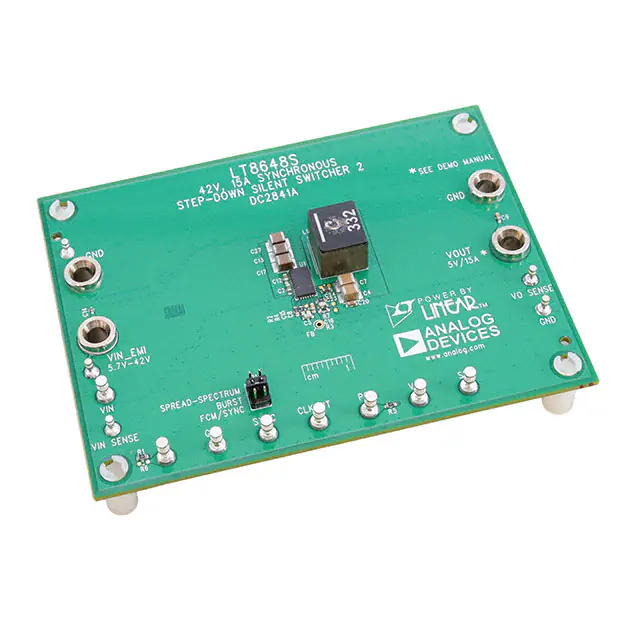
-
DC2841A
Analog Devices Inc.

-
TPS552892EVM-111
Texas Instruments
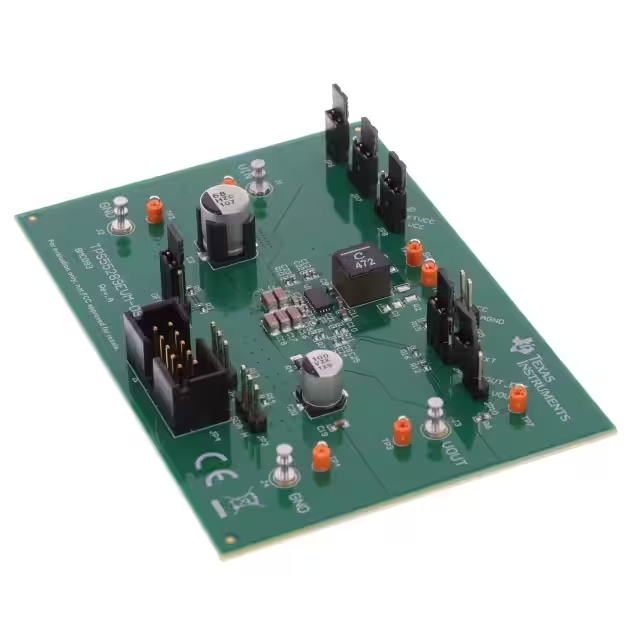
-
TPS55289EVM-093
Texas Instruments
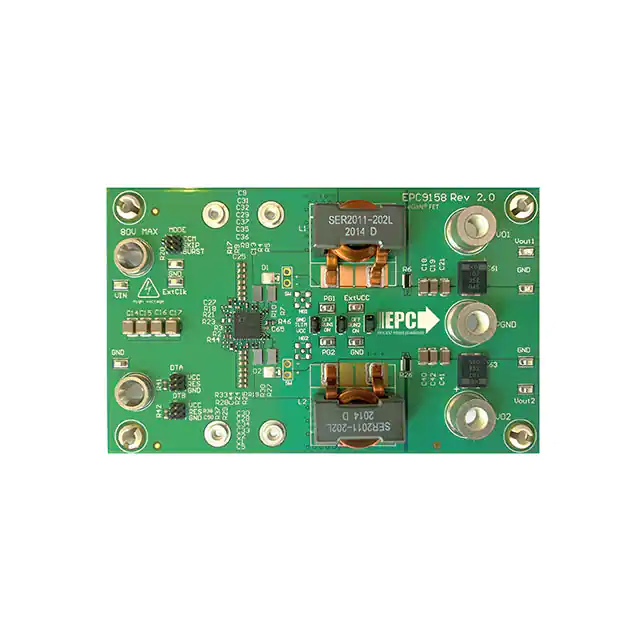
-
EPC9158
EPC
Tech Hub

TTL and CMOS logic families differ in thresholds, loading, output drive, power and timing. This engineering guide compares 74HC and 74HCT, calculates noise margins and checks 3.3 V/5 V compatibility.

A practical engineering guide to 3.3V and 5V logic compatibility, input thresholds, resistor dividers, translator ICs, MOSFET level shifting, I2C pull-ups, timing limits and power-sequencing risks.

The 74HC595 uses push-pull logic outputs, while the TPIC6B595 uses 50 V open-drain DMOS sinks for higher-power loads. This guide compares timing, current limits, 3.3 V interfacing, load wiring, thermal…

The 74HC595 converts serial data into eight stable parallel outputs. This guide covers pin functions, shift and storage timing, OE and MR behavior, drive-current limits, cascading, voltage compatibilit…

A technical comparison of level-sensitive latches and edge-triggered flip-flops, covering timing windows, setup and hold limits, master–slave operation, time borrowing, race-through, HDL inference and…

A D latch stores one bit while Enable controls when data can pass. This reference covers gate-level operation, truth tables, transparency, setup and hold timing, LE versus OE, common ICs and practical …

An SR latch stores one bit through cross-coupled feedback. This engineering reference covers NOR and NAND implementations, truth tables, forbidden-state recovery, gated operation, switch debouncing, fa…

Latch circuits retain one bit through feedback. This technical reference covers SR and D latches, truth tables, transparency, timing limits, latch-versus-flip-flop behavior, applications and common log…

An engineering guide to LED driver operation, constant-current and constant-voltage outputs, linear and switching topologies, dimming, IC selection, calculations, replacement compatibility, and fault c…

Operational amplifier guide covering op amp basics, feedback, ideal vs real op amps, common configurations, buffer circuits, offset, bias current, gain-bandwidth, slew rate, rail-to-rail limits and sel…


