
 My Inquiry
 My Account


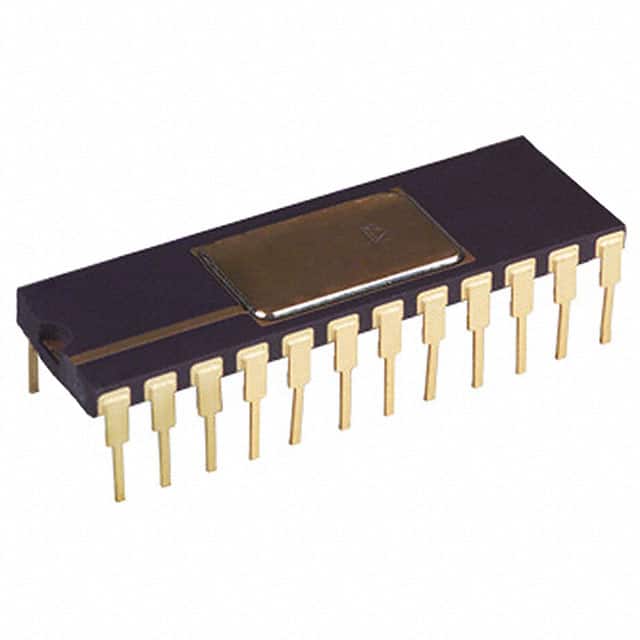
Texas Instruments ISO120G-BI
- Part No.:
- ISO120G-BI
- Manufacturer:
- Texas Instruments
- Category:
- Instrumentation, Op Amps, Buffer Amps
- Package:
- 24-CDIP (0.300", 7.62mm), 16 Leads
- Datasheet:
-
 ISO120G-BI.pdf
- Description:
- IC OPAMP ISOLATION 1 CIRC 16CDIP
- Quantity:
- Payment:

- Shipping:

Inventory:2,358
Please send an inquiry. Send us your inquiry, and we will respond immediately.
Product details
Overview
ISO120G-BI from Burr-Brown Corporation is a precision isolation amplifier employing duty-cycle modulation across a 2pF differential capacitive barrier, delivering 0.01% max nonlinearity, 115dB IMR at 60Hz, and ±10V bipolar output swing. It operates over ±4.5V to ±18V supplies with 6kHz bandwidth (with C1=C2=1000pF) and is used in industrial transducer isolation, 4–20mA loop systems, and biomedical signal conditioning where galvanic separation and high common-mode rejection are critical.
For engineers reviewing the ISO120G-BI datasheet, ISO120G-BI pinout, ISO120G-BI application, or ISO120G-BI equivalent, key selection considerations include its 1500Vrms isolation rating, hermetic 24-pin DIP package, guaranteed VOS drift ≤150µV/°C, synchronization capability via Ext Osc pin, and compatibility with ±10V input/output ranges under wide temperature operation (–25°C to +85°C).
Technical Context
The ISO120G-BI implements a laser-trimmed, dual-section architecture: an input integrator (A1) converts VIN into a duty-cycle-modulated triangular waveform using internal 150pF and external C1 capacitors; the modulated signal crosses the 2pF capacitive barrier and is demodulated by a matched output section (A2) with sample-and-hold filtering to suppress ripple. Its free-running carrier frequency is ~500kHz when C1 = 0, yielding 60kHz small-signal bandwidth.
In synchronized mode, an external ±4V sine or triangle wave applied to the Ext Osc pin (Pin 22) locks the modulator frequency - enabling noise rejection at system clock harmonics - while requiring C1/C2 ≥ 500pF for stability below 400kHz. The device maintains charge balance around A1 and A2 via 200kΩ feedback paths, ensuring gain accuracy of ±0.1% FSR and IMR performance independent of barrier impedance.
Key Specifications
| Parameter | Value and Actual Design Meaning |
|---|---|
| Isolation Voltage Rating | 1500Vrms AC continuous - certifies safe operation in industrial mains-referenced sensor interfaces. |
| Input Nonlinearity | ±0.01% max FSR - enables high-accuracy RTD and bridge measurements without calibration correction. |
| IMR @ 60Hz | 115dB - rejects ground-loop interference in 4–20mA current loops and motor control feedback paths. |
| Supply Range | ±4.5V to ±18V - supports direct integration with legacy ±15V industrial power rails. |
| Bandwidth (C1=C2=1000pF) | 6kHz - balances precision and noise immunity for slow-varying process signals. |
| VOS Drift | ≤150µV/°C - ensures stable offset over temperature in uncooled field-mounted instrumentation. |
| Package | 24-pin hermetic DIP (0.3" width) - provides long-term reliability in harsh environments including aerospace and downhole tools. |
Pinout & Package
ISO120G-BI is housed in a 0.3"-wide 24-pin hermetic dual-in-line package (DIP), rated for operation from –25°C to +85°C and qualified for high-reliability applications requiring partial discharge testing (≤5pC at 2500Vrms).
| Pin/Terminal | Circuit Role | Design Meaning |
|---|---|---|
| 1, 2, 3, 4, 9, 10, 11, 12 | Signal Common 1 / Ground 1 / –VS1 / +VS1 | Input-side reference nodes: Com1 and Gnd1 must remain within ±1V; ±VS1 supplies input section. |
| 13, 14, 15, 16, 21, 22, 23, 24 | Signal Common 2 / Ground 2 / –VS2 / +VS2 / Ext Osc / Sense / VOUT | Output-side reference nodes: Ext Osc (Pin 22) accepts ±4V sync signal; Sense (Pin 15) enables remote sensing to cancel IR drop errors. |
| 5, 6, 7, 8 | VIN / C1L / C1H / C2L | VIN (Pin 5) accepts ±10V differential input; C1H/C1L (Pins 6/7) connect external modulator capacitor; C2L (Pin 8) ties to demodulator integrator. |
| 17, 18, 19, 20 | C2H / +VS2 / –VS2 / Gnd 2 | C2H (Pin 17) connects external demodulator capacitor; ±VS2 powers output stage; Gnd2 completes isolated return path. |
Key Features
| Feature | Design Value |
|---|---|
| Duty-cycle modulation architecture | Digitally transmits analog signal across 2pF capacitive barrier - eliminates sensitivity to barrier aging, humidity, or dielectric absorption. |
| User-controllable carrier frequency | External oscillator input (Pin 22) enables synchronization to system clocks - suppresses beat frequencies in multi-channel data acquisition. |
| Laser-trimmed gain and offset | Guarantees ±0.1% gain error and ≤±25mV initial VOS without external trimming - reduces calibration overhead in production test. |
| High-impedance signal commons | Com1 and Com2 provide isolated bias return paths - allows floating sensor connections in grounded chassis without ground loops. |
| Hermetic DIP packaging | 24-pin ceramic/metal seal withstands 1500Vrms isolation stress and meets MIL-STD-883 requirements for moisture resistance and thermal cycling. |
Applications
| Industrial Transducer Isolation | 4–20mA Loop Isolation |
|---|---|
|
Use Scenario: Isolating thermocouple or RTD outputs in refinery process controllers exposed to 480VAC motor drives and EMI-rich environments. IC Role / Device Role / Timing Role: Precision analog isolator converting low-level sensor voltage to isolated ±10V output while rejecting >115dB of 60Hz ground noise. Use Value: Eliminates measurement drift caused by ground potential differences between field sensors and central PLC racks. |
Use Scenario: Converting 0–5V DAC output to isolated 4–20mA current loop driving remote valve actuators in hazardous locations. IC Role / Device Role / Timing Role: Input-stage isolation amplifier providing galvanic separation between controller PCB and loop-powered field devices. Use Value: Prevents fault currents from damaging upstream DACs during loop wiring faults or lightning-induced surges. |
| Motor & SCR Control Feedback | Biomedical Signal Conditioning |
|
Use Scenario: Isolating current-sense shunt voltage in IGBT gate driver circuits operating with 600V DC bus voltages. IC Role / Device Role / Timing Role: High-CMRR isolation amplifier capturing fast transient current pulses while rejecting dv/dt-induced coupling across isolation barrier. Use Value: Enables accurate real-time current limiting without compromising safety insulation between power stage and MCU control logic. |
Use Scenario: Right-leg driven ECG front-end where patient-connected electrodes require 1500Vrms isolation from mains-powered amplifiers. IC Role / Device Role / Timing Role: Biopotential isolation stage preserving microvolt-level signal integrity while meeting IEC 60601 creepage/clearance requirements. Use Value: Maintains <150µV/°C offset drift across body temperature range - critical for baseline stability in diagnostic-grade ECG. |
Equivalent & Alternatives
The following parts are listed as comparable options for similar isolation amplifier applications.
| Alternative Part | Technical Difference | Application Difference | Selection Advice |
|---|---|---|---|
| ISO120BG | Same 24-pin DIP package and 1500Vrms rating, but specified only for –25°C to +85°C (no extended temp screening). | Lacks 100% partial discharge test at 2500Vrms - suitable for commercial-grade industrial controls but not aerospace or downhole tools. | Select ISO120BG only if full SG-grade reliability testing is unnecessary and cost is primary constraint. |
| AMC1301DWV | Modern 8-pin SOIC, 5kVRMS reinforced isolation, integrated ±250mV input range, but requires external gain stage for ±10V output. | Optimized for current sensing in motor drives; lacks Ext Osc sync capability and hermetic packaging. | Choose AMC1301DWV for space-constrained designs needing higher isolation voltage and lower quiescent current, accepting trade-offs in flexibility and ruggedness. |
Compared with ISO120G-BI, ISO120BG offers identical electrical performance but reduced quality assurance rigor, while AMC1301DWV delivers higher isolation and smaller footprint at the expense of programmable carrier control, hermetic reliability, and direct ±10V output compatibility.
Availability
ISO120G-BI is available at Aetrix Electronics and suitable for industrial process control, motor drive feedback, and biomedical instrumentation requiring stable component supply, long-term obsolescence management, and traceable sourcing from original manufacturer-qualified channels.
Supply support for ISO120G-BI includes scheduled delivery planning, volume procurement assistance, BOM continuity management, traceable sourcing, and lifecycle availability coordination for OEM customers, industrial embedded developers, connected-device designers, and electronics production programs.
Manufacturer
Burr-Brown Corporation was a U.S.-based analog semiconductor pioneer (acquired by Texas Instruments in 2000), renowned for high-precision signal conditioning ICs used in test equipment, medical devices, and industrial automation.
The ISO120G-BI belongs to Burr-Brown's precision isolation amplifier product line, designed specifically for applications demanding galvanic separation, ultra-low drift, and immunity to high dv/dt transients in electrically noisy environments.
FAQ
What is the maximum continuous isolation voltage rating for ISO120G-BI?
The ISO120G-BI is rated for 1500Vrms continuous AC isolation voltage at 60Hz across its capacitive barrier. This rating is validated by 100% production partial discharge testing at 2500Vrms for 1 second with ≤5pC discharge level - confirming robust dielectric integrity for use in industrial mains-referenced systems. The ISO120G-BI also supports 2121VDC continuous rating per specification table.
Can ISO120G-BI operate with ±12V supplies instead of ±15V?
Yes, ISO120G-BI supports supply voltages from ±4.5V to ±18V, making ±12V fully compliant. At ±12V, output swing remains ±10V (limited by internal design), and specifications such as nonlinearity (±0.01% max), IMR (115dB at 60Hz), and VOS drift (≤150µV/°C) are maintained per datasheet conditions. Quiescent current decreases slightly, improving thermal margin in compact layouts.
How does the Ext Osc pin on ISO120G-BI enable noise rejection?
The Ext Osc pin (Pin 22) allows external synchronization of the ISO120G-BI's internal carrier frequency to system clocks or noise sources. By locking the modulator to a known frequency (e.g., 100kHz), the ISO120G-BI places its response nulls at that frequency and harmonics - effectively attenuating periodic interference from DC/DC converters or digital clocks. This requires matching C1 and C2 values per the Synchronization Range curve.
What is the purpose of the Sense pin on ISO120G-BI?
The Sense pin (Pin 15) on ISO120G-BI provides Kelvin sensing for the output stage, allowing remote sensing at the load to eliminate errors from IR drops in output traces or connectors. When connected directly to VOUT, it enables standard unity-gain operation; when routed to the load terminal, it compensates for voltage loss - critical for maintaining ±10V accuracy in long-cable 4–20mA loop drivers or precision actuator interfaces.
Is ISO120G-BI compatible with C1 = C2 = 0 for maximum bandwidth?
Yes, ISO120G-BI achieves 60kHz small-signal bandwidth with C1 = C2 = 0, using its internal 150pF modulator and demodulator capacitors. However, this configuration yields higher nonlinearity (±0.02% max) and VOS drift (±250µV/°C), and removes synchronization capability. For precision applications, C1 = C2 = 1000pF is recommended to guarantee ±0.01% nonlinearity and ≤150µV/°C drift at 6kHz bandwidth.
ISO120G-BI Specifications
- Product attributes
- Attribute value
- Manufacturer:
- Texas Instruments
- Series:
- -
- Package/Case:
- 24-CDIP (0.300", 7.62mm), 16 Leads
- Packaging:
- Tube
- Product Status:
- Obsolete
- Amplifier Type:
- Isolation
- Number of Circuits:
- 1
- Output Type:
- -
- Slew Rate:
- 2V/µs
- Gain Bandwidth Product:
- -
- -3db Bandwidth:
- 60 kHz
- Current - Input Bias:
- -
- Voltage - Input Offset:
- 10 mV
- Current - Supply:
- 4mA
- Current - Output / Channel:
- 15 mA
- Voltage - Supply Span (Min):
- 9 V
- Voltage - Supply Span (Max):
- 36 V
- Operating Temperature:
- -25°C ~ 85°C
- Grade:
- -
- Qualification:
- -
- Mounting Type:
- Through Hole
- Supplier Device Package:
- 16-CDIP
ISO120G-BI FAQ
1.How can I place an order for ISO120G-BI through Aetrix?
Please submit a Request for Quotation (RFQ) for ISO120G-BI on Aetrix. Our sales agent will provide a competitive quotation and guide you through the order confirmation once you accept the terms.
2.Are the price and stock information for ISO120G-BI reliable?
The price and inventory of ISO120G-BI are updated periodically and may fluctuate due to market conditions. Stock and pricing data are typically refreshed every 24 hours. Quotation validity for ISO120G-BI is usually 5 days.
3.What payment methods are accepted for ISO120G-BI?
We accept Wire Transfer, PayPal, Credit Card, Western Union, MoneyGram, and Escrow for ISO120G-BI transactions.
Note: Certain payment methods may incur a processing fee.
4.How is shipping managed for ISO120G-BI?
ISO120G-BI orders can be shipped via leading logistics carriers, including DHL, UPS, FedEx, TNT, or Registered Mail.
Once your ISO120G-BI order is processed, you will receive an email with the shipment details and tracking number.
Note: Tracking information may take up to 24 hours to appear. Express delivery typically takes 3–5 business days.
5.How can I obtain technical support or documentation for ISO120G-BI?
For technical support, including ISO120G-BI datasheets, pinout diagrams, or application guidance, please contact our engineering support team. They can provide detailed documentation and assistance for your ISO120G-BI requirements.
6.How does Aetrix verify that ISO120G-BI is sourced from the original manufacturer or authorized distributors?
All ISO120G-BI products on Aetrix are procured from qualified distributors and authorized channels. Our dedicated quality assurance team conducts strict verification, including traceability checks and, if necessary, third-party testing. This ensures that ISO120G-BI meets industry standards.
7.What is the process for return or replacement of ISO120G-BI?
All ISO120G-BI units undergo pre-shipment inspection (PSI). If there is an issue with ISO120G-BI, returns or replacements are accepted under the following conditions:
1.Quantity discrepancies, incorrect items, or visible external defects (such as breakage or corrosion), acknowledged by Aetrix.
2.The issue is reported within 90 days of delivery.
3.The ISO120G-BI part is unused and in its original packaging.
Return procedure for ISO120G-BI:
1.Submit a request within 90 days.
2.Obtain a Return Material Authorization (RMA) from Aetrix.
ISO120G-BI Tags

-
LM358DT
STMicroelectronics

-
LM358DR
Texas Instruments
-
LM2904DR
Texas Instruments
-
LM358ADR
Texas Instruments
-
LM2904DGKR
Texas Instruments
-
LM324DR
Texas Instruments

-
MCP6006T-E/OT
Microchip Technology
-
MCP6006UT-E/OT
Microchip Technology
-
LM324PWR
Texas Instruments
-
LM2902PWR
Texas Instruments
-
LM2902DR
Texas Instruments
-
LM358P
Texas Instruments
Tech Hub

A practical engineering guide to 3.3V and 5V logic compatibility, input thresholds, resistor dividers, translator ICs, MOSFET level shifting, I2C pull-ups, timing limits and power-sequencing risks.

The 74HC595 uses push-pull logic outputs, while the TPIC6B595 uses 50 V open-drain DMOS sinks for higher-power loads. This guide compares timing, current limits, 3.3 V interfacing, load wiring, thermal…

The 74HC595 converts serial data into eight stable parallel outputs. This guide covers pin functions, shift and storage timing, OE and MR behavior, drive-current limits, cascading, voltage compatibilit…

A technical comparison of level-sensitive latches and edge-triggered flip-flops, covering timing windows, setup and hold limits, master–slave operation, time borrowing, race-through, HDL inference and…

A D latch stores one bit while Enable controls when data can pass. This reference covers gate-level operation, truth tables, transparency, setup and hold timing, LE versus OE, common ICs and practical …

An SR latch stores one bit through cross-coupled feedback. This engineering reference covers NOR and NAND implementations, truth tables, forbidden-state recovery, gated operation, switch debouncing, fa…

Latch circuits retain one bit through feedback. This technical reference covers SR and D latches, truth tables, transparency, timing limits, latch-versus-flip-flop behavior, applications and common log…

An engineering guide to LED driver operation, constant-current and constant-voltage outputs, linear and switching topologies, dimming, IC selection, calculations, replacement compatibility, and fault c…

Operational amplifier guide covering op amp basics, feedback, ideal vs real op amps, common configurations, buffer circuits, offset, bias current, gain-bandwidth, slew rate, rail-to-rail limits and sel…

Jumper cables guide covering safe connection order, red and black clamp placement, final ground connection, cable gauge, length, clamp quality, copper vs CCA cables, jump starter comparison and battery…


