
 My Inquiry
 My Account


Texas Instruments JM38510/34701BSA
- Part No.:
- JM38510/34701BSA
- Manufacturer:
- Texas Instruments
- Category:
- Comparators
- Package:
- -
- Datasheet:
-
 JM38510/34701BSA.pdf
- Description:
- 54F521 8-BIT IDENTITY/MAGNITUDE
- Quantity:
- Payment:

- Shipping:

Inventory:378
Please send an inquiry. Send us your inquiry, and we will respond immediately.
Product details
Overview
JM38510/34701BSA from Texas Instruments is a military-grade 8-bit identity comparator IC that performs bitwise equality comparison between two parallel 8-bit binary or BCD words and asserts a single active-high P = Q output. It operates across −55°C to 125°C, supports 4.5 V to 5.5 V supply, delivers 20 mA low-level output drive, and features 3.2 ns typical tPHL propagation delay into 50 pF load - used in avionics data validation and missile guidance subsystems.
For engineers reviewing the JM38510/34701BSA datasheet, JM38510/34701BSA pinout, JM38510/34701BSA application, or JM38510/34701BSA equivalent, key selection criteria include its CFP (W) 20-pin hermetic package, guaranteed operation over full military temperature range, OE-controlled output enable, and compatibility with TTL-level input/output interfaces in high-reliability digital systems.
Technical Context
This device implements combinational logic for exact word matching without internal latching or clocking. Its architecture compares all eight P–Q bit pairs simultaneously using wired-AND logic, with the P = Q output driven only when all eight comparisons yield equality and OE is low.
The output stage uses a standard TTL totem-pole driver capable of sourcing −1 mA and sinking 20 mA, while input clamping diodes support VIK = −1.2 V and VIH ≥ 2 V under recommended conditions. Propagation delays are specified with CL = 50 pF and RL = 500 Ω, confirming suitability for synchronous bus integrity checking in real-time control systems.
Key Specifications
| Parameter | Value and Actual Design Meaning |
|---|---|
| Function | 8-bit identity comparator with single P = Q output and active-low output enable (OE) |
| Supply Voltage | 4.5 V to 5.5 V - compatible with standard 5 V TTL power rails and tolerant of transient droop |
| Operating Temperature | −55°C to 125°C - qualified per MIL-PRF-38535 for space and defense platforms |
| Propagation Delay | tPHL = 3.2 ns (max), tPLH = 2.7 ns (max) - enables sub-10 ns word-compare cycles in high-speed data paths |
| Output Drive | IOL = 20 mA (min), IOH = −1 mA (min) - sufficient to directly drive multiple TTL inputs or small LED indicators |
| Input Thresholds | VIL ≤ 0.8 V, VIH ≥ 2.0 V - ensures robust noise margin against TTL-compatible signal sources |
| Package Type | CFP (Ceramic Flatpack), Package Drawing W, 20 leads - hermetically sealed, lead-finished per MIL-STD-1835 |
Pinout & Package
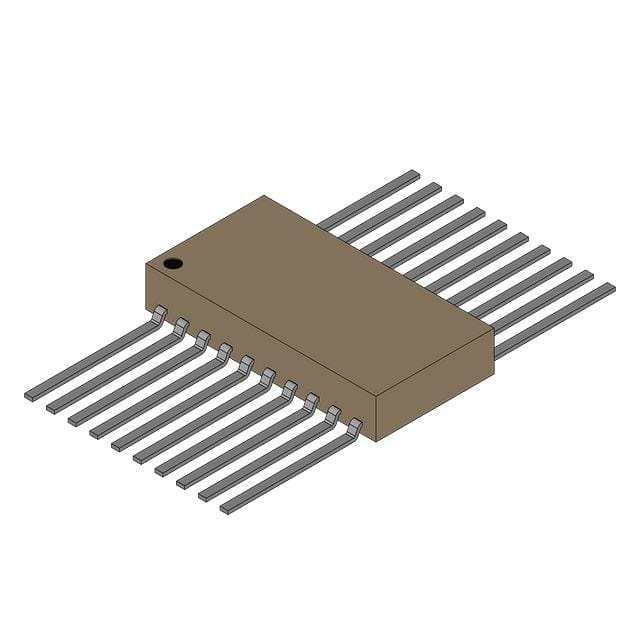
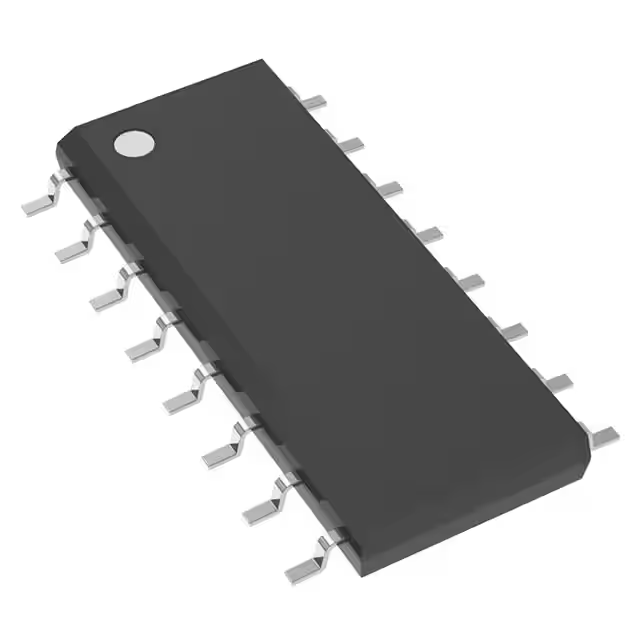
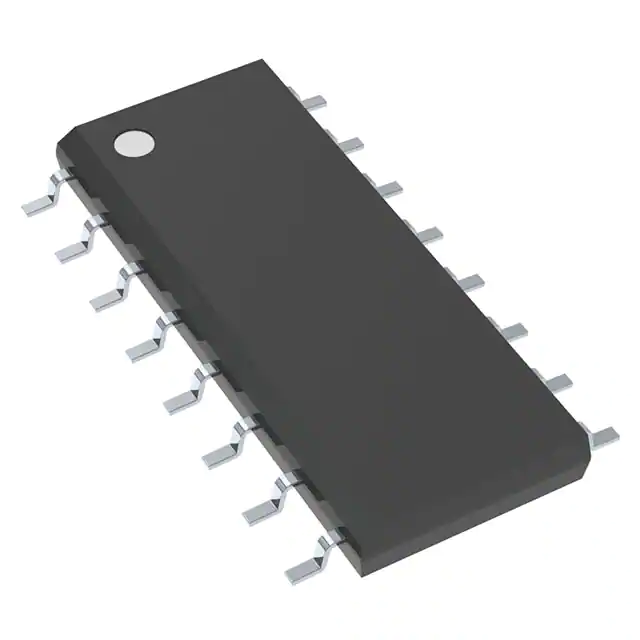
JM38510/34701BSA is housed in a 20-lead ceramic flatpack (CFP) package per Package Drawing W, featuring a 0.6-inch body width, 0.25-inch height, and glass-sealed lid for moisture resistance and thermal stability in harsh environments.
| Pin/Terminal | Circuit Role | Design Meaning |
|---|---|---|
| 1, 2, 4, 6, 8, 11, 13, 15 | P0–P7 Data Inputs | High-impedance TTL-compatible inputs accepting 8-bit reference word for comparison |
| 3, 5, 7, 9, 12, 14, 16, 18 | Q0–Q7 Data Inputs | High-impedance TTL-compatible inputs accepting 8-bit test word for comparison |
| 19 | OE (Output Enable) | Active-low control: P = Q output disabled (high-impedance) when OE = high |
| 17 | P = Q Output | Active-high open-collector/totem-pole output asserted only when all eight Pn = Qn bits match and OE = low |
| 10 | GND | Signal ground reference for logic thresholds and output current sink path |
| 20 | VCC | Positive supply terminal - must be decoupled locally due to fast switching transients |
Key Features
| Feature | Design Value |
|---|---|
| Full military temperature qualification | Tested and screened per MIL-PRF-38535 Class B for −55°C to 125°C continuous operation |
| Hermetic CFP packaging | Ceramic flatpack (W) provides zero moisture ingress, enabling long-term reliability in humid or vacuum environments |
| Output enable control | OE pin allows time-multiplexed bus monitoring without external gating logic or additional buffers |
| TTL-compatible interface | Direct interoperability with legacy 74F, 74AS, and 74ALS families without level-shifting circuitry |
| Low propagation skew | Matched tPLH/tPHL delays (< 1 ns variation) ensure deterministic timing in synchronized comparator arrays |
Applications
| Avionics Data Bus Validation | Missile Guidance Word Matching |
|---|---|
|
Use Scenario: Real-time verification of command word integrity on MIL-STD-1553B remote terminal interfaces. IC Role / Device Role / Timing Role: Identity comparator validating that received 8-bit subaddress matches expected value before enabling data transfer. Use Value: Prevents erroneous command execution by ensuring bit-perfect match prior to bus arbitration - critical for flight-critical subsystems. |
Use Scenario: Confirming alignment of encrypted target coordinate words between onboard processor and seeker electronics. IC Role / Device Role / Timing Role: Parallel word comparator asserting match flag within 10 ns to trigger next-stage decryption handshake. Use Value: Enables deterministic <10 ns response window for time-critical guidance loop closure in tactical missiles. |
| Secure Crypto Key Verification | Radiation-Hardened Memory Check |
|
Use Scenario: Validating ephemeral session keys during secure boot sequence in FPGAs with embedded crypto engines. IC Role / Device Role / Timing Role: Comparator verifying 8-bit key segment equality before releasing decryption enable signal. Use Value: Adds hardware-enforced key consistency check independent of software stack - mitigates fault-injection attacks. |
Use Scenario: Periodic scrubbing of radiation-sensitive SRAM blocks in satellite attitude control units. IC Role / Device Role / Timing Role: Comparing stored checksum bytes against recalculated values to detect single-event upsets (SEUs). Use Value: Provides deterministic, low-latency error detection without CPU intervention - essential for autonomous spacecraft operation. |
Equivalent & Alternatives
The following parts are listed as comparable options for similar 8-bit identity comparator applications.
| Alternative Part | Technical Difference | Application Difference | Selection Advice |
|---|---|---|---|
| SNJ54F521J | Same logic function and military temp range, but packaged in 20-pin CDIP (J) instead of CFP (W) | CDIP offers easier manual prototyping and socket compatibility, but lower hermeticity and higher thermal resistance | Select SNJ54F521J for lab validation or non-hermetic board-level integration where cost and solderability outweigh environmental sealing needs |
| 5962-9759101Q2A | Identical function and CFP packaging, but qualified to QML-V per MIL-PRF-38535 Class V (higher screening level) | Required for mission-critical launch vehicle avionics where extended burn-in and radiation lot acceptance testing are mandated | Choose 5962-9759101Q2A when system certification requires Class V screening beyond standard Class B (JM38510/34701BSA) |
Compared with SNJ54F521J and 5962-9759101Q2A, JM38510/34701BSA provides optimal balance of hermetic reliability, Class B qualification, and production availability - making it preferred for fielded defense electronics requiring proven longevity without Class V overhead.
Availability
JM38510/34701BSA is available at Aetrix Electronics and suitable for avionics data validation, missile guidance word matching, and secure crypto key verification requiring stable component supply across extended product lifecycles.
Supply support for JM38510/34701BSA includes scheduled delivery planning, volume procurement assistance, BOM continuity management, traceable sourcing, and lifecycle availability coordination for OEM customers, industrial embedded developers, connected-device designers, and electronics production programs.
Manufacturer
Texas Instruments is a U.S.-based semiconductor manufacturer founded in 1930, specializing in analog, embedded processing, and high-reliability logic solutions for aerospace, defense, and industrial markets.
JM38510/34701BSA belongs to TI's military logic family derived from the 74F series, designed specifically for high-integrity digital comparison tasks in systems where failure is not an option - including flight control, weapon fuzing, and secure communications.
FAQ
What is the operating temperature range of the JM38510/34701BSA?
The JM38510/34701BSA is fully characterized and qualified for continuous operation from −55°C to 125°C per MIL-PRF-38535 Class B requirements. This range is verified through temperature cycling, steady-state burn-in, and parametric testing at both extremes - confirming reliable functionality in jet engine bays, space payloads, and desert-deployed electronics where ambient extremes exceed commercial limits.
Does the JM38510/34701BSA require external pull-up resistors on the P = Q output?
No, the JM38510/34701BSA features a totem-pole output stage capable of actively driving high (VOH ≥ 2.5 V at IOH = −1 mA) and low (VOL ≤ 0.5 V at IOL = 20 mA), eliminating the need for external pull-up resistors. This simplifies PCB layout and ensures consistent rise/fall times across varying capacitive loads up to 50 pF, as validated in the official SDFS091 switching characteristics table.
How does the OE (output enable) pin affect the P = Q output behavior of the JM38510/34701BSA?
When OE is high, the P = Q output enters a high-impedance state regardless of input word equality - effectively disconnecting the comparator from downstream logic. When OE is low, the P = Q output actively drives high only if all eight Pn–Qn bit pairs match; otherwise it drives low. This enables time-shared monitoring of multiple 8-bit buses using a single JM38510/34701BSA with external multiplexing.
Is the JM38510/34701BSA pin-compatible with commercial SN74F521 variants?
No - while the logic function and pin count match, JM38510/34701BSA uses a 20-lead CFP (W) package with different lead pitch, body dimensions, and thermal/mechanical properties than SOIC (DW), PDIP (N), or CDIP (J) versions. Direct PCB replacement is not possible without footprint redesign; however, electrical interface behavior (voltage levels, timing, drive strength) remains functionally identical across all 74F521 variants.
What is the maximum capacitive load the JM38510/34701BSA can drive on its P = Q output while maintaining specified propagation delay?
The JM38510/34701BSA's propagation delay specifications (tPLH/tPHL) are guaranteed only up to CL = 50 pF with RL = 500 Ω, as defined in the SDFS091 switching characteristics table. Driving >50 pF increases delay nonlinearly and may degrade noise margin; for heavier loads, TI recommends buffering the P = Q output with a 74F04 or similar inverter stage - a practice confirmed in TI application note SCBA005.
JM38510/34701BSA Specifications
- Product attributes
- Attribute value
- Manufacturer:
- Texas Instruments
- Series:
- *
- Package/Case:
- -
- Packaging:
- Bulk
- Product Status:
- Active
- Type:
- -
- Number of Bits:
- -
- Output:
- -
- Output Function:
- -
- Voltage - Supply:
- -
- Current - Output High, Low:
- -
- Max Propagation Delay @ V, Max CL:
- -
- Current - Quiescent (Iq):
- -
- Operating Temperature:
- -
- Grade:
- -
- Qualification:
- -
- Supplier Device Package:
- -
- Mounting Type:
- -
JM38510/34701BSA FAQ
1.How can I place an order for JM38510/34701BSA through Aetrix?
Please submit a Request for Quotation (RFQ) for JM38510/34701BSA on Aetrix. Our sales agent will provide a competitive quotation and guide you through the order confirmation once you accept the terms.
2.Are the price and stock information for JM38510/34701BSA reliable?
The price and inventory of JM38510/34701BSA are updated periodically and may fluctuate due to market conditions. Stock and pricing data are typically refreshed every 24 hours. Quotation validity for JM38510/34701BSA is usually 5 days.
3.What payment methods are accepted for JM38510/34701BSA?
We accept Wire Transfer, PayPal, Credit Card, Western Union, MoneyGram, and Escrow for JM38510/34701BSA transactions.
Note: Certain payment methods may incur a processing fee.
4.How is shipping managed for JM38510/34701BSA?
JM38510/34701BSA orders can be shipped via leading logistics carriers, including DHL, UPS, FedEx, TNT, or Registered Mail.
Once your JM38510/34701BSA order is processed, you will receive an email with the shipment details and tracking number.
Note: Tracking information may take up to 24 hours to appear. Express delivery typically takes 3–5 business days.
5.How can I obtain technical support or documentation for JM38510/34701BSA?
For technical support, including JM38510/34701BSA datasheets, pinout diagrams, or application guidance, please contact our engineering support team. They can provide detailed documentation and assistance for your JM38510/34701BSA requirements.
6.How does Aetrix verify that JM38510/34701BSA is sourced from the original manufacturer or authorized distributors?
All JM38510/34701BSA products on Aetrix are procured from qualified distributors and authorized channels. Our dedicated quality assurance team conducts strict verification, including traceability checks and, if necessary, third-party testing. This ensures that JM38510/34701BSA meets industry standards.
7.What is the process for return or replacement of JM38510/34701BSA?
All JM38510/34701BSA units undergo pre-shipment inspection (PSI). If there is an issue with JM38510/34701BSA, returns or replacements are accepted under the following conditions:
1.Quantity discrepancies, incorrect items, or visible external defects (such as breakage or corrosion), acknowledged by Aetrix.
2.The issue is reported within 90 days of delivery.
3.The JM38510/34701BSA part is unused and in its original packaging.
Return procedure for JM38510/34701BSA:
1.Submit a request within 90 days.
2.Obtain a Return Material Authorization (RMA) from Aetrix.
JM38510/34701BSA Tags
-
SN74HC688PWR
Texas Instruments
-
74HC85PW,118
Nexperia USA Inc.
-
74HC688D,653
Nexperia USA Inc.
-
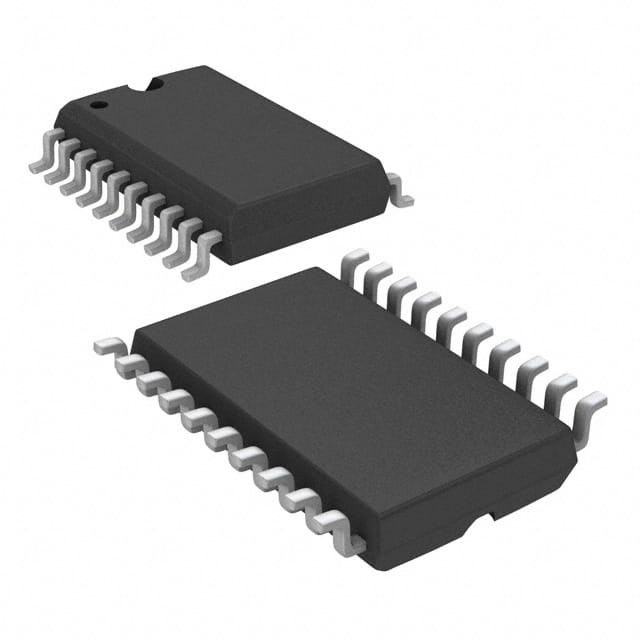
SN74F521DWR
Texas Instruments
-
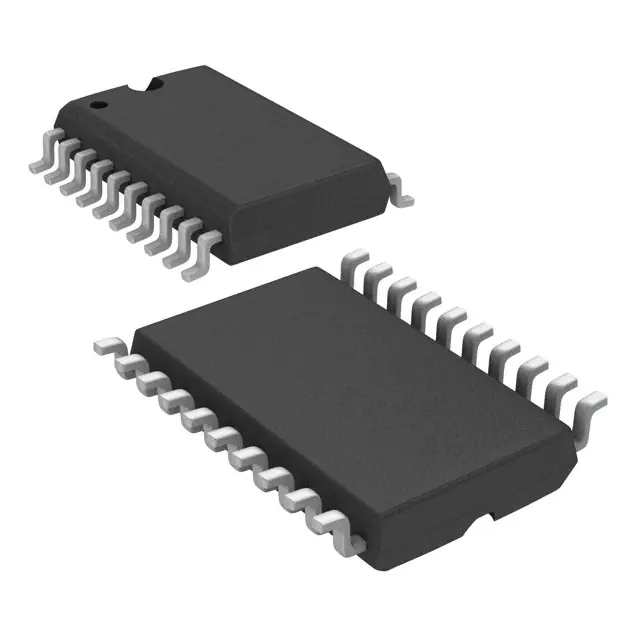
CD74HCT688M96
Texas Instruments
-
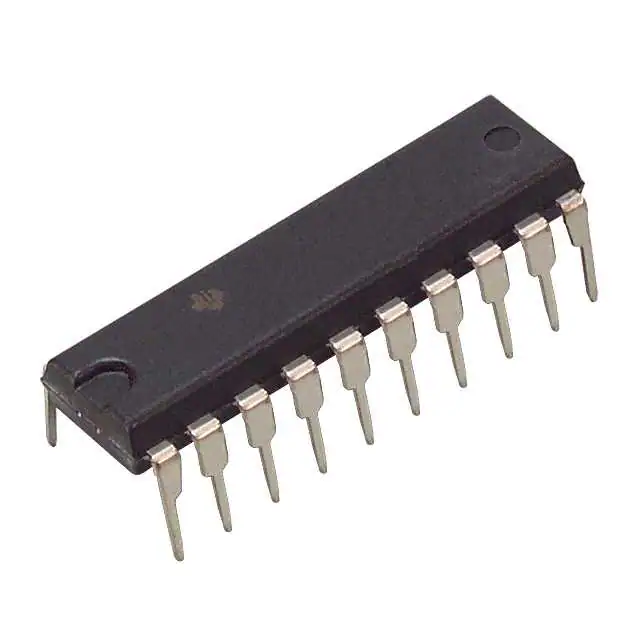
SN74F521N
Texas Instruments
-
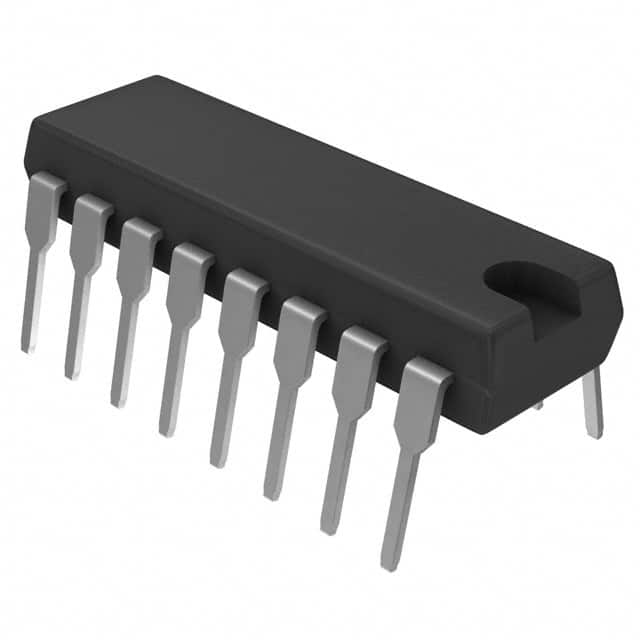
CD4585BE
Texas Instruments
-
SN74HC688DWR
Texas Instruments
-
SN74LS85DR
Texas Instruments
-
CD74HC85E
Texas Instruments
-
MC14585BDR2G
onsemi
-
SN74HC688N
Texas Instruments
Tech Hub

A practical engineering guide to 3.3V and 5V logic compatibility, input thresholds, resistor dividers, translator ICs, MOSFET level shifting, I2C pull-ups, timing limits and power-sequencing risks.

The 74HC595 uses push-pull logic outputs, while the TPIC6B595 uses 50 V open-drain DMOS sinks for higher-power loads. This guide compares timing, current limits, 3.3 V interfacing, load wiring, thermal…

The 74HC595 converts serial data into eight stable parallel outputs. This guide covers pin functions, shift and storage timing, OE and MR behavior, drive-current limits, cascading, voltage compatibilit…

A technical comparison of level-sensitive latches and edge-triggered flip-flops, covering timing windows, setup and hold limits, master–slave operation, time borrowing, race-through, HDL inference and…

A D latch stores one bit while Enable controls when data can pass. This reference covers gate-level operation, truth tables, transparency, setup and hold timing, LE versus OE, common ICs and practical …

An SR latch stores one bit through cross-coupled feedback. This engineering reference covers NOR and NAND implementations, truth tables, forbidden-state recovery, gated operation, switch debouncing, fa…

Latch circuits retain one bit through feedback. This technical reference covers SR and D latches, truth tables, transparency, timing limits, latch-versus-flip-flop behavior, applications and common log…

An engineering guide to LED driver operation, constant-current and constant-voltage outputs, linear and switching topologies, dimming, IC selection, calculations, replacement compatibility, and fault c…

Operational amplifier guide covering op amp basics, feedback, ideal vs real op amps, common configurations, buffer circuits, offset, bias current, gain-bandwidth, slew rate, rail-to-rail limits and sel…

Jumper cables guide covering safe connection order, red and black clamp placement, final ground connection, cable gauge, length, clamp quality, copper vs CCA cables, jump starter comparison and battery…


