
 My Inquiry
 My Account


Texas Instruments JM38510/50601BRA
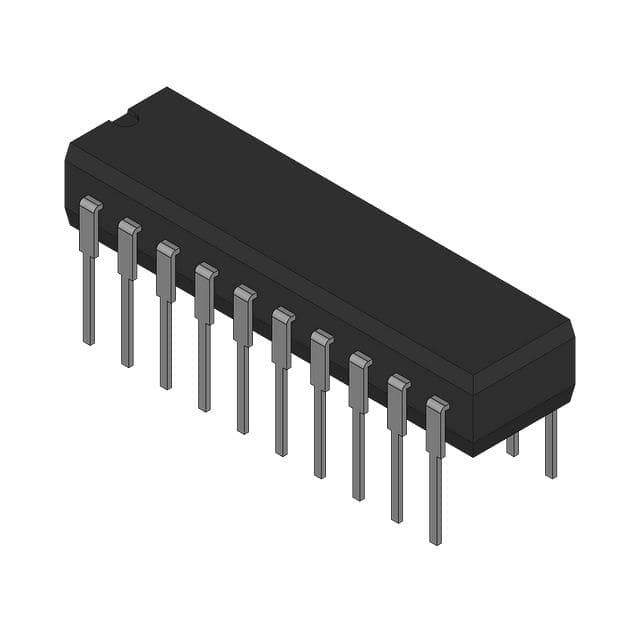
- Part No.:
- JM38510/50601BRA
- Manufacturer:
- Texas Instruments
- Category:
- PLDs (Programmable Logic Device)
- Package:
- -
- Datasheet:
-
 JM38510/50601BRA.pdf
- Description:
- TIBPAL16L8-20M HIGH-PERFORMANCE
- Quantity:
- Payment:

- Shipping:

Inventory:3,037
Please send an inquiry. Send us your inquiry, and we will respond immediately.
Product details
Overview
JM38510/50601BRA from Texas Instruments is a military-grade, 20-pin CMOS programmable array logic (PAL) device in the TIBPAL16L8 family, configured as a 10-input, 6-output, 2-registered I/O logic circuit with 15 ns max propagation delay at 5 V and –55°C to +125°C operation. It implements combinational and registered logic functions via titanium-tungsten fuse programming and supports power-up register reset to high state.
For engineers reviewing the JM38510/50601BRA datasheet, JM38510/50601BRA pinout, JM38510/50601BRA application, or JM38510/50601BRA equivalent, this device serves as a drop-in replacement for PAL16L8A in high-reliability aerospace, defense, and industrial control systems requiring radiation-tolerant, temperature-stable programmable logic with deterministic timing and 3-state output capability.
Technical Context
The JM38510/50601BRA implements a fixed 32 × 64 AND-OR array architecture with programmable input polarity and macrocell-level output enable control. Its registered outputs feature synchronous D-type flip-flops clocked by a single global CLK input, with asynchronous power-up clear that forces Q outputs high on VCC ramp.
It operates under MIL-PRF-38535 Class B requirements, uses Advanced Low-Power Schottky-compatible CMOS process, and supports preload of individual registers via dedicated VIHH voltage (10.25–10.75 V) on Pin 11 - enabling in-system test without full state-machine sequencing.
Key Specifications
| Parameter | Value and Actual Design Meaning |
|---|---|
| Propagation delay | 15 ns max (I/O to O/I/O), enabling 50 MHz system clock interfacing with tight setup/hold margins |
| Operating temperature | –55°C to +125°C, qualified per MIL-PRF-38535 for extended-life mission-critical platforms |
| Supply voltage | 4.5 V to 5.5 V, compatible with legacy 5 V TTL/CMOS bus environments without level translation |
| Output drive | 12 mA sink (IOL), sufficient to directly drive multiple 74LS inputs or discrete LEDs in avionics annunciator panels |
| Input count | 10 dedicated inputs + 6 I/O pins configurable as inputs, supporting up to 16 product terms per macrocell |
| Register count | 2 synchronous D-type flip-flops with common clock and individual preload, suitable for dual-edge-triggered state storage |
| Package | 20-pin Ceramic Dual-In-Line Package (CDIP, J package drawing), hermetically sealed for moisture resistance and thermal cycling stability |
Pinout & Package
Package: 20-pin Ceramic Dual-In-Line Package (CDIP), J package drawing, 0.300-inch wide body, hermetic ceramic construction with solder-dip leads.
| Pin/Terminal | Circuit Role | Design Meaning |
|---|---|---|
| 1 | CLK | Global synchronous clock input for all registered outputs; edge-triggered on rising edge |
| 2–9 | I | Dedicated input pins (I₂–I₉); fused for polarity inversion and AND-array routing |
| 10 | GND | Power ground reference; must be low-inductance connection for noise immunity in mixed-signal boards |
| 11 | OE | Active-low output enable controlling all 3-state outputs; used for bus arbitration and shared data lines |
| 12–13 | I/O | Bidirectional I/O ports with internal 3-state buffers; configurable as input or registered output |
| 14–15 | O | Combinational output pins (O₁₄, O₁₅); unregistered, direct AND-OR array result |
| 16–19 | I/O | Bidirectional I/O ports (I/O₁₆–I/O₁₉); support registered feedback paths for state machines |
| 20 | VCC | +5 V supply pin; requires local 0.1 µF ceramic decoupling adjacent to pin for transient suppression |
Key Features
| Feature | Design Value |
|---|---|
| Power-up register reset | Automatically sets all registered outputs high at VCC ramp completion, eliminating external reset circuitry in boot-time initialization |
| Individual register preload | Enables deterministic test of any register state via VIHH pulse on Pin 11, bypassing sequential state traversal during functional test |
| Fuse-based nonvolatile programming | Titanium-tungsten fuses provide permanent, radiation-hardened configuration immune to SEU and latch-up in space applications |
| MIL-PRF-38535 Class B qualification | Guarantees screening for burn-in, temperature cycling, and lot acceptance testing per military reliability standards |
| 3-state output control | Single OE pin enables/disables all I/O and O outputs simultaneously, simplifying bus interface design in multi-device backplanes |
Applications
| Aerospace Flight Control Logic | Defense Radar Signal Conditioning |
|---|---|
Use Scenario: Implementing real-time sensor fusion logic and actuator command decoding in fly-by-wire ECUs where deterministic latency is safety-critical. IC Role / Device Role / Timing Role: Configurable combinatorial decoder and registered state tracker for ADC sample alignment and servo position latching. Use Value: 15 ns propagation delay ensures sub-microsecond response to air data computer interrupts, meeting DO-254 Level A timing budgets. | Use Scenario: Generating synchronized timing strobes and gain-control words for T/R module drivers in phased-array radar front ends. IC Role / Device Role / Timing Role: Programmable delay generator and register-based sequencer for RF chain calibration cycles. Use Value: Power-up reset guarantees known initial state across all radar channels, preventing spurious transmit bursts during cold start. |
| Industrial Motor Drive Safety Logic | Secure Communications Crypto State Machine |
Use Scenario: Enforcing SIL-3-compliant emergency stop sequencing and dual-channel watchdog validation in servo amplifier controllers. IC Role / Device Role / Timing Role: Hardwired safety interlock arbiter with redundant input monitoring and fail-safe output forcing. Use Value: Hermetic CDIP package withstands 1000+ thermal cycles in motor cabinet environments, ensuring long-term parameter stability. | Use Scenario: Managing key schedule state transitions and round counter sequencing in hardware-accelerated AES engines for secure telemetry links. IC Role / Device Role / Timing Role: Deterministic finite-state machine implementing cryptographic round progression with tamper-resistant register preload. Use Value: VIHH-based register preload allows secure initialization of cipher state without exposing intermediate values on external buses. |
Equivalent & Alternatives
The following parts are listed as comparable options for similar programmable logic applications.
| Alternative Part | Technical Difference | Application Difference | Selection Advice |
|---|---|---|---|
| 5962-8515501RA | Identical electrical specs and pinout; same CDIP-J package but marked per JAN standard instead of JANTXV | No functional difference; differs only in traceability documentation and test report format per MIL-STD-883 | Select when full JAN certification with lot-specific radiation test reports is required |
| TIBPAL16L8-20MJ | Commercial-grade version; same 20-pin CDIP-J package but rated 0°C to 75°C and not MIL-qualified | Lacks burn-in, temperature cycling, and radiation tolerance screening; unsuitable for flight or deployed military use | Use only for lab prototyping or non-safety-critical ground support equipment |
Compared with 5962-8515501RA, JM38510/50601BRA provides identical functionality with JANTXV-level screening rigor, while TIBPAL16L8-20MJ offers cost savings only in benign environments where military reliability assurance is unnecessary.
Availability
JM38510/50601BRA is available at Aetrix Electronics and suitable for aerospace flight control, defense radar signal conditioning, and industrial motor drive safety logic requiring stable component supply across extended product lifecycles.
Supply support for JM38510/50601BRA includes scheduled delivery planning, volume procurement assistance, BOM continuity management, traceable sourcing, and lifecycle availability coordination for OEM customers, industrial embedded developers, connected-device designers, and electronics production programs.
Manufacturer
Texas Instruments is a U.S.-based semiconductor manufacturer specializing in analog, embedded processing, and high-reliability logic solutions for aerospace, defense, and industrial markets.
The TIBPAL family was designed to replace discrete TTL logic and early PLDs in mission-critical systems, delivering fuse-programmable flexibility with military-grade temperature, radiation, and longevity performance.
FAQ
What is the maximum clock frequency supported by the JM38510/50601BRA?
The JM38510/50601BRA supports a maximum clock frequency of 41.6 MHz under military operating conditions (–55°C to +125°C) with VCC = 4.5 V to 5.5 V. This is derived from its 20 ns max tpd (CLK↑ to Q) and verified in TI's SRPS019A datasheet Section 11. At 25°C and 5 V, typical operation reaches 50 MHz, but system designs targeting full temperature range must observe the 41.6 MHz limit.
Does the JM38510/50601BRA require external reset circuitry?
No, the JM38510/50601BRA includes built-in power-up reset functionality that forces all registered outputs high upon monotonic VCC ramp. As confirmed in SRPS019A Figure 2 and Section 14, this eliminates need for external RC reset networks - provided VCC rise time meets minimum monotonicity requirement (no dips or plateaus).
Can the JM38510/50601BRA be reprogrammed after initial fuse programming?
No, the JM38510/50601BRA uses one-time-programmable titanium-tungsten fuses. Once programmed, the logic function is permanently fixed. Reprogramming is not possible; functional changes require physical device replacement. This is inherent to the IMPACT PAL architecture and explicitly stated in TI's programming information section (SRPS019A p.13).
What is the purpose of Pin 11 (OE) on the JM38510/50601BRA?
Pin 11 is the active-low Output Enable (OE) control that globally disables all 3-state outputs (O₁₄, O₁₅, I/O₁₂, I/O₁₃, I/O₁₆–I/O₁₉). When OE is high, outputs enter high-impedance state - essential for shared bus architectures. Its behavior is electrically identical across all TIBPAL16L8 variants and documented in SRPS019A logic diagrams (p.3) and switching characteristics (p.10–12).
Is the JM38510/50601BRA RoHS compliant?
The JM38510/50601BRA is not RoHS compliant; it is a legacy military-spec device with leaded solder finish per MIL-PRF-38535 requirements. The Package Option Addendum (p.2) lists its lead/ball finish as "Call TI" with no RoHS designation, and its CDIP-J package uses SnPb eutectic leads - consistent with Class B screening protocols for high-reliability applications where lead-free alternatives are not yet qualified.
JM38510/50601BRA Specifications
- Product attributes
- Attribute value
- Manufacturer:
- Texas Instruments
- Series:
- *
- Package/Case:
- -
- Packaging:
- Bulk
- Product Status:
- Active
- Programmable:
- Not Verified
- Programmable Type:
- -
- Number of Macrocells:
- -
- Voltage - Input:
- -
- Speed:
- -
- Mounting Type:
- -
- Supplier Device Package:
- -
JM38510/50601BRA FAQ
1.How can I place an order for JM38510/50601BRA through Aetrix?
Please submit a Request for Quotation (RFQ) for JM38510/50601BRA on Aetrix. Our sales agent will provide a competitive quotation and guide you through the order confirmation once you accept the terms.
2.Are the price and stock information for JM38510/50601BRA reliable?
The price and inventory of JM38510/50601BRA are updated periodically and may fluctuate due to market conditions. Stock and pricing data are typically refreshed every 24 hours. Quotation validity for JM38510/50601BRA is usually 5 days.
3.What payment methods are accepted for JM38510/50601BRA?
We accept Wire Transfer, PayPal, Credit Card, Western Union, MoneyGram, and Escrow for JM38510/50601BRA transactions.
Note: Certain payment methods may incur a processing fee.
4.How is shipping managed for JM38510/50601BRA?
JM38510/50601BRA orders can be shipped via leading logistics carriers, including DHL, UPS, FedEx, TNT, or Registered Mail.
Once your JM38510/50601BRA order is processed, you will receive an email with the shipment details and tracking number.
Note: Tracking information may take up to 24 hours to appear. Express delivery typically takes 3–5 business days.
5.How can I obtain technical support or documentation for JM38510/50601BRA?
For technical support, including JM38510/50601BRA datasheets, pinout diagrams, or application guidance, please contact our engineering support team. They can provide detailed documentation and assistance for your JM38510/50601BRA requirements.
6.How does Aetrix verify that JM38510/50601BRA is sourced from the original manufacturer or authorized distributors?
All JM38510/50601BRA products on Aetrix are procured from qualified distributors and authorized channels. Our dedicated quality assurance team conducts strict verification, including traceability checks and, if necessary, third-party testing. This ensures that JM38510/50601BRA meets industry standards.
7.What is the process for return or replacement of JM38510/50601BRA?
All JM38510/50601BRA units undergo pre-shipment inspection (PSI). If there is an issue with JM38510/50601BRA, returns or replacements are accepted under the following conditions:
1.Quantity discrepancies, incorrect items, or visible external defects (such as breakage or corrosion), acknowledged by Aetrix.
2.The issue is reported within 90 days of delivery.
3.The JM38510/50601BRA part is unused and in its original packaging.
Return procedure for JM38510/50601BRA:
1.Submit a request within 90 days.
2.Obtain a Return Material Authorization (RMA) from Aetrix.
JM38510/50601BRA Tags
-
ATF16V8B-15PU
Microchip Technology
-
ATF16V8B-15JU
Microchip Technology
-
ATF16V8BQL-15PU
Microchip Technology
-
ATF22V10C-15PU
Microchip Technology
.jpg)
-
ATF22V10C-15JU
Microchip Technology
-
ATF22V10C-10JU
Microchip Technology
-
ATF22V10B-15GM/883
Microchip Technology
-
ATF16V8B-15SU
Microchip Technology
-
ATF16V8BQL-15SU
Microchip Technology
-
ATF16V8BQL-15JU
Microchip Technology
-
ATF16V8B-10JU
Microchip Technology
-
ATF16V8BQL-15XU
Microchip Technology
Tech Hub

A practical engineering guide to 3.3V and 5V logic compatibility, input thresholds, resistor dividers, translator ICs, MOSFET level shifting, I2C pull-ups, timing limits and power-sequencing risks.

The 74HC595 uses push-pull logic outputs, while the TPIC6B595 uses 50 V open-drain DMOS sinks for higher-power loads. This guide compares timing, current limits, 3.3 V interfacing, load wiring, thermal…

The 74HC595 converts serial data into eight stable parallel outputs. This guide covers pin functions, shift and storage timing, OE and MR behavior, drive-current limits, cascading, voltage compatibilit…

A technical comparison of level-sensitive latches and edge-triggered flip-flops, covering timing windows, setup and hold limits, master–slave operation, time borrowing, race-through, HDL inference and…

A D latch stores one bit while Enable controls when data can pass. This reference covers gate-level operation, truth tables, transparency, setup and hold timing, LE versus OE, common ICs and practical …

An SR latch stores one bit through cross-coupled feedback. This engineering reference covers NOR and NAND implementations, truth tables, forbidden-state recovery, gated operation, switch debouncing, fa…

Latch circuits retain one bit through feedback. This technical reference covers SR and D latches, truth tables, transparency, timing limits, latch-versus-flip-flop behavior, applications and common log…

An engineering guide to LED driver operation, constant-current and constant-voltage outputs, linear and switching topologies, dimming, IC selection, calculations, replacement compatibility, and fault c…

Operational amplifier guide covering op amp basics, feedback, ideal vs real op amps, common configurations, buffer circuits, offset, bias current, gain-bandwidth, slew rate, rail-to-rail limits and sel…

Jumper cables guide covering safe connection order, red and black clamp placement, final ground connection, cable gauge, length, clamp quality, copper vs CCA cables, jump starter comparison and battery…


