
 My Inquiry
 My Account


NXP Semiconductors JN5148/Z01,515
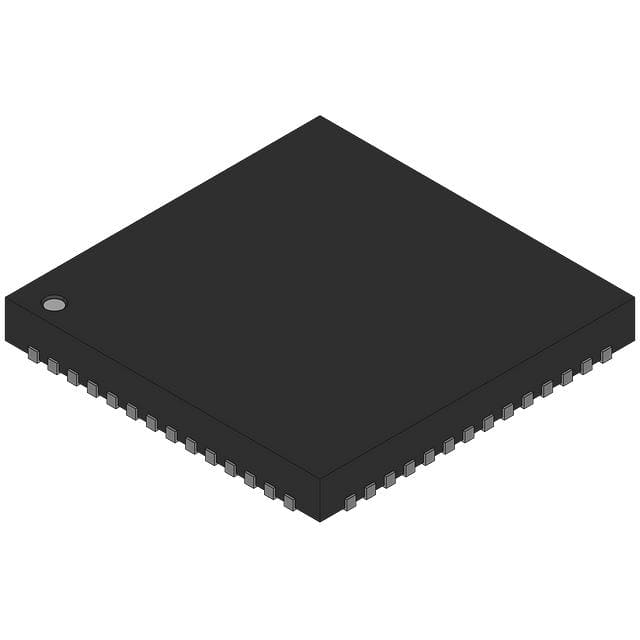
- Part No.:
- JN5148/Z01,515
- Manufacturer:
- NXP Semiconductors
- Category:
- RF Transceiver ICs
- Package:
- -
- Datasheet:
-
 JN5148/Z01,515.pdf
- Description:
- IC RF TXRX + MCU 802.15.4 ZIGBEE
- Quantity:
- Payment:

- Shipping:

Inventory:17,285
Please send an inquiry. Send us your inquiry, and we will respond immediately.
Product details
Overview
JN5148/Z01,515 from NXP Semiconductors is an IEEE 802.15.4-compliant wireless microcontroller integrating a 32-bit RISC CPU, 2.4 GHz transceiver, 128 kB ROM, 128 kB RAM, and hardware AES-128 security engine - designed for ZigBee PRO and JenNet mesh networking in battery-powered sensor nodes, smart meters, and location-aware devices.
For engineers reviewing the JN5148/Z01,515 datasheet, JN5148/Z01,515 pinout, JN5148/Z01,515 application, or JN5148/Z01,515 equivalent, key selection criteria include deep-sleep current (100 nA), integrated Time-of-Flight ranging engine, 21 configurable DIOs with dual-function peripherals, and support for co-processor mode with full network stack execution.
Technical Context
The JN5148/Z01,515 implements a unified memory architecture with 128 kB ROM hosting bootloader, MAC stack, and peripheral APIs, and 128 kB RAM for concurrent application + protocol stack execution. Its 32-bit RISC CPU supports programmable clock speeds (4–32 MHz) and variable-width instructions to optimize code density and power efficiency.
The transceiver subsystem integrates O-QPSK modulation, IEEE 802.15.4 MAC accelerator (packet formatting, CRC, auto-ACK), and dedicated baseband processor - enabling 500/667 kbps data rates, -95 dBm receiver sensitivity, and 2.5 dBm transmit power while maintaining <18 mA active current. The Time-of-Flight ranging engine operates independently in sleep mode for low-power location services.
Key Specifications
| Parameter | Value and Actual Design Meaning |
|---|---|
| CPU Core | 32-bit RISC with 4–32 MHz programmable clock; enables dynamic power/performance scaling in battery-constrained applications. |
| Memory | 128 kB ROM (bootloader, MAC, APIs) + 128 kB RAM (stack + app); supports standalone ZigBee PRO node without external memory. |
| Wireless Standard | IEEE 802.15.4-2006 compliant at 2.4 GHz; includes hardware MAC accelerator for packet handling, CRC, address check, and auto-ACK. |
| Security | Hardware 128-bit AES-CCM coprocessor supporting MIC-32/64/128, ENC, ENC-MIC modes per IEEE 802.15.4. |
| Power Efficiency | Deep sleep current = 100 nA; sleep current with active timer = 1.25 µA; enables >10-year coin-cell operation in AMR endpoints. |
| RF Performance | -95 dBm sensitivity @ 250 kbps (O-QPSK); 2.5 dBm output power; integrated sleep oscillator eliminates external 32 kHz crystal in basic configurations. |
| Analog Peripherals | 4-channel 12-bit ADC, 2× 12-bit DACs, 2 comparators, internal temp sensor, supply monitor - enables direct sensor interfacing without external signal conditioning. |
Pinout & Package
Package: 8×8 mm, 56-lead punched QFN (RoHS-compliant, lead-free). Exposed paddle (VSSA) must be connected to ground per PCB layout guidelines in Appendix B.4.
| Pin/Terminal | Circuit Role | Design Meaning |
|---|---|---|
| DIO0–DIO20 | Digital I/O / Peripheral Multiplex | 21 pins support GPIO, SPI select, UART, timers, pulse counters, JTAG, or intelligent peripheral interface - software-configurable direction and pull-up. |
| XTAL_IN / XTAL_OUT | 32 MHz Crystal Oscillator Interface | Drives 16 MHz system clock via internal divider; requires external 32 MHz crystal and load capacitors per Section 5.1.1. |
| RF_IN | Single-ended RF Input | Connects to 50 Ω microstrip antenna path via matching network (2 inductors + capacitor); no external PA required for standard range. |
| VCOTUNE / IBIAS | VCO Tuning & Radio Bias Control | VCOTUNE sets VCO frequency via RC network; IBIAS connects to 43 kΩ resistor to ground to calibrate radio bias currents. |
| RESETN | Active-Low Reset Input/Output | Bi-directional pin with 40 kΩ internal pull-up; driven low by external circuit or internally during watchdog/brown-out reset. |
| VDD1 / VDD2 | Separate Analog/Digital Supplies | VDD1 (3.3 V) powers analog blocks (ADC/DAC/comparators); VDD2 (3.3 V) powers digital logic; decoupling per Section 2.2.1 is mandatory. |
Key Features
| Feature | Design Value |
|---|---|
| Time-of-Flight Ranging Engine | Hardware-accelerated distance measurement in sleep mode; enables asset tracking and indoor localization without waking CPU. |
| Low-Power Pulse Counters | Two independent counters operate in deep sleep (100 nA) to capture meter pulses in AMR - eliminating need for external wake-up circuitry. |
| 4-Wire Digital Audio Interface | I²S-compatible interface (DAI_SCK/WS/SDIN/SDOUT) directly drives mainstream audio CODECs - removes external audio bridge IC. |
| Intelligent Peripheral Interface | Slave SPI mode shared with DIO pins; allows host MCU to offload sensor data acquisition while JN5148/Z01,515 remains in low-power state. |
| Multi-Mode Sleep Architecture | Three distinct low-power states: Active Doze (CPU halted), Sleep (peripherals clock-gated), Deep Sleep (only wakeup timer + pulse counters active). |
Applications
| Smart Metering (AMR) | Home Automation |
|---|---|
Use Scenario: Gas/water/electricity meter with wireless HAN communication and tamper detection. IC Role / Device Role / Timing Role: Primary system controller executing JenNet/ZigBee PRO stack, reading pulse counters, managing secure OTA updates, and maintaining 10+ year battery life. Use Value: Integrated pulse counters and 100 nA deep sleep eliminate external wake-up logic; hardware AES ensures regulatory compliance for utility-grade security. |
Use Scenario: Wireless light switch, thermostat, or occupancy sensor in ZigBee-certified smart home ecosystem. IC Role / Device Role / Timing Role: End-device node performing sensor sampling, encrypted frame transmission, and low-latency response to coordinator commands. Use Value: Unified memory allows full ZigBee PRO stack + application in on-chip RAM; 21 DIOs support diverse sensor/actuator interfaces without glue logic. |
| Industrial Telemetry | Asset Tracking |
Use Scenario: Remote monitoring of tank levels, valve positions, or environmental conditions in oil/gas or manufacturing plants. IC Role / Device Role / Timing Role: Ruggedized edge node collecting analog/digital inputs, applying local filtering, and transmitting time-stamped data over self-healing mesh. Use Value: -40°C to +85°C industrial temp rating; 12-bit ADC + comparators enable direct sensor integration; robust RF performance in noisy EMI environments. |
Use Scenario: Real-time location of tools, pallets, or medical equipment within warehouse or hospital using multi-hop ToF triangulation. IC Role / Device Role / Timing Role: Anchor or tag node executing Time-of-Flight ranging calculations and synchronizing with neighboring nodes via IEEE 802.15.4 beacon frames. Use Value: Dedicated ToF engine performs distance measurements autonomously in sleep mode - reduces CPU load and extends battery life vs. software-based solutions. |
Equivalent & Alternatives
The following parts are listed as comparable options for similar wireless microcontroller applications.
| Alternative Part | Technical Difference | Application Difference | Selection Advice |
|---|---|---|---|
| EM3581-RTR | SiLabs Ember ZigBee SoC; 2.4 GHz, 128 kB flash, 16 kB RAM; no integrated ToF engine; higher active current (22 mA). | Lacks hardware ToF and low-power pulse counters; requires external components for AMR pulse counting and location services. | Choose when legacy Ember toolchain compatibility is required and ToF/location features are not needed. |
| JN5169-001-M00 | NXP successor; enhanced 2.4 GHz transceiver (-102 dBm sensitivity), 256 kB flash, 32 kB RAM, same pinout; supports ZigBee 3.0 and Thread. | Higher RF sensitivity and modern protocol support; backward-compatible firmware migration path but requires updated SDK. | Choose for new designs requiring longer range, multi-protocol support, or extended lifecycle assurance beyond JN5148/Z01,515. |
Compared with EM3581-RTR, JN5148/Z01,515 delivers superior ultra-low-power operation and unique ToF capability; compared with JN5169-001-M00, it offers proven field reliability and lower BOM cost where ZigBee PRO suffices and extended range is unnecessary.
Availability
JN5148/Z01,515 is available at Aetrix Electronics and suitable for smart metering, industrial telemetry, and location-aware wireless sensor networks requiring stable component supply across long production lifecycles.
Supply support for JN5148/Z01,515 includes scheduled delivery planning, volume procurement assistance, BOM continuity management, traceable sourcing, and lifecycle availability coordination for OEM customers, industrial embedded developers, connected-device designers, and electronics production programs.
Manufacturer
NXP Semiconductors is a global semiconductor leader focused on secure connectivity solutions for automotive, industrial, and IoT markets, with headquarters in Eindhoven, Netherlands.
The JN5148/Z01,515 belongs to NXP's JenNet and ZigBee PRO wireless microcontroller product line - engineered specifically for ultra-low-power, self-organizing mesh networks in battery-operated infrastructure monitoring and control systems.
FAQ
What is the operating temperature range for the JN5148/Z01,515?
The JN5148/Z01,515 is rated for industrial operation from -40°C to +85°C ambient temperature. This specification is validated per JEDEC JESD22-A104 and applies to all functional blocks including the 32-bit RISC CPU, 2.4 GHz transceiver, and analog peripherals such as the 12-bit ADC and comparators - ensuring reliable deployment in outdoor smart meters and factory-floor sensors.
Does the JN5148/Z01,515 support ZigBee 3.0 or only ZigBee PRO?
The JN5148/Z01,515 natively supports ZigBee PRO and JenNet protocols as defined in its ROM-resident stack. It does not support ZigBee 3.0, which requires additional security layers and cluster library features introduced in later-generation SoCs like the JN5169. Firmware updates cannot extend JN5148/Z01,515 beyond its original certified profile scope.
Can the JN5148/Z01,515 operate without an external 32 MHz crystal?
No - the JN5148/Z01,515 requires an external 32 MHz crystal connected between XTAL_IN and XTAL_OUT to generate its primary 16 MHz system clock. While it includes a 24 MHz RC oscillator for backup timing, the RC source lacks the stability and accuracy needed for IEEE 802.15.4 symbol timing compliance and cannot replace the crystal in production designs.
How many simultaneous UART interfaces does the JN5148/Z01,515 provide?
The JN5148/Z01,515 integrates two independent UART peripherals (UART0 and UART1), each with full hardware flow control (RTS/CTS) and configurable baud rates up to 1 Mbps. Both UARTs are accessible via dedicated DIO pins (DIO4–DIO7 for UART0; DIO17–DIO20 for UART1) and support interrupt-driven or DMA-assisted operation in the NXP-provided SDK.
Is the JN5148/Z01,515 pin-compatible with the JN5168 or JN5169 series?
No - the JN5148/Z01,515 uses a 56-pin QFN package with specific pin assignments for RF_IN, VCOTUNE, and IBIAS that differ from the 40-pin QFN of JN5168 and the 48-pin QFN of JN5169. Although JN5169-001-M00 shares functional similarity and offers migration support in software, physical board redesign is required due to incompatible pin count, layout, and RF matching network requirements.
JN5148/Z01,515 Specifications
- Product attributes
- Attribute value
- Manufacturer:
- NXP Semiconductors
- Series:
- *
- Package/Case:
- -
- Packaging:
- Bulk
- Product Status:
- Active
- Programmable:
- Not Verified
- Type:
- -
- RF Family/Standard:
- -
- Protocol:
- -
- Modulation:
- -
- Frequency:
- -
- Data Rate (Max):
- -
- Power - Output:
- -
- Sensitivity:
- -
- Memory Size:
- -
- Serial Interfaces:
- -
- GPIO:
- -
- Voltage - Supply:
- -
- Current - Receiving:
- -
- Current - Transmitting:
- -
- Operating Temperature:
- -
- Grade:
- -
- Qualification:
- -
- Supplier Device Package:
- -
JN5148/Z01,515 FAQ
1.How can I place an order for JN5148/Z01,515 through Aetrix?
Please submit a Request for Quotation (RFQ) for JN5148/Z01,515 on Aetrix. Our sales agent will provide a competitive quotation and guide you through the order confirmation once you accept the terms.
2.Are the price and stock information for JN5148/Z01,515 reliable?
The price and inventory of JN5148/Z01,515 are updated periodically and may fluctuate due to market conditions. Stock and pricing data are typically refreshed every 24 hours. Quotation validity for JN5148/Z01,515 is usually 5 days.
3.What payment methods are accepted for JN5148/Z01,515?
We accept Wire Transfer, PayPal, Credit Card, Western Union, MoneyGram, and Escrow for JN5148/Z01,515 transactions.
Note: Certain payment methods may incur a processing fee.
4.How is shipping managed for JN5148/Z01,515?
JN5148/Z01,515 orders can be shipped via leading logistics carriers, including DHL, UPS, FedEx, TNT, or Registered Mail.
Once your JN5148/Z01,515 order is processed, you will receive an email with the shipment details and tracking number.
Note: Tracking information may take up to 24 hours to appear. Express delivery typically takes 3–5 business days.
5.How can I obtain technical support or documentation for JN5148/Z01,515?
For technical support, including JN5148/Z01,515 datasheets, pinout diagrams, or application guidance, please contact our engineering support team. They can provide detailed documentation and assistance for your JN5148/Z01,515 requirements.
6.How does Aetrix verify that JN5148/Z01,515 is sourced from the original manufacturer or authorized distributors?
All JN5148/Z01,515 products on Aetrix are procured from qualified distributors and authorized channels. Our dedicated quality assurance team conducts strict verification, including traceability checks and, if necessary, third-party testing. This ensures that JN5148/Z01,515 meets industry standards.
7.What is the process for return or replacement of JN5148/Z01,515?
All JN5148/Z01,515 units undergo pre-shipment inspection (PSI). If there is an issue with JN5148/Z01,515, returns or replacements are accepted under the following conditions:
1.Quantity discrepancies, incorrect items, or visible external defects (such as breakage or corrosion), acknowledged by Aetrix.
2.The issue is reported within 90 days of delivery.
3.The JN5148/Z01,515 part is unused and in its original packaging.
Return procedure for JN5148/Z01,515:
1.Submit a request within 90 days.
2.Obtain a Return Material Authorization (RMA) from Aetrix.
JN5148/Z01,515 Tags
-
ESP32-D0WD-V3
Espressif Systems
-
ESP8266EX
Espressif Systems

-
ESP32-S3
Espressif Systems
-
NRF24L01P-R7
Nordic Semiconductor ASA
-
NRF24L01P-R
Nordic Semiconductor ASA
-
ESP32-U4WDH
Espressif Systems
-
DA14531-00000OG2
Renesas
-
ESP32-C6FH4
Espressif Systems
-
DA14531-00000FX2
Renesas
-
NRF24L01P-T
Nordic Semiconductor ASA
-
NRF52810-QCAA-R
Nordic Semiconductor ASA
-
ESP32-S3FN8
Espressif Systems
Tech Hub

A practical engineering guide to 3.3V and 5V logic compatibility, input thresholds, resistor dividers, translator ICs, MOSFET level shifting, I2C pull-ups, timing limits and power-sequencing risks.

The 74HC595 uses push-pull logic outputs, while the TPIC6B595 uses 50 V open-drain DMOS sinks for higher-power loads. This guide compares timing, current limits, 3.3 V interfacing, load wiring, thermal…

The 74HC595 converts serial data into eight stable parallel outputs. This guide covers pin functions, shift and storage timing, OE and MR behavior, drive-current limits, cascading, voltage compatibilit…

A technical comparison of level-sensitive latches and edge-triggered flip-flops, covering timing windows, setup and hold limits, master–slave operation, time borrowing, race-through, HDL inference and…

A D latch stores one bit while Enable controls when data can pass. This reference covers gate-level operation, truth tables, transparency, setup and hold timing, LE versus OE, common ICs and practical …

An SR latch stores one bit through cross-coupled feedback. This engineering reference covers NOR and NAND implementations, truth tables, forbidden-state recovery, gated operation, switch debouncing, fa…

Latch circuits retain one bit through feedback. This technical reference covers SR and D latches, truth tables, transparency, timing limits, latch-versus-flip-flop behavior, applications and common log…

An engineering guide to LED driver operation, constant-current and constant-voltage outputs, linear and switching topologies, dimming, IC selection, calculations, replacement compatibility, and fault c…

Operational amplifier guide covering op amp basics, feedback, ideal vs real op amps, common configurations, buffer circuits, offset, bias current, gain-bandwidth, slew rate, rail-to-rail limits and sel…

Jumper cables guide covering safe connection order, red and black clamp placement, final ground connection, cable gauge, length, clamp quality, copper vs CCA cables, jump starter comparison and battery…


