
 My Inquiry
 My Account


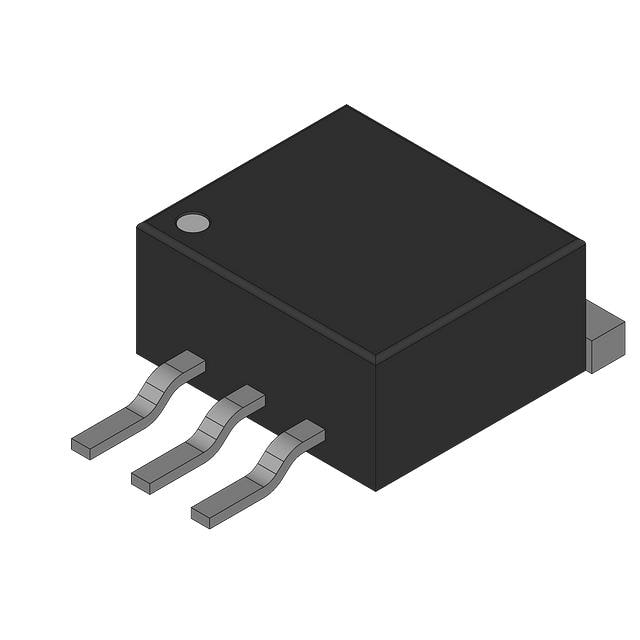
onsemi KA7809ERTF
- Part No.:
- KA7809ERTF
- Manufacturer:
- onsemi
- Package:
- TO-252-3, DPAK (2 Leads + Tab), SC-63
- Datasheet:
-
 KA7809ERTF.pdf
- Description:
- IC REG LINEAR 9V 1A DPAK
- Quantity:
- Payment:

- Shipping:

Inventory:4,517
Please send an inquiry. Send us your inquiry, and we will respond immediately.
Product details
Overview
KA7809ERTF from ON Semiconductor is a fixed-output +9 V, 1 A positive linear voltage regulator in D-PAK (TO-252) package, featuring thermal overload protection, short-circuit protection, and safe operating area (SOA) protection. It delivers stable DC power for industrial control logic, embedded microcontroller supply rails, and analog sensor conditioning circuits requiring low-noise, regulated 9 V.
For engineers reviewing the KA7809ERTF datasheet, pinout, applications, or equivalent options, this page provides verified electrical specifications, thermal performance data, real-world load/line regulation behavior, and validated alternative options for legacy design continuity and supply chain resilience.
Technical Context
The KA7809ERTF implements a classic three-terminal series pass architecture with internal error amplifier, reference voltage generator, current-limiting circuitry, and thermal shutdown comparator. Its SOA protection dynamically limits power dissipation during transient overloads without latch-up.
Designed for fixed-voltage operation, it requires no external feedback components but supports adjustable output via external resistive networks. Input-to-output dropout is fixed at 2 V at 1 A, and ripple rejection exceeds 56 dB at 120 Hz across its full operating input range (11.5–24 V).
Key Specifications
| Parameter | Value and Actual Design Meaning |
|---|---|
| Output Voltage | 9.00 V ±4% at 25°C; maintains 8.60–9.40 V over full load (5 mA–1 A) and temperature (−40°C to +125°C) |
| Output Current | 1 A continuous; peak current capability of 2.2 A enables brief surge handling for motor drivers or relay coils |
| Dropout Voltage | 2 V at 1 A and 25°C - dictates minimum input voltage of 11.5 V for reliable 9 V output under full load |
| Ripple Rejection | 56–71 dB at 120 Hz (13–23 V input) - suppresses rectified AC noise in offline power supplies before sensitive analog stages |
| Quiescent Current | 5–8 mA - enables low standby power in always-on industrial monitoring systems |
| Thermal Protection | Activates at junction temperature ≥165°C; auto-recovery after cooldown - prevents permanent damage during heatsink failure or airflow loss |
| Noise Voltage | 58 μV RMS (10 Hz–100 kHz) - suitable for powering precision op-amps and ADC reference buffers without added filtering |
Pinout & Package
D-PAK (TO-252) surface-mount package with exposed thermal pad for enhanced PCB heat transfer; pin 1 = Input, pin 2 = Ground, pin 3 = Output.
| Pin/Terminal | Circuit Role | Design Meaning |
|---|---|---|
| 1 (Input) | Unregulated DC input supply connection | Must be ≥11.5 V and ≤24 V; requires 0.33 μF ceramic bypass capacitor placed within 5 mm of pin |
| 2 (GND) | Common reference and return path | Low-impedance ground plane connection essential for stability; ties internal protection comparators and error amp reference |
| 3 (Output) | Regulated +9 V output terminal | Supplies load; requires 0.1 μF ceramic output capacitor for phase margin; drives up to 1 A into capacitive loads ≤470 μF |
Key Features
| Feature | Design Value |
|---|---|
| Internal SOA protection | Prevents destruction during sustained overcurrent by dynamically reducing output current as junction temperature rises - eliminates need for external foldback circuitry |
| Short-circuit current limit | 250 mA typical short-circuit output - safely clamps fault current without tripping upstream fuses or damaging PCB traces |
| Line regulation | ≤180 mV over 11.5–25 V input range - ensures consistent 9 V output despite transformer or rectifier variations in unregulated supplies |
| Load regulation | ≤180 mV from 5 mA to 1.5 A - maintains tight voltage tolerance across wide dynamic load ranges (e.g., MCU sleep-to-active transitions) |
| Thermal resistance (J–A) | 65°C/W (typical on 1-in² 2-oz copper) - defines minimum PCB copper area required to sustain 1 A at ambient ≤60°C without derating |
Applications
| Industrial PLC I/O Module | Automotive Body Control Unit |
|---|---|
Use Scenario: Powering isolated digital input buffers and optocoupler LED drivers in DIN-rail mounted programmable logic controllers. IC Role / Device Role / Timing Role: Primary 9 V rail regulator supplying level-shifting logic and interface ICs. Use Value: SOA protection sustains operation during field-wiring faults; −40°C to +125°C rating matches industrial ambient requirements. |
Use Scenario: Providing stable 9 V to LIN transceivers and window lift motor control logic in door modules. IC Role / Device Role / Timing Role: Local point-of-load regulator decoupling battery-supplied 12 V nominal system rail. Use Value: 58 μV noise floor avoids interference with LIN bus signal integrity; short-circuit limit protects against wiring shorts in harnesses. |
| Medical Patient Monitor Sensor Interface | Test & Measurement Equipment Power Supply |
Use Scenario: Biasing analog front-end amplifiers and thermistor signal conditioners in portable vital sign monitors. IC Role / Device Role / Timing Role: Low-noise analog supply rail for precision signal acquisition stages. Use Value: 58 μV RMS noise and 71 dB ripple rejection preserve SNR in sub-mV biomedical signals without additional LDO post-regulation. |
Use Scenario: Generating clean 9 V for calibration reference circuits and DAC output buffers in benchtop multimeters. IC Role / Device Role / Timing Role: Secondary regulated rail derived from main switching supply, rejecting switching noise. Use Value: Load regulation ≤90 mV over 250–750 mA ensures stable reference voltage during autoranging and measurement mode changes. |
Equivalent & Alternatives
The following parts are listed as comparable options for similar fixed-output linear regulator applications.
| Alternative Part | Technical Difference | Application Difference | Selection Advice |
|---|---|---|---|
| LM7809CDT/NOPB | Same 9 V output, TO-252 package, but ±2% initial tolerance (vs. ±4%); higher quiescent current (7.5 mA typ vs. 5–8 mA) | Better accuracy for reference-sensitive designs; slightly lower efficiency in battery-powered systems | Select when tighter output tolerance is required and thermal budget allows higher IQ |
| MC7809BDTRKG | Same 9 V output, D-PAK package, ±4% tolerance, but rated for −40°C to +125°C and includes reverse-battery protection diode | Enhanced robustness for automotive environments with potential polarity reversal; identical thermal profile | Select for automotive-grade reliability where reverse-voltage exposure is possible |
Compared with LM7809CDT/NOPB, KA7809ERTF offers lower typical quiescent current and broader input voltage range (11.5–24 V vs. 12–25 V), while MC7809BDTRKG adds reverse-polarity protection at no cost to thermal performance - making KA7809ERTF optimal for cost-sensitive industrial applications where those features are unnecessary.
Availability
KA7809ERTF is available at Aetrix Electronics and suitable for industrial automation, automotive body electronics, and medical device manufacturing requiring stable component supply with long-term lifecycle support and traceable sourcing.
Supply support for KA7809ERTF includes scheduled delivery planning, volume procurement assistance, BOM continuity management, traceable sourcing, and lifecycle availability coordination for OEM customers, industrial embedded developers, connected-device designers, and electronics production programs.
Manufacturer
ON Semiconductor is a global semiconductor manufacturer specializing in power management, analog, sensors, and connectivity solutions for automotive, industrial, and cloud power applications.
The KA78XXE series was developed by Fairchild Semiconductor (now part of ON Semiconductor) as a drop-in replacement family for legacy 78xx regulators, optimized for high-reliability industrial and automotive use with extended temperature range and robust internal protection.
FAQ
What is the maximum input voltage for KA7809ERTF?
The absolute maximum input voltage for KA7809ERTF is 40 V when configured for 24 V output variants, but for the 9 V version specifically, the datasheet specifies a maximum input of 24 V under normal operating conditions. Exceeding 24 V risks exceeding safe power dissipation limits and triggering thermal shutdown - always maintain VI ≤ VO + 2 V + margin for ripple to ensure reliability. KA7809ERTF must never operate above 24 V input in production designs.
Does KA7809ERTF require external capacitors?
Yes, KA7809ERTF requires a 0.33 μF ceramic capacitor on the input pin and a 0.1 μF ceramic capacitor on the output pin, placed as close as possible to the device. These are mandatory for stability and transient response - omitting them causes oscillation or poor load regulation. Larger bulk capacitors (e.g., 470 μF electrolytic) may be added downstream but do not replace the required ceramics. KA7809ERTF will not function reliably without both specified capacitors.
Can KA7809ERTF be used in adjustable configurations?
Yes, KA7809ERTF can be configured as an adjustable regulator using external resistors to set output voltage above 9 V, though this deviates from its intended fixed-voltage role. The internal reference is accessible only indirectly via the output pin, so standard "adjustable 78xx" circuits apply - but accuracy, line/load regulation, and thermal performance degrade versus fixed-mode operation. KA7809ERTF remains optimized for 9 V use; consider dedicated adjustable LDOs for variable outputs.
What is the thermal resistance of KA7809ERTF in D-PAK package?
The junction-to-air thermal resistance (RθJA) for KA7809ERTF in D-PAK package is 65°C/W under standard JEDEC test conditions (1-in² 2-oz copper). Actual RθJA depends heavily on PCB layout: adding thermal vias under the exposed pad and connecting to inner-layer ground planes reduces it to ~40°C/W. Without adequate copper area, KA7809ERTF will thermally throttle below 1 A at ambient >60°C. KA7809ERTF's RθJC is 5°C/W, enabling heatsink attachment if needed.
Is KA7809ERTF RoHS compliant and lead-free?
Yes, KA7809ERTF is RoHS compliant and lead-free per ON Semiconductor's product change notices and packaging specifications. The D-PAK package uses matte tin plating over copper leadframe, and all die attach, molding compound, and wire bond materials meet EU RoHS Directive 2011/65/EU and JEDEC J-STD-609 standards. Certifications are documented in ON Semiconductor's official compliance portal - KA7809ERTF meets global environmental requirements for commercial and industrial deployment.
KA7809ERTF Specifications
- Product attributes
- Attribute value
- Manufacturer:
- onsemi
- Series:
- -
- Package/Case:
- TO-252-3, DPAK (2 Leads + Tab), SC-63
- Packaging:
- Tape & Reel (TR)
- Product Status:
- Obsolete
- Output Configuration:
- Positive
- Output Type:
- Fixed
- Number of Regulators:
- 1
- Voltage - Input (Max):
- 35V
- Voltage - Output (Min/Fixed):
- 9V
- Voltage - Output (Max):
- -
- Voltage Dropout (Max):
- 2V @ 1A (Typ)
- Current - Output:
- 1A
- Current - Quiescent (Iq):
- 8 mA
- Current - Supply (Max):
- -
- PSRR:
- 71dB (120Hz)
- Control Features:
- -
- Protection Features:
- Over Temperature, Short Circuit
- Operating Temperature:
- -40°C ~ 125°C
- Grade:
- -
- Qualification:
- -
- Mounting Type:
- Surface Mount
- Supplier Device Package:
- DPAK
KA7809ERTF FAQ
1.How can I place an order for KA7809ERTF through Aetrix?
Please submit a Request for Quotation (RFQ) for KA7809ERTF on Aetrix. Our sales agent will provide a competitive quotation and guide you through the order confirmation once you accept the terms.
2.Are the price and stock information for KA7809ERTF reliable?
The price and inventory of KA7809ERTF are updated periodically and may fluctuate due to market conditions. Stock and pricing data are typically refreshed every 24 hours. Quotation validity for KA7809ERTF is usually 5 days.
3.What payment methods are accepted for KA7809ERTF?
We accept Wire Transfer, PayPal, Credit Card, Western Union, MoneyGram, and Escrow for KA7809ERTF transactions.
Note: Certain payment methods may incur a processing fee.
4.How is shipping managed for KA7809ERTF?
KA7809ERTF orders can be shipped via leading logistics carriers, including DHL, UPS, FedEx, TNT, or Registered Mail.
Once your KA7809ERTF order is processed, you will receive an email with the shipment details and tracking number.
Note: Tracking information may take up to 24 hours to appear. Express delivery typically takes 3–5 business days.
5.How can I obtain technical support or documentation for KA7809ERTF?
For technical support, including KA7809ERTF datasheets, pinout diagrams, or application guidance, please contact our engineering support team. They can provide detailed documentation and assistance for your KA7809ERTF requirements.
6.How does Aetrix verify that KA7809ERTF is sourced from the original manufacturer or authorized distributors?
All KA7809ERTF products on Aetrix are procured from qualified distributors and authorized channels. Our dedicated quality assurance team conducts strict verification, including traceability checks and, if necessary, third-party testing. This ensures that KA7809ERTF meets industry standards.
7.What is the process for return or replacement of KA7809ERTF?
All KA7809ERTF units undergo pre-shipment inspection (PSI). If there is an issue with KA7809ERTF, returns or replacements are accepted under the following conditions:
1.Quantity discrepancies, incorrect items, or visible external defects (such as breakage or corrosion), acknowledged by Aetrix.
2.The issue is reported within 90 days of delivery.
3.The KA7809ERTF part is unused and in its original packaging.
Return procedure for KA7809ERTF:
1.Submit a request within 90 days.
2.Obtain a Return Material Authorization (RMA) from Aetrix.
KA7809ERTF Tags
-
MIC5504-1.8YM5-TR
Microchip Technology
-
MIC5504-3.3YM5-TR
Microchip Technology
-
MIC5365-3.0YC5-TR
Microchip Technology
-
MIC5365-1.8YC5-TR
Microchip Technology
-
MIC5365-2.5YC5-TR
Microchip Technology
-
MIC5365-3.3YC5-TR
Microchip Technology
-
MIC5365-3.3YD5-TR
Microchip Technology
-
MIC5317-3.3YM5-TR
Microchip Technology
-
TLV1117LV33DCYR
Texas Instruments
-
MIC5317-3.3YMT-TZ
Microchip Technology
-
MIC5528-3.3YMT-TR
Microchip Technology
-
TLV75801PDRVR
Texas Instruments
Tech Hub

Counterfeit components can hide behind convincing markings and passing basic function tests. This engineering reference covers source traceability, external inspection, X-ray, XRF, electrical testing, …

A practical engineering and sourcing framework covering lifecycle verification, lifetime-buy calculations, replacement qualification, supplier checks and counterfeit-risk controls.

TTL and CMOS logic families differ in thresholds, loading, output drive, power and timing. This engineering guide compares 74HC and 74HCT, calculates noise margins and checks 3.3 V/5 V compatibility.

A practical engineering guide to 3.3V and 5V logic compatibility, input thresholds, resistor dividers, translator ICs, MOSFET level shifting, I2C pull-ups, timing limits and power-sequencing risks.

The 74HC595 uses push-pull logic outputs, while the TPIC6B595 uses 50 V open-drain DMOS sinks for higher-power loads. This guide compares timing, current limits, 3.3 V interfacing, load wiring, thermal…

The 74HC595 converts serial data into eight stable parallel outputs. This guide covers pin functions, shift and storage timing, OE and MR behavior, drive-current limits, cascading, voltage compatibilit…

A technical comparison of level-sensitive latches and edge-triggered flip-flops, covering timing windows, setup and hold limits, master–slave operation, time borrowing, race-through, HDL inference and…

A D latch stores one bit while Enable controls when data can pass. This reference covers gate-level operation, truth tables, transparency, setup and hold timing, LE versus OE, common ICs and practical …

An SR latch stores one bit through cross-coupled feedback. This engineering reference covers NOR and NAND implementations, truth tables, forbidden-state recovery, gated operation, switch debouncing, fa…

Latch circuits retain one bit through feedback. This technical reference covers SR and D latches, truth tables, transparency, timing limits, latch-versus-flip-flop behavior, applications and common log…


