
 My Inquiry
 My Account


NXP Semiconductors KMPC823VR66B2T
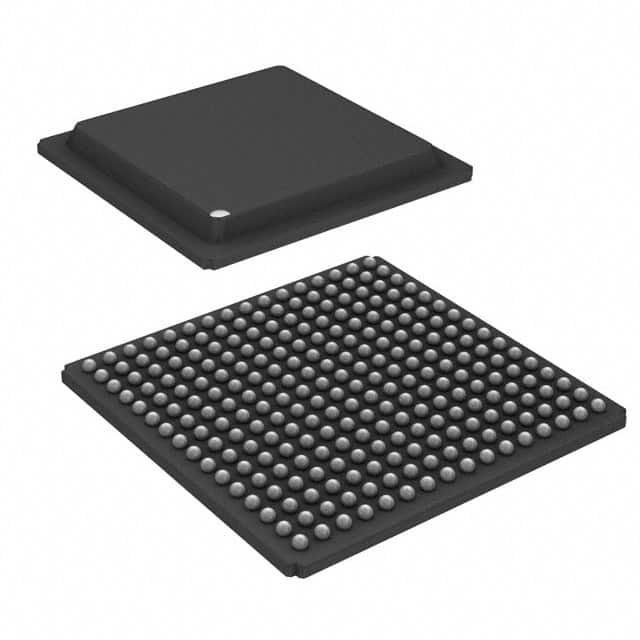
- Part No.:
- KMPC823VR66B2T
- Manufacturer:
- NXP Semiconductors
- Category:
- Microprocessors
- Package:
- 256-BBGA
- Datasheet:
-
 KMPC823VR66B2T.pdf
- Description:
- IC MPU MPC8XX 66MHZ 256BGA
- Quantity:
- Payment:

- Shipping:

Inventory:2,932
Please send an inquiry. Send us your inquiry, and we will respond immediately.
Product details
Overview
KMPC823VR66B2T from Freescale Semiconductor is a dual-processor embedded microprocessor integrating a 75 MHz PowerPC core and a dedicated communication processor module (CPM), with USB 1.1 host/slave interface, dual serial communication controllers (SCCs), two serial management controllers (SMCs), I²C, SPI, video/LCD controller, PCMCIA-ATA v2.1 interface, and 256-pin PBGA packaging. It delivers 99 MIPS (Dhrystone 2.1) at 66 MHz and targets low-power portable imaging and communications devices.
For engineers reviewing the KMPC823VR66B2T datasheet, KMPC823VR66B2T pinout, KMPC823VR66B2T application, or KMPC823VR66B2T equivalent, this page provides verified technical context, validated pin-level functionality, real-world use cases in portable imaging systems, and confirmed alternative parts for migration or sourcing continuity.
Technical Context
The KMPC823VR66B2T implements a static, dual-processor architecture: a 32-bit PowerPC core (single-issue, 2K instruction / 1K data cache, MMU with 8-entry TLBs) operates in parallel with a 32-bit scalar RISC communication processor module (CPM) featuring 8K dual-port RAM, twelve serial DMA channels, and hardware MAC unit supporting JPEG compression/decompression. Both processors share a 32-bit internal bus and access system memory via an eight-bank glueless memory controller.
Its system integration unit provides clock synthesis, IEEE 1149.1 JTAG debug support, real-time clock, software watchdog timer, and five power management modes (Doze, Sleep, Deep Sleep, Power-Down). The video/LCD controller supports CCIR-656-compatible digital video output and programmable grayscale/color TFT panels using burst-read DMA transfers.
Key Specifications
| Parameter | Value and Actual Design Meaning |
|---|---|
| Core Frequency | 66 MHz - Enables deterministic real-time execution at 99 MIPS (Dhrystone 2.1) with 94% cache hit rate assumption. |
| PowerPC Core | 32-bit single-issue integer processor - Fully compatible with PowerPC Architecture Definition; executes one instruction per cycle with branch folding and prediction. |
| Instruction Cache | 2 KB, 2-way set-associative - Supports critical-word-first burst line fill and line-level locking for real-time ISR routines. |
| Data Cache | 1 KB, 2-way set-associative - Physical addressing with LRU replacement; configurable copyback/writethrough mode per MMU page. |
| Memory Controller | 8 banks, 0–30 wait states per bank - Glueless interface to DRAM, SRAM, Flash, SDRAM, EPROM; supports 32K–256M block sizes. |
| USB Interface | USB 1.1 Host/Slave, 4 endpoints, 12 Mbps - Dedicated high-speed serial channel with endpoint FIFOs managed by CPM DMA. |
| Video/LCD Support | CCIR-656 8-bit digital video port + 4/8/9/12-bit parallel LCD output - Hardware horizontal scrolling, end-of-frame interrupts, and panel voltage control via CPM PWM timers. |
Pinout & Package
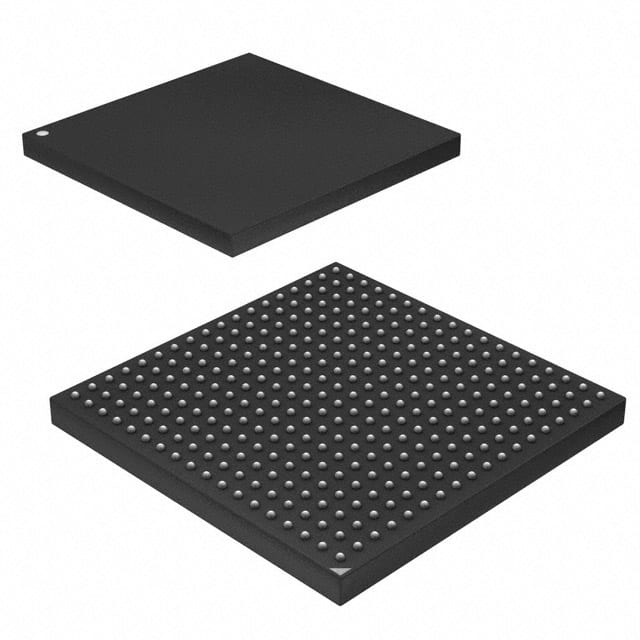
Package: 256-ball plastic BGA (PBGA), 23 mm × 23 mm, 1.27 mm pitch, RoHS-compliant lead-free finish.
| Pin/Terminal | Circuit Role | Design Meaning |
|---|---|---|
| CLKIN | System Clock Input | Accepts external crystal or oscillator (1–75 MHz); feeds PLL for internal core and peripheral clock generation. |
| RESET | Asynchronous Reset Input | Active-low signal initiating full chip reset; asserts boot chip-select and initializes memory controller, CPM, and PowerPC core state. |
| USB_DP / USB_DM | USB Differential Pair | Full-speed (12 Mbps) USB 1.1 physical layer interface; internally terminated; requires no external transceiver for basic operation. |
| SCC1_TX / SCC1_RX | Serial Comm Controller 1 I/O | Dedicated pins for Ethernet/HDLC/UART/USART/IrDA on SCC1; support 35 Mbps max serial data rate with programmable baud generators. |
| SDA / SCL | I²C Bus Signals | Open-drain bidirectional interface supporting master/slave mode, multimaster arbitration, and high-speed operation up to 400 kHz. |
| VD[23:0] | Video Data Bus | 24-bit parallel output for RGB/YCrCb video; CCIR-656 compliant timing with half-clock resolution sync generation. |
| LD[15:0] | LCD Data Bus | 16-bit parallel interface supporting 4-/8-/9-/12-bit color modes and 1-/2-/4-bit grayscale with frame-rate control algorithm. |
Key Features
| Feature | Design Value |
|---|---|
| Dual-Processor Parallelism | PowerPC core handles OS/application tasks while CPM independently manages imaging compression, serial protocols (Ethernet, HDLC, IrDA), and USB transfers-reducing core load and power consumption. |
| Glueless Memory Interface | Eight programmable memory banks support DRAM, SRAM, Flash, and SDRAM without external logic; includes boot chip-select and variable wait-state configuration per bank. |
| Integrated Video/LCD Controller | Single-chip display subsystem eliminates external video encoder or LCD driver IC; supports NTSC/PAL digital encoders and passive/color TFT panels with hardware scrolling and contrast PWM control. |
| Twelve Serial DMA Channels | Offloads all serial peripheral data movement (SCC, SMC, USB, SPI, I²C) from both CPU and CPM; enables zero-copy transfers between peripherals and system memory. |
| Five Low-Power Modes | Doze/Sleep/Deep Sleep/Power-Down modes selectively disable functional units (e.g., core, PLL, caches) while preserving RTC, timers, and CPM-enabling sub-mA standby in portable battery-powered systems. |
Applications
| Digital Still Camera | Portable VoIP Terminal |
|---|---|
Use Scenario: Compact handheld camera capturing JPEG images with live preview on integrated TFT display. IC Role / Device Role / Timing Role: KMPC823VR66B2T acts as main system controller-executing image capture firmware on PowerPC core while CPM performs real-time JPEG compression and drives LCD/video output via dedicated DMA channels. Use Value: Eliminates need for separate JPEG codec and display controller ICs; reduces BOM count and PCB area; enables <100 ms wake-from-sleep image capture latency. | Use Scenario: Battery-powered SIP-based voice terminal with Ethernet backhaul and headset audio interface. IC Role / Device Role / Timing Role: KMPC823VR66B2T serves as communications hub-running lightweight RTOS on PowerPC core while CPM handles Ethernet MAC, HDLC framing, and USB audio class device enumeration. Use Value: Achieves full-duplex 10 Mbps Ethernet + USB audio streaming with <5 µs jitter on audio sample clocks via CPM's dedicated baud rate generators and SDMA channels. |
| Handheld Medical Imaging Device | Industrial HMI Panel |
Use Scenario: Portable ultrasound or dermatology imager with VGA-resolution grayscale LCD and flash storage. IC Role / Device Role / Timing Role: KMPC823VR66B2T functions as imaging subsystem controller-using CPM's MAC unit for real-time FIR filtering of sensor data and PowerPC core for UI rendering and PCMCIA-ATA storage management. Use Value: Enables 60 fps grayscale display update with hardware-accelerated frame buffering and direct flash write via PCMCIA-ATA interface-no external FPGA required. | Use Scenario: Factory-floor operator interface with touch-sensitive color TFT display and RS-485 fieldbus connectivity. IC Role / Device Role / Timing Role: KMPC823VR66B2T operates as HMI processor-driving 8-bit color LCD via parallel interface while managing Modbus RTU over SMC1 and real-time logging to CompactFlash via PCMCIA. Use Value: Integrates display, fieldbus, and storage interfaces into single chip; supports hot-plug CF card detection and CRC-protected serial comms without external protocol accelerators. |
Equivalent & Alternatives
The following parts are listed as comparable options for similar embedded microprocessor applications.
| Alternative Part | Technical Difference | Application Difference | Selection Advice |
|---|---|---|---|
| MPC823ZT66B | Same die, identical electrical specs and pinout; differs only in marking and temperature grade (0°C to 95°C vs. -40°C to 95°C). | Commercial-grade variant; unsuitable for extended industrial ambient conditions where KMPC823VR66B2T's -40°C rating is required. | Select MPC823ZT66B only for cost-sensitive consumer applications operating within 0–95°C ambient. |
| MPC823CZT66B | Identical functionality and package; qualified for -40°C to 95°C operation with enhanced reliability screening per automotive AEC-Q100 stress test requirements. | Targeted at automotive infotainment and telematics modules requiring extended temperature validation and failure rate reporting. | Choose MPC823CZT66B when AEC-Q100 compliance and long-term supply assurance are mandatory. |
Compared with KMPC823VR66B2T, MPC823ZT66B lacks extended temperature qualification and reliability reporting, while MPC823CZT66B adds AEC-Q100 validation but shares identical performance, pinout, and software compatibility-making it a drop-in upgrade for automotive deployments.
Availability
KMPC823VR66B2T is available at Aetrix Electronics and suitable for digital imaging systems, portable VoIP terminals, handheld medical devices, industrial HMIs, and embedded multimedia gateways requiring stable component supply across extended temperature ranges.
Supply support for KMPC823VR66B2T includes scheduled delivery planning, volume procurement assistance, BOM continuity management, traceable sourcing, and lifecycle availability coordination for OEM customers, industrial embedded developers, connected-device designers, and electronics production programs.
Manufacturer
Freescale Semiconductor (now part of NXP Semiconductors) is a fabless semiconductor company specializing in embedded processing, analog, and connectivity solutions for automotive, industrial, and networking markets.
The MPC823 product line was designed as a low-power, highly integrated entry point into the PowerPC architecture-targeting portable imaging, personal communications, and GUI-rich embedded systems with minimal external component count.
FAQ
What is the maximum operating frequency of the KMPC823VR66B2T?
The KMPC823VR66B2T is rated for 66 MHz operation. Its PowerPC core delivers 99 MIPS (Dhrystone 2.1) at this frequency with a 94% cache hit rate assumption. The communication processor module runs synchronously at the same clock rate and achieves >75 MIPS in parallel. Operation above 66 MHz violates the device's specified timing margins and is not supported.
Does the KMPC823VR66B2T support USB device mode with standard class drivers?
Yes, the KMPC823VR66B2T supports USB 1.1 device (peripheral) mode with four configurable endpoints. It implements the USB protocol stack in CPM microcode and supports standard CDC ACM (virtual COM port), HID, and mass storage class descriptors. Full driver support requires Freescale's MQX RTOS or custom firmware implementing descriptor tables and endpoint handlers in CPM RAM.
Can the KMPC823VR66B2T drive both video encoder and LCD simultaneously?
No, the KMPC823VR66B2T's shared video/LCD controller uses common dual-port memory and cannot operate both video and LCD controllers concurrently. The device must be configured at boot time to select either video output (NTSC/PAL digital encoder interface) or LCD output (TFT/passive panel interface); switching requires software reinitialization and memory buffer reallocation.
What power management modes are available on the KMPC823VR66B2T?
The KMPC823VR66B2T supports five hardware-controlled power modes: Normal High (full speed), Normal Low (reduced frequency), Doze (core disabled, CPM/RTC/memory controller active), Sleep (PLL active, minimal logic powered), and Power-Down (only RTC/timers retain state). Wake-up latency ranges from 1 µs (Doze) to 100 ms (Power-Down), with all modes controlled via system interface unit registers.
Is the KMPC823VR66B2T pin-compatible with other MPC823 variants like MPC823ZT66B?
Yes, the KMPC823VR66B2T is fully pin-compatible with MPC823ZT66B and MPC823CZT66B. All share identical 256-ball PBGA (23×23 mm, 1.27 mm pitch) mechanical layout, electrical signaling, and register-level functionality. Differences are limited to temperature grading, reliability screening, and marking-requiring no PCB redesign for substitution.
KMPC823VR66B2T Specifications
- Product attributes
- Attribute value
- Manufacturer:
- NXP Semiconductors
- Package/Case:
- 256-BBGA
- Series:
- MPC8xx
- Packaging:
- Box
- Product Status:
- Obsolete
- Core Processor:
- PowerPC
- Number of Cores/Bus Width:
- 1 Core, 32-Bit
- Speed:
- 66MHz
- Co-Processors/DSP:
- Communications; RISC CPM
- RAM Controllers:
- DRAM
- Graphics Acceleration:
- No
- Display & Interface Controllers:
- LCD, Video
- Ethernet:
- 10Mbps (1)
- SATA:
- -
- USB:
- USB 1.x (1)
- Voltage - I/O:
- 3.3V
- Operating Temperature:
- 0°C ~ 95°C (TA)
- Grade:
- -
- Qualification:
- -
- Security Features:
- -
- Mounting Type:
- Surface Mount
- Supplier Device Package:
- 256-PBGA (23x23)
- Additional Interfaces:
- I2C, SMC, SCC, SPI, UART
KMPC823VR66B2T FAQ
1.How can I place an order for KMPC823VR66B2T through Aetrix?
Please submit a Request for Quotation (RFQ) for KMPC823VR66B2T on Aetrix. Our sales agent will provide a competitive quotation and guide you through the order confirmation once you accept the terms.
2.Are the price and stock information for KMPC823VR66B2T reliable?
The price and inventory of KMPC823VR66B2T are updated periodically and may fluctuate due to market conditions. Stock and pricing data are typically refreshed every 24 hours. Quotation validity for KMPC823VR66B2T is usually 5 days.
3.What payment methods are accepted for KMPC823VR66B2T?
We accept Wire Transfer, PayPal, Credit Card, Western Union, MoneyGram, and Escrow for KMPC823VR66B2T transactions.
Note: Certain payment methods may incur a processing fee.
4.How is shipping managed for KMPC823VR66B2T?
KMPC823VR66B2T orders can be shipped via leading logistics carriers, including DHL, UPS, FedEx, TNT, or Registered Mail.
Once your KMPC823VR66B2T order is processed, you will receive an email with the shipment details and tracking number.
Note: Tracking information may take up to 24 hours to appear. Express delivery typically takes 3–5 business days.
5.How can I obtain technical support or documentation for KMPC823VR66B2T?
For technical support, including KMPC823VR66B2T datasheets, pinout diagrams, or application guidance, please contact our engineering support team. They can provide detailed documentation and assistance for your KMPC823VR66B2T requirements.
6.How does Aetrix verify that KMPC823VR66B2T is sourced from the original manufacturer or authorized distributors?
All KMPC823VR66B2T products on Aetrix are procured from qualified distributors and authorized channels. Our dedicated quality assurance team conducts strict verification, including traceability checks and, if necessary, third-party testing. This ensures that KMPC823VR66B2T meets industry standards.
7.What is the process for return or replacement of KMPC823VR66B2T?
All KMPC823VR66B2T units undergo pre-shipment inspection (PSI). If there is an issue with KMPC823VR66B2T, returns or replacements are accepted under the following conditions:
1.Quantity discrepancies, incorrect items, or visible external defects (such as breakage or corrosion), acknowledged by Aetrix.
2.The issue is reported within 90 days of delivery.
3.The KMPC823VR66B2T part is unused and in its original packaging.
Return procedure for KMPC823VR66B2T:
1.Submit a request within 90 days.
2.Obtain a Return Material Authorization (RMA) from Aetrix.
KMPC823VR66B2T Tags
-
AT91SAM9260B-CU-999
Microchip Technology
-
AT91SAM9G25-CU
Microchip Technology
-
ATSAMA5D27C-CU
Microchip Technology
-
AT91SAM9X35-CU
Microchip Technology
-
AT91SAM9X25-CU
Microchip Technology
-
MCIMX6Y2CVM08AB
NXP Semiconductors
.JPG)
-
AM3352BZCZ100
Texas Instruments
-
AT91SAM9260B-CU
Microchip Technology
-
AT91SAM9260B-QU
Microchip Technology
-
ATSAMA5D31A-CU
Microchip Technology
-
AT91SAM9G20B-CU-999
Microchip Technology
-
MCIMX6Y2CVM05AB
NXP Semiconductors
Tech Hub

A practical engineering guide to 3.3V and 5V logic compatibility, input thresholds, resistor dividers, translator ICs, MOSFET level shifting, I2C pull-ups, timing limits and power-sequencing risks.

The 74HC595 uses push-pull logic outputs, while the TPIC6B595 uses 50 V open-drain DMOS sinks for higher-power loads. This guide compares timing, current limits, 3.3 V interfacing, load wiring, thermal…

The 74HC595 converts serial data into eight stable parallel outputs. This guide covers pin functions, shift and storage timing, OE and MR behavior, drive-current limits, cascading, voltage compatibilit…

A technical comparison of level-sensitive latches and edge-triggered flip-flops, covering timing windows, setup and hold limits, master–slave operation, time borrowing, race-through, HDL inference and…

A D latch stores one bit while Enable controls when data can pass. This reference covers gate-level operation, truth tables, transparency, setup and hold timing, LE versus OE, common ICs and practical …

An SR latch stores one bit through cross-coupled feedback. This engineering reference covers NOR and NAND implementations, truth tables, forbidden-state recovery, gated operation, switch debouncing, fa…

Latch circuits retain one bit through feedback. This technical reference covers SR and D latches, truth tables, transparency, timing limits, latch-versus-flip-flop behavior, applications and common log…

An engineering guide to LED driver operation, constant-current and constant-voltage outputs, linear and switching topologies, dimming, IC selection, calculations, replacement compatibility, and fault c…

Operational amplifier guide covering op amp basics, feedback, ideal vs real op amps, common configurations, buffer circuits, offset, bias current, gain-bandwidth, slew rate, rail-to-rail limits and sel…

Jumper cables guide covering safe connection order, red and black clamp placement, final ground connection, cable gauge, length, clamp quality, copper vs CCA cables, jump starter comparison and battery…


