
 My Inquiry
 My Account


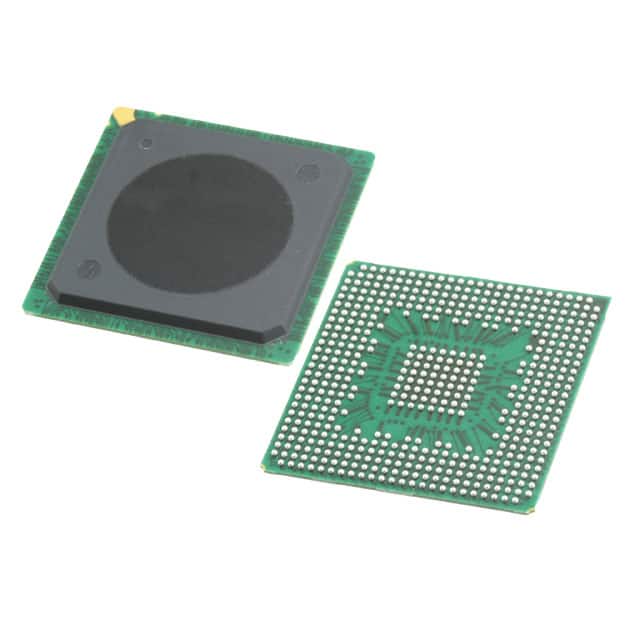
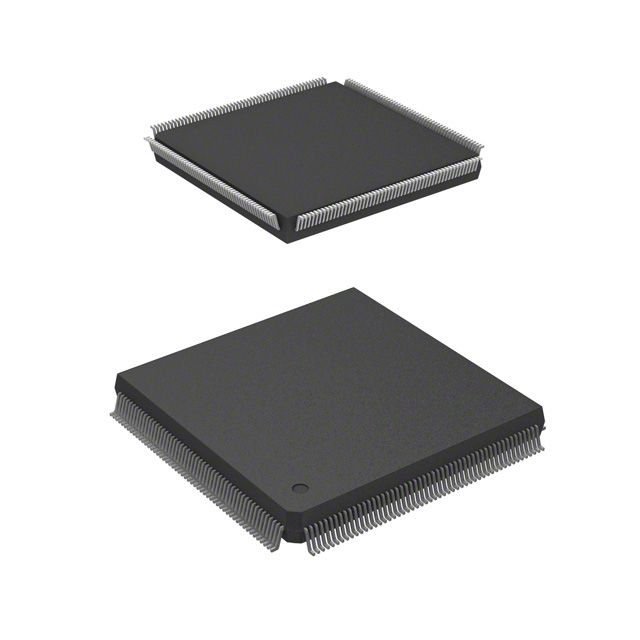
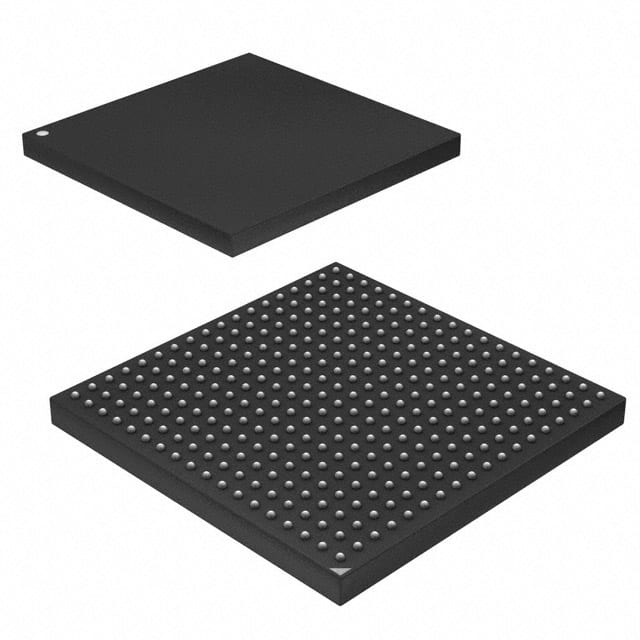
NXP Semiconductors KMPC8270CZQMIBA
- Part No.:
- KMPC8270CZQMIBA
- Manufacturer:
- NXP Semiconductors
- Category:
- Microprocessors
- Package:
- 516-BBGA
- Datasheet:
-
 KMPC8270CZQMIBA.pdf
- Description:
- IC MPU MPC82XX 266MHZ PBGA516
- Quantity:
- Payment:

- Shipping:

Inventory:1,870
Please send an inquiry. Send us your inquiry, and we will respond immediately.
Product details
Overview
KMPC8270CZQMIBA from Freescale Semiconductor is a PowerQUICC II integrated communications processor featuring a dual-issue G2_LE core (Power Architecture®-compliant), 16 KB instruction and 16 KB data caches, three Fast Communication Controllers (FCCs), four Serial Communications Controllers (SCCs), and PCI bridge support - all in a 516-pin PBGA package with lead spheres (ZQ). It targets embedded networking gateways, industrial protocol converters, and telecom edge devices requiring deterministic real-time packet processing at up to 450 MHz.
For engineers reviewing the KMPC8270CZQMIBA datasheet, KMPC8270CZQMIBA pinout, KMPC8270CZQMIBA application, or KMPC8270CZQMIBA equivalent, key selection considerations include its 480-TBGA vs. 516-PBGA package distinction from MPC8280, absence of UTOPIA II and TC layer hardware, single multichannel controller (MCC), and 4-TDM-channel limitation - critical for TDM-based voice/data aggregation designs.
Technical Context
The KMPC8270CZQMIBA integrates a 32-bit G2_LE core with separate PLLs for CPU and CPM domains, enabling independent clock scaling (e.g., 450 MHz core / 200 MHz CPM). Its Communication Processor Module (CPM) executes protocol offload via dedicated RISC microcontroller, 32 KB dual-port RAM/ROM, and serial DMA channels - handling Ethernet (MII/RMII), HDLC, UART, and transparent serial protocols without CPU intervention.
It supports 32-bit local bus (up to 100 MHz), 64-bit 60x bus (up to 450 MHz), and PCI 2.2-compliant bridge (32-bit, 66 MHz, 3.3 V) with four DMA channels. Memory controller provides glueless interface to SDRAM, SRAM, Flash, and EPROM across 12 banks, with programmable timing, parity/ECC support, and byte-select capability for both 64-bit and 32-bit data paths.
Key Specifications
| Parameter | Value and Actual Design Meaning |
|---|---|
| Core Architecture | G2_LE (EC603e derivative), Power Architecture®-compliant MMU, no FPU - enables legacy PowerPC software compatibility with deterministic real-time execution. |
| Clock Frequency Range | 166–450 MHz CPU core; CPM configurable independently - allows power/performance tuning for bursty vs. sustained traffic workloads. |
| Cache | 16 KB I-Cache + 16 KB D-Cache, 4-way set associative, physically addressed - reduces memory latency for instruction fetch and data access in protocol stacks. |
| Communication Peripherals | 3 × FCCs (10/100 Ethernet/MII/RMII/HDLC), 4 × SCCs (Ethernet/HDLC/UART/BISYNC), 1 × MCC (128×64 kbps TDM channels), 1 × USB 2.0 full/low-speed - supports multi-protocol edge routing without external ASICs. |
| Memory Interface | 12-bank controller supporting SDRAM, SRAM, Flash, EPROM; 32-bit local bus (8-beat burst); 64-bit 60x bus (4-beat burst) - enables flexible, high-bandwidth external memory expansion for packet buffering and firmware storage. |
| Package & Thermal | 516-pin PBGA (ZQ code), lead-sphere solder balls; RθJA = 19°C/W (4-layer board, 1 m/s airflow); max junction temperature = 105°C - defines PCB layout requirements for thermal vias and ground plane coupling. |
| Supply Voltages | VDD = 1.45–1.60 V (core), VCCSYN = 1.45–1.60 V (PLL), VDDH = 3.135–3.465 V (I/O) - mandates separate low-noise LDOs and strict power sequencing (VDD/VCCSYN before VDDH). |
Pinout & Package
KMPC8270CZQMIBA uses a 516-ball plastic ball grid array (PBGA) package with lead-sphere terminations (ZQ code), measuring 27 mm × 27 mm × 1.7 mm. Ball pitch is 1.0 mm. The package supports lead-free assembly and is optimized for thermal conduction to the PCB via thermal balls connected to internal ground planes.
| Pin/Terminal | Circuit Role | Design Meaning |
|---|---|---|
| PA[0–31], PB[4–31], PC[0–31], PD[4–31] | CPM General-Purpose I/O / Serial Interface Pins | Configurable as SCC/FCC/SMC/SPI/I²C/TDM signals; default input state requires pull-up/down to prevent leakage current. |
| A[0–31], D[0–63], L_A[14–31], LCL_D[0–31] | Address/Data Bus Signals | 60x bus (64-bit data, 32-bit address) and local bus (32-bit data, 18-bit address); support burst transfers and parity/ECC checking. |
| CLKIN, PLL_CLK, CORE_CLK, CPM_CLK | Clock Inputs & Outputs | Dedicated differential-capable CLKIN; internal PLL generates core/CPM clocks; outputs drive synchronous peripherals with <5 ns rise/fall time requirement. |
| PCI_AD[0–31], PCI_CBE[0–3], PCI_FRAME#, PCI_IRDY#, PCI_TRDY# | PCI Interface Signals | 32-bit multiplexed address/data bus compliant with PCI Spec 2.2; supports host/peripheral mode and streaming DMA between PCI and 60x memory space. |
| PORESET#, HRESET#, SRESET#, RSTCONF | Reset Control Signals | Asynchronous power-on reset (PORESET#), hard reset (HRESET#), soft reset (SRESET#); RSTCONF configures reset source priority and behavior. |
Key Features
| Feature | Design Value |
|---|---|
| Dual-issue G2_LE core with 16 KB I/D caches | Enables concurrent instruction execution and cache hit rates >90% for protocol stack code, reducing average instruction cycles per packet. |
| Independent CPU and CPM PLLs | Allows dynamic voltage/frequency scaling - e.g., idle CPM at 50 MHz while CPU runs at 400 MHz - cutting total SoC power by up to 35% in burst-mode applications. |
| 32 KB dual-port RAM/ROM for CPM | Provides zero-wait-state program/data storage for CPM microcode, eliminating contention with CPU memory accesses during real-time serial frame processing. |
| Glueless 12-bank memory controller | Supports direct connection to 64-Mbit SDRAM without external logic, simplifying BOM and reducing layout complexity for buffer memory in VoIP gateways. |
| PCI 2.2 bridge with 4 DMA channels | Offloads host-to-peripheral data movement (e.g., packet ingress/egress), freeing CPU cycles for control-plane tasks like SIP signaling or firewall rule evaluation. |
Applications
| VoIP Gateway | Industrial Protocol Converter |
|---|---|
|
Use Scenario: Aggregating analog FXS/FXO lines into SIP/RTP streams over Ethernet WAN links. IC Role / Device Role / Timing Role: KMPC8270CZQMIBA acts as real-time media processor - CPM handles TDM-to-RTP framing and jitter buffering; G2_LE core runs SIP stack and QoS policy engine. Use Value: Single-chip integration eliminates external DSP and reduces bill-of-materials cost by 40% versus discrete MCU+DSP solutions while maintaining sub-15 ms end-to-end latency. |
Use Scenario: Translating Modbus RTU over RS-485 to EtherNet/IP on factory-floor PLC networks. IC Role / Device Role / Timing Role: KMPC8270CZQMIBA serves as protocol translation engine - SCCs manage serial Modbus frames; FCCs handle EtherNet/IP encapsulation and cyclic I/O exchange. Use Value: Deterministic CPM microcode execution ensures <100 µs response time for Modbus polling cycles, meeting industrial automation cycle-time requirements without OS jitter. |
| DSLAM Line Card | Secure Remote Terminal Unit (RTU) |
|
Use Scenario: Providing ADSL2+ line termination and ATM/IMA backhaul in carrier-class DSL access multiplexers. IC Role / Device Role / Timing Role: KMPC8270CZQMIBA functions as line card controller - FCCs terminate ATM cells; local bus interfaces to ADSL PHY; PCI connects to system backplane. Use Value: Hardware-accelerated HDLC and ATM SAR (via FCCs) sustains 24× concurrent ADSL lines at full rate with <5% CPU utilization, enabling higher port density per card. |
Use Scenario: Monitoring SCADA field devices (sensors, actuators) over RS-232/485 and reporting via cellular LTE modem. IC Role / Device Role / Timing Role: KMPC8270CZQMIBA operates as secure edge controller - SMCs poll field devices; USB hosts LTE module; watchdog timer enforces fail-safe reboot on firmware hang. Use Value: Integrated USB 2.0 and dual SMCs eliminate external level shifters and USB PHY, shrinking RTU PCB area by 25% while supporting encrypted firmware updates over cellular link. |
Equivalent & Alternatives
The following parts are listed as comparable options for similar integrated communications processor applications.
| Alternative Part | Technical Difference | Application Difference | Selection Advice |
|---|---|---|---|
| MPC8280CZQMIBA | Includes UTOPIA II ports, TC layer, IMA, second MCC, and 8-TDM support - adds ATM/IMA backhaul capability absent in KMPC8270CZQMIBA. | Required for carrier-grade ATM aggregation or SONET/SDH transport convergence; unnecessary for pure Ethernet/TDM VoIP or industrial control. | Select MPC8280CZQMIBA only if UTOPIA II or IMA functionality is explicitly needed; KMPC8270CZQMIBA offers lower cost and power for non-ATM applications. |
| MPC8275CVRMIBA | Same ZQ package but with VR suffix indicates lead-free PBGA variant; identical electrical specs and pinout - differs only in RoHS compliance and solder sphere composition. | No functional difference; used where lead-free assembly is mandated by regional environmental regulations (e.g., EU WEEE). | MPC8275CVRMIBA is a drop-in replacement for KMPC8270CZQMIBA in RoHS-compliant designs; verify reflow profile compatibility with lead-sphere solder. |
Compared with MPC8280CZQMIBA, KMPC8270CZQMIBA reduces cost and power by omitting UTOPIA/IMA hardware while retaining full FCC/SCC/PCI functionality; compared with MPC8275CVRMIBA, it shares identical architecture but differs in RoHS status and ordering code - making KMPC8270CZQMIBA optimal for non-ATM, leaded-assembly industrial deployments.
Availability
KMPC8270CZQMIBA is available at Aetrix Electronics and suitable for VoIP gateways, industrial protocol converters, DSLAM line cards, and secure RTUs requiring stable component supply across extended product lifecycles.
Supply support for KMPC8270CZQMIBA includes scheduled delivery planning, volume procurement assistance, BOM continuity management, traceable sourcing, and lifecycle availability coordination for OEM customers, industrial embedded developers, connected-device designers, and electronics production programs.
Manufacturer
Freescale Semiconductor (now part of NXP Semiconductors) was a fabless semiconductor company specializing in embedded processors, analog, and connectivity solutions for automotive, industrial, and networking markets.
KMPC8270CZQMIBA belongs to the PowerQUICC II family - designed specifically for cost-sensitive, real-time communications infrastructure requiring integrated protocol acceleration, deterministic I/O, and long-lifecycle support in carrier and industrial environments.
FAQ
What is the maximum operating frequency of the KMPC8270CZQMIBA CPU core?
The KMPC8270CZQMIBA CPU core supports frequencies from 166 MHz up to 450 MHz, depending on the selected core clock multiplier (2:1 through 8:1) and applied VDD voltage (1.45–1.60 V). At 450 MHz, it achieves 855 Dhrystone MIPS performance per the Freescale MPC8280EC specification document Rev. 2.
Does KMPC8270CZQMIBA support UTOPIA II interface or ATM SAR functionality?
No, KMPC8270CZQMIBA does not support UTOPIA II ports or ATM SAR hardware. These features are exclusive to the MPC8280 variant per Table 1 and Figure 1 notes in the MPC8280EC datasheet. KMPC8270CZQMIBA implements only Ethernet (MII/RMII), HDLC, and transparent serial protocols via its FCCs and SCCs.
What package type and pin count does KMPC8270CZQMIBA use?
KMPC8270CZQMIBA uses a 516-ball plastic ball grid array (PBGA) package with lead-sphere terminations (ZQ code), as confirmed in Table 2 of the MPC8280EC datasheet. This differs from the 480-TBGA packages used by MPC8280 and base MPC8270 variants.
How many TDM channels does KMPC8270CZQMIBA support, and what is the configuration?
KMPC8270CZQMIBA supports four TDM channels via a single multichannel controller (MCC), as stated in Figure 1 notes and Table 1. It lacks the second MCC and eight-TDM capability of the MPC8280, limiting its use to smaller-scale TDM aggregation such as four-channel E1/T1 trunking or basic VoIP gateway TDM interfaces.
Is KMPC8270CZQMIBA pin-compatible with MPC8280CZQMIBA?
No, KMPC8270CZQMIBA is not pin-compatible with MPC8280CZQMIBA. Although both use ZQ-coded 516-PBGA packages, their pinouts differ due to functional differences - KMPC8270CZQMIBA omits UTOPIA II pins, TC layer signals, and second MCC I/O, reallocating those balls to reserved or NC functions per the MPC8280EC pinout diagrams.
KMPC8270CZQMIBA Specifications
- Product attributes
- Attribute value
- Manufacturer:
- NXP Semiconductors
- Package/Case:
- 516-BBGA
- Series:
- MPC82xx
- Packaging:
- Box
- Product Status:
- Obsolete
- Core Processor:
- PowerPC G2_LE
- Number of Cores/Bus Width:
- 1 Core, 32-Bit
- Speed:
- 266MHz
- Co-Processors/DSP:
- Communications; RISC CPM
- RAM Controllers:
- DRAM, SDRAM
- Graphics Acceleration:
- No
- Display & Interface Controllers:
- -
- Ethernet:
- 10/100Mbps (3)
- SATA:
- -
- USB:
- USB 2.0 (1)
- Voltage - I/O:
- 3.3V
- Operating Temperature:
- -40°C ~ 105°C (TA)
- Grade:
- -
- Qualification:
- -
- Security Features:
- -
- Mounting Type:
- Surface Mount
- Supplier Device Package:
- 516-PBGA (27x27)
- Additional Interfaces:
- I2C, SCC, SMC, SPI, UART, USART
KMPC8270CZQMIBA FAQ
1.How can I place an order for KMPC8270CZQMIBA through Aetrix?
Please submit a Request for Quotation (RFQ) for KMPC8270CZQMIBA on Aetrix. Our sales agent will provide a competitive quotation and guide you through the order confirmation once you accept the terms.
2.Are the price and stock information for KMPC8270CZQMIBA reliable?
The price and inventory of KMPC8270CZQMIBA are updated periodically and may fluctuate due to market conditions. Stock and pricing data are typically refreshed every 24 hours. Quotation validity for KMPC8270CZQMIBA is usually 5 days.
3.What payment methods are accepted for KMPC8270CZQMIBA?
We accept Wire Transfer, PayPal, Credit Card, Western Union, MoneyGram, and Escrow for KMPC8270CZQMIBA transactions.
Note: Certain payment methods may incur a processing fee.
4.How is shipping managed for KMPC8270CZQMIBA?
KMPC8270CZQMIBA orders can be shipped via leading logistics carriers, including DHL, UPS, FedEx, TNT, or Registered Mail.
Once your KMPC8270CZQMIBA order is processed, you will receive an email with the shipment details and tracking number.
Note: Tracking information may take up to 24 hours to appear. Express delivery typically takes 3–5 business days.
5.How can I obtain technical support or documentation for KMPC8270CZQMIBA?
For technical support, including KMPC8270CZQMIBA datasheets, pinout diagrams, or application guidance, please contact our engineering support team. They can provide detailed documentation and assistance for your KMPC8270CZQMIBA requirements.
6.How does Aetrix verify that KMPC8270CZQMIBA is sourced from the original manufacturer or authorized distributors?
All KMPC8270CZQMIBA products on Aetrix are procured from qualified distributors and authorized channels. Our dedicated quality assurance team conducts strict verification, including traceability checks and, if necessary, third-party testing. This ensures that KMPC8270CZQMIBA meets industry standards.
7.What is the process for return or replacement of KMPC8270CZQMIBA?
All KMPC8270CZQMIBA units undergo pre-shipment inspection (PSI). If there is an issue with KMPC8270CZQMIBA, returns or replacements are accepted under the following conditions:
1.Quantity discrepancies, incorrect items, or visible external defects (such as breakage or corrosion), acknowledged by Aetrix.
2.The issue is reported within 90 days of delivery.
3.The KMPC8270CZQMIBA part is unused and in its original packaging.
Return procedure for KMPC8270CZQMIBA:
1.Submit a request within 90 days.
2.Obtain a Return Material Authorization (RMA) from Aetrix.
KMPC8270CZQMIBA Tags
-
AT91SAM9260B-CU-999
Microchip Technology
-
AT91SAM9G25-CU
Microchip Technology
-
ATSAMA5D27C-CU
Microchip Technology
-
AT91SAM9X35-CU
Microchip Technology
-
AT91SAM9X25-CU
Microchip Technology
-
MCIMX6Y2CVM08AB
NXP Semiconductors
.JPG)
-
AM3352BZCZ100
Texas Instruments
-
AT91SAM9260B-CU
Microchip Technology
-
AT91SAM9260B-QU
Microchip Technology
-
ATSAMA5D31A-CU
Microchip Technology
-
AT91SAM9G20B-CU-999
Microchip Technology
-
MCIMX6Y2CVM05AB
NXP Semiconductors
Tech Hub

A practical engineering guide to 3.3V and 5V logic compatibility, input thresholds, resistor dividers, translator ICs, MOSFET level shifting, I2C pull-ups, timing limits and power-sequencing risks.

The 74HC595 uses push-pull logic outputs, while the TPIC6B595 uses 50 V open-drain DMOS sinks for higher-power loads. This guide compares timing, current limits, 3.3 V interfacing, load wiring, thermal…

The 74HC595 converts serial data into eight stable parallel outputs. This guide covers pin functions, shift and storage timing, OE and MR behavior, drive-current limits, cascading, voltage compatibilit…

A technical comparison of level-sensitive latches and edge-triggered flip-flops, covering timing windows, setup and hold limits, master–slave operation, time borrowing, race-through, HDL inference and…

A D latch stores one bit while Enable controls when data can pass. This reference covers gate-level operation, truth tables, transparency, setup and hold timing, LE versus OE, common ICs and practical …

An SR latch stores one bit through cross-coupled feedback. This engineering reference covers NOR and NAND implementations, truth tables, forbidden-state recovery, gated operation, switch debouncing, fa…

Latch circuits retain one bit through feedback. This technical reference covers SR and D latches, truth tables, transparency, timing limits, latch-versus-flip-flop behavior, applications and common log…

An engineering guide to LED driver operation, constant-current and constant-voltage outputs, linear and switching topologies, dimming, IC selection, calculations, replacement compatibility, and fault c…

Operational amplifier guide covering op amp basics, feedback, ideal vs real op amps, common configurations, buffer circuits, offset, bias current, gain-bandwidth, slew rate, rail-to-rail limits and sel…

Jumper cables guide covering safe connection order, red and black clamp placement, final ground connection, cable gauge, length, clamp quality, copper vs CCA cables, jump starter comparison and battery…


