
 My Inquiry
 My Account


NXP Semiconductors KMZ41,118
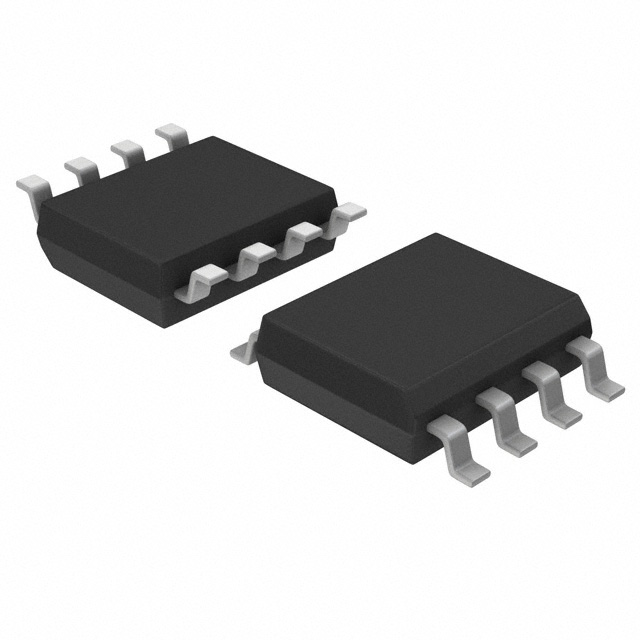
- Part No.:
- KMZ41,118
- Manufacturer:
- NXP Semiconductors
- Category:
- Linear, Compass (ICs)
- Package:
- 8-SOIC (0.154", 3.90mm Width)
- Datasheet:
-
 KMZ41,118.pdf
- Description:
- SENSOR MR ANALOG 8SO
- Quantity:
- Payment:

- Shipping:

Inventory:1,228
Please send an inquiry. Send us your inquiry, and we will respond immediately.
Product details
Overview
KMZ41 from NXP Semiconductors is a magneto-resistive magnetic field sensor with dual galvanically isolated Wheatstone bridges arranged at 45°, delivering cos(2α) and sin(2α) output signals for precise angular position sensing. It operates from DC to 1 MHz, supports 5–9 V supply, delivers ±81 mV peak output, and maintains <0.25° angular inaccuracy across −40 °C to +150 °C - used in automotive throttle and steering angle sensing.
For engineers reviewing the KMZ41 datasheet, KMZ41 pinout, KMZ41 application, or KMZ41 equivalent, this page provides verified specifications, SO8 package details, bridge-level offset and temperature coefficients, amplitude synchronism (99–101%), and real-world use cases in contactless rotary position feedback systems requiring high thermal stability and mechanical robustness.
Technical Context
The KMZ41 implements two independent permalloy thin-film Wheatstone bridges on a single die, physically oriented at 45° to enable orthogonal magnetic field component detection. Each bridge has 2.5 kΩ nominal resistance with ±0.33%/K TCR and generates differential outputs referenced to its dedicated VCC/GND pair.
Its operation relies on rotating in-plane magnetic fields ≥100 kA/m (min 40 kA/m), producing sinusoidal outputs whose phase encodes absolute angular position. Signal conditioning requires external amplification and analog-to-digital conversion, as KMZ41 provides raw bridge voltages without integrated signal processing or digital interface.
Key Specifications
| Parameter | Value and Actual Design Meaning |
|---|---|
| Supply voltage | 5–9 V - supports direct connection to automotive 5 V or 8 V supply rails without regulation |
| Peak output voltage | 73–89 mV - defines minimum gain requirement for downstream amplifier stage |
| Bridge resistance | 2.0–3.0 kΩ - determines excitation current draw and thermal self-heating under 5 V bias |
| Angular inaccuracy | 0–0.25° - enables sub-degree position resolution in closed-loop motor control |
| Operating temperature | −40 °C to +150 °C - qualified for under-hood automotive environments |
| Amplitude synchronism | 99–101% - ensures consistent quadrature signal ratio for accurate arctangent calculation |
| Frequency range | DC to 1 MHz - supports high-speed dynamic angle tracking in fast-rotating systems |
Pinout & Package
The KMZ41 is housed in an SO8 plastic small outline package (SOT96-1), 3.9 mm body width, 1.27 mm lead pitch, with 8 leads and gull-wing terminations. Thermal resistance is 155 K/W junction-to-ambient.
| Pin/Terminal | Circuit Role | Design Meaning |
|---|---|---|
| 1 | ON1 | Output negative of bridge 1 - differential complement to OP1; required for balanced readout |
| 2 | ON2 | Output negative of bridge 2 - differential complement to OP2; enables noise-rejecting measurement |
| 3 | VCC2 | Supply voltage for bridge 2 - must be decoupled locally to minimize crosstalk between bridges |
| 4 | VCC1 | Supply voltage for bridge 1 - independent rail allows separate filtering and fault isolation |
| 5 | OP1 | Output positive of bridge 1 - delivers cos(2α) signal relative to VCC1/GND1 reference |
| 6 | OP2 | Output positive of bridge 2 - delivers sin(2α) signal relative to VCC2/GND2 reference |
| 7 | GND2 | Ground return for bridge 2 - galvanic separation prevents ground loop interference |
| 8 | GND1 | Ground return for bridge 1 - maintains isolation integrity between dual bridge domains |
Key Features
| Feature | Design Value |
|---|---|
| Dual isolated Wheatstone bridges | Enables simultaneous, crosstalk-free acquisition of orthogonal magnetic components for true 2D field vector resolution |
| 45° bridge orientation | Generates cos(2α)/sin(2α) outputs - doubles electrical cycle per mechanical rotation, improving resolution without gear reduction |
| 0.25° max angular inaccuracy | Supports ASIL-B–compliant position feedback in electric power steering and brake-by-wire systems |
| −40 °C to +150 °C operation | Eliminates need for external thermal derating or heatsinking in engine compartment deployments |
| 0.01% max hysteresis | Ensures repeatable position reporting during bidirectional actuator movement without calibration drift |
Applications
| Automotive Throttle Position Sensing | Electric Power Steering (EPS) Angle Feedback |
|---|---|
Use Scenario: Monitoring rotational position of throttle valve shaft in gasoline/diesel engines for closed-loop air-fuel ratio control. IC Role / Device Role / Timing Role: Contactless angular transducer providing analog cos(2α)/sin(2α) outputs to ECU ADC inputs. Use Value: Replaces potentiometers with wear-free operation, eliminating mechanical failure modes and enabling lifetime compliance with ISO 26262 ASIL-B requirements. | Use Scenario: Measuring torque-sensing motor rotor angle in column-assist EPS systems to compute assist magnitude and direction. IC Role / Device Role / Timing Role: High-precision magnetic angle sensor feeding dual-redundant microcontroller channels for functional safety monitoring. Use Value: Delivers <0.25° angular error over full temperature range, supporting fail-operational behavior during transient thermal events. |
| Industrial Motor Commutation | Rotary Encoder Replacement in HVAC Actuators |
Use Scenario: Providing rotor position feedback for BLDC motor field-oriented control in industrial pumps and compressors. IC Role / Device Role / Timing Role: Analog resolver substitute generating quadrature signals compatible with standard motor controller ADC front-ends. Use Value: Enables elimination of bulky resolvers while maintaining <1° electrical angle error up to 10 krpm mechanical speed. | Use Scenario: Detecting damper blade position in commercial HVAC systems where long-term reliability exceeds encoder lifespan. IC Role / Device Role / Timing Role: Non-contact angular sensor interfaced to low-cost 12-bit SAR ADC for position digitization. Use Value: Achieves >10 million cycle endurance without degradation - outperforming optical encoders in dusty, vibration-prone duct environments. |
Equivalent & Alternatives
The following parts are listed as comparable options for similar magnetic angular sensing applications.
| Alternative Part | Technical Difference | Application Difference | Selection Advice |
|---|---|---|---|
| AMS AS5055A | Integrated 12-bit ADC and SPI interface; single-chip digital output vs. KMZ41's analog bridge outputs | Reduces BOM count but requires redesign of signal chain and firmware support for SPI protocol | Select when system-level integration and digital interface outweigh raw analog flexibility and thermal robustness |
| Texas Instruments TMAG5170 | Tri-axis Hall-based sensor with I²C output; measures field vector magnitude/direction rather than pure angle via cos/sin | Higher sensitivity to stray fields; requires field calibration per installation; lacks KMZ41's inherent 2× electrical resolution | Select for multi-axis field mapping or when PCB space constraints prohibit dual-bridge layout |
Compared with AMS AS5055A and TMAG5170, the KMZ41 offers superior thermal stability (±0.41%/K TCVpeak), guaranteed <0.25° angular inaccuracy over full automotive temperature range, and native cos(2α)/sin(2α) outputs that simplify arctangent computation - making it preferred for safety-critical, high-reliability rotary position sensing where analog signal integrity and long-term drift performance are paramount.
Availability
KMZ41 is available at Aetrix Electronics and suitable for automotive throttle control, electric power steering feedback, and industrial BLDC motor commutation requiring stable component supply across extended temperature ranges and long production lifecycles.
Supply support for KMZ41 includes scheduled delivery planning, volume procurement assistance, BOM continuity management, traceable sourcing, and lifecycle availability coordination for OEM customers, industrial embedded developers, connected-device designers, and electronics production programs.
Manufacturer
NXP Semiconductors is a global semiconductor company headquartered in Eindhoven, Netherlands, specializing in secure connectivity solutions for automotive, industrial, and IoT applications.
The KMZ41 belongs to NXP's legacy magnetic sensor product line, engineered specifically for high-accuracy, contactless angular position measurement in harsh environments - emphasizing thermal resilience, mechanical robustness, and functional safety readiness.
FAQ
What is the operating principle of the KMZ41?
The KMZ41 uses the magneto-resistive effect in thin-film permalloy to detect in-plane rotating magnetic fields. Its two galvanically isolated Wheatstone bridges-oriented at 45°-generate cos(2α) and sin(2α) analog output signals proportional to magnetic field direction. The KMZ41 requires no internal signal processing; outputs are raw bridge voltages intended for external amplification and digitization. It operates from DC to 1 MHz with supply voltage ranging from 5 V to 9 V.
Does the KMZ41 include built-in signal conditioning or digital interface?
No, the KMZ41 does not include built-in amplifiers, ADCs, or digital interfaces. It delivers raw differential analog outputs (OP1/ON1 and OP2/ON2) from two independent Wheatstone bridges. Signal conditioning-including amplification, offset correction, and analog-to-digital conversion-must be implemented externally. This architecture preserves design flexibility and avoids fixed-gain or resolution limitations, allowing system-level optimization of SNR and dynamic range for the KMZ41.
What is the recommended external magnetic field strength for optimal KMZ41 performance?
The KMZ41 specifies a minimum external magnetic field strength of 40 kA/m, but NXP recommends ≥100 kA/m for optimal linearity, signal amplitude, and angular accuracy. At 100 kA/m, the KMZ41 achieves typical 81 mV peak output and ≤0.1° angular inaccuracy. Field strength below 40 kA/m results in reduced signal amplitude and increased susceptibility to noise and offset errors. Magnet selection and air gap must be designed to ensure field homogeneity across the KMZ41 die surface.
How does the KMZ41 achieve galvanic isolation between its two bridges?
The KMZ41 achieves galvanic isolation by assigning separate supply (VCC1/VCC2) and ground (GND1/GND2) terminals to each Wheatstone bridge, with no internal electrical connection between the two domains. Pins 1–8 are physically routed to isolate power and signal paths, preventing ground loops and crosstalk. This design allows independent filtering, fault detection, and redundancy implementation - critical for automotive ASIL-B applications where failure of one bridge must not compromise the other. The KMZ41's isolation is verified per ISO 11452-4 for conducted immunity.
Can the KMZ41 be used in safety-critical automotive systems?
Yes, the KMZ41 is qualified for automotive applications and operates reliably from −40 °C to +150 °C, meeting AEC-Q100 stress test requirements. Its dual isolated bridges, <0.25° angular inaccuracy, 0.01% hysteresis, and robust magneto-resistive construction support ASIL-B–compliant designs such as throttle position and EPS angle sensing. While the KMZ41 itself is not ISO 26262-certified, its characteristics enable system-level compliance when integrated with redundant signal paths, diagnostics, and safe-state logic - as validated in multiple Tier-1 automotive deployments.
KMZ41,118 Specifications
- Product attributes
- Attribute value
- Manufacturer:
- NXP Semiconductors
- Series:
- -
- Package/Case:
- 8-SOIC (0.154", 3.90mm Width)
- Packaging:
- Tape & Reel (TR)
- Product Status:
- Obsolete
- Technology:
- Magnetoresistive
- Axis:
- X, Y
- Output Type:
- Analog Voltage
- Sensing Range:
- -
- Voltage - Supply:
- 5V ~ 9V
- Current - Supply (Max):
- -
- Current - Output (Max):
- -
- Resolution:
- -
- Bandwidth:
- -
- Operating Temperature:
- -40°C ~ 150°C
- Grade:
- -
- Qualification:
- -
- Features:
- -
- Supplier Device Package:
- 8-SO
- Mounting Type:
- Surface Mount
KMZ41,118 FAQ
1.How can I place an order for KMZ41,118 through Aetrix?
Please submit a Request for Quotation (RFQ) for KMZ41,118 on Aetrix. Our sales agent will provide a competitive quotation and guide you through the order confirmation once you accept the terms.
2.Are the price and stock information for KMZ41,118 reliable?
The price and inventory of KMZ41,118 are updated periodically and may fluctuate due to market conditions. Stock and pricing data are typically refreshed every 24 hours. Quotation validity for KMZ41,118 is usually 5 days.
3.What payment methods are accepted for KMZ41,118?
We accept Wire Transfer, PayPal, Credit Card, Western Union, MoneyGram, and Escrow for KMZ41,118 transactions.
Note: Certain payment methods may incur a processing fee.
4.How is shipping managed for KMZ41,118?
KMZ41,118 orders can be shipped via leading logistics carriers, including DHL, UPS, FedEx, TNT, or Registered Mail.
Once your KMZ41,118 order is processed, you will receive an email with the shipment details and tracking number.
Note: Tracking information may take up to 24 hours to appear. Express delivery typically takes 3–5 business days.
5.How can I obtain technical support or documentation for KMZ41,118?
For technical support, including KMZ41,118 datasheets, pinout diagrams, or application guidance, please contact our engineering support team. They can provide detailed documentation and assistance for your KMZ41,118 requirements.
6.How does Aetrix verify that KMZ41,118 is sourced from the original manufacturer or authorized distributors?
All KMZ41,118 products on Aetrix are procured from qualified distributors and authorized channels. Our dedicated quality assurance team conducts strict verification, including traceability checks and, if necessary, third-party testing. This ensures that KMZ41,118 meets industry standards.
7.What is the process for return or replacement of KMZ41,118?
All KMZ41,118 units undergo pre-shipment inspection (PSI). If there is an issue with KMZ41,118, returns or replacements are accepted under the following conditions:
1.Quantity discrepancies, incorrect items, or visible external defects (such as breakage or corrosion), acknowledged by Aetrix.
2.The issue is reported within 90 days of delivery.
3.The KMZ41,118 part is unused and in its original packaging.
Return procedure for KMZ41,118:
1.Submit a request within 90 days.
2.Obtain a Return Material Authorization (RMA) from Aetrix.
KMZ41,118 Tags
-
DRV5053VAQDBZR
Texas Instruments
-
MMC5603NJ
Memsic Inc.
-
DRV5055A1QDBZR
Texas Instruments
-
MLX90392ELQ-AAA-011-RE
Melexis Technologies NV

-
CT100LW-HS6
Allegro MicroSystems
-
DRV5056A1ELPGMQ1
Texas Instruments
-
A1304ELHLX-T
Allegro MicroSystems
-
MMC5633NJL
Memsic Inc.
-
A1308KUA-2-T
Allegro MicroSystems
-
A1308KUA-1-T
Allegro MicroSystems
-
SI7210-B-04-IVR
Silicon Labs
-
A1308LLHLT-2-T
Allegro MicroSystems
Tech Hub

A practical engineering guide to 3.3V and 5V logic compatibility, input thresholds, resistor dividers, translator ICs, MOSFET level shifting, I2C pull-ups, timing limits and power-sequencing risks.

The 74HC595 uses push-pull logic outputs, while the TPIC6B595 uses 50 V open-drain DMOS sinks for higher-power loads. This guide compares timing, current limits, 3.3 V interfacing, load wiring, thermal…

The 74HC595 converts serial data into eight stable parallel outputs. This guide covers pin functions, shift and storage timing, OE and MR behavior, drive-current limits, cascading, voltage compatibilit…

A technical comparison of level-sensitive latches and edge-triggered flip-flops, covering timing windows, setup and hold limits, master–slave operation, time borrowing, race-through, HDL inference and…

A D latch stores one bit while Enable controls when data can pass. This reference covers gate-level operation, truth tables, transparency, setup and hold timing, LE versus OE, common ICs and practical …

An SR latch stores one bit through cross-coupled feedback. This engineering reference covers NOR and NAND implementations, truth tables, forbidden-state recovery, gated operation, switch debouncing, fa…

Latch circuits retain one bit through feedback. This technical reference covers SR and D latches, truth tables, transparency, timing limits, latch-versus-flip-flop behavior, applications and common log…

An engineering guide to LED driver operation, constant-current and constant-voltage outputs, linear and switching topologies, dimming, IC selection, calculations, replacement compatibility, and fault c…

Operational amplifier guide covering op amp basics, feedback, ideal vs real op amps, common configurations, buffer circuits, offset, bias current, gain-bandwidth, slew rate, rail-to-rail limits and sel…

Jumper cables guide covering safe connection order, red and black clamp placement, final ground connection, cable gauge, length, clamp quality, copper vs CCA cables, jump starter comparison and battery…


