
 My Inquiry
 My Account


Microchip Technology KSZ8061RNBW
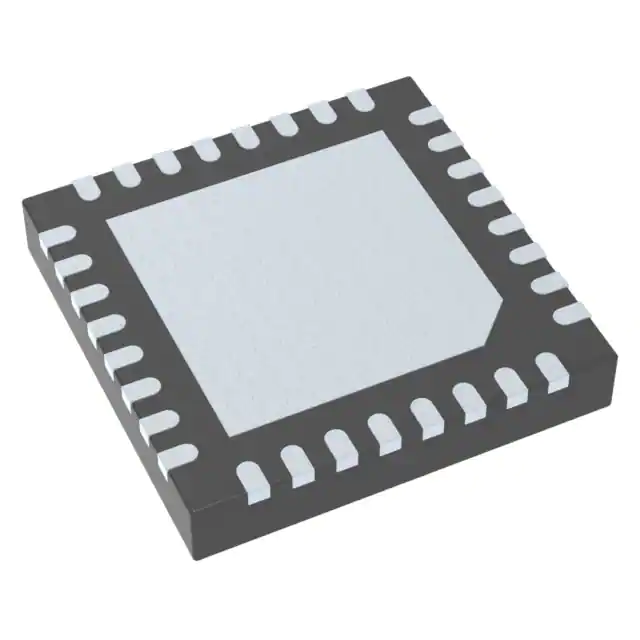
- Part No.:
- KSZ8061RNBW
- Manufacturer:
- Microchip Technology
- Category:
- Drivers, Receivers, Transceivers
- Package:
- 32-VFQFN Exposed Pad
- Datasheet:
-
 KSZ8061RNBW.pdf
- Description:
- IC TRANSCEIVER FULL 1/1 32QFN
- Quantity:
- Payment:

- Shipping:

Inventory:1,212
Please send an inquiry. Send us your inquiry, and we will respond immediately.
Product details
Overview
KSZ8061RNBW from Microchip Technology is a single-chip 10BASE-T/100BASE-TX Ethernet physical layer transceiver (PHY) with Quiet-Wire® EMI reduction, RMII interface, and AEC-Q100 Grade 2 automotive qualification. It operates from -40°C to +105°C, integrates on-chip RX termination, and supports Ultra-Deep Sleep mode activated by signal detect or CPU command - deployed in vehicle OBD systems and automotive gateways.
For engineers reviewing the KSZ8061RNBW datasheet, KSZ8061RNBW pinout, KSZ8061RNBW application, or KSZ8061RNBW equivalent, key selection criteria include RMII clock sourcing (output vs input), Quiet-Wire® enable/disable strapping, PHY address configuration via strap pins, and compatibility with unshielded CAT-5 cabling under stringent EMC limits.
Technical Context
The KSZ8061RNBW implements a full IEEE 802.3-compliant 10/100 Mbps transceiver with adaptive equalization for 100BASE-TX receive, MLT3 encoding and NRZI conversion for transmit, and parallel detection fallback when auto-negotiation is disabled. Its PLL synthesizes all internal clocks from a 25 MHz crystal input (XI pin), and it delivers a 50 MHz RMII reference clock (REF_CLK pin 19) to the MAC.
It features hardware-configurable strap-in options including PHY address (PHYAD[2:0]), CONFIG[2:0] for RMII mode selection, AUTONEG for negotiation enable/disable, and RXER for Quiet-Wire® filtering control - all latched at reset deassertion. Internal 50 Ω RX differential termination eliminates external resistors unless tighter tolerance is required.
Key Specifications
| Parameter | Value and Actual Design Meaning |
|---|---|
| Data Rates | 10BASE-T and 100BASE-TX compliant; supports full/half-duplex operation per IEEE 802.3. |
| Interface | Reduced Media Independent Interface (RMII); 2-bit TX/RX data, 50 MHz REF_CLK output. |
| Operating Temp | -40°C to +105°C; qualified to AEC-Q100 Grade 2 for automotive reliability. |
| EMI Reduction | Quiet-Wire® internal filtering reduces radiated emissions above 60 MHz; enables unshielded cable use. |
| Power Supplies | AVDDH = 3.3 V (analog TX/drivers), AVDDL/VDDL = 1.2 V (analog/digital core), VDDIO = 2.5/3.3 V (I/O). |
| Sleep Mode | Ultra-Deep Sleep standby mode triggered by SIGDET deassertion or register command; ultra-low power state. |
| Termination | On-chip 50 Ω differential RX termination; configurable via register 14h bit [2] to disable for external termination. |
Pinout & Package
KSZ8061RNBW is housed in a 32-pin, 5 mm × 5 mm QFN package with exposed thermal paddle (GND). Pin functions are validated per Microchip DS00002197F, including dedicated RMII signals, strap-in configuration pins, and management interface (MDC/MDIO).
| Pin/Terminal | Circuit Role | Design Meaning |
|---|---|---|
| 1 (XI) | 25 MHz Crystal/Oscillator Input | Reference clock source for internal PLL; connects to 25 MHz crystal or oscillator (AVDDH-referenced). |
| 19 (REF_CLK) | 50 MHz RMII Reference Clock Output | Provides synchronous timing to MAC; distinguishes RNB variant from RND (which receives clock on XI). |
| 4–7 (TXP/TXM/RXP/RXM) | UTP Differential I/O Pair | Direct connection to magnetics; supports MDI/MDI-X auto-crossover and HP Auto MDI/MDI-X. |
| 11 (MDC) / 10 (MDIO) | MIIM Management Interface | Serial bus for register read/write; MDIO is open-drain with external 1 kΩ pull-up. |
| 28 (RESET#) | Active-Low Hardware Reset | Asynchronous reset input; initializes strap-in latch values and internal state machines. |
| 32 (SIGDET) | Signal Detect Output | Active-high indicator of link partner presence; used to trigger Ultra-Deep Sleep entry automatically. |
Key Features
| Feature | Design Value |
|---|---|
| Quiet-Wire® Programmable EMI Filter | Reduces radiated emissions >60 MHz without external components; enables cost-effective unshielded cable deployment. |
| LinkMD®+ Receive Signal Quality Indicator | Diagnoses cable faults (opens/shorts) and estimates cable length via time-domain reflectometry on receive path. |
| Hardware Strap-In Configuration | PHY address, RMII mode, auto-negotiation, and Quiet-Wire® enabled/disabled at power-up via pull-up/down on pins 14/16/17/18/19/29/12. |
| Ultra-Deep Sleep Standby Mode | Sub-100 µA quiescent current; entered automatically on SIGDET deassertion or via register write - critical for battery-powered automotive nodes. |
| On-Chip RX Termination | Integrated 50 Ω differential termination eliminates two external resistors and capacitor; reduces BOM count and layout area. |
Applications
| Vehicle On-Board Diagnostics (OBD) | Automotive Gateway |
|---|---|
Use Scenario: Real-time diagnostic data streaming from ECUs to OBD-II port over Ethernet backbone. IC Role / Device Role / Timing Role: PHY layer interface between microcontroller-based diagnostic host and RJ-45 connector; provides robust 100BASE-TX link with Fast Link-Up for sub-second boot-time connectivity. Use Value: AEC-Q100 Grade 2 qualification ensures operation across extended temperature range; Quiet-Wire® meets CISPR 25 Class 5 radiated emission limits without shielded cable. | Use Scenario: Centralized communication hub aggregating CAN, LIN, and Ethernet domains in modern vehicle architecture. IC Role / Device Role / Timing Role: Ethernet PHY bridging domain controllers to high-speed backbone; RMII interface minimizes MCU pin count while supporting deterministic latency via register-controlled interrupt (INTRP). Use Value: Ultra-Deep Sleep mode reduces gateway standby power; LinkMD®+ enables in-field cable health monitoring during service intervals. |
| Industrial Control Network | Camera and Sensor Networking |
Use Scenario: Deterministic Ethernet connectivity for PLCs and I/O modules in factory automation environments. IC Role / Device Role / Timing Role: Physical layer transceiver interfacing industrial Ethernet MAC with field-side UTP cabling; supports auto MDI/MDI-X for flexible topology deployment. Use Value: Enhanced EMI immunity ensures reliable operation near variable-frequency drives; on-chip RX termination simplifies PCB routing in space-constrained DIN-rail modules. | Use Scenario: High-bandwidth video and sensor data aggregation from ADAS cameras and radar units to central processing unit. IC Role / Device Role / Timing Role: Low-latency 100BASE-TX PHY enabling time-synchronized frame capture; REF_CLK output synchronizes MAC sampling to PHY timing. Use Value: Fast Start-Up and Link reduces camera boot delay; programmable interrupt (INTRP) signals link status changes without polling overhead. |
Equivalent & Alternatives
The following parts are listed as comparable options for similar Ethernet PHY applications.
| Alternative Part | Technical Difference | Application Difference | Selection Advice |
|---|---|---|---|
| KSZ8041RNLI | 48-pin QFN; supports MII and RMII; no Quiet-Wire®; lower temp grade (–40°C to +85°C). | Targeted at industrial non-automotive designs; lacks AEC-Q100 qualification and EMI filtering. | Select when MII interface or higher pin-count packaging is acceptable and automotive EMC compliance is not required. |
| LAN8720AI-CP | 32-pin QFN; 10/100BASE-TX; no Quiet-Wire®; includes integrated 50 MHz oscillator driver; different strap-in logic. | Used in consumer and embedded applications; lacks AEC-Q100 Grade 2 and LinkMD®+ diagnostics. | Choose for cost-sensitive non-automotive designs where internal oscillator support is preferred over crystal. |
Compared with KSZ8061RNBW, KSZ8041RNLI offers MII flexibility but sacrifices automotive qualification and EMI control, while LAN8720AI-CP provides oscillator integration but omits Quiet-Wire® and advanced diagnostics - making KSZ8061RNBW uniquely suited for EMC-critical automotive Ethernet nodes requiring zero-additional-component RX termination and sleep-triggered power management.
Availability
KSZ8061RNBW is available at Aetrix Electronics and suitable for vehicle OBD systems, automotive gateways, and industrial control networks requiring stable component supply, long-term lifecycle support, and AEC-Q100-compliant traceability.
Supply support for KSZ8061RNBW includes scheduled delivery planning, volume procurement assistance, BOM continuity management, traceable sourcing, and lifecycle availability coordination for OEM customers, industrial embedded developers, connected-device designers, and electronics production programs.
Manufacturer
Microchip Technology Inc. is a leading provider of microcontrollers, analog devices, FPGAs, and connectivity solutions, headquartered in Chandler, Arizona.
The KSZ8061RNBW belongs to Microchip's automotive-qualified Ethernet PHY product line, designed specifically for robust, low-EMI wired connectivity in safety-critical vehicle subsystems and harsh industrial environments.
FAQ
What is the reference clock requirement for KSZ8061RNBW?
The KSZ8061RNBW requires a 25 MHz crystal or oscillator connected to the XI pin (Pin 1); it internally generates and outputs a 50 MHz RMII reference clock on REF_CLK (Pin 19) to the MAC. This distinguishes it from the KSZ8061RND variant, which accepts 50 MHz externally. The XI input references AVDDH and must meet specified jitter and drive strength per DS00002197F Section 9.
How does Quiet-Wire® filtering work on KSZ8061RNBW?
Quiet-Wire® is an internal EMI filter enabled by default via pull-down on RXER (Pin 12) at reset. It reduces radiated emissions above 60 MHz without external components, allowing unshielded CAT-5 cable use in automotive applications. Filtering level can be adjusted via registers, but cannot be re-enabled after software disable - only hardware strapping controls initial state.
Does KSZ8061RNBW support auto MDI/MDI-X crossover?
Yes, KSZ8061RNBW supports HP Auto MDI/MDI-X for automatic correction of straight-through and crossover cables. This feature is configurable via strap-in pins (CONFIG[2:0]) and can be disabled to reduce link-up time in fixed-topology applications. It operates independently of auto-negotiation and remains functional even when auto-negotiation is disabled.
What is the purpose of the SIGDET pin on KSZ8061RNBW?
The SIGDET pin (Pin 32) is an active-high output indicating detection of a valid link partner signal on the UTP cable. It serves dual roles: real-time link presence monitoring and automatic trigger for Ultra-Deep Sleep mode entry when deasserted - enabling rapid power-state transitions critical for battery-operated automotive modules using KSZ8061RNBW.
Can KSZ8061RNBW operate without external termination resistors?
Yes, KSZ8061RNBW includes on-chip 50 Ω differential termination for the RX pair (RXP/RXM), eliminating the need for external resistors in most designs. This termination is enabled by default and can be disabled via register 14h bit [2] only if tighter-tolerance external termination (e.g., 1% precision resistors) is required for signal integrity optimization in long-cable or high-noise environments.
KSZ8061RNBW Specifications
- Product attributes
- Attribute value
- Manufacturer:
- Microchip Technology
- Series:
- -
- Package/Case:
- 32-VFQFN Exposed Pad
- Packaging:
- Tray
- Product Status:
- Active
- Type:
- Transceiver
- Protocol:
- Ethernet
- Number of Drivers/Receivers:
- 1/1
- Duplex:
- Full
- Receiver Hysteresis:
- -
- Data Rate:
- 100Mbps
- Voltage - Supply:
- 1.8V, 2.5V, 3.3V
- Operating Temperature:
- -40°C ~ 105°C
- Grade:
- -
- Qualification:
- -
- Mounting Type:
- Surface Mount
- Supplier Device Package:
- 32-QFN (5x5)
KSZ8061RNBW FAQ
1.How can I place an order for KSZ8061RNBW through Aetrix?
Please submit a Request for Quotation (RFQ) for KSZ8061RNBW on Aetrix. Our sales agent will provide a competitive quotation and guide you through the order confirmation once you accept the terms.
2.Are the price and stock information for KSZ8061RNBW reliable?
The price and inventory of KSZ8061RNBW are updated periodically and may fluctuate due to market conditions. Stock and pricing data are typically refreshed every 24 hours. Quotation validity for KSZ8061RNBW is usually 5 days.
3.What payment methods are accepted for KSZ8061RNBW?
We accept Wire Transfer, PayPal, Credit Card, Western Union, MoneyGram, and Escrow for KSZ8061RNBW transactions.
Note: Certain payment methods may incur a processing fee.
4.How is shipping managed for KSZ8061RNBW?
KSZ8061RNBW orders can be shipped via leading logistics carriers, including DHL, UPS, FedEx, TNT, or Registered Mail.
Once your KSZ8061RNBW order is processed, you will receive an email with the shipment details and tracking number.
Note: Tracking information may take up to 24 hours to appear. Express delivery typically takes 3–5 business days.
5.How can I obtain technical support or documentation for KSZ8061RNBW?
For technical support, including KSZ8061RNBW datasheets, pinout diagrams, or application guidance, please contact our engineering support team. They can provide detailed documentation and assistance for your KSZ8061RNBW requirements.
6.How does Aetrix verify that KSZ8061RNBW is sourced from the original manufacturer or authorized distributors?
All KSZ8061RNBW products on Aetrix are procured from qualified distributors and authorized channels. Our dedicated quality assurance team conducts strict verification, including traceability checks and, if necessary, third-party testing. This ensures that KSZ8061RNBW meets industry standards.
7.What is the process for return or replacement of KSZ8061RNBW?
All KSZ8061RNBW units undergo pre-shipment inspection (PSI). If there is an issue with KSZ8061RNBW, returns or replacements are accepted under the following conditions:
1.Quantity discrepancies, incorrect items, or visible external defects (such as breakage or corrosion), acknowledged by Aetrix.
2.The issue is reported within 90 days of delivery.
3.The KSZ8061RNBW part is unused and in its original packaging.
Return procedure for KSZ8061RNBW:
1.Submit a request within 90 days.
2.Obtain a Return Material Authorization (RMA) from Aetrix.
KSZ8061RNBW Tags

-
ATA6561-GAQW-N
Microchip Technology
-
ATA6561-GBQW-N
Microchip Technology
-
AM26LS32ACDR
Texas Instruments

-
SP485CN-L/TR
MaxLinear, Inc.
-
SP485EN-L/TR
MaxLinear, Inc.
-
SP485EEN-L/TR
MaxLinear, Inc.
-
SP485ECN-L/TR
MaxLinear, Inc.
-
THVD1400DR
Texas Instruments
-
AM26C31IDR
Texas Instruments

-
TLIN1021ADRQ1
Texas Instruments
-
MAX232IDR
Texas Instruments
-
AM26C32IDR
Texas Instruments
Tech Hub

TTL and CMOS logic families differ in thresholds, loading, output drive, power and timing. This engineering guide compares 74HC and 74HCT, calculates noise margins and checks 3.3 V/5 V compatibility.

A practical engineering guide to 3.3V and 5V logic compatibility, input thresholds, resistor dividers, translator ICs, MOSFET level shifting, I2C pull-ups, timing limits and power-sequencing risks.

The 74HC595 uses push-pull logic outputs, while the TPIC6B595 uses 50 V open-drain DMOS sinks for higher-power loads. This guide compares timing, current limits, 3.3 V interfacing, load wiring, thermal…

The 74HC595 converts serial data into eight stable parallel outputs. This guide covers pin functions, shift and storage timing, OE and MR behavior, drive-current limits, cascading, voltage compatibilit…

A technical comparison of level-sensitive latches and edge-triggered flip-flops, covering timing windows, setup and hold limits, master–slave operation, time borrowing, race-through, HDL inference and…

A D latch stores one bit while Enable controls when data can pass. This reference covers gate-level operation, truth tables, transparency, setup and hold timing, LE versus OE, common ICs and practical …

An SR latch stores one bit through cross-coupled feedback. This engineering reference covers NOR and NAND implementations, truth tables, forbidden-state recovery, gated operation, switch debouncing, fa…

Latch circuits retain one bit through feedback. This technical reference covers SR and D latches, truth tables, transparency, timing limits, latch-versus-flip-flop behavior, applications and common log…

An engineering guide to LED driver operation, constant-current and constant-voltage outputs, linear and switching topologies, dimming, IC selection, calculations, replacement compatibility, and fault c…

Operational amplifier guide covering op amp basics, feedback, ideal vs real op amps, common configurations, buffer circuits, offset, bias current, gain-bandwidth, slew rate, rail-to-rail limits and sel…


